AA alumni Eleonore Audi, Albane Duvillier and Hélène Solvay discuss their work on AAXX and the position of women in architecture
AA alumni Eleonore Audi, Albane Duvillier and Hélène Solvay discuss their work on AAXX and the position of women in architecture
Matthew Lloyd Roberts: Eleonore, Albane and Hélène, thank you so much for joining me, I was wondering if you could speak a little about the work you did with AA XX 100 whilst you were at the school?
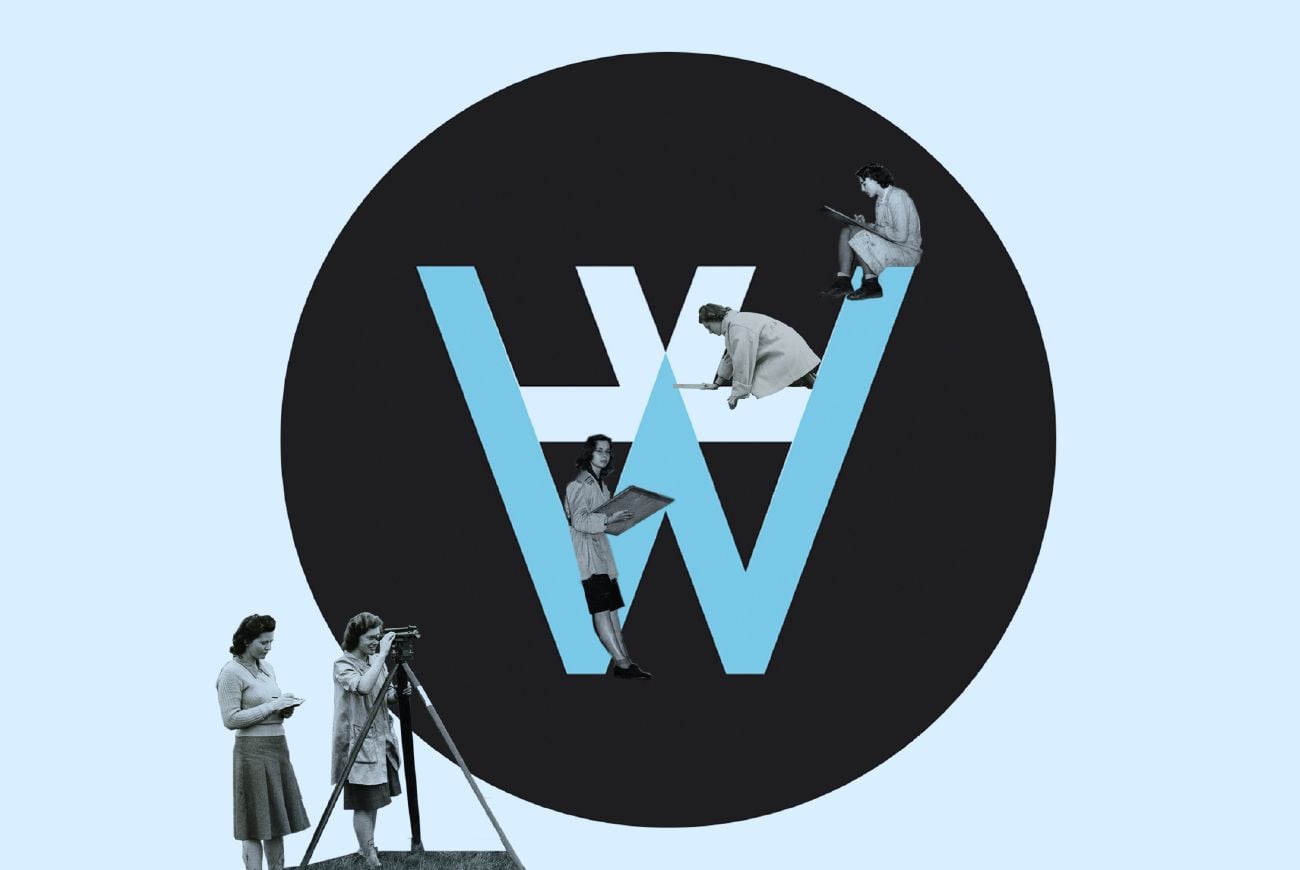
Eleonore Audi: I don't remember how I got involved with AA XX, but we had just done a year studying the work of Lina Bo Bardi in Brazil. Ana Araujo always used to ask us “what would Lina do?” So we were already looking at women designers and architects and realizing the lack of resources and information about them. It seemed obvious that we should try to create more knowledge and increase visibility for this issue by discussing it. And then it was a question of trying to find a format that would address that problem and make the whole programme more inclusive, make everyone want to come and get involved with this conversation and work done by women architects, rather than events that were focussed on networking, quite corporate.
Albane Duvillier: As a feminist, it just sounded like a project I had to be a part of, something really important and an opportunity to do something political as well as historical.
Hélène Solvay: I really enjoyed working on the transcription project, a series of interviews with AA alumni who were women, led by Yasmin Shariff, Hannah Durham and Samantha Lee and working with fellow students Lingxiu and Lise Raue. I transcribed the interview with Jean Symons and it was so amazing to hear about her experiences as a student in the 1940s. It probably distracted me quite a lot from my studio work, but it was amazing to hear her recounting her experiences that were in some ways parallel to our experiences, but also very different. I was also working in the AA Archives, literally inputting the data from the student records into a database, which sounds dry, but it was so interesting to see where women had dropped out of the school because they had a child, or maybe they got married and changed their surnames. Working out these patterns gave me such a connection to those womens’ lives.
Matthew: And how did working on the project whilst you were students affect the way you thought about the school?
Hélène: My experience was that whilst I was at the AA, I was actually in a very protective bubble, certainly there are always things that need to be addressed, but architectural education tends to be a better place for women than the industry. The imbalance that women like Jean were experiencing in the 40s doesn’t exist so much in schools, but does still exist in the profession. When I started working, I found myself in meetings with the developers, contractor, engineers, and I was regularly the only woman in those rooms, which I certainly recognised in the historical accounts of women in the profession.
Albane: I agree, I think at the time, even if these political discussions were not being had as openly as we might have them now, the AA provided a nourishing, attentive and caring environment that allows people to flourish and explore these questions of representation. Things have gotten a lot better, information about women architects is becoming more widely available, but there are still massive gaps. What was amazing about AA XX was that it brought together two generations, an older generation who studied, lived and worked through a very different time for gender in architecture, and a younger generation who were starting to see more women like Lina Bo Bardi become standard references in teaching. Today the construction industry continues to be very macho, tough and often misogynistic, it can be really tough as a woman. I think one of the few good things about the pandemic is that online meetings and events can be less susceptible to the gender dynamics that lead to women being spoken over and ignored.
Eleonore: I really remember this experience of finding a woman’s work in the AA Archive, and looking for what they did next, and it being impossible to find them, because maybe their name had changed, it led to a lot of gaps. I remember having the impression that when some of these women got married, or had children, it was basically the end of their architectural careers. The events we organised changed that impression, In the event Engaging generations when we were joined by people like Farshid Moussavi, Sally Lewis and Clementine Blakemore, it was so inspiring to see these women, for whom having families didn’t stop them having careers. They came to us and said, “I am still the only woman at the table, but I am working on these huge projects, and I am respected in the field.” There was a feeling that progress was being made, and would continue to be made.
Albane: No, I think this is true. And there was a lot of support, there was an enormous amount of generosity.
Hélène: I was going to mention the speed mentoring, I remember I had just started working, and it felt so affirming to speak to someone in the field, someone who could empathise with my complaints about the planning process and all those difficulties that you discover when you start in practice, a kind of confrontation with the realities of the industry.
Albane: That programme was important because it was a way of demonstrating, to students both male and female, that having a female mentor was normal, that women are in senior positions in the industry in a way that they hadn’t been in the past. I was struck by the events we did with Harvard GSD, they were very upfront about the problems, very direct in addressing them, more confrontational. I think students today would also be more straight-forward in addressing these problems, whereas we were just starting to get the conversation going.
Hélène: That was the great thing about AAXX, we were working with our friends, and we were having a really good time raising these questions. Do you remember Konstantina Koulouri made that great poster of Norman Foster with the great big bosom? AAXX was interesting because it was grounded in this historical project of recovering the lost histories of women at the AA. I think it is really important to get students involved in these discussions, and a conventional piece of historical research isn’t always the best way to do that, there’s a need for precision and accuracy that can sometimes restrict you in activism. It was important to include more contemporary and future facing events and ideas in the programme, to keep that radical agenda in mind.
Albane: It’s important to tell the story of women architects without locking them away in history, to restore these stories into the historical record without reducing their agency and relevance as architects. I wanted to highlight the work we did on Wikipedia, writing new entries for women architects that were missing, there are such huge gaps. But there are problems here as well: what kind of sources does Wikipedia accept? How do editors decide if women architects are ‘notable’ enough to deserve a page? There is still a long way to go.
Matthew: Has your experience working on the project influenced your approach to working in the sector after you graduated?
Albane: I think it clearly made an impact on the AA, which went on to elect its first female director shortly after.
Hélène: Yes, and actually one of the outcomes of AAXX 100 project was a book. I really enjoyed assisting Helen Thomas who wrote the final chapter about 21st century women at the AA, for which we made a ‘diagram of relative positions’, charting a moment in time, looking at where women who had studied or taught at the AA found themselves within the world of architecture. Even if you’re not working in practice, you can still play such an important role in that ecosystem of curators, historians, writers, critics etc. Samantha Hardingham (Interim Director of the AA 2017-18) was on that diagram and was so influential, Eleonore worked with her on a project looking at architecture for children.
Eleonore: I really valued being taught by brilliant tutors, like Ana Araujo, Nannette Jackowski and Kate Davies, in every unit that I was part of. I went on to work with Sam, after working in a more traditional practice, and it was brilliant to see a different process of working and producing projects. It was such a nurturing and productive environment to work in, and it is inspiring to think that we can try and lead projects in that supportive way in the future, rather than the antagonistic environments that often exist in architecture.
Hélène: That makes me think of Jean Symons, she left the AA and went straight to work on the Royal Festival Hall, this incredibly innovative construction site. They had to drain the river and in the interiors used all this new acoustic technology. She was insistent that you had to work collaboratively on site, discussing questions with tradesmen, deferring to the knowledge of contractors, working together respectfully rather than simply drawing something and bulldozing ahead with it. That nurturing way of working might sound maternal, but it is just about giving time to people, being generous, thinking about working in a team. It is an approach that always produces better results.
Albane: Getting involved with AAXX definitely made us aware of all these problems, and more conscious about highlighting and amplifying the work, voice and experiences of women architects. There were always inspiring female tutors at the AA, and that was an inspiring start to a career in practice, seeing all these stories laid out consciously.
Eleonore: Sophie Hicks came to the Speed Mentoring event, and that was so important to hear someone tell you “I started my practice before I even finished studying, I just did it, I didn’t wait for anyone to tell me I could.” It felt so important to hear that from a woman, it is different to hearing it from a man.
5 March 2021