David McAlmont and Hila Shemer, who teach the new unit ‘Eureka!’ discuss inspiration, self-knowledge and creative practice
David McAlmont and Hila Shemer, who teach the new unit ‘Eureka!’ discuss inspiration, self-knowledge and creative practice
Matthew: Thank you so much for joining me David and Hila! How did you come to teach this new unit, ‘Eureka!’?
David: To tell you the truth, it was a very welcome but strange surprise to be invited to apply. I wasn’t concerned about working with Hila because I know from working with her in AAIS how impressive and affable she is. I freak her out sometimes because she says something and I start beaming from ear to ear, and she asks me “why are you smiling?” It’s because she’s so good! It was that typical thing, “Oh my god, the AA have asked me to form a unit with my colleague. Why have they asked me? Are they sure? Imposter syndrome!” I think an unsung element of creativity isn’t about how we create or the techniques for creation, but what we’re doing to keep our inspiration reserves stocked. I think that’s what I’m bringing to it, my awareness of that dependence on inspiration, that’s been the reason for my work in the history of art, I’ve been trying to ensure that I never feel uninspired again.
Hila: Our first principle was what makes us creative, what we are inspired by, and how do we plant it out in the world to inspire other people? After graduating from architecture school, as a young architect, and an architecture critic, I got bored! Later I joined the AAIS as a student, because if I’m going to find new ways to inspire people about architecture, where better than the AA? I met David during my studies and I’ve never left. The unit grew out of that work, and we wanted to find the things that we were most engaged with to bring to the table. The idea of “The Table” is an interesting one. Crisis is really useful for architects, it’s a positive thing – creative people are called back to “The Table” because everyone else is clueless when it comes to imagining a different world, a different way of life. David and I aren’t interested in waiting to be invited to the table, but in getting our students to set up a table for themselves: how can we make the world healthier, happier, more positive, more equal. We encourage our students to raise issues that are important for them individually, to develop their own voices. That’s why we start by asking them to make a self-portrait, we’re interested in the self-portrait of the architect as a young man or woman. We want them to have that self-gaze, but also to think of themselves as young practitioners, looking forward into the future of what they can achieve. We want them to have a janus face, we want them also to look into the past and to learn from history to inform those ideas.
Matthew: So the unit is an opportunity for students to ask questions of themselves?
David: It’s about self-expression. Hila and I are in the middle of a writing workshop right now, which begins with creating a map of the self. I really do think that output is self-expression. For a range of reasons that is often obfuscated by education systems. Certainly, what I’m attempting to remind students of all the time is that it is about you, when you’re designing a building and getting it built, that is an expression of yourself, a manifestation of yourself on the landscape. Sometimes we encounter a mindset of “what does this have to do with architecture?” Which to me is the same as saying “what do you have to do with architecture?” Where does architecture come from? It comes from you! So the better you understand yourself, the more likely you’ll understand what you are doing. It’s about asking those difficult, critical questions about why the world is the way it is. We had a student who was very interested in strawberries, but had never researched them, to think in depth about what they mean. I’ve done the same thing with the English Breakfast, I eat this meal, week in, week out, but had never seriously considered where it came from, what caused it to be.
Hila: It’s about raising awareness to your immediate surroundings, the same process as staring at yourself in the mirror, but never asking yourself what you get out of it. It leads students to ask what questions they want to deal with. The students are quite far in their studies, they have their architectural tools. So why not operate and use these architectural tools to research something that comes from within. We’re asking them to come to the world with positive tools, and a very open scope: if someone is a great coder, or sewer, they’re welcome to use anything, we find ourselves applying unusual tools to unusual problems. When you’re experimenting like that, that’s when inspiration strikes – suddenly the beam of light hits your forehead, like in Vermeer’s The Milkmaid. That’s why the unit is called ‘Eureka!’, in homage to that moment of deep understanding and revelation that we’re trying to induce, and generate many more ideas along the way.
David: Often we are asked “where are you going?” and we’re not here to tell the students where to go, but to help them find those deeply personal moments of discovery.
Matt: Does this process require a lot of multidisciplinary work? Lots of swapping between mediums and practices?
David: A lot of students come to the AA not necessarily planning to practice architecture: many people want to practice art, and they’ve come to the school to enhance their artistic craft. I think society sometimes has certain pressures, about what are acceptable expressions of creativity and the AA is a very powerful place in breaking down some of those arbitrary boundaries.
Hila: We’re trying to strike a balance for each student between the traditional ways of working and the avant-garde. Each student can bring something unique to the world of architecture and art, but I think that all of the students in the unit are interested in being interdisciplinary, bringing out their thoughts through many different types of practice. David is certainly like that, you couldn’t narrow down his practice to a single way of working, which is true of my work as well. We work closely with Technical Studies, because our students want to create a cloud, and we want to understand the chemistry, and the art history of the cloud, and to perform and depict it. You have to be critical, if you’re using plastic, carbon, water, you have to ask questions about how you’re working. I don’t think I’ve ever been anywhere quite like the AA, it is so diverse, people come from all over the world to share their love of architecture and it is wonderful.
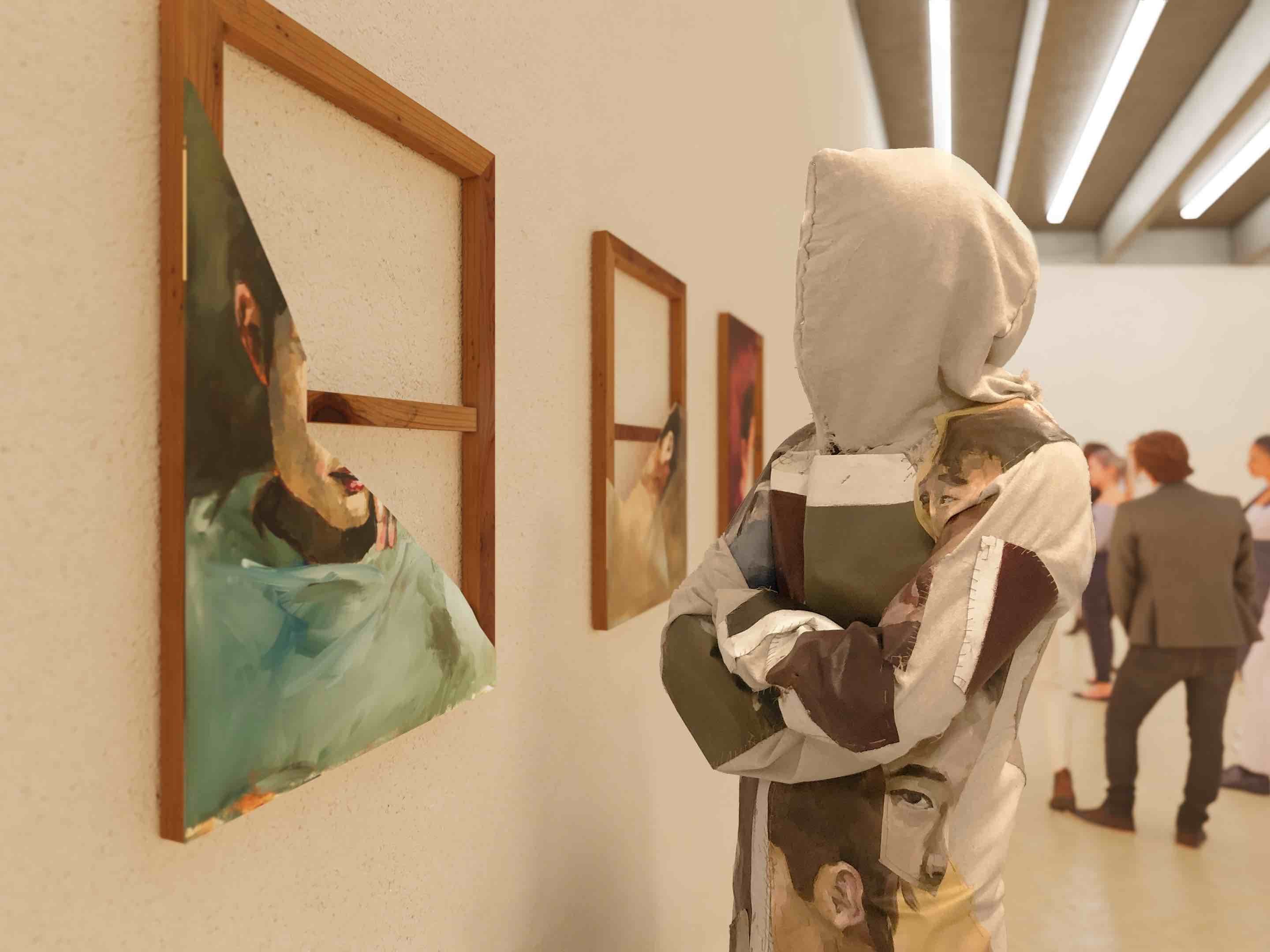
Image: 'Quiet Introspection' by Hui Ning Lau
27 November 2020