Hafizah Mohd Nor, AADipl(Hons)2020 discusses her Diploma project, water settlements and decolonisation
Hafizah Mohd Nor, AADipl(Hons)2020 discusses her Diploma project, water settlements and decolonisation
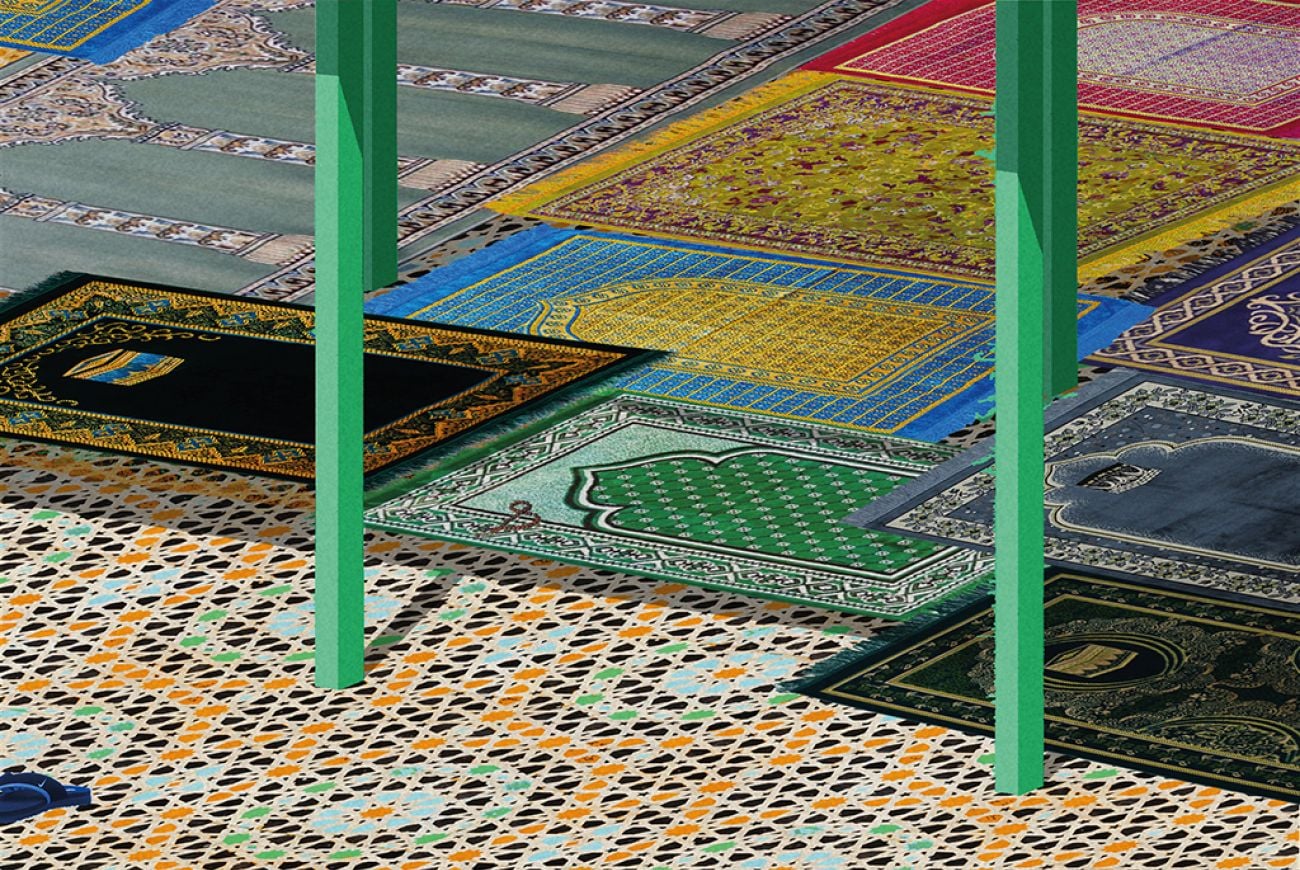
Matthew Lloyd Roberts: Congratulations Hafizah on being awarded Diploma Honours! How did your Diploma project, ‘Gotong-Royong: An Autonomous Floating Settlement in Brunei’ grow out of your work with Islands: Rethinking the Settlement Form from Property to Care (Diploma 14)?
Hafizah Mohd Nor: The brief this year was on the relationship between property and settlements. Our goal as a unit was to challenge this idea of property, because it is so entrenched in our society that we forget that it is an exploitative tool that has reduced our existence into a commodity. This was against our unit’s ethos of care so we were trying to see the settlement through a different lens. My project is based in Brunei, which is where I’m from, so it was a very special year for me because it was the first project I did that wasn’t based in the UK. I was intimidated at first, I didn’t know the reactions I would get from tutors or critics, but it was really worthwhile. The broader aim of my project was that I felt that I had a role within the current conversation about decolonising the curriculum in architecture. For my specific project itself, I was trying to challenge ideas of property by focussing on water settlements, the way that water erodes the permanence that we associate with property and ownership. I opened my project with a statement that we’re so used to land settlements historically because of colonialism. Colonialists came to foreign lands and traced out boundaries as a tool of control, so I was trying to shed light on an alternative narrative.
MLR: Is there a pre-colonial tradition of this kind of water settlement in Brunei?
HMN: Yes, but not just in Brunei. Water settlements were very common in South-East Asia for example Singapore, Philippines and Indonesia. It was the way of life before colonisation, but then under the British administration in Brunei, they wanted to remove water settlements. They perceived it as unhealthy and unhygienic. This triggered a national resettlement programme, but it was not fully successful. Kampung Ayer became this testament to a culture that resisted the colonial shift towards land, as it still managed to exist today, inhabited by 6% of the Brunei population. By comparison, the traditional forms of communal living on the water in countries like Singapore didn’t manage to survive. People have scepticism when it comes to water settlements- it’s seen as a ‘romantic’ notion, ultimately too radical or unpractical as a way of life. That’s because so many of us are already consumed by the status quo of land-based urbanisation that we see anything as ‘other’ to be inferior. I wanted to counter that narrative and show that water settlements could also be a viable way of settling today.
MLR: Decolonising ways of thinking about architecture is central to this project, how have you thought about decolonising architecture during your studies?
HMN: In my 5 years of architectural education, having done my part 1 at a different university, I was quite surprised at the lack of global breadth within institutions. Not just in terms of discourses that were taught, but also in diversity of staff expertise. Most schools in the UK offer quite Eurocentric curriculums that don’t lend themselves to a fair perspective of the world. Of course, there are people in education starting to broaden these views, but we still need to do more. Perhaps unit briefs could also be more open. I was surprised in fifth year when my tutors encouraged me to do a personal project, a site that my tutors weren’t perfectly familiar with and I worried the project couldn’t develop as much. But what I realized was, this doesn’t matter. For example, I started this year with two other case studies to compare to Brunei’s Kampung Ayer which I intentionally picked as examples that have been excluded from the architectural canon. My research on water settlements led me to Ganvie, Benin and the Mesopotamian Marshlands in Iraq to reveal that water settlements actually permeated across the world - not just in Asia. I didn’t know much about their histories and culture, and neither did my tutors, but they taught a way of questioning, analysing issues and approaching problems with a certain rigour. We were both learning at the same time and getting really excited in tutorials at the lesser-known research! I feel educators need to encourage this kind of self-learning, enabling students the freedom to move outside their area of expertise but with a guided framework. I feel these discovery moments should happen more in education, rather than limiting it only to the standard Le Corbusier and Koolhaas references.
MLR: So now that you’ve finished your Diploma, what would you like to do next?
HMN: To me, Diploma wasn’t just an educational development but also a personal one. I’ve been taught not just to look at architecture differently, but to look at societies and our relationships with each other. That’s why I find architecture quite fascinating, the way it translates into your daily life, into the ideologies that define the way we live. I would love to work in the UK for a while to gain more experience, but ultimately I think I will go back to Brunei and work in the government. In Brunei, the majority of construction work is government-built so it is teeming with design opportunities. I worked there for a couple of months before and it was equally amazing and intimidating. Even as an architectural assistant, there was an opportunity to design a national market, school building and a mosque with an incredible amount of freedom. This weight of responsibility influenced my outlook going into Diploma School. How could I use this time to learn as much as I can since architects have this responsibility, this social agency over the built environment and the way communities experience architecture?
I am eternally grateful to my tutors who have taught me so much throughout my 2 years at the AA; Pier Vittorio Aureli, Maria Giudici, Miraj Ahmed and Martin Jameson. Not to forget my peers for all the great conversations. A special thank you to Tim, Nicole, Jane and Natacia for the endless support and care.
14 August 2020