Atmospheres: The weaponisation of doubt
Atmospheres: The weaponisation of doubt
4 March 2020
Time
7.30pm
Location
AA Lecture Hall
“We can’t breathe”
Teargas is used to disperse bodies gathering in democratic protest, chlorine gas bombs are used to spread terror in cities, herbicide is sprayed from airplanes to destroy fields and displace those whose livelihood depends on them, arson is used to eradicate forests for industrial plantations.
Mobilised by state and corporate powers, toxic clouds colonise the air we breath across different scales and durations, from urban squares to continents and from the incident to epochal latencies.
But cloud dynamics is elusive, governed by non-linear and multi causal logics.
This is a problem that persisted throughout the history of painting when clouds
— moving faster than the painter’s brush could capture them
— needed to be imagined rather than described. The contemporary problem of cloud analysis shifts rather from the physical to the epistemological. Today toxic fog breads lethal doubt, with negationists operating across the spectrum seeking to deny the facts of climate change just as they do of chemical strikes.
-----
The seminar introduces the means and modes by which architecture — as a contemporary set of techniques and as a body of knowledge — can become an investigative and evidentiary mode through which to interrogate contemporary politics and conflict.
Conflicts are urban phenomena, played out within dense media and data environments. Political violence no longer focuses on the control of territories, but rather on the governance of population. From the use of tear gas to choke protestors, through to humanitarian governance of populations in the global south, to machine learning mobilisation of face recognition and biometric fingerprinting, the body is once again the focus of systems of government and control. This year the seminars will concentrate on concepts of biopolitics.
There has been some important shifts in our contemporary techno-political landscape since Foucault first formulated and Agamben re-articulated the term biopolitics. While their formulations were fundamental in identifying modes of governmentally and control of humans as mere bodies in space, the question associated with the term biopolitics today must shift in two different ways: on the one hand it must account for the techno-biological nature of the human in which the border between technology and biological matter erodes. It must also turn to engage larger ecologies in which the “bio” in biopolitics designate all living matter now under threat of extinction.
This open seminar series comes to map out the shifting landscapes articulated around the term biopolitics and the ways it could become relevant today.
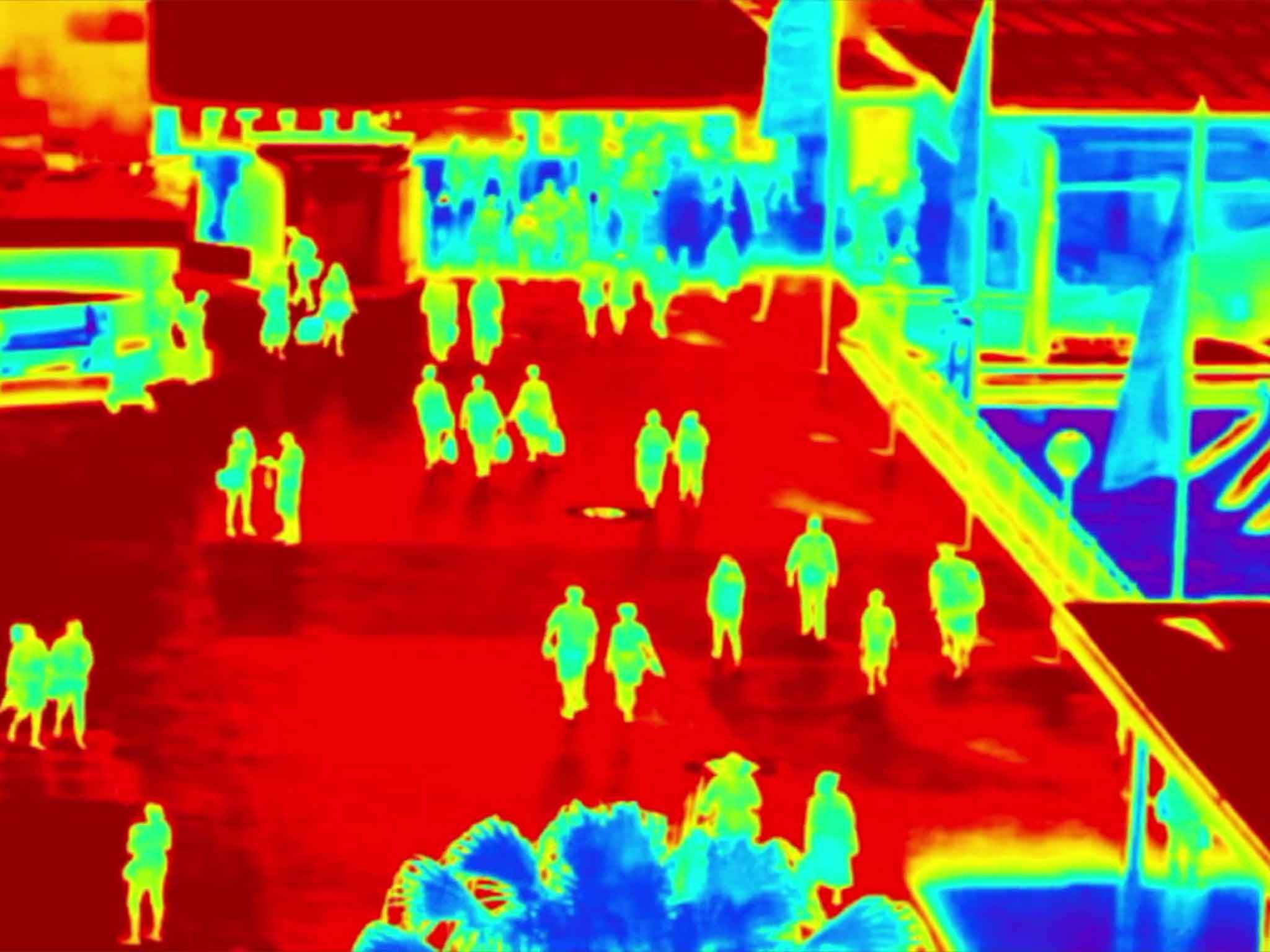
Image: Infrared thermal imaging of bodies, scopesman.com, 2019