Computational Urbanism: From Generative Origins to Semi-Automatic Global Implementation
Computational Urbanism: From Generative Origins to Semi-Automatic Global Implementation
12 January 2022
Time
6pm
Location
Online
This is the keynote lecture following the M.Arch Jury for the Emergent Technologies and Design Taught Postgraduate Programme
The application of computation in most design industries has forever evoked the desire to optimize workflows through automation. In some design industries this benefit of efficiency can be observed by now, but urban planning and design have so far been eluding this promise due to its complexities and multi-stakeholder participation.
Across my 20 years of developing computational urban design and planning applications, I naively started with the intention to generate whole cities through machine learning models. But through application on live professional projects, we had to increasingly refine individual applications into sophisticated open digital urban ecologies that cater from policy to place making.
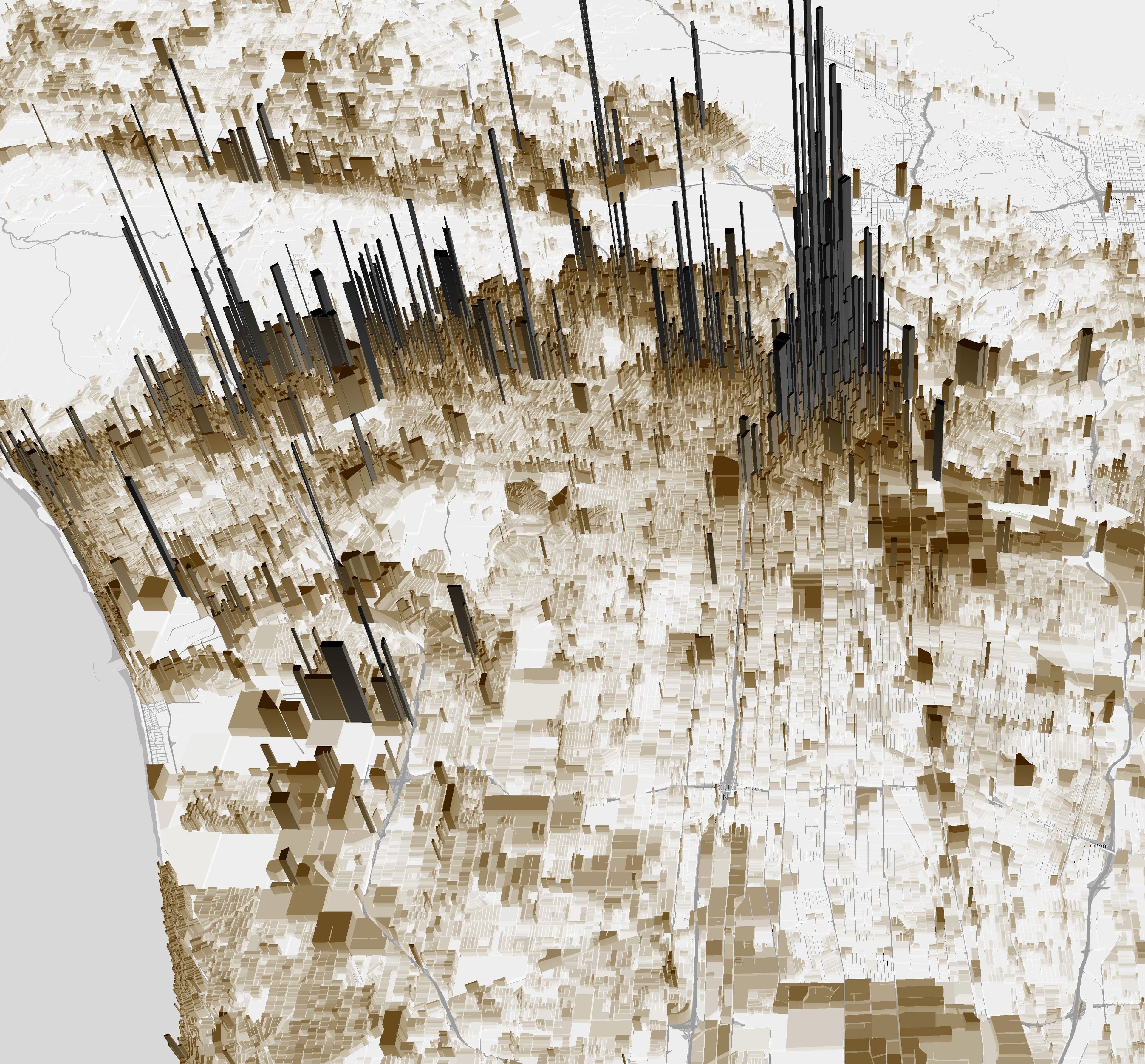
The presentation will cover early foundational research into generative urban models and advanced spatial analytics and bridges to recent global projects that hybridize generative design with spatial analytics and data science
Christian Derix founded the first 'Computational Design' group in architectural industry and is a global leader in computational urbanism and architectural AI. With 20 years of experience in academic and professional R&D, he is one of the early pioneers at the nexus of human-centric planning with generative design, data science & machine learning.
He is the founder of many state-of-the-art award-winning computational planning consultancies that set standards for the domain like the Centre for Evolutionary Computing in Architecture (CECA) with Paul Coates in 2002, Aedas|R&D and its Computational Design Research [CDR] group in 2004, Woods Bagot's design research agency SUPERSPACE in 2014 and Urban Systems of ERA-co in 2019.
Derix holds a PhD from the Technical University Vienna and is director of quantitative planning for transit-oriented communities of the Line at Neom.