Portal Confluence - Lighthouse ex-fluence
Portal Confluence - Lighthouse ex-fluence
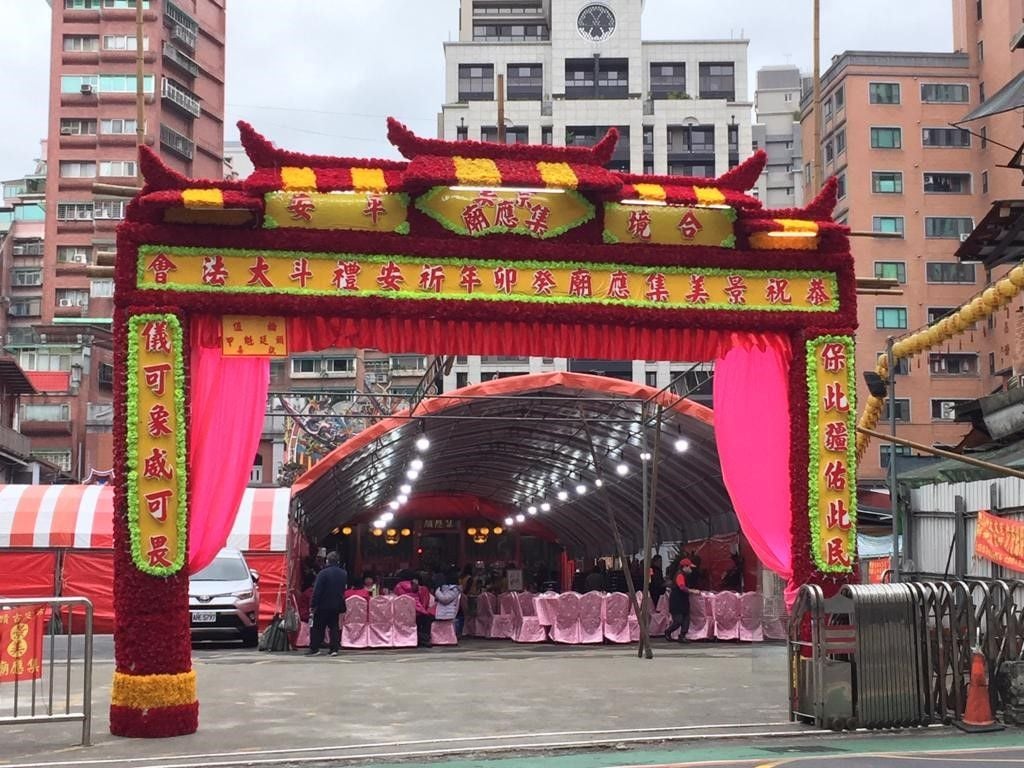
12 May 2023
Time
2–4.30pm
Location
33 First Floor Front and Online
Not only that the sense of place is emigrant in itself, it is also marked by the wavy journeys of goods and gods, blessings and omens, rituals and betrayals, opportunities and fortunes. The lighthouse effect that was explored in relation to the condition of harbouring across ports is further expanded here in the second session. It begins by tracing, with a zoomed-in focus on Southern China and Taiwan, the emergence, multiplication, migration and ex-fluence of temples, where the permanently illuminated fragrant oil lamps assert the lighthouse effect, along with affiliated marketplaces and urban spaces that grew around it. Furthermore, at a zoomed-out level across the maritime region between Japan and Indonesia, within which Tainan, created by the Dutch East India Company, was a crucial node, the lighthouse effect is manifested through the agency of pirates that offer protection and opportunities, as well as threats and forces that result in the rise and fall of cities. These two connected views on lighthouse ex-fluence reveal the deeper ties between spiritual networks and a system of economics with a particular maritime logic. It echoes the refutation by R. E. Coase’s economic theory, by studying the lighthouse system, that private enterprises (which are agencies including pirates) too can take on the function assumed by a government to build lighthouses as a matter of public and social good, serving both local and foreign ex-fluences.
SCHEDULE
2:00pm - Introduction: Doreen Bernath and Shiyu Jin
2:15pm - Fang-Long Shih: Multiplication of Pài-pài and Affluence - Lighthouse Effects of Tsi̍p-ìng Temples and Jingmei Marketplaces in Taipei’s Wenshan District
3pm - Ke Bo Izac Tsai: The Lighthouse in Urbanism - From Pirates to Interconnected Cities in the Far East and Southeast Asia
3:45pm - Discussion with presenters and guest discussants Shin Egashira, Javier Castanon, Sean Gwee, Teresa Stoppani and Stuart Thompson
Lighthouse ex-fluence is the second of the three seminar sessions on the theme of Portal Confluence, which is the third episode of the PhD seminar series Interjectures 2022-23. The ‘Portal Confluence’ episode will be co-convened by Doreen Bernath, Ke Bo Izac Tsai and Shiyu Jin. Each session engages presentations by guest speakers, followed by comments and discussions, and is open to participants from the PhD and graduate school programmes, as well as open to the larger AA school and community.
Guest discussants:
Shin Egashira makes art and architecture collaboratively worldwide. His experiments include the construction of Alfred Jarry’s Time Machine alongside astrophysicist Andrew Jaffe; How to Walk a Flat Elephant and Twisting Concrete which fuse old and new technologies. He conducts a series of landscape workshops in rural and inner-city communities across the world. He is Unit Master of Diploma 11 at the Architectural Association School of Architecture, where he has been critically documenting neoliberal urban development in London. Shin holds visiting professorships at Tokyo National University of Fine Arts and Music and the University of Hong Kong.
Javier Castanon is Head of Environmental and Technical Studies Programme at the Architectural Association School of Architecture. He has degrees from Manchester (BArch) Architectural Association (AA Dip) and Universidad de Granada, Spain (PhD) and has taught at the AA since 1978 and in other schools in the AA and abroad. He is a practicing architect in private practice as director of Castanon Associates (London) and Castañón Asociados (Madrid). His research interests lie with reinforced ceramics, light weight structures, folding and retractable structures, alternative materials and sustainability.
Sean Gwee is an Installation Artist, Art Fabricator
and Architectural Designer. He graduated from the Architectural
Association School of Architecture and is the recipient of the Mark Fisher
Scholarship for the intersection of architecture, performance, media and
engineering. He currently runs The Made Agency, an art and design
fabrication space (asset-based community platform), and Quite-ok Things, an
outlet for design covering anything from renovation-restorations, industrial design
to performance production. He recently produced a collaborative show with
musician and composer Kin Leonn called <
on earth as it is in water>
a meditation on the ambiguity between land and sea. This was a follow up to
<
a love letter to the lighthouse in the expanded field> his thesis
production/ prop-based performance piece performed at the AA in 2020.
Teresa Stoppani is Professor of Architecture and
Director of Architecture and Interior Design at Norwich University of the Arts.
An architect and architectural theorist, Teresa studied Architecture at the
IUAV University of Venice and received a PhD in Architecture and Urban Design
from the University of Florence. She has taught at the IUAV, the University of
Greenwich, UT Sydney, and Leeds Beckett University where she was the Head of
the School of Architecture. She is a member of the Architectural Humanities
Research Association (AHRA) Steering Group, an editor of the RIBA’s Journal of
Architecture, and co-founder of the international research collective ThisThingCalledTheory,
for which she has co-edited the book
This Thing Called Theory. Her
work focuses on the relationship between architecture theory and the design
process, and on the influence of other spatial and critical practices on the
specifically architectural.
Stuart Thompson lectured in Chinese Anthropology at the Department of Anthropology and Sociology, School of Oriental and African Studies, University of London. He is affiliated to the SOAS Centre of Taiwan Studies and LSE Taiwan Research Centre, for which he continues to act regularly as Chair and Discussant for seminars and conferences. His research traverse contexts of Taiwan, Southern China, and Ireland on topics of food and culture, anthropology of education, death rites, cultural literacy, schooling, language, history and ritual, trauma, memories and identities, insular cinemas and literary metaphors. His publications include co-editing and contributing to: Kevin Latham, Stuart Thompson & Jakob Klein (eds.) Consuming China: Approaches to Cultural Change in Contemporary China, (Routledge, 2016); and Fang-Long Shih, Stuart Thompson & Paul-Francois Tremlett (eds.) 2009 Re-Writing Culture in Taiwan, Routledge.
Fang-Long Shih
Multiplication of Pài-pài and Affluence:
Lighthouse Effects of Tsi̍p-ìng Temples and Jingmei Marketplaces in Taipei’s Wenshan District
During the very late maritime age, around the mid-19th century, new urban zones in Southern Taipei had gradually been established by migrants mainly from Anxi County (安溪縣), Fujian Province (福建省), China. In the Qing dynasty’s Daoguang period (道光年間1821–1850), these zones were collectively known as the Kûn-san Pó (拳山堡, Fist-like Mountainous Fort). In the early 19th century, the Fort had been developing into an Anxi migrants’ interconnected network, providing a double joining of economy and pài-pài (worship) within Northern Taiwan as their new centre. Tsi̍p-ìng temple (集應廟), founded in 1860, became the centre of Anxi migrants’ settlement. The early modern system of trade focussed on tea and coal mines in the Kûn-san Fort, centring around Tsi̍p-ìng temple, evolved from the mechanism of kinship surnamed Gao (高), Lin (林), and Zhang (張). Thâu-ke (頭家head traders) as clan leaders were administrators of the temple. Temple followers donated thiam iû-hiunn money (香油錢) for lightening incense and lamp oil. The Tsi̍p-ìng temple still keeps this lamp oil alight as the symbol of a lighthouse even though long-since situated by the Jingmei river (景美溪, old name: 霧裡薛溪) far from any coastline. During the 19th century it also became the centre of a number of marketplaces that have constituted urban districts, which as late as 1990 was integrated as Wenshan District (文山區), part of Taipei City. As the settlements of those surnamed Gao, Lin and Zhang expanded, their temples and economy multiplied, through congregation and dispersion, thereby creating the new urban centres known respectively as Jingmei (景美, developed from ship unloading), Wanlong (萬隆, developed from coal mining), and Muzha (木柵, developed from tea production). This chain of interconnected pài-pài and affluence has further iterated into the marketplaces known respectively as Jingmei night-market (景美夜市), Wanlong fair (萬隆市集), and Muzha market (木柵市場). The ethos of expansion and interconnection has created a constellation of urban economic zones in Wenshan District that both support and compete against each other. This ethno-historical study seeks to demonstrate how in southern Taipei the history and patterning of migration, and the formation of culture that has been a constant process of self-centring and self-differentiating from other cultures, preluded by those migrating to the ‘margins’ reconfiguring themselves as newly centred.
Fang-Long Shih is Digital IR Project Associate at the LSE IDEAS. She has since 2003 joined the London School of Economics and Political Science (LSE) and worked as Research Fellow of Taiwan Research Programme in Asia Research Centre (2003–16), in ‘Research and Expertise’ (2016–18), and in Anthropology Department (2018–22). In 2006, she launched a continuing seminar series, ‘Taiwan in Comparative Perspective’, serving as chair; in 2007 she established journal Taiwan in Comparative Perspective, serving as editor. She has since 2009 acted as Co-Director of the LSE Taiwan Research Programme. Having obtained her PhD from the University of London, Dr Shih is a specialist in the anthropology of Chinese religious, civic and political culture in Taiwan. Her writings, based on extensive fieldwork conducted in Taiwan since the late 1980s, have been about the development of civil society in relation to colonialism, modernisation, nationalism, democratisation, and globalisation, often using case studies from religion or culture. She has published extensively and has been interviewed by the BBC World TV News and the New York Times. She is a regular contributor to influential media Liberty Times and Upmedia.
Ke Bo Izac Tsai
The Lighthouse in Urbanism - From Pirates to Interconnected Cities in the Far East and Southeast Asia
During the era of mercantilism, new urban zones in the Far East and Southeast Asia were established by pirates — both Asian and European — and became an interconnected network of economy. This early modern system of trade, orchestrated by piracy, evolved from the mechanism of kinships. Pirates as clan leaders were administrators of temples. Before the British introduced the modern typology of lighthouses to the Far East and Southeast Asia until the 19th century, temples were the lighthouses, as well as centres of marketplaces that formulated the urban districts. As the economy of kinships expanded, temples and their marketplaces began to multiply, creating extensions of new urban centres. These chains of interconnected marketplaces, supporting and competing against each other, shaped the early modern cities in the Far East and Southeast Asia. The ethos of expansion through multiplication, evolving into the modern era, created a chain of interconnected cities that also supported and competed against each other. These constellations of urban economic zones became part of today’s global economy, continuing to subsidise and ricochet wealth. In this seminar, we explore the evolution of these interconnected cities through the economic history and maritime history of Tainan, the first city of Taiwan that was constructed by the Dutch East India Company during the era of mercantilism, and examine how one city evolved into a constellation of urban economic systems.
Ke Bo Izac Tsai is a designer, an architect, an artist, a researcher, a historian, a theorist, a radio programme producer and presenter. He finished his RIBA part I and II at the AA and had also completed his Bachelors in Mass Communications and Masters in Marketing in Canada and the United States. His PhD at the Architectural Association focuses on the economic and maritime history of cities in the Far East and Southeast Asia. He has competed and shortlisted in design competitions, and has been invited to present his researches at the Architectural Association, London School of Economics, University of Norwich and University of Denver. He is currently the co-head of AA Visiting School Taiwan, and has taught at Leeds School of Architecture and Norwich University of the Arts. He is currently developing a multi-disciplinary platform for art, architecture, design, research and media that bridges knowledge from different backgrounds to experiment new possibilities. He is the founder of design studio KBITA and co-founder of research collective Translocality.