The Citizen as a Subject: PERSPECTIVE
The Citizen as a Subject: PERSPECTIVE
12 October 2022
Time
10am–12pm
Location
Online
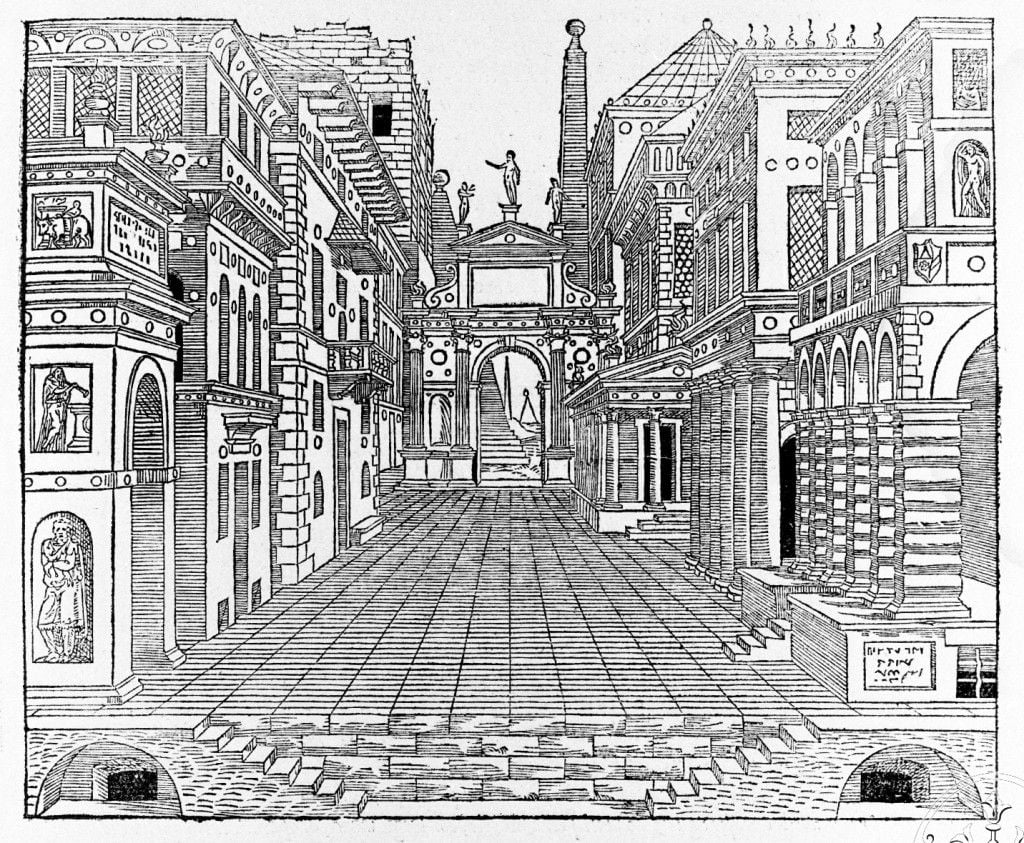
Perspective represents the coagulation of some fundamental tendencies of western culture: the suppression of localised ‘place’ in favour of infinite and homogenous ‘space’, the exaltation of individual self, the anxiety to quantify and measure distance and depth. It can be argued that there would be no modern capitalism without perspective, and vice-versa, as perspectival vision is a full-fledged way of understanding the world that influences the way men relate to each other and to nature. Perspective is not only a method to construct images, but rather a tool to produce the subjectivity of the secularised citizen: an individual torn between the uniqueness of his own position, and the homogeneity and infiniteness of space at large. The lecture will take Sebastiano Serlio’s Tragic Scene as a key example of perspectival culture – a culture that exalts the visual and theatrical understanding of space. We will make a detour through some examples of Renaissance art, Piero della Francesca in particular, to then focus on the work of Serlio, Bramante and Peruzzi, who, in the early XVI century, translated what was initially mere technique into a way of rethinking the urban as stage for collective life that would go on to have enormous impact on the work of architects and city-makers from Bernini to Haussmann and beyond.