The Interior as a subject: Section
The Interior as a subject: Section
26 October 2022
Time
10am
Location
33 Bedford Square, First Floor Front & Online
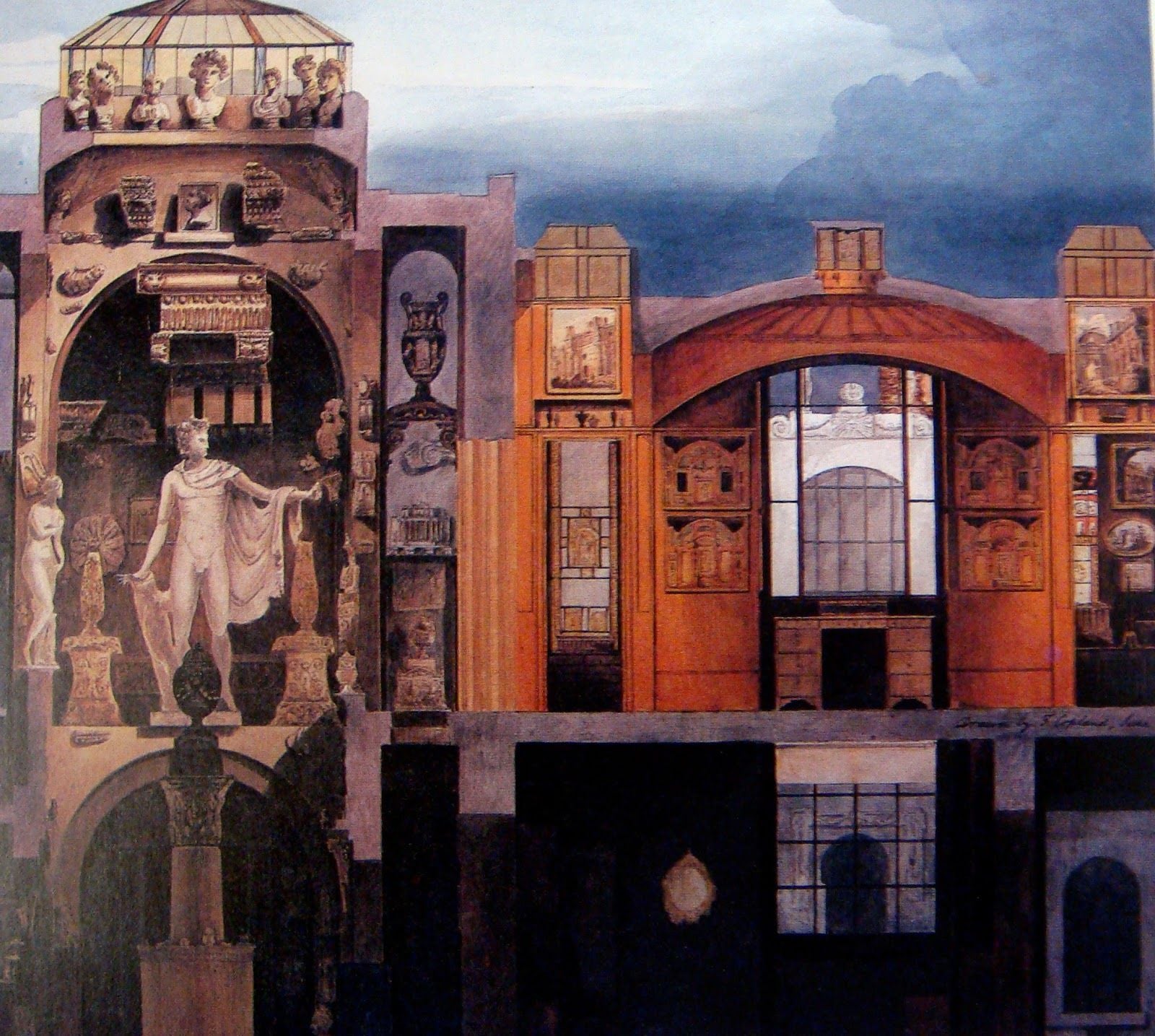
In the early 1800s, the office of John Soane produced some sections of the architects’ own house-office-wunderkammer. These watercolours represent a crucial moment of reflection for Western architecture: it is a moment in which thinking in section becomes more urgent than defining a façade, as the city becomes the product of seriality and repetition. And it is in the section, rather than in plan, that Soane seeks to criticize and undo the sameness of the London terrace, questioning its typological rationale as well as its tectonic logic. In doing so, Soane is admitting that in the budding industrial city the interior has become a primary concern: long a pragmatic question or, at best, an organizational one, in the 1800s the interior becomes the protagonist of architectural debate as the shell that contains, defines, and represents the ambitions of both inhabitants and architects. We will discuss Soane in the context of XVIII and XIX century British architecture, with a particular attention to Robert Adam, an architect whose work stands as key example of the emergence of the interior as intellectual and political category aimed at reframing the contraposition between the domestic and the harshness of the metropolis.
To join this event remotely, please sign up to get the link.