For a Critique of the Architectural Image 5 -The Territory as a subject: MAP
For a Critique of the Architectural Image 5 -The Territory as a subject: MAP
2 November 2022
Time
10am
Location
33 Bedford Square, First Floor Front & Online
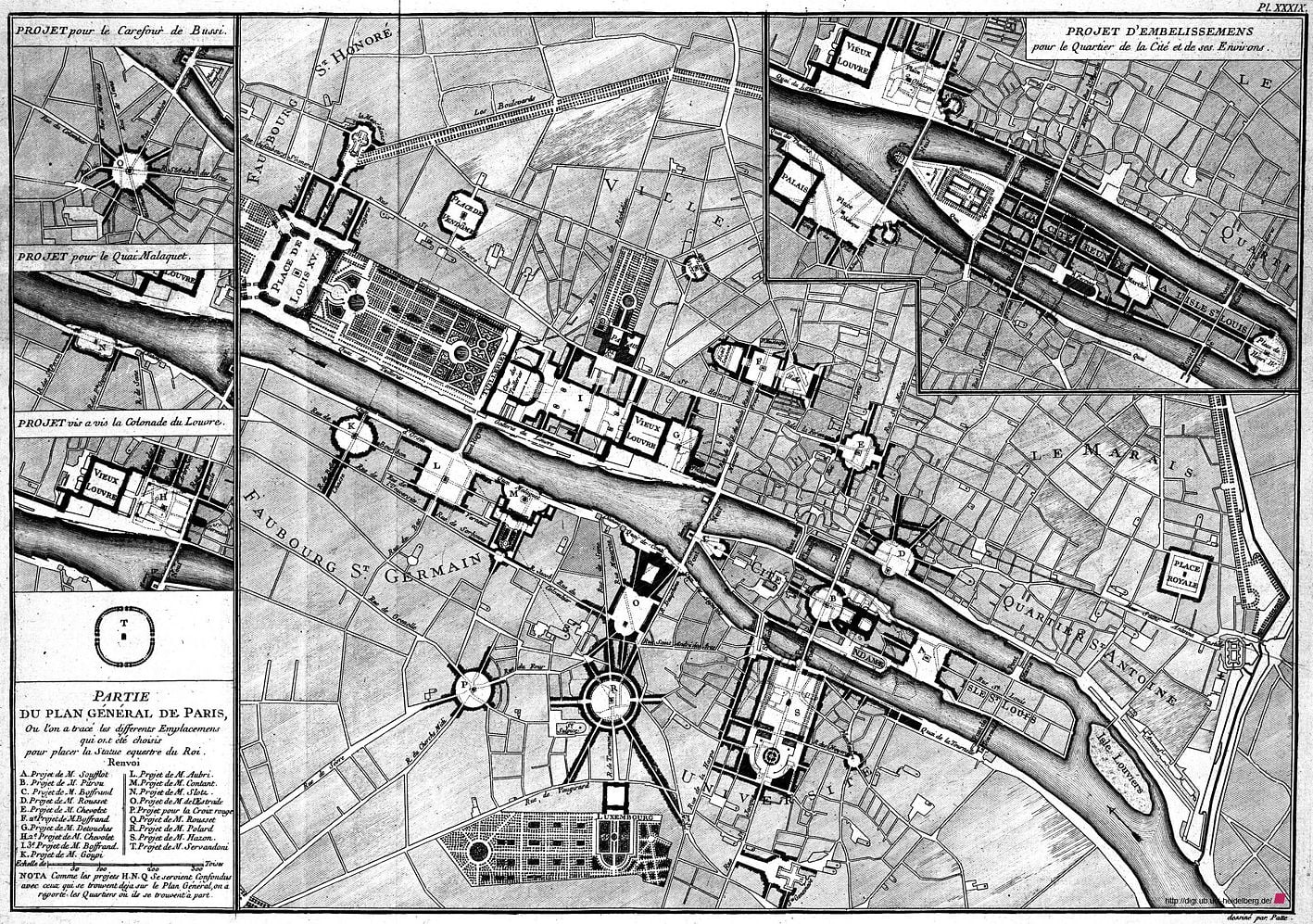
If drawing is a tool for the production of political subjectivity, then mapmaking is perhaps the most obvious and direct example of the way in which images are manipulated to construct, literally, a specific vision of the world. Analogical or pseudo-scientific, symbolic or pragmatic, the map reads the space of the existing as a project, as a ground for change. Drawing a map means to invent, define, and appropriate a territory. Without maps, there is land, and there are inhabitants, but there is no territorial project. The problem of the territory as a political category emerges with unprecedented violence in the 1500s with the colonial expansion of Europe, although it was by no means an unprecedented issue, as the case studies will try to prove. However, it is only in the 1800s that the city starts to be read – and mapped – as a territory rather than as an exception within a territory. The session will depart from Pierre Patte’s Partie du Plan Général de Paris to discuss case studies of urban and territorial representation from the Tabula Peutingeriana to Ildefons Cerda’s map of the Barcelona Eixample, Fra Mauro, Nolli, Tempesta, and Ligorio, as well as colonial mapmaking in the Americas and the development of the grid as instrument of geopolitical control.
To join this event remotely, please sign up to get the link.