The Ocean as a Space
The Ocean as a Space
30 May 2019
Time
6.30–8pm
It would be radical—but probably right—to say that the rising interest in nature among artists and art professionals has less to do with nature and a lot more to do with the institutional structure of the art world itself. The rise and development of museums, public collections, and all other participating institutions in this history has been dependent on an idea of social structure and citizenship that is now radically changing: one could even say that nature embodies the last institutional twist in the history of institutionalized art, as the emergence of Nature —not as a notion or a subject, but as a space and a ground—embodies not so much an institutional alterity to the museums and white (and non-white) cubes, but rather the very possibility of a rebirth outside the frame of history.
Both democracy and museums had a short-lived, minor revival at the very edge of their decay, before continuing on their descent. The transition from the twentieth to the twenty-first century was marked by the energy of discourses inhabiting art institutions, an energy of renewal that affected not only the big institutions, but also the role and importance of medium-sized and smaller ones. The question of the future of representation within the Western democratic system was answered by the proliferation of philosophers and different curatorial and artistic agents claiming access, ideas, and archives… The past gained a plurality and the question of history started to fragment into the problems of the postcolonial legacy. The archive was the first door; the document—still white—preceded the entrance of materials and artistic voices from different territories and histories… Restitution started to gain body and reality, in regards to the question of race in the art world. Still, the energies of renewal were possessed by enthusiasm, by an economic and social growth that unprecedentedly empowered art to see itself as capable of opening up the social to its past through new and different ideas of education, participation, social wealth and access. The art world believed in itself and many politicians in Europe supported this wave—at the beginning—as a way of activating the Union and creating a resonance between the old continent’s dreams and this new political organization, which on its surface seemed a genius development of all those historical loose ties among nations that were never friends, but permanently interdependent. It was only natural that the Union needed to spread a strong sense of culture, one that was critical and, at the same time, capable of capitalizing on the old flavor of history through a renewed “park” of art institutions. This also explains why the tsunami of critique of the old and the belief in its force were interwoven. But, more importantly, this also explains why the whole exercise of investigating the limits of the established art institutions and the possibilities of the new formats was a very controlled impulse, and one absolutely convinced that at the end of the rainbow was a pot of gold. The emerging interest in the press and the media about museums and the “stars” that created exhibitions enhanced an idea of access that was mostly sponsored by low-cost air companies. All of a sudden, cities were like the musicals that reemerged as a genre in new North American cinema. Thanks to Zara, Uniqlo, or Swatch, many old forgotten buildings in city centers started to sing and to smell. All glories of past centuries responded to the arrival of all these tourists as if they were new wings in old art institutions presenting both the identity of the past and the place under new form and new light and, of course, the new collections of clothes.
Chus Martínez is head of the Art Institute at the FHNW Academy of Arts and Design in Basel, Switzerland. She is also the expedition leader of The Current, a project initiated by TBA21–Academy (2018–2020). She currently leads a research project at the Art Institute, supported by Muzeum Susch, on the role of education enhancing women’s equality in the arts. Born in Spain, Chus Martínez has a background in philosophy and art history. She previously worked as chief curator at El Museo Del Barrio, New York. For dOCUMENTA(13) (2012) she was head of department, and a member of the Core Agent Group. She also curated the National Pavilion of Catalonia at the 56th Biennale di Venezia (2015) as well as the National Pavilion of Cyprus in 2005. Martínez lectures and writes regularly, including numerous catalogue texts and critical essays, and is a regular contributor to Artforum among other international journals.
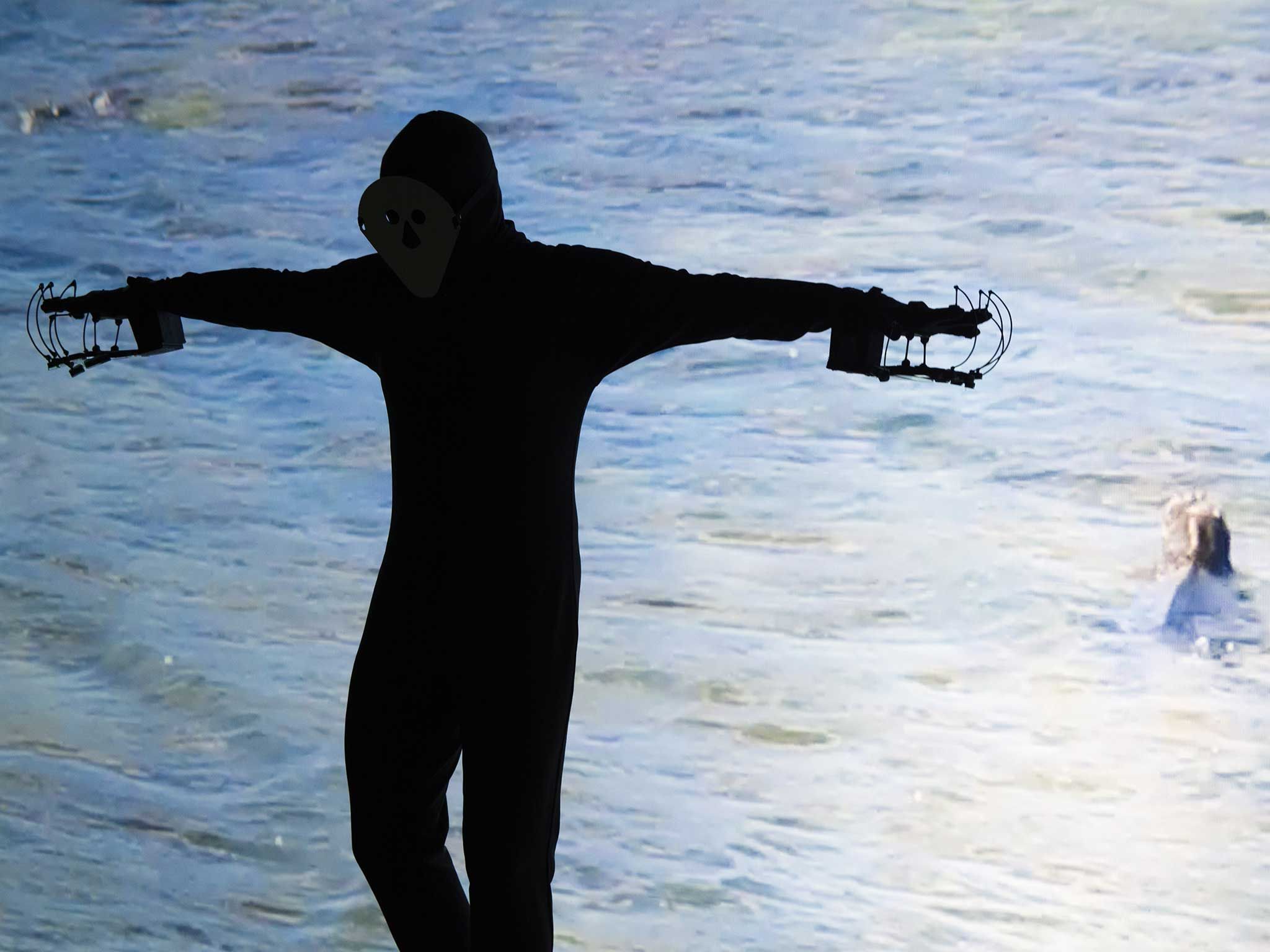
Photo: Documentation of Performance, Spiritual Gloves, 2017 by Eduardo Navarro on the event Fishing for Islands at TBA21, curated by Chus Martínez