For a Critique of the Architectural Image 5
For a Critique of the Architectural Image 5
16 November 2022
Time
10am
Location
33 First Floor Front
The Program as a subject: DIAGRAM
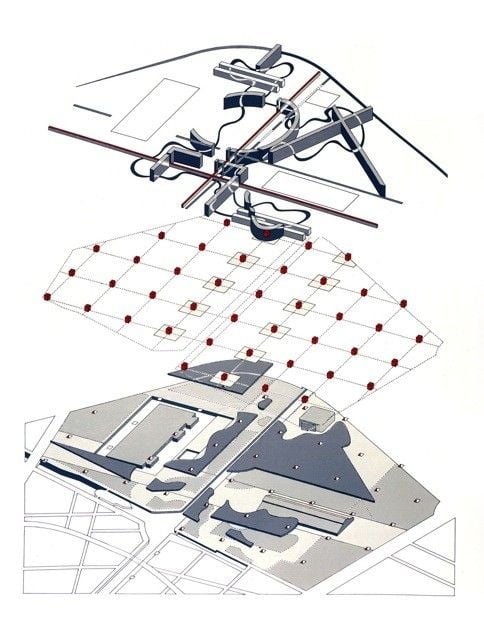
Most architects’ images are focused on rereading that which is visible or tweaking that which will be visible. However, as architecture took up an increasingly managerial role in the last centuries, representing the invisible, the fleeting, even the non-physical has become not only a need, but an actual obsession that has completely changed the way we conceive a project as environment or as event rather than as building. The use of diagrams is often associated to the necessity to render ‘function’, a category that architects only adopted in the 1700s as a loan from biology; retracing a genealogy of the architectural diagram will allow us to understand how and why architects come to be first and foremost choreographers of lives. Program had never been a key concern of architects until the industrial age; in a time when engineering seemed to have robbed architecture of its primacy over built space, architects discovered that their true vocation would ultimately be to script behaviours rather than spaces, and this ambition required graphic media that did not fit in the beaux-arts tradition. The session will explore scientific illustrations from the age of Enlightenment but will ultimately focus on the work of Bernard Tschumi and OMA, starting from their submissions for the La Villette competition.