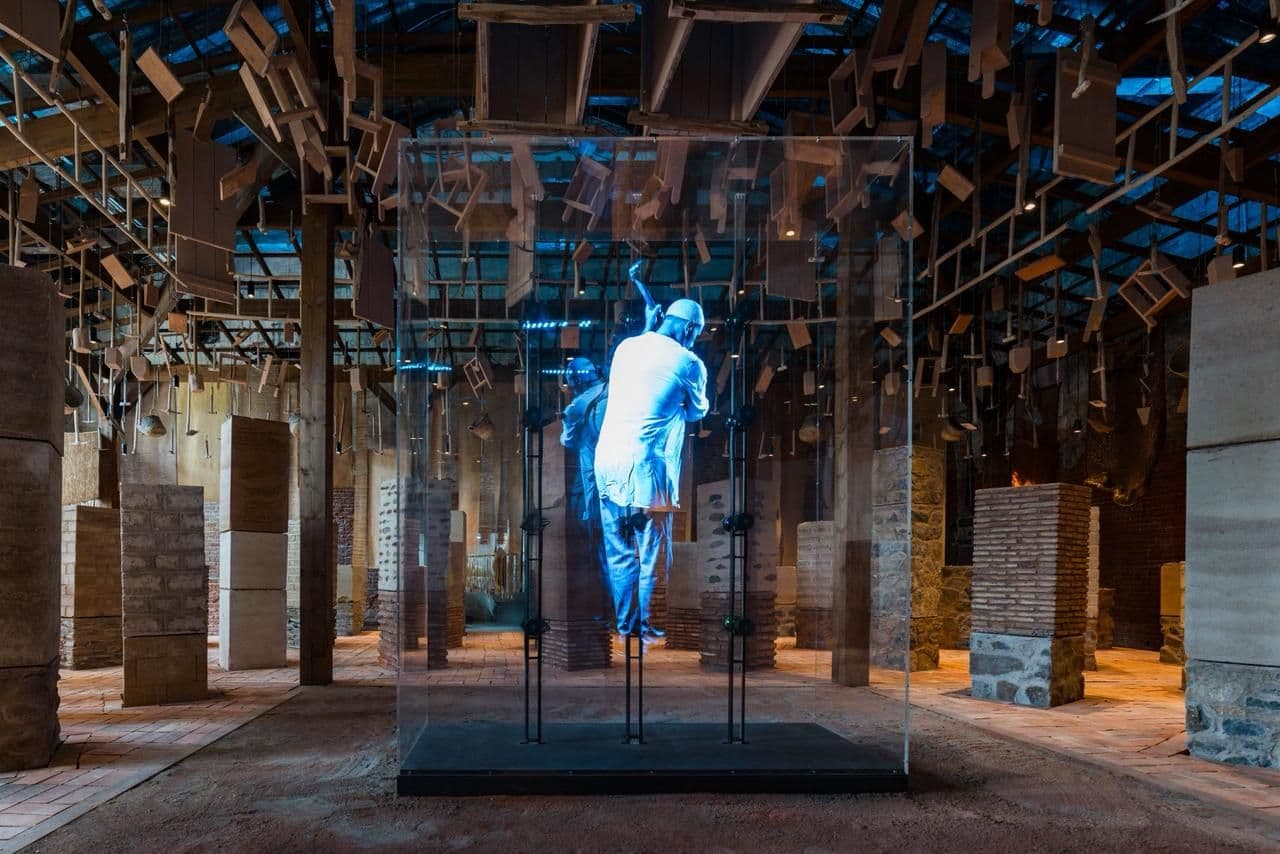
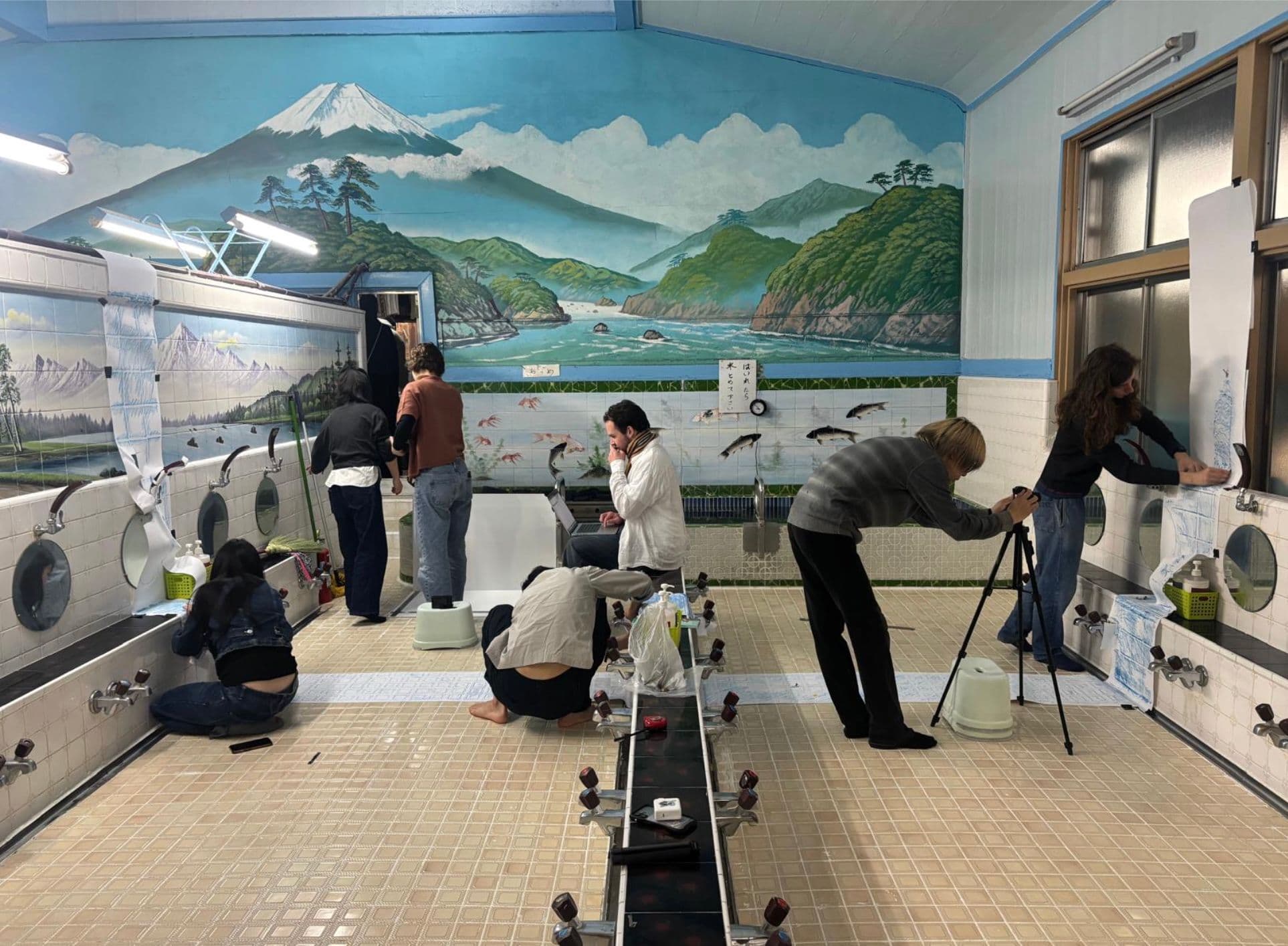
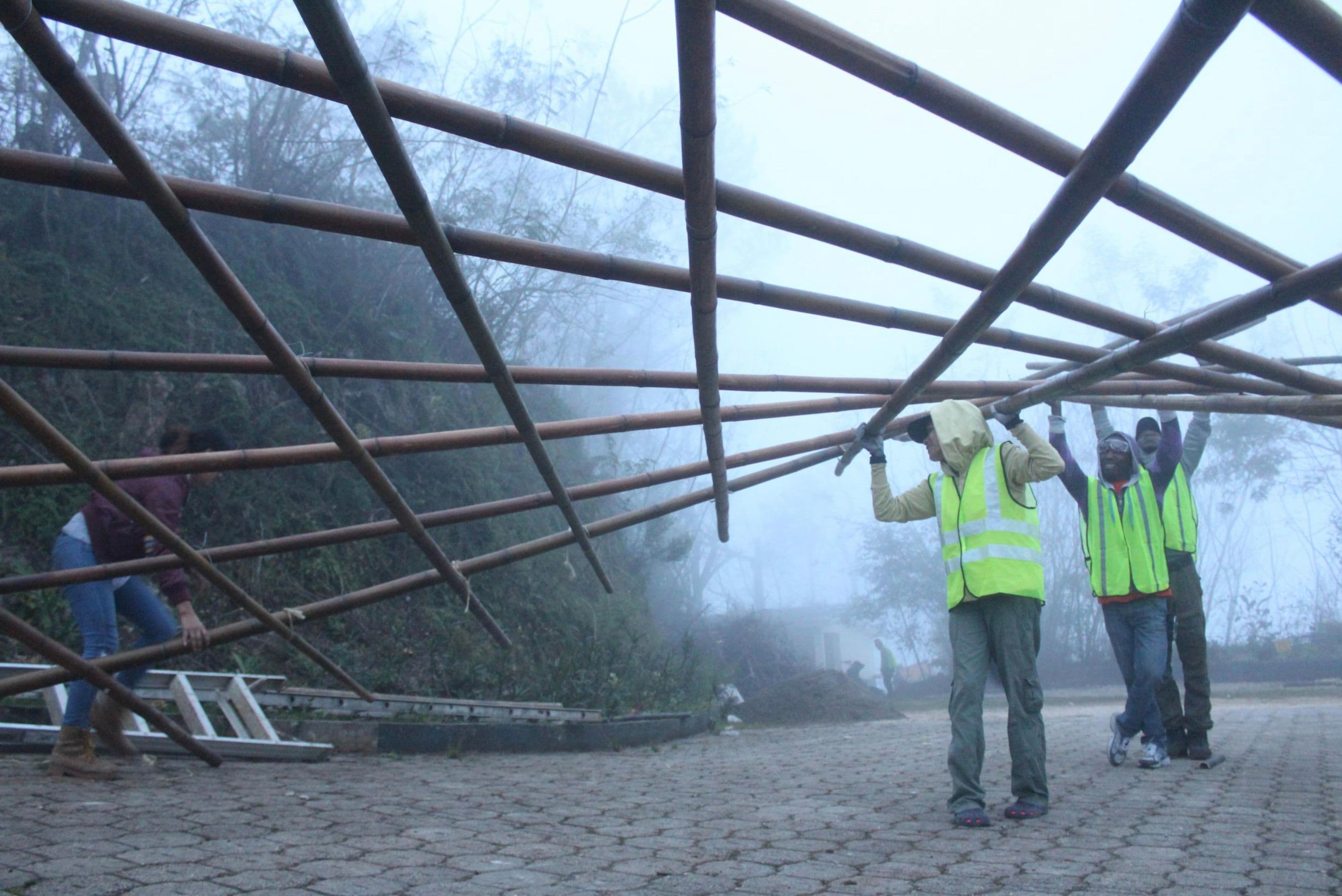
The Foundation Programme is a one-year full-time course that focuses on observation, conversation and the development of key skills. This course is aimed at students who are at the very start of their architectural studies, and facilitates individual and group project work.
The Intermediate Programme (BA(Hons)) is a three-year full-time programme. The First Year is characterised by its shared, open studio, where students work individually and together across a series of projects. Years two and three introduce students to the unit system, in which small design studios (12–14 students) operate a vertical structure of Second and Third Year students.
The Diploma Programme (MArch) is a two-year full-time programme that accepts students who have completed the Intermediate Programme at the AA, as well as eligible new students who have studied elsewhere. The programme leads to the AA Final Examination (ARB/RIBA Part 2) and is structured around a unit system, in which small design studios (12–14 students) operate a vertical structure of Fourth and Fifth Year students.
The AA offers ten Taught Postgraduate Programmes for students with prior academic and professional experience. Most of the programmes are full-time courses of advanced study, except for Conservation and Reuse, which provides a part-time study option.
Professional Practice is a RIBA Part 3 course and examination that allows successful candidates to register as architects with the Architects Registration Board (ARB). The course is open to AA RIBA Part 2 graduates and eligible non-graduates.
The Visiting School encompasses diverse learning programmes, workshops and site-based agendas shaped by participants working intensively in small groups over varying periods of time from one to two weeks. Central to each programme is the idea that experimental, new and provocative forms of architecture are best learned by doing.
The Visiting School encompasses diverse learning programmes, workshops and site-based agendas shaped by participants working intensively in small groups over varying periods of time from one to two weeks. Central to each programme is the idea that experimental, new and provocative forms of architecture are best learned by doing. These programmes take place all over the world, including Bedford Square in London and Hooke Park in Dorset. The Visiting School welcomes applicants in any moment of their studies and careers, from within and outside of the architectural realm. The AA Summer School Programme, also part of the Visiting School, is equally open and takes place for three weeks during the summer period.
DTA Students’ education and architectural practices post AA
Join one of our Visiting School short courses happening around the world.
Photo by Pliers by Renate BaumaneACCOMMODATION
The AA recognises that the prospect of finding private-sector housing* upon arrival to London can be daunting, and has therefore enlisted the services of the University of London Housing Services (ULHS). The ULHS offers advice to students regarding how to find accommodation, which areas to consider, pricing, contract checking, legal advice and more. They produce an annual Private Housing Guide and maintain an online database of available accommodation provided by registered landlords and letting agents for both groups and individuals. The ULHS also works with short-term accommodation providers and Private Student Halls of Residences.
Applicants can book an appointment for advice. You will need to provide ULHS with a copy of your unconditional offer letter from the AA.
*Please remember to check the council tax exemption criteria specific to each borough when taking out your accommodation. The AA can provide a letter confirming that you are a participant on the Summer School programme but cannot guarantee council tax exemption.
A limited number of places are available for this programme, we advice you to secure your place as soon as possible by completing the online application and making a full payment of the fees. Please note that a deposit payment holds your place onto the course but does not confirm it.
1. Standard Application:
2. AA Students and Melbourne University Students:
Note: Check the step-by step guide to navigate the AA Applicant's portal.
Applications deadline: Until capacity is reached.
The workshop is open to current students or professionals in the fields of architecture, film studies, design, curating, art history and related subjects in the humanities, phd candidates and young professionals.
ENTERING THE UK
If you are traveling to the UK from abroad, it is your responsibility to ensure that you hold the right documents to enter the UK.
All applicants are required to review the relevant sections on ‘Entering the UK’ via the UK Government website to check which documents are required to enter the UK and check if an application to a Standard Visitor visa or an Electronic Travel Authorisation (ETA) is needed. Your type of immigration document and how to apply depends on your nationality, the AA can provide a letter confirming your enrolment to the course to support your application once the course fees are settled.
Electronic Travel Authorisation (ETA)
Commencing 8 January 2025, the UK introduced ETAs for all visitors who do not currently need a visa for short stays of under six months, including Australian, Canadian, and US passport holders.
Starting in April 2025, all visitors to the UK who do not require a visa for short stays and do not already have a UK immigration status will need an Electronic Travel Authorisation (ETA). This includes nationals from many countries, including those in the European Union, Australian, Canadian, and US passport holders as well as Bahrain, Kuwait, Oman, Qatar, Saudi Arabia, and the United Arab Emirates, among others.
You can Check if you can apply for an ETA on the UK Government website. An ETA costs £10 and allows multiple entries into the UK for stays of up to six months at a time, valid for two years or until the holder’s passport expires—whichever is sooner.
Standard Visitor Visa
Please note that Standard Visitor Visas may take up to 3 months to be issued, all applicants who require a visa to enter the UK are encouraged to apply for a Standard Visitor visa at least 3 months in advance and no later than 1 month before the start of the programme or the date of the flight in which is intended to enter the UK, whichever is first. Student Visas are not required for study periods shorter than six months.
How to apply for a Standard Visitor Visa depends on your country of origin. You can check check if you need to apply for a visa in advance or if you can enter with and ETA and your passport upon arrival in the UK.
Applicants who need a visa to study in the UK are encouraged to carefully review the details and eligibility criteria for the Standard Visitor Visa, which are available on the UK Government website. The Visiting School Office will provide guidance throughout the process to ensure applicants are well-informed and prepared to submit their visa applications. Please also review the costs associated with obtaining a visa.
Once an applicant has been accepted into the programme and has paid the deposit or full fees (see ‘Fees’ section), the Visiting School Office will issue an invitation letter confirming enrolment. This letter can also be used as a supporting document when entering the UK.
All applicants are responsible for securing their own travel and health insurance and should ensure that their policy provides coverage for personal belongings such as laptops, equipment, tools, passports, etc. The AA takes no responsibility for lost or stolen property.
Note for EU, EEA, and Swiss Citizens:
The UK left the European Union on 31 January 2020. Applicants should complete the Brexit checker and review the guidance notes on healthcare for visitors to the UK from the EU.
Applicants who are in the UK for less than six months will require a European Health Insurance Card (EHIC), which can be obtained from their home country. This card is not an alternative to travel insurance and will not cover any private medical healthcare costs or lost or stolen property. It is therefore important to have both an EHIC and a valid private travel insurance policy.
Note for international students:
As you will be in the UK for less than six months, you are not covered for National Health Service (NHS) services and treatment, and must therefore obtain travel and health insurance from your own country.
BIOGRAPHIES
Inigo Minns is an architect and lecturer working with narrative, world building and film making. In addition to his traditional architecture and design practice he has worked in CGI and postproduction on large budget films for Disney and most recently Ridley Scott’s Napoleon. Inigo has extensive experience teaching design for world building and speculation in the UK and abroad.
Sebastian Tiew is an architectural designer and visual artist based in London. He co-founded Cream Projects, a hybrid practice exploring game engine tools both as means for creative production in the film, music and fashion industries, as well as subjects of contemporary critique, through moving image artworks and teaching across schools of art and architecture.