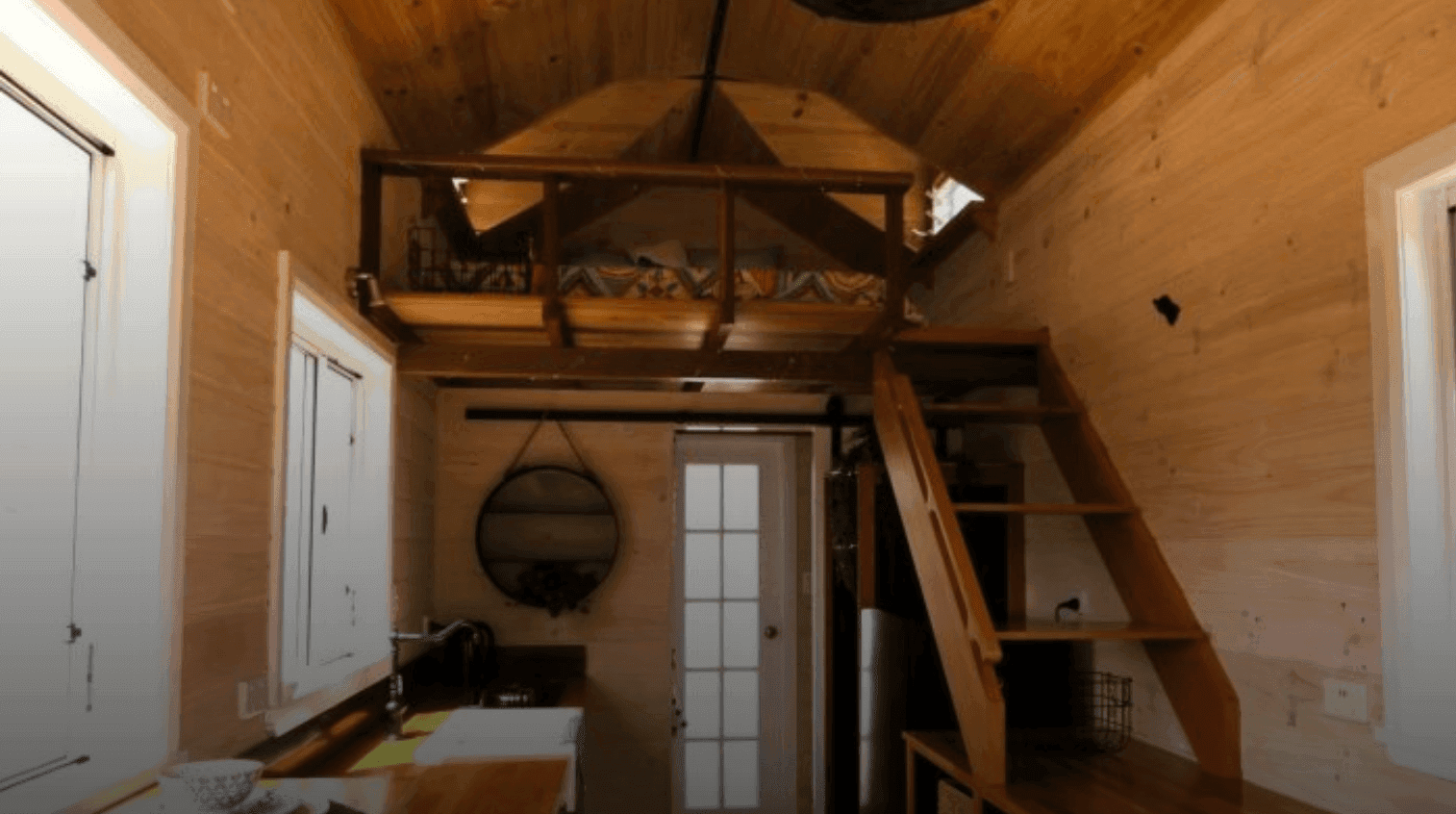
Self commented on the popularity of 'Tiny Homes' and their positive environmental reputation pointing out that:
‘They’ve become increasingly popular… The way that they’re pitched is that they’re meant to be cheaper to buy and run… presenting a carefree lifestyle, mobility, getting outdoors. There’s an ethical dimension, about self-reliance, going off the grid, taking responsibility for our environmental footprint, but none of that is true unfortunately.’
However, despite the apparent environmental credentials of the project, Self was keen highlight the realities:
‘Tiny homes are mostly made out of metal or arsenic treated wood, the materials are often synthetic and they’re made in such a way that they cannot easily be repaired over time… you can build a home which is cheaper out of natural materials, and one that has a lower environmental impact… if you’re prepared to investigate natural materials: straw bales and adobe.’
Indeed, despite appearing to be a solution to excessive consumption, Self sees mass produced tiny homes as a marked failure to leave behind a mindset of private ownership that will be made impossible by the climate crisis:
‘The realities of climate change are that we will go through incredible environmental changes in the next decade, we need to think about deep adaptation to how our societies operate, how they think about housing… We might consider multi-family or collective ownership of land, where you might build four or five small homes that might have collective amenities that can be shared between those people… you can have a much higher standard of living than if you insist on going down the tiny homes route’
This idea of ‘deep adaptation’ directly addresses the work of Diploma 6, which seeks ‘to understand how the social figure of the architect might react to the climate crisis and how deep adaptation will impact domestic space and contemporary forms of life.’
Listen to the whole interview