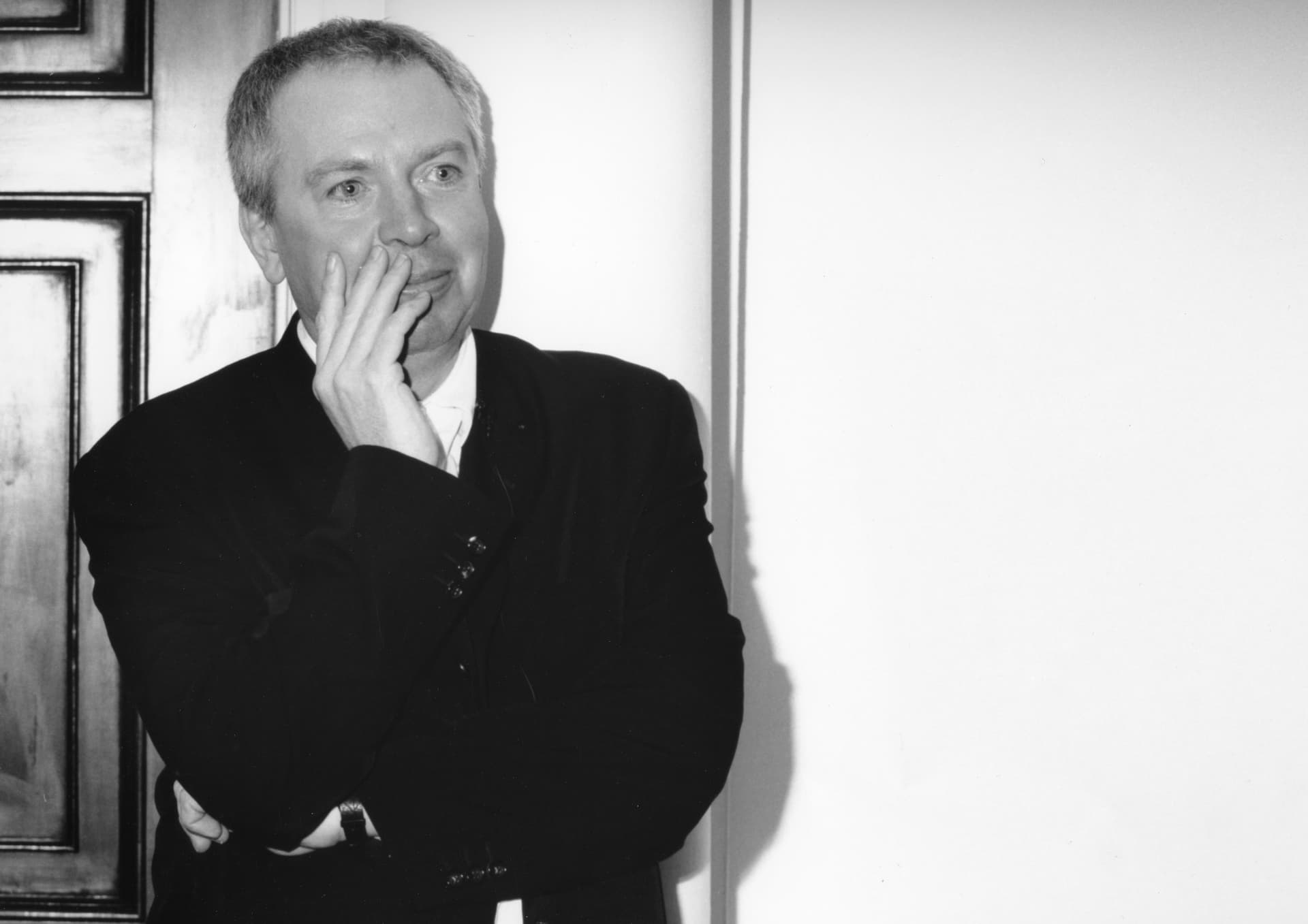
It is with great sadness that the AA has learnt of the passing of architect and former alumnus Edward Burd. Edward studied architecture at the Architecture Association between 1957-1964, one of a generation of socially minded progressive architects who went on to live and practice in Camden. Taught by, among others, Reyner Banham and John Summerson, Edward combined a sophisticated understanding of historic buildings and sense of proportion with an appreciation of how things go together and how spaces are lived in and used. He put people at the heart of his work, and his belief in local community participation to effect positive change was reflected in all aspects of his life and practice.
In 1965 he and his wife Mary bought a run down house in Albert Street and together they restored and transformed it into their family home, where he spent the rest of his life. When other houses in Albert Street were threatened with demolition as part of a road building plan in the early 1970s, Edward and neighbours teamed up to campaign to save them, forming the Albert Street Association and organising the first of many Albert Street Carnivals.
After periods working at Architects' Co-Partnership and Associated Architects and Consultants, Edward worked for four years from 1966-1970 at Central Electricity Generating Board (CEGB) on the design of new power stations with Jim Hodges. He joined Hunt Thompson Associates as a partner in 1970, working mainly on the design of new social housing projects and pioneering techniques for community architecture and place making, until his retirement from the practice in 2002. Of all his projects, the one of which he was perhaps most proud was the redevelopment of the Mother’s Hospital site in Lower Clapton as the new Mother’s Square for Newlon Housing Association. Opened in 1990, it is an estate of social rented, supported and shared ownership homes, and was described by Lord Justice Scarman as 'a little piece of heaven on earth’.
Edward died peacefully at his home in Camden Town and is remembered dearly by his wife Mary and his daughter Catherine.