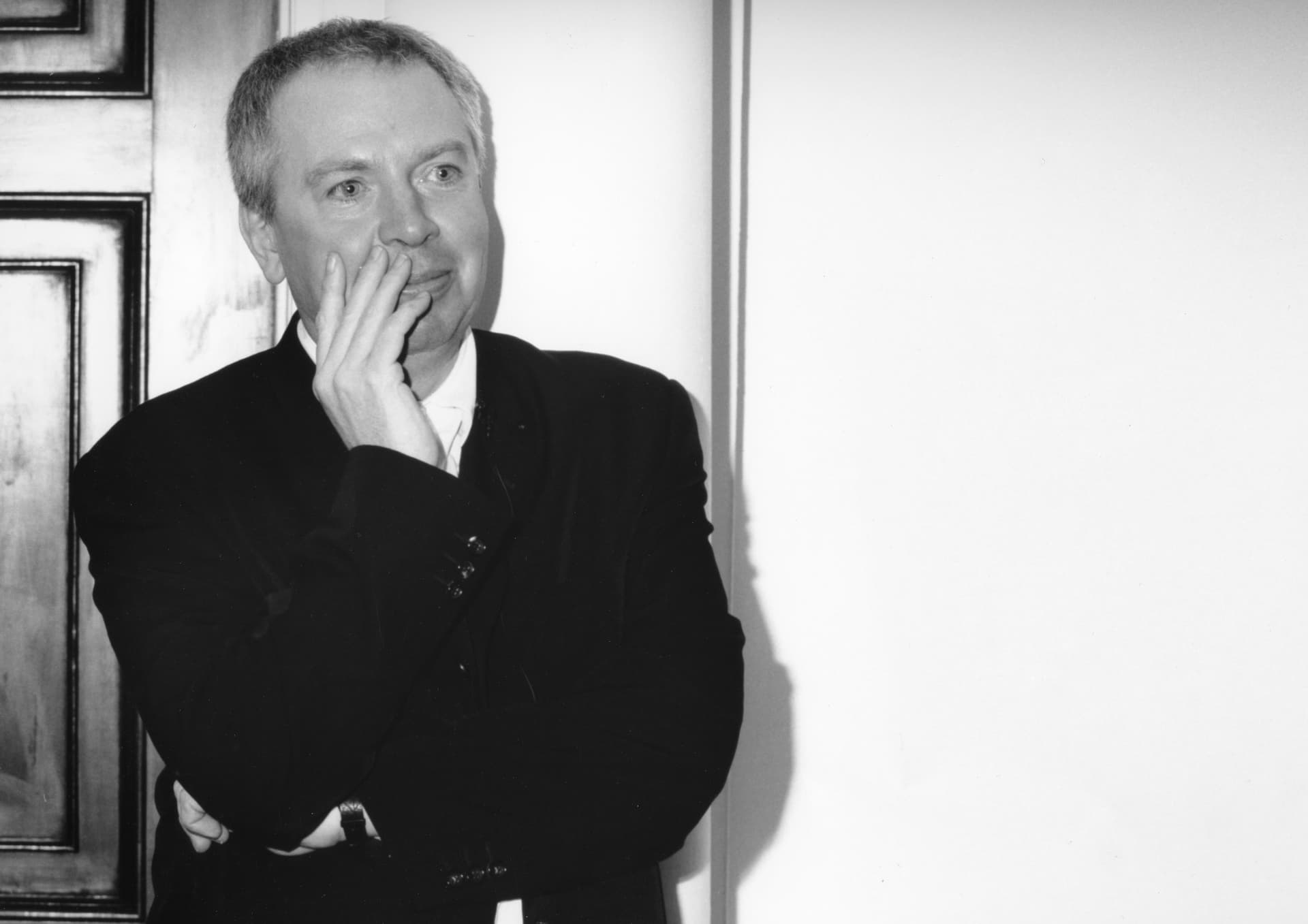
It is with great sadness the AA learns of Peter Keith Collymore's (AADipl 1955) passing on 25 March 2019. This obituary has been written by Bob Allies, May 2019 -
In 1962 Peter Collymore, who has died at the age of 89, formed an association with three other sole practitioners: John Winter, Michael Brawne and Charlotte Baden-Powell.
Conceived with the specific aim of allowing them - whenever the opportunity arose - to collaborate on larger projects, it failed to bear fruit in this way. It did however provide a basis for sharing space, staff (I was not unusual in working for all of them at some point), equipment, refreshments and jokes, in a relationship that was to last throughout their professional careers, and that would also survive two physical transplantations: one from Charlotte Street, in Fitzrovia, to Earlham Street in Covent Garden (then largely empty and abandoned), and a second to a converted ice-cream factory in Gospel Oak, still home to architects today.
Over the years, at different times, further architects congregated around them, including Adrian Gale, Patrick Hodgkinson, Peter Wadley, Michael Glickman, Edward Samuel and Dean la Tourelle, as well as Chris Cross and Adrian Sansom (with whom the Earlham Street studio was shared) and one non-architect, Victoria Thornton, then just starting out on the venture which was ultimately to evolve into Open House (now Open City).
What seems striking now is the way in which all this group of architects sustained delicately poised - and no doubt sometimes alarmingly precarious - careers, carefully balanced between practice, teaching and writing, an inspirational model for the itinerant group of young architects, like me, who worked for and around them. The friendly and informal atmosphere that the studio engendered was also one which entirely suited Peter’s character. Always interested, always supportive, and with an irrepressible cheerfulness, Peter was at once the ideal colleague and perfect employer.
Peter Collymore was the son of a Lancing College schoolmaster and having grown up in Sussex he also chose to return there when he retired from practice. But he went away to school - to Marlborough College - where his talent for, and pleasure in, art (and cricket) were nurtured, and where he first met Neave Brown, who was to become a life-long friend.
From Marlborough he went first to Clare College Cambridge, and then to the Architectural Association, graduating in 1955 in a cohort that also included Patrick Hodgkinson, David Gray, John Miller and Ken Frampton. From the AA, Collymore - like so many of his contemporaries - went to the States in search of modernism, spending a year with Skidmore, Owings and Merrill, before returning to England and taking up a post with Robert Matthew Johnson-Marshall and Partners as part of the team working on (the still remarkable) New Zealand House, in London’s Haymarket.
Writing in the early 1980s about the association with Winter, Brawne and Baden-Powell, Collymore observed that they did not “specialise in any particular field of architecture, but tackle(d) all kinds of work, for a wide variety of clients from local authorities to private individuals”. It’s true, their work was diverse, both in terms of building type and physical location, but in Collymore’s case it was dominated by the private house, of which he built more than fifteen (including one for himself in Highbury Terrace Mews) and adapted many more. His particular interest in working with existing buildings was evidenced in the book he wrote for the Architectural Press in 1975 on ‘House Conversion and Renewal’.
But Collymore’s most important commission came when he was asked by Benjamin Britten and Peter Pears to oversee a series of adjustments and extensions to the new home that they had recently acquired (1957) on the edge of Aldeburgh, the Red House. Among Collymore’s output at the Red House was a sturdy little brick cottage designed for the artist Mary Potter, but the most significant of his projects was the library and rehearsal room that he created for Britten and Pears. Now carefully maintained and looked after by the Britten-Pears Foundation, it is open to visitors.
Collymore placed the new library on the site of an old barn, retaining part of the original walls as well as re-using the surviving pier footings as bases for his new timber columns, with their four outspreading arms. At once intimate and generous, the new space provided Britten and Pears with exactly the atmosphere they required.Collymore wrote about architecture throughout his career, guest editing four editions of the Architectural Review, and in 1982 he published a monograph on the work of Ralph Erskine, the product of a lengthy – and undoubtedly enjoyable – series of conversations between the two men.
Collymore’s appreciation of the work of others extended particularly into the field of painting, and before he died he gifted his collection – including works by Eileen Agar, Prunella Clough, Anthony Hill, Paul Huxley, Paul Nash and William Scott - to Pallant House Gallery in Chichester. A selection of the work was exhibited in the gallery under the title ‘An Architect’s Eye: the gift of Peter Collymore’ at the end of 2017.
Peter is survived by his sister Gill, who was for many years the editorial administrator of the Architectural Press