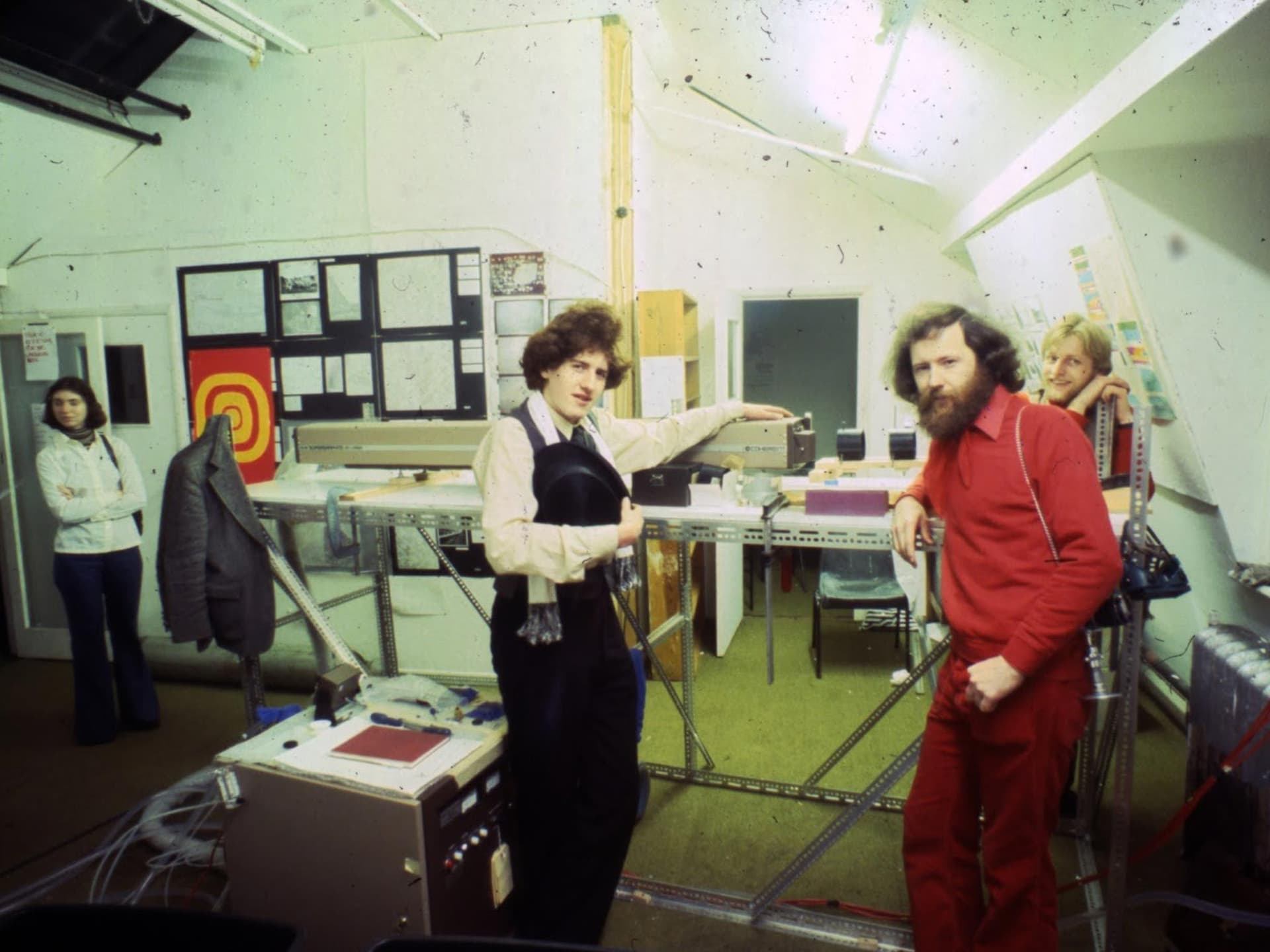
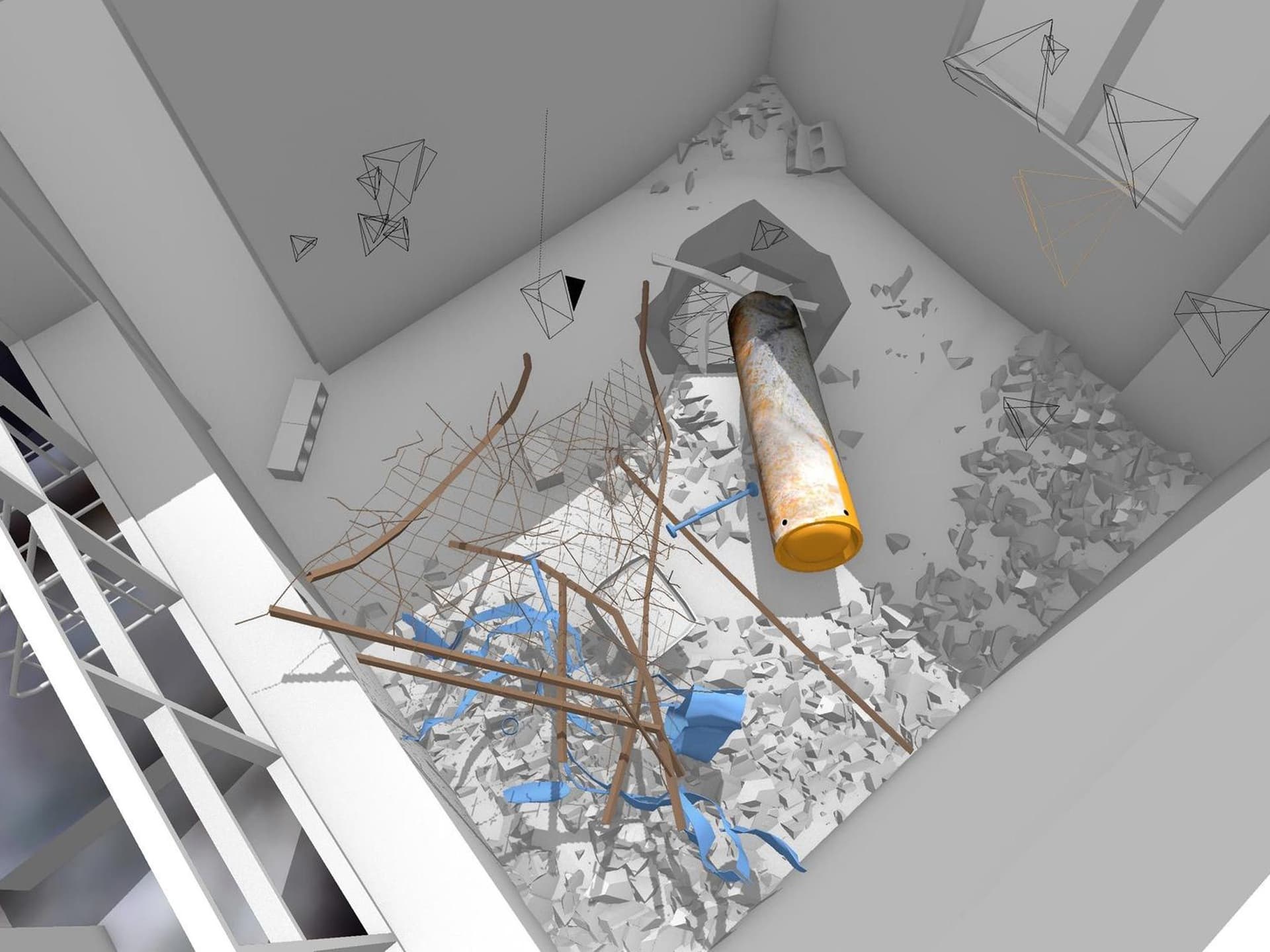
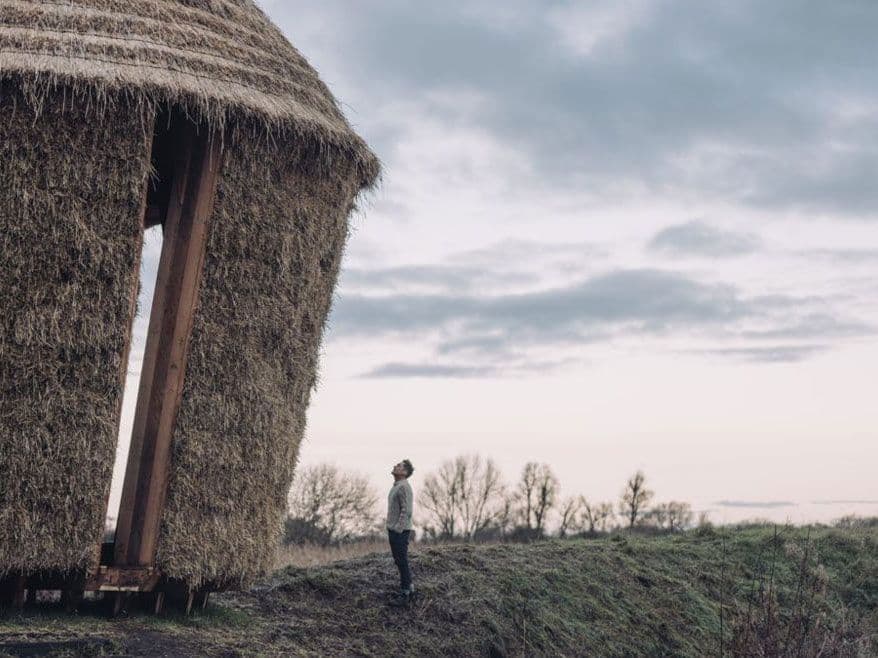
The AA extends its deepest condolences to alumna and former tutor Gordana Korolija Fontana-Giusti on the passing of her husband, AA alumnus Ranieri Fontana-Giusti. Ranieri graduated from Peter Salter’s Unit at the AA in 1993 and worked in Rome for Massimiliano Fuksas and for Fletcher Priest Architects in London, before joining KPF in the late 1990’s. Over the last 20 years he played a key role in developing KPF’s practice throughout Europe, with recent projects in Paris and Milan.
The following tribute was given by Jamie von Klemperer, President of Kohn Pedersen Fox Associates, at Ranieri’s funeral in March 2019.
I speak for the many colleagues at KPF who knew Ranieri the Architect, both as a designer and as a builder. He worked alongside of us for over 12 years.
We all knew there was something special about this man, something extraordinary. But what was it that allowed him to lift our spirits, not just in light-hearted moments, or on dull days of London rain, but even in the darkest of times?
First, I think of Ranieri’s innate generosity, his kindness in teaching the younger architects who sat at their desks surrounding his workspace in our Covent Garden studio. They owed much of their happiness in the profession to his consistent care in tutoring, and his ability to encourage. When his health began to fail, one of his first acts was to enthusiastically coach a younger colleague to take on his responsibilities. He spoke about the happiness he found in her success, never about his own misfortune. In this age of aggressive self-promotion, he instinctively put others first.
Second, I remember Ranieri’s love of beauty - his appreciation for the details of our physical world: how the sun streams through the panes of a skylight, how angular shapes play off of each other in perspective. The exquisite hand drawings of his student days manifested this. The physical connections and geometries of buildings were especially important to him.
In our London office, Ranieri had established a small colony dedicated to French projects. As our Franco Italian representative, he made us feel at home on the Continent. His major works included a tower in Milan, a courtyard office building for the French Ministry of Justice, and the recently completed “Window”, a ground-scraper headquarters for the French national electrical authority situated next to the Grande Arche of La Défense.
Ranieri pursued his aesthetic sense not only in his professional work, but also in his art. Through his photographs and paintings he searched for patterns and colours in nature, seeing the profound in the everyday - in the movement of water, the branches of trees, and the configuration of clouds. His Instagram posts traced an aesthetic voyage, as they also chronicled the path of his illness.
Like many, I valued and admired Ranieri’s great gifts of loyalty. He stayed true to a clear purpose. He often expressed his love of his parents, his brothers, and the heritage of his Italian and French cultural backgrounds. His own nuclear family was the true centre of his life. When he spoke of Gordana and Sofia, a certain glint of light came into his eyes. He was so admiring of their accomplishments in Architectural Theory and in Pharmacology and took great pride when describing their successes. It was clear that he considered himself a very fortunate man.
And I remember his strength: In Ranieri’s work as an architect he was not afraid to fight for what he believed to be right. He liked the sometimes contentious “sport” of building. He enjoyed the world of gritty sites, mud caked construction boots, and the builders’ colourful profanities. I recall him remarking with great admiration how one of our client representatives had learned to swear effectively in three languages.
Ranieri brought this soldier-like strength and courage to his fight with cancer. Though only his family can understand the true bravery of this epic battle, his friends who observed this period of his life were also in awe of his fortitude and uncomplaining optimism, which he exhibited even in the most dire of situations. Those who witnessed his unfailing resolve, displayed over a period of two and a half years, were left with a profound sense of admiration and gratitude. Ranieri taught us all about the value of life, and the dignity with which we can hope to face its end.
Finally, I’d like to say something about his grace and elegance. He lived in an era when most people don’t seem to understand the meaning of that concept. In his noble attitude and general bearing, he reminded me of the phrase of Milan Kundera, The Unbearable Lightness of Being. Ranieri was not bound by the limitations of the mundane. He seemed to search for something bigger, to rise above the commonplace.
In the time that I knew Ranieri, I sensed in him a quest for a lofty place. On sites in London, Milan, Paris, and Lyon, Ranieri devoted his efforts to the realization of tall buildings. The architectural project of which he was the most proud, the Tour First in La Défense, is the tallest structure on the skyline of Paris. He revelled in the triangular complexities of its plan, and marvelled at the laciness of its diaphanous pinnacle.
Similarly, in his art Ranieri expressed a special fascination with height. In small square compositions of textured colours, he clearly separated the ground from the sky. He painted strong horizon lines, sometimes brooding, sometimes calm. One got the sense that he was exploring something profound about our place on this earth.
One year ago, I took a long walk with Ranieri on Primrose Hill, the favourite place from which he could broadly survey the metropolis of London. He had good energy that day, and seemed optimistic about his condition. At the peak of the hill, we paused to survey the panoramic landscape. On that sunny early spring afternoon, looking south over parklands and rooftops to the glinting spires in the distance, his spirit seemed to soar like a bird.
And that is how I will remember him.