Matthew Lloyd Roberts: Congratulations Russell on winning Diploma Honours. How has your practice developed over the course of your Diploma studies?
Russell Royer: In both fourth and fifth year I was in Diploma 12, so in fourth year working with Inigo Minns and Manijeh Verghese, and then this year working with Inigo, Daisy Ginsberg and Ivan Morison. My fourth year project involved developing a practice through world building, looking at ways of documenting performance. That included everything from theatre, to street performance, looking at ways that cultural performances might be archived, who might be able to copy them, remix them etc. That led to me looking at cultural and intangible heritage, and museology. This meant that my Diploma work formed a kind of two-year project, investigating current archiving and museological practices, and looking at how we can make changes to work in favour of the communities who own those cultural traditions.
MLR: So how does your project, ‘The Choreum’, respond to that research?
RR: The Choreum looks at the progression of museums, from the original museum, the Mouseion, to the Museum as it was established in 17th century Britain with the Ashmolean Museum, which was seen as the first museum because suddenly wunderkammer, private collections were made “public” for the first time. The Choreum is a continuation of that evolution, no longer a Museum but an open and self-reflective practice, rejecting the destructive display of ethnographic artefacts and the ownership of foreign objects. That formed the start of the research - working within - understanding how we can get indigenous voices embedded in the museum, going beyond conversations of decolonisation and repatriation, to doing the physical and difficult work of confronting the destructive history of the museum and being brave enough to have these conversations with indigenous communities. After that it began to be about rejecting the institution in its entirety or working without.
MLR: So what is the end goal of the project? How do you want to change these practices?
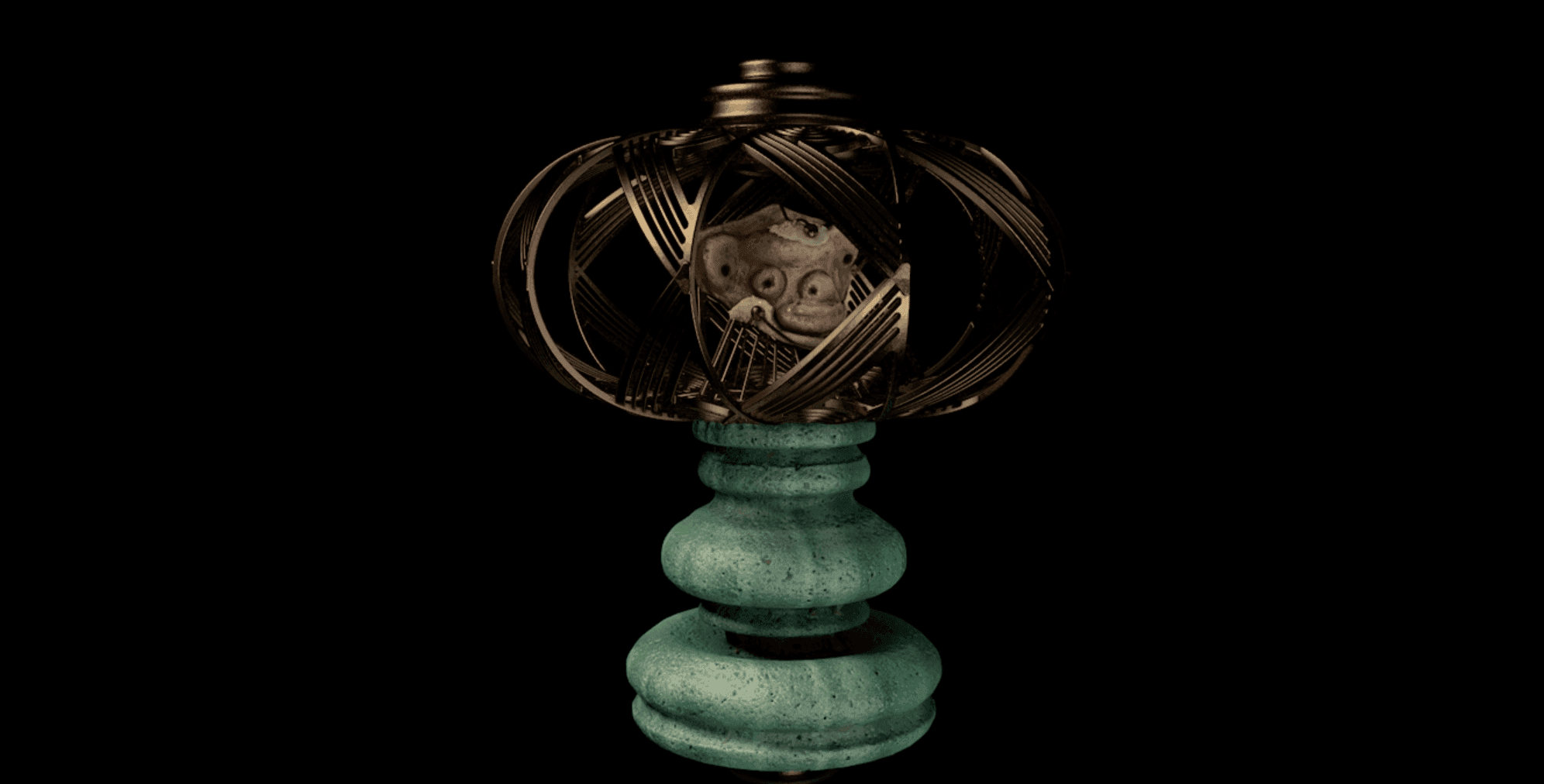
RR: The intent behind the project is to achieve a cultural renaissance. I think that there are an awful lot of items and artefacts that are locked in museums, that could bring about a cultural renaissance for many communities. Even with the small bits of work that I’ve done this year, they have an aesthetic which is so strange, that comes purely from these objects, which haven’t been available to be manipulated physically or digitally. The future of this project is about looking for ways to reframe these artefacts to bring about new vernacular architecture and design.
MLR: Have you been working alongside the communities that these artefacts came from?
RR: During the course of the project, Inigo introduced us to an amazing professor called Dean Sully from UCL’s archaeology department. He introduced me to Hinemihi, the Maōri meeting house, that I looked at in the project. Sully was directly engaging with the source community, descendants of the source community, but also with the National Trust, grappling with what it means to have different stakeholders from contemporary communities and schools, through the generations to the source community centuries ago, and I began to understand those complex and sensitive dynamics. In October I’m planning to go to Grenada, which is where my grandfather is from. I’ve been working with Grenadian artefacts which I purchased on Ebay, who are still allowing artefacts to be sold on their marketplace, and their report system is awful. You can buy ethnographic artefacts from various communities online as easily as you can buy a T-shirt or a battery. So I will be doing my own repatriation of those objects, utilising the principles of The Choreum, of adaptive reuse, finding ways for these artefacts to re-infiltrate communities. In doing that I’ve recognised the difficulty of connecting present day communities with those indigenous communities, because there is a distance in terms of time, but also in terms of what’s being culturally produced and what people recognise and identify with.
MLR: What would you like to see institutions doing to decolonise their practice?
RR: The museum will eventually be outmoded, the current practice of holding ethnographic artefacts will become a thing of the past. This isn’t about giving museums a model for performance within the museum space, in front of the spectators. As we pursue decolonisation in these institutions, there shouldn’t always be an outcome of displaying things for museum visitors, where everything is for your entertainment. Actually, some ethnographic artefacts should remain precious, they should remain a part of a process purely between the museum and source communities, there doesn’t need to be documentation. I think that many things in the past were buried for a reason and can remain so. We don’t need to dig up everything, we don’t need to dig things up to understand our past, where we came from, to situate ourselves. What we already have is enough to rebuild, and to make new things.
Follow the Choreum on Instagram