The Foundation Programme is a one-year full-time course that focuses on observation, conversation and the development of key skills. This course is aimed at students who are at the very start of their architectural studies, and facilitates individual and group project work.
The Intermediate Programme (BA(Hons)) is a three-year full-time programme. The First Year is characterised by its shared, open studio, where students work individually and together across a series of projects. Years two and three introduce students to the unit system, in which small design studios (12–14 students) operate a vertical structure of Second and Third Year students.
The Diploma Programme (MArch) is a two-year full-time programme that accepts students who have completed the Intermediate Programme at the AA, as well as eligible new students who have studied elsewhere. The programme leads to the AA Final Examination (ARB/RIBA Part 2) and is structured around a unit system, in which small design studios (12–14 students) operate a vertical structure of Fourth and Fifth Year students.
The AA offers ten Taught Postgraduate Programmes for students with prior academic and professional experience. Most of the programmes are full-time courses of advanced study, except for Conservation and Reuse, which provides a part-time study option.
Professional Practice is a RIBA Part 3 course and examination that allows successful candidates to register as architects with the Architects Registration Board (ARB). The course is open to AA RIBA Part 2 graduates and eligible non-graduates.
The Visiting School encompasses diverse learning programmes, workshops and site-based agendas shaped by participants working intensively in small groups over varying periods of time from one to two weeks. Central to each programme is the idea that experimental, new and provocative forms of architecture are best learned by doing.
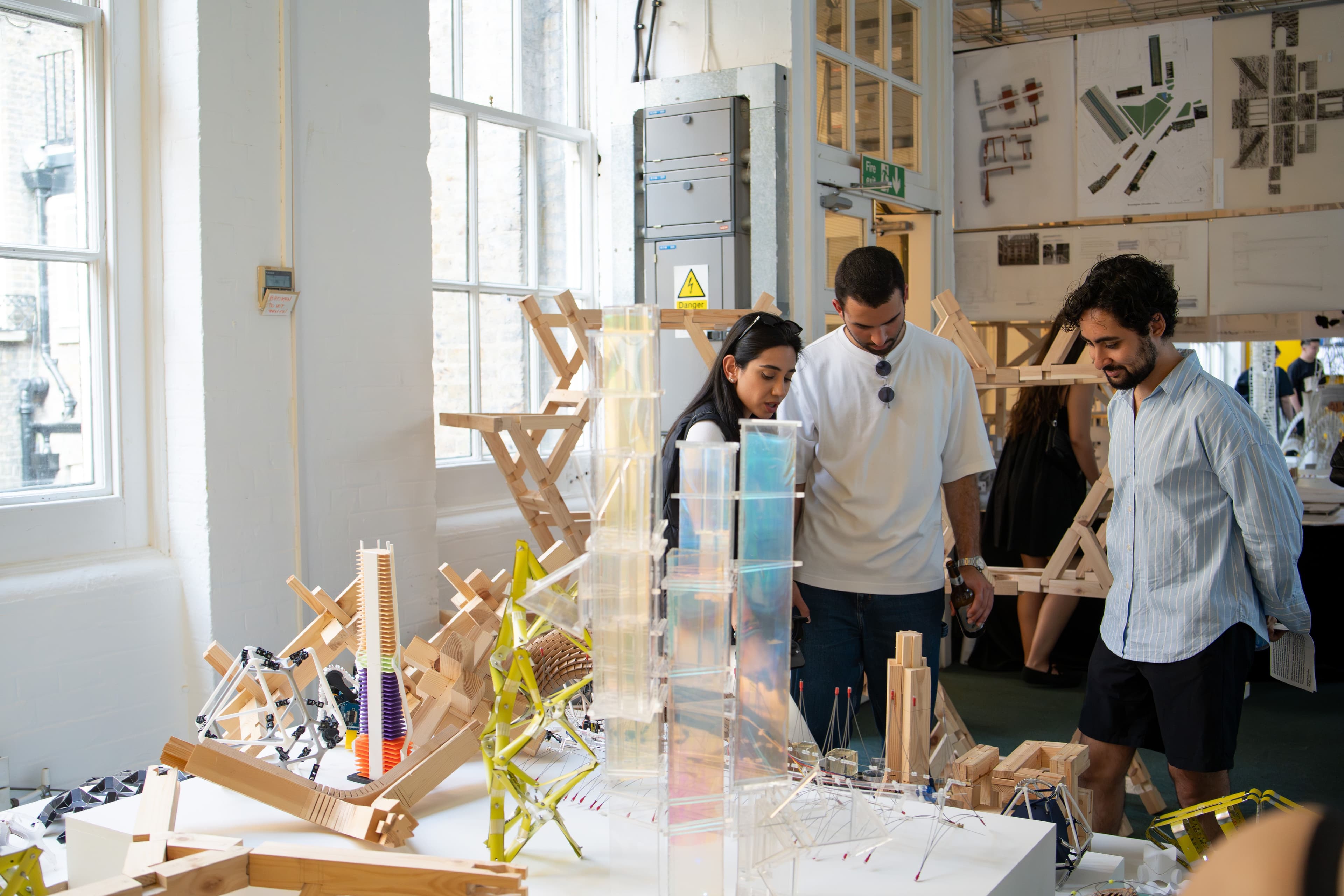
The Intermediate Programme (BA(Hons)) is a three-year full-time programme. The First Year is characterised by its shared, open studio, where students work individually and together across a series of projects. This part of the Intermediate Programme is defined by a learning-through-making approach, providing students with the tools and methods that help to foster an exploratory and intellectual interest in architecture. Years two and three introduce students to the unit system, in which small design studios (12–14 students) operate a vertical structure of Second and Third Year students. Innovative approaches to the study of form, typology, programme, site, material, craft and fabrication sit side-by-side with the study of critical architectural theory, environmental and technical considerations, speculative studies and different modes of architectural practice.
Toggle the below table to see course structure by year. Add more here.
| Title | Requirement | Duration |
|---|---|---|
| First Year Design Studio | Required Course | Term 1–3 |
Core Studies Environmental and Technical Studies | Required Course | Term 1–2 |
Core Studies History and Theory Studies | Required Course | Term 1–2 |
Core Studies Media Studies | Required Course | Term 1–2 |
The first year is characterised by its shared, open studio and defined by a learning-through-making approach, which provides students with the tools and methods that help to foster an exploratory and intellectual interest in architecture. The studio encourages individuals to focus on the challenges of the 21st century, while learning about and challenging the foundational principles of architecture.
In the second and third year, a student elects one of the design units below.
| Unit | Title | Tutors |
|---|---|---|
| 10 | Diploma 10 | Carlos Villanueva Brandt |
The four Core Studies subject areas – History and Theory Studies, Environmental and Technical Studies, Media Studies, and Professional Practice Studies – are an essential part of the Intermediate Programme.
Together, the courses on offer in Core Studies give students the opportunity to establish and develop their own individual interests and direction within the school. These courses also provide opportunities for students approaching architecture from the different agendas of the units to come together in shared settings.
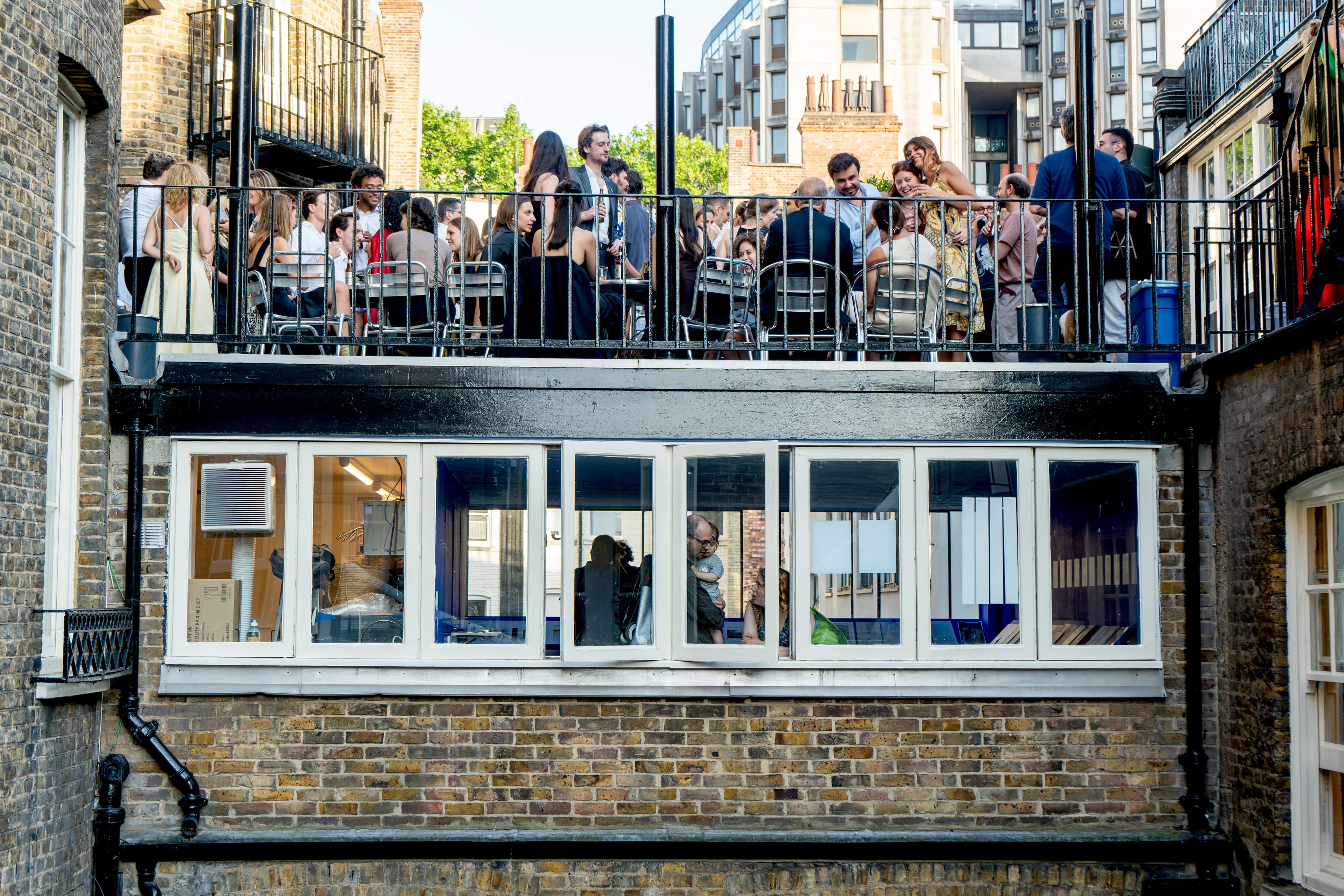
From First Year to Third Year, the AA's Intermediate Programme is dedicated to providing students an enriching and supportive entry into architectural studies. The Intermediate design units are centred around exploration and experimentation, and additional school events organised by the Public Programme, the AA Student Forum and AA LAWuN make the school a creative place to learn.
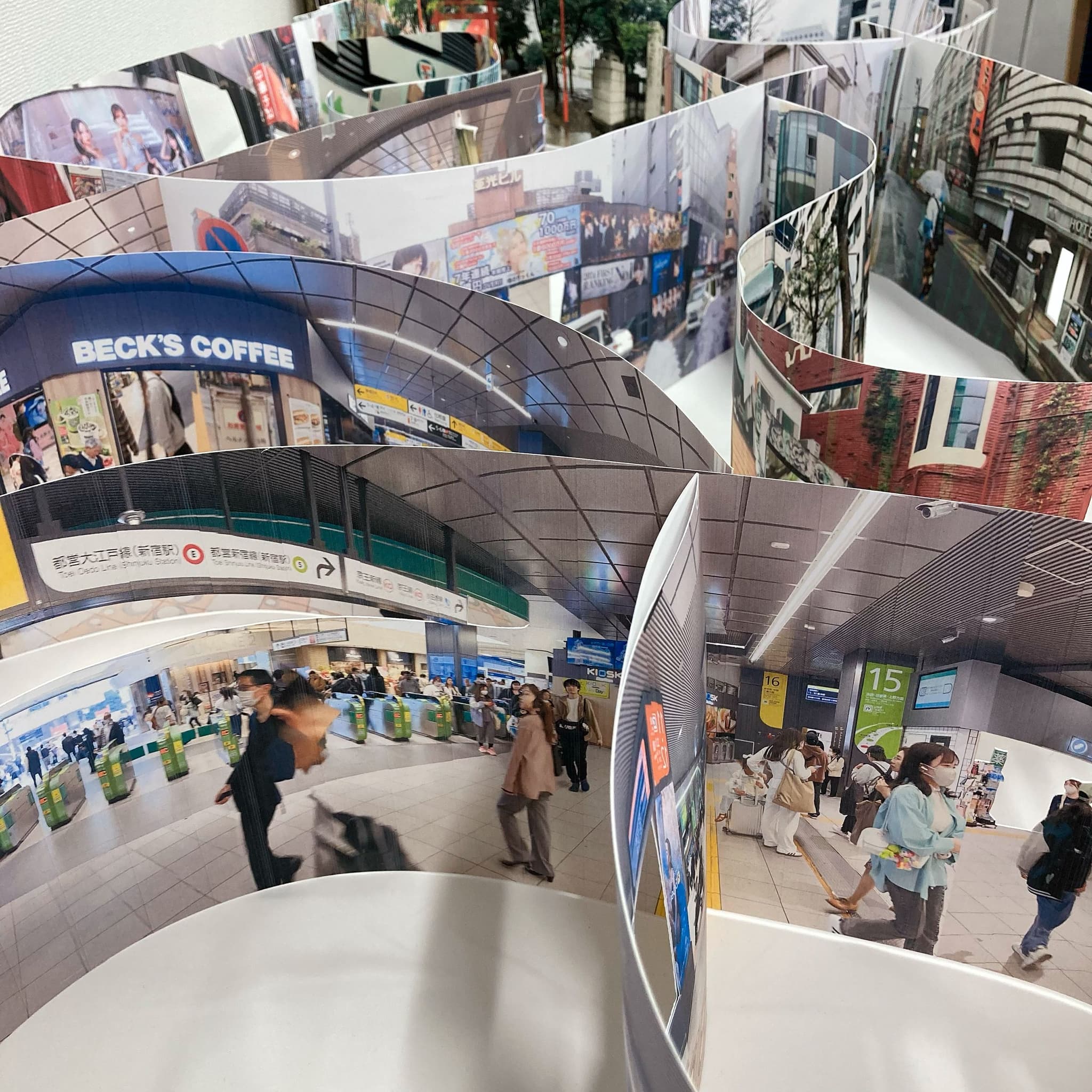
Diploma 10 and Geidai, Tokyo Panoramas, 2024–25.Transforming Transformations
We will be working with three forms of transformation: an interactive construct, a speculative film and an architectural project that overlaps and influences the space of the city.
Architecture will play a fundamental role in London’s future transformations; it will shape how people interact with and activate space. Intersecting with policy and social systems, transformations can be physical, social, economic, political, cultural and technological. Architectural transformations need to be equitable and adaptable to reflect the city’s diversity and resilience.
London’s architectural landscape is a mirror of political change; political ideologies are etched into its fabric. The Labour Party’s political slogan ‘Change’ is catchy and rhetorical, but how does it relate to the production of space? The relationship between politics and architecture is deeply intertwined: architecture is a reflection of power, ideology, identity and governance.
Architecture can serve as a site of political change. In its current transformations, homogenised, quantified space is a tool for profit, surveillance and control; it looks objective, but hides its ideological and political content. The notion of unlocking public value in city-making is more important than ever. With ongoing privatisation, a focus should be put on public assets, their roles and opportunities as spaces that can be reimagined and repurposed.
We will transform a recent and ongoing transformation in London. Using a construct (a multi-layered digital model), we will identify and select the salient variables, spatial and territorial, that can be changed and tweaked. Acting as a thesis, a film will speculatively edit architectural and city spaces. The construct’s variables and the film’s thesis will then be used to generate a drawn and animated architectural proposal. At the city scale, the final construct will contextualise the architectural proposal and explore its reciprocal relationship with the city.
Can space embrace difference, multiplicity, lived experience and use-value over exchange-value?