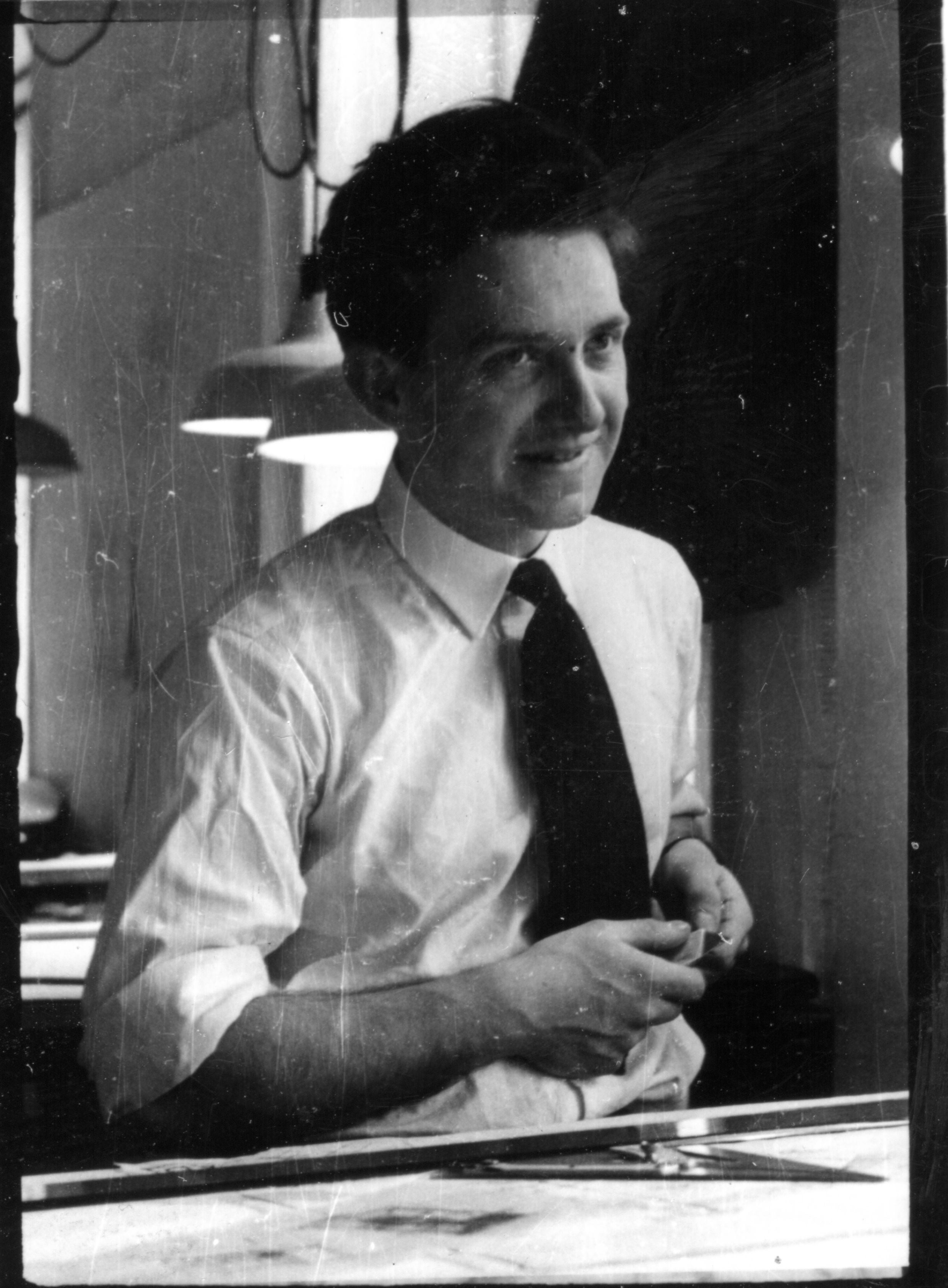
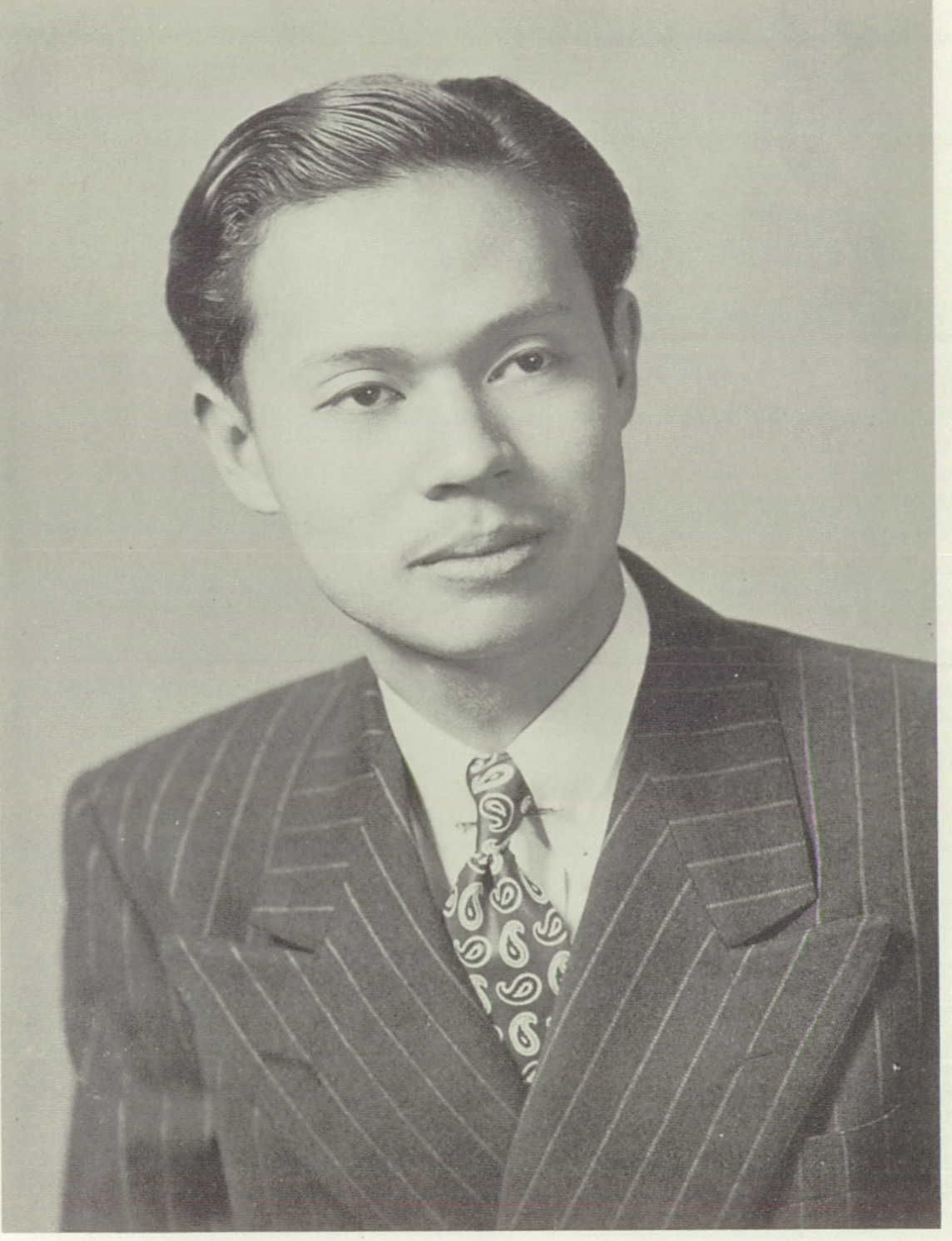
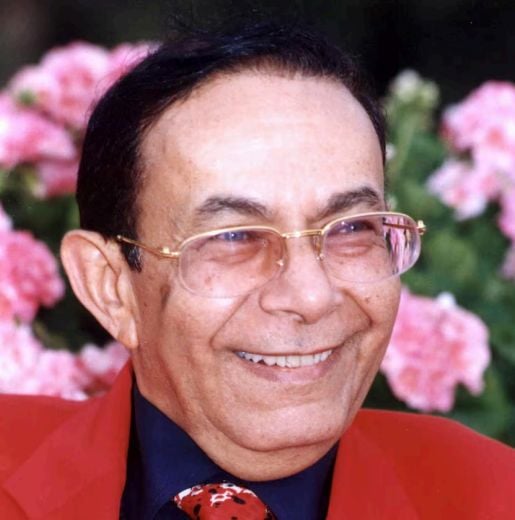
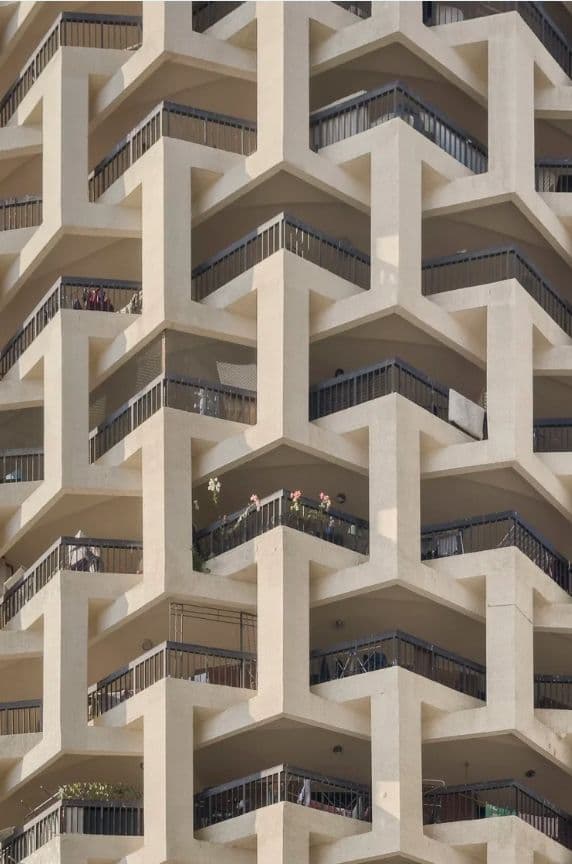
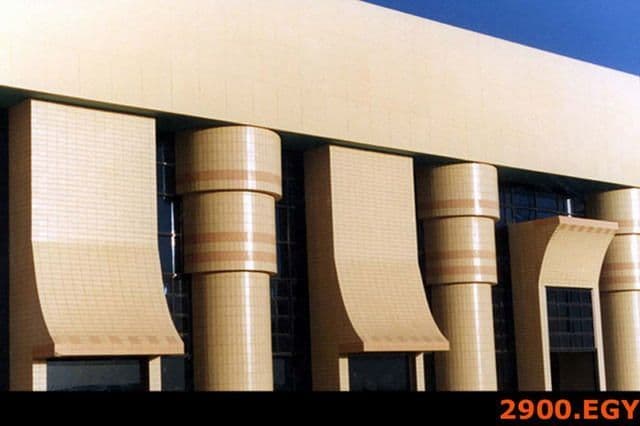
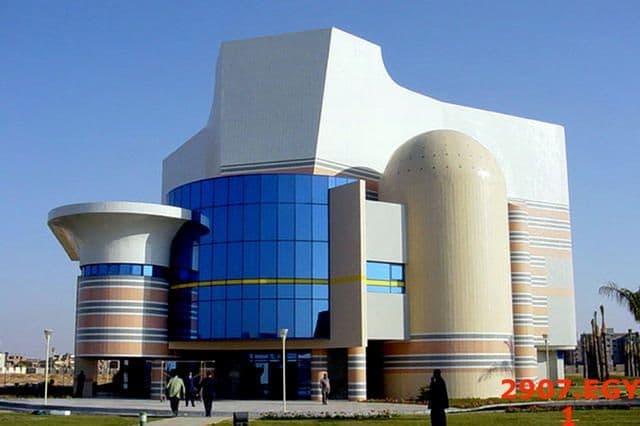
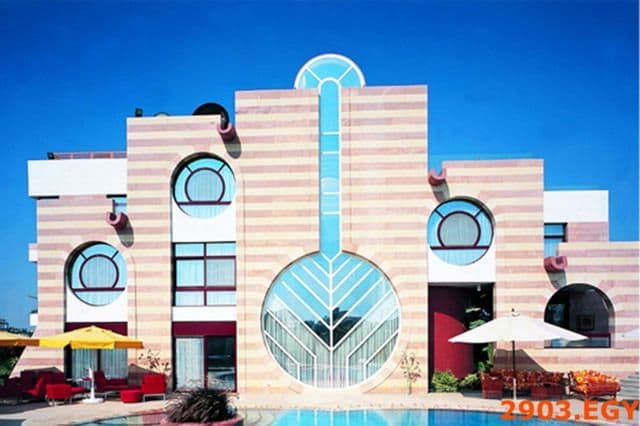
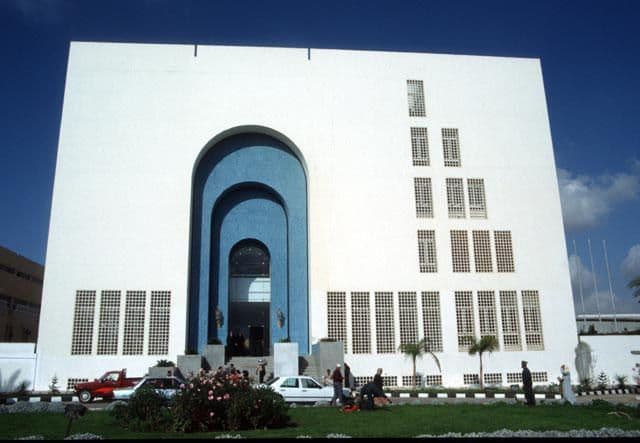
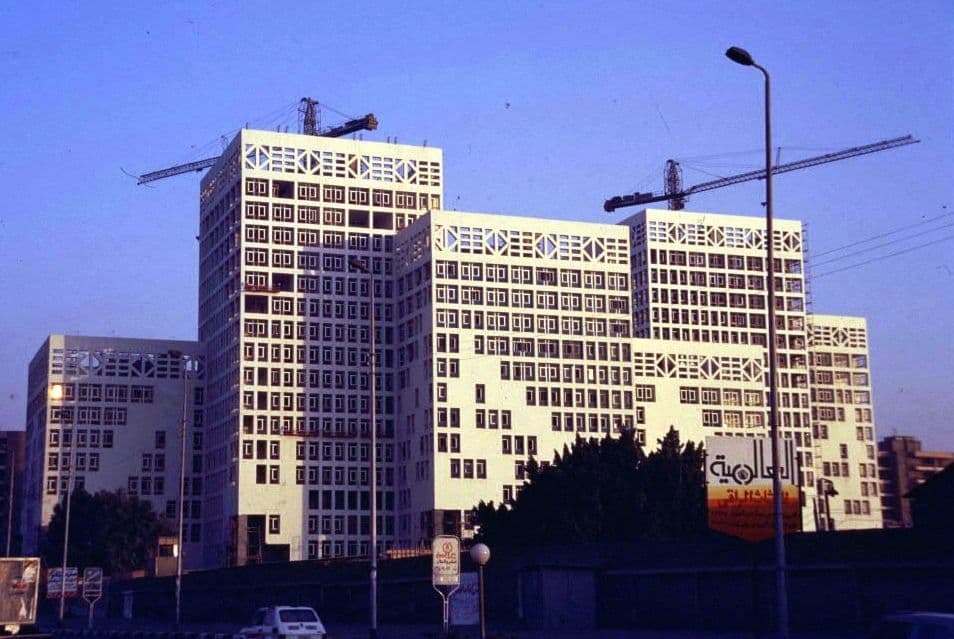
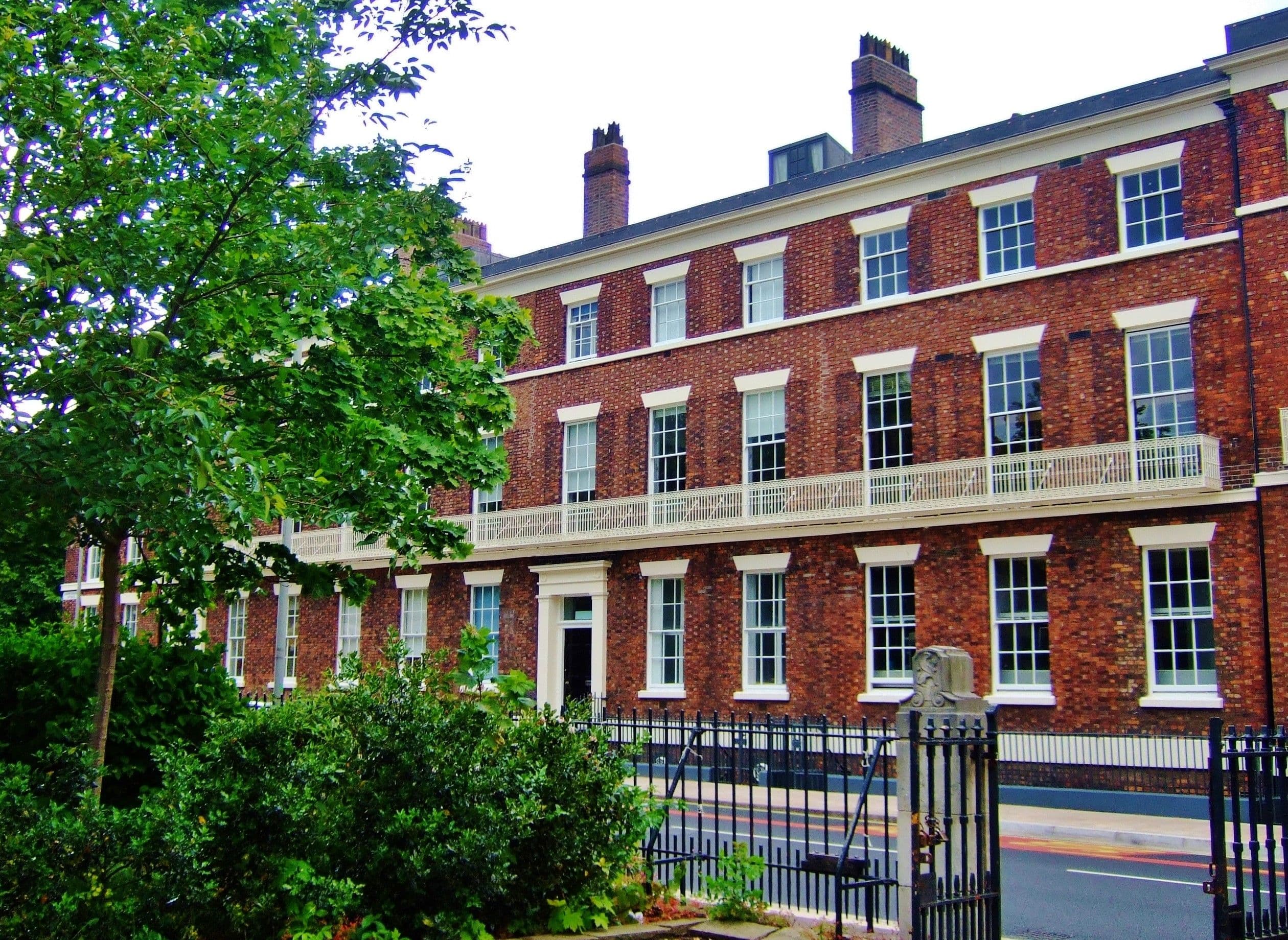
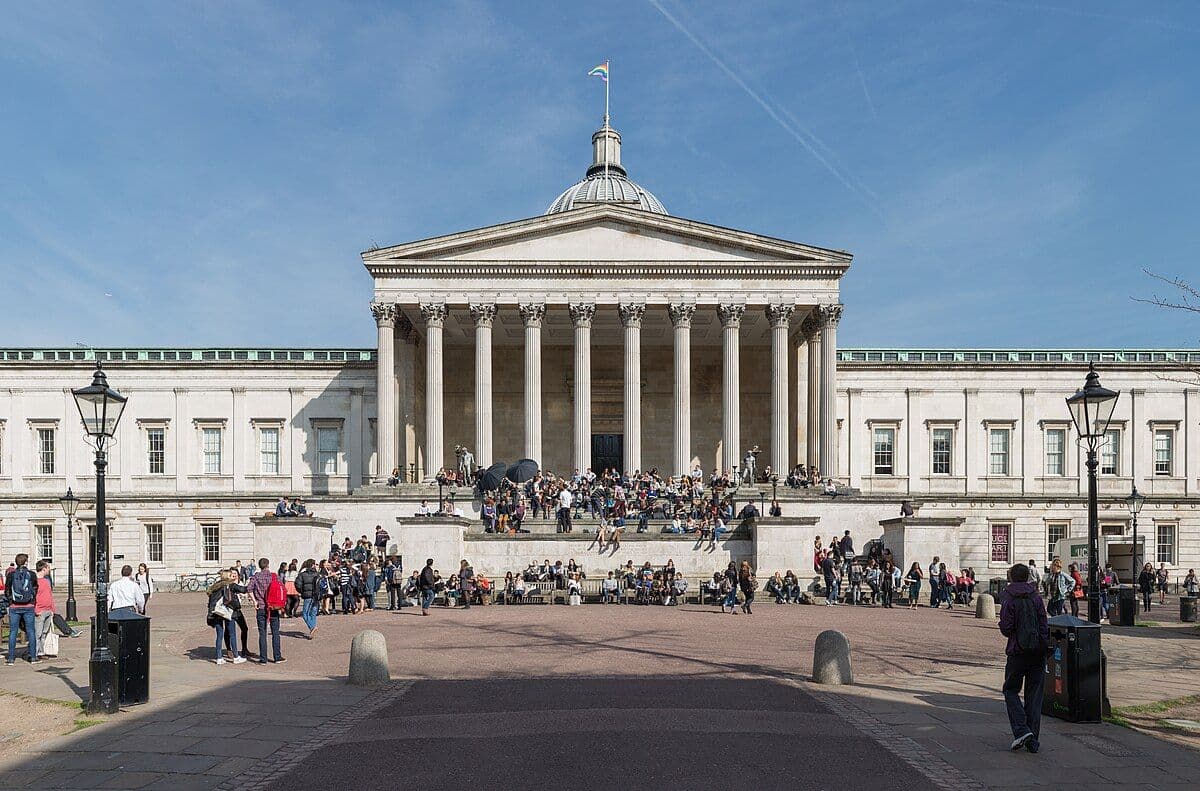
Farouk Hafiz El Gohary was born in Samannoud, northern Egypt, in 1937. He moved to Cairo where he studied for a BArch, degree at Cairo University, graduating in 1959. Farouk subsequently gained experience in the design office of Ali Labib Gabr (the first Egyptian dean of the Architecture School at Cairo University), where he worked on a number of projects, including the El Amiriya Press building in Imbaba and the New Winter Palace Hotel at Luxor. In 1961 he travelled to the UK and continuing his studies at the University of Liverpool, completing a MArch degree in 1963 and then enrolling on the 1963-64 postgraduate course run by the Architectural Association’s Department of Tropical Studies, in London. A PhD at University College, London, followed, with his 1966 thesis, entitled ‘Wells Coates: Beginning of the Modern Movement in England’, being supervised by Rayner Banham. During his time in London, Farouk also worked in the offices of some of the UK’s most significant Modernist practices, spending time with Fry, Drew and Partners, Llewelyn-Davies Weeks and Basil Spence and Partners. On his return to the Cairo, in 1966, Farouk immediately took up a teaching role in the Faculty of Engineering at Ain Shams University and, two years later, set up his own practice ‘Elgohary Architects’, which he was to develop into one of the most important practices operating in Egypt and parts of the Middle East. Perhaps his most well-known work is the Al Ibrahimi building (the Saeed Al Kalili Building), on Electra Street, Abu Dhabi. Completed in 1983, this 16 storey, cylindrical residential tower, has an exquisite façade comprising a complex weave of interlocking concrete modules. Over the decades, Elgohary’s office worked across many sectors, often in an eclectic manner which developed into a style akin to the Post Modern, in his later career. He designed university buildings, including the Study Hall for the Faculty of Engineering at Ain Shams University, together with their faculty buildings for Pharmacy and Dentistry. He worked for the government, producing buildings for the Ministry of Finance and the Egyptian Tax Authority, in Cairo, together with the National Security Headquarters (2000). Two of his largest projects were for airports, the Luxor International, and the Aswan International (2000), whilst other major works included the Al-Horriyya Mall, Cairo (1998), the Conference Hall at 10th of Ramadan City, Sharqia (2002) and the Mubarak Educational Training City, 6th October City (2002) – the latter project consisting of six interlocking buildings for teacher training. However, Farouk could also excel at a smaller scale – his El-Obour Elgohary Residence, in Cairo (2002), being an particularly striking example.
Alongside his architectural practice, Elgohary played a very active role in academia, initially as a lecturer but then, from 1992 as Chair of the Urban Design and Urban Planning Department at Ain Shams University. He was to continue his teaching well into the 2000s, having a profound influence on many generations of Egyptian architectural students. He was appointed Professor Emeritus in 2012.
Sources
- Architectural Association Council Minutes, 16th March, 1964. AA Archives
- Architectural Association Student Register 1945-1972, AA Archives
- Elgohary, F.H. ‘Wells Coates: Beginning of the Modern Movement in England’, PhD thesis, Bartlett School of Architecture, University College, London, 1966.
- Khorshid, R. ‘Remembering Farouk El Gohary: Egyptian architect behind Abu Dhabi’s Al Ibrahimi building dies aged 83’ The National, January 4th, 2021. Accessed 25th September 2025: https://www.thenationalnews.com/arts-culture/art/remembering-farouk-el-gohary-egyptian-architect-behind-abu-dhabi-s-al-ibrahimi-building-dies-aged-83-1.1140133