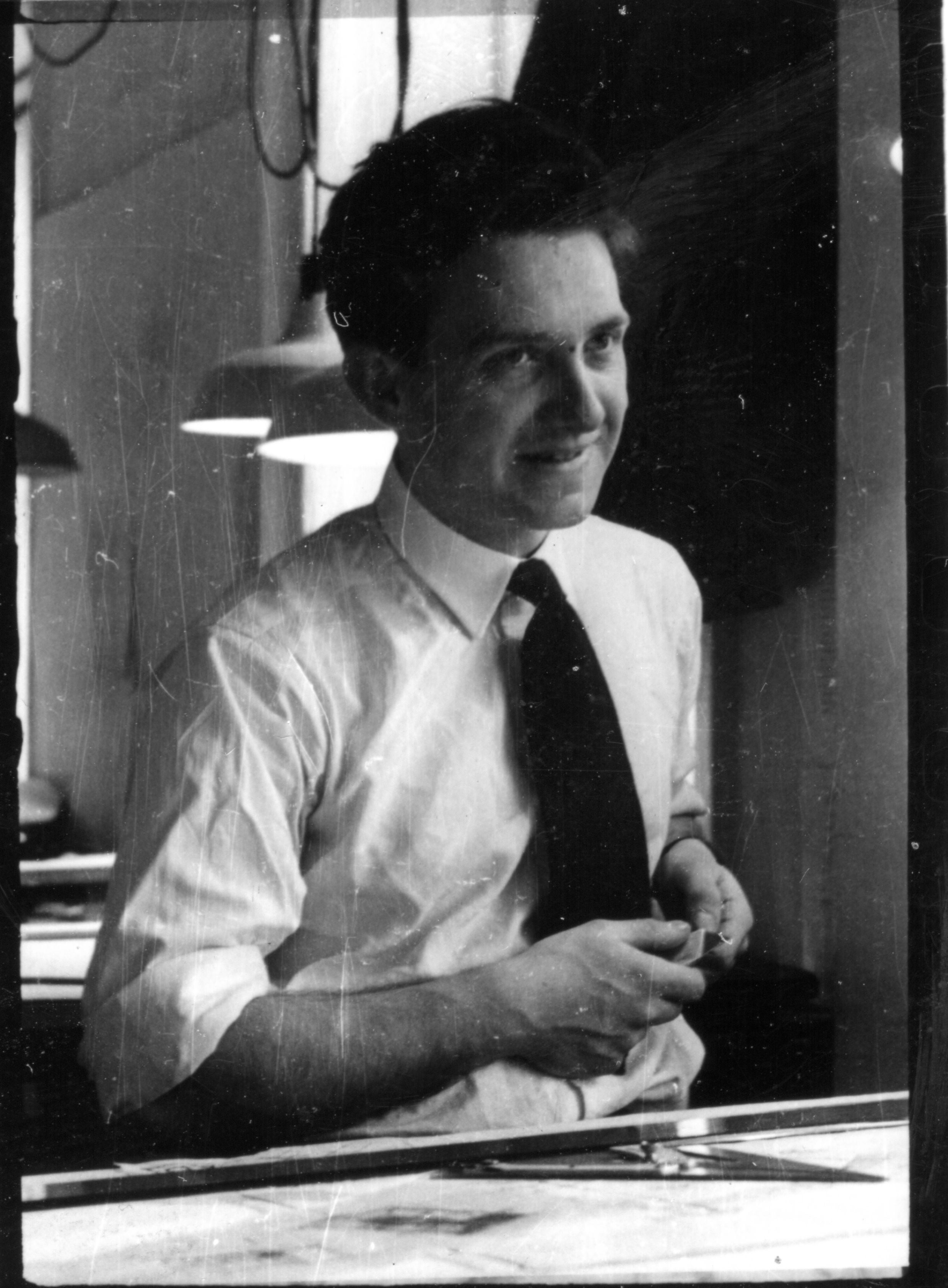
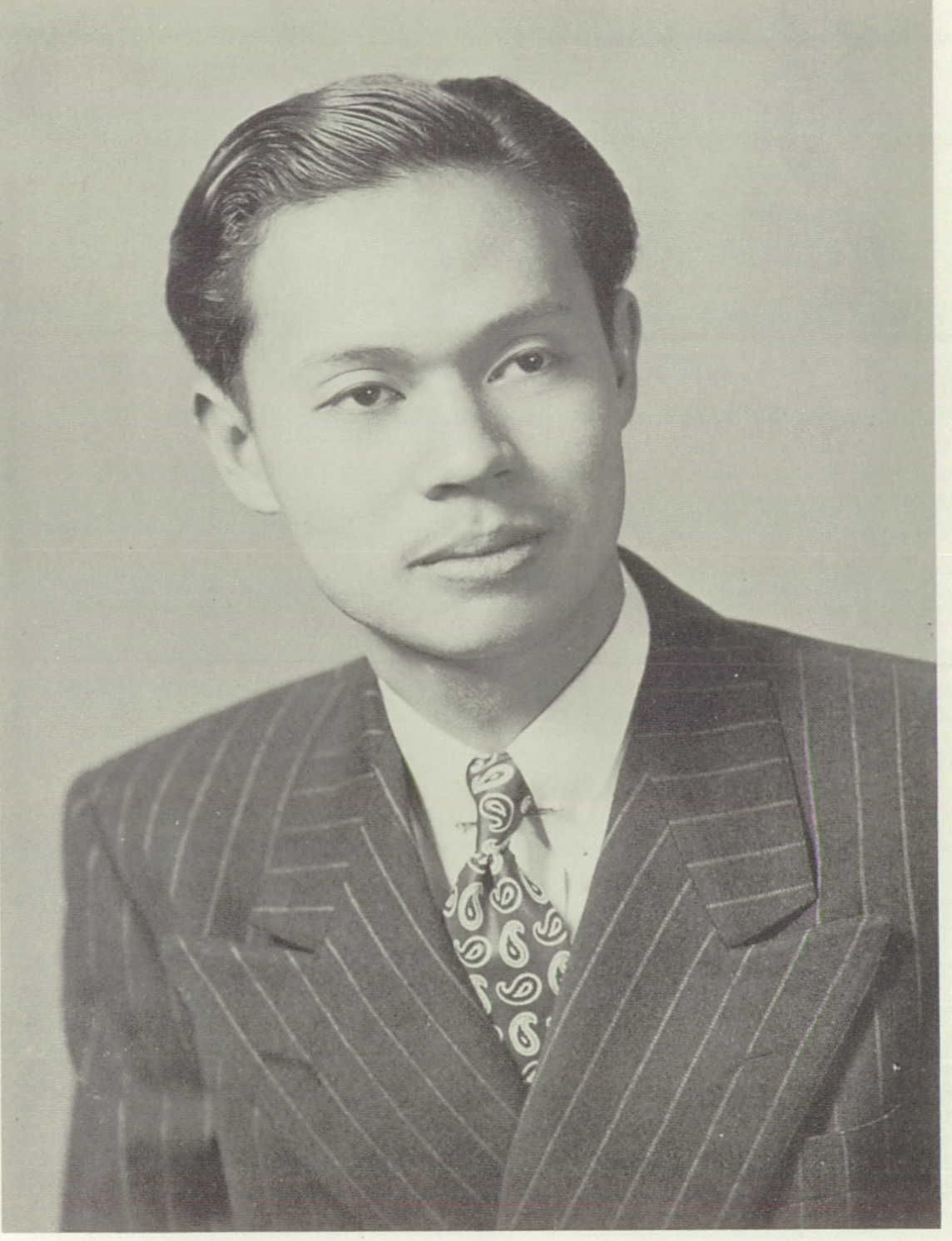
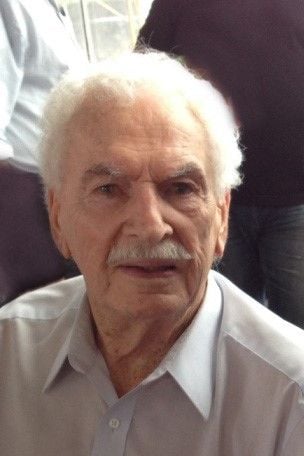
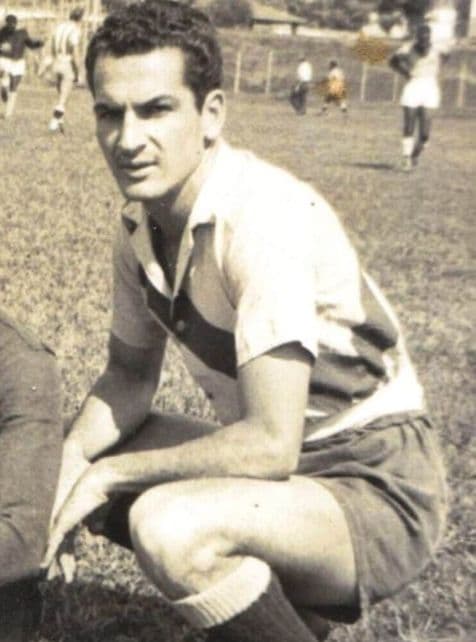
Rafael ‘Felo’ García was born in the canton of Paraíso, in Cartago, Costa Rica, in 1928. He excelled at sport from a young age and made his debut as a professional footballer at the age of 15 for Club Sport La Libertad, in the Costa Rican First Division. In 1946 he won the top scorer title in the First Division, La Libertad winning the national championship that year. In 1947 he was awarded a government scholarship to travel to London, to study architecture at the Hammersmith School of Building and Arts and Crafts, however during his second year of studies the outbreak of the Costa Rican civil war meant that his funding was discontinued. Forced to abandon architecture, Garcia pursued a football career, playing in Cuba for Real Iberia and Centro Gallego in Havana (1948-49), in Colombia he was top scorer in the Copa Sultana del Valle, for América de Cali (1949-50). Moving back to Costa Rica, he subsequently played for
Deportivo Saprissa (1951), Sociedad Gimnástica Española (1951-1952) and Club Sport Herediano (1952-1954). From 1951 Rafael also worked at the Ministry of Public Works and Transportation, in Costa Rica, and in 1954 the Ministry awarded him a scholarship so that he could complete his architecture studies in London. He subsequently graduated from Hammersmith School of Building and Arts and Crafts in 1957 and returned to Costa Rica, where he continued to play football for Herediano until his retirement in 1960. During Rafael’s time in Cuba he met the Costa Rican artist, Manuel de la Cruz González, who encouraged him in his painting and drawing. This interest developed further in London, in the 1950s, where Rafael formed the ‘New Vision Group’ of artists engaged in abstraction. Upon his return to Costa Rica, Rafael continued to pursue his passion for contemporary art, founding ‘Group 8’ in 1961, to foster creative expression in the avant garde creative arts, followed by establishing the Dirección General de Artes y Letras in 1963 – this latter institution being the predecessor of the current Ministry of Culture, Youth and Sport. His renown, as a driving force for cultural change, was such that in 1970 he was selected as part of a group of influential architects (with Jorge Bertheau, Edgar Brenes and Santiago Crespo), who were provided with scholarships to attend the postgraduate programme run by the Architectural Association’s (AA) Department of Development and Tropical Studies, in London. This selection was made as part of a process by which the University of Costa Rica (UCR) and the UK government were engaged in talks to set up a school of architecture in Costa Rica. Under the aegis of the UK/Central American Technical Assistance Arrangements programme, the Head of the AA Department of Development and Tropical Studies, Otto Koenigsberger, had visited Costa Rica from April 14th – May 4th, 1970, interviewing specialists and holding talks with UCR. His subsequent report and recommendations were submitted to the Rector and Board of Trustees of UCR in April 1970. Both a Spanish and an English language copy remains within the AA Archives today. Garcia and his colleagues began their studies at the AA from September 1970, within the Department’s new ‘Teaching Methods Course’. Together they worked on a joint dissertation, specifically the drawing up of a formal proposal for a pedagogical and administrative system for a new Architecture School at UCR. After returning to Costa Rica in 1971 both Garcia, Bertheau and Brenes were tasked with developing the new School, Garcia serving as the inaugural Director from 1972-79. Through his long career he won the nickname of "El adelantado" (The Pioneer) for his fearless pursuit of radical ideas and the promotion of cultural activities. He has served as the President of the Costa Rican Association of Architects and has been awarded several national honours, including the MAGON National Culture Award in 2008, and the Aquileo Echeverría National Painting Award.
Sources
- Architectural Association Student Register, 1970-71. AA Archives
- ‘A School of Architecture For Costa Rica. Report submitted to the Rector and Board of Trustees of the University of Costa Rica by Otto Koenigsberger, Consultant, United Kingdom / Central American Technical Assistance Programme. San Jose, April 1970.’ AA Archives
- Solano-Meza, Natalia. ‘Against a Pedagogical Colonization: The Case of the School of Architecture at the University of Costa Rica.’ Charrette, Volume 4, Number 2, Autumn 2017, pp. 40-58(19)
- Solano-Meza, Natalia, ‘Tropical Dissidence: The Creation of the School of Architecture of the University of Costa Rica at the Department of Development and Tropical Studies’, Fabrications, 2017. Vol. 27, No. 2, pp.177–199
- Solano-Meza, Natalia. ‘Aesthetics of Comfort: A Third Moment in Costa Rican Histories of T...’ ABE Journal. Architecture beyond Europe, September 2, 2020. Accessed 24th Jan. 2026: https://journals.openedition.org/abe/8146?lang=it
- Obituary, ‘Arq. Rafael Ángel “Felo“ García Picado ,’ Revista CFIA, April 23, 2024. Accessed 2nd Feb., 2026: https://revista.cfia.or.cr/arq-rafael-angel-felo-garcia-picado/