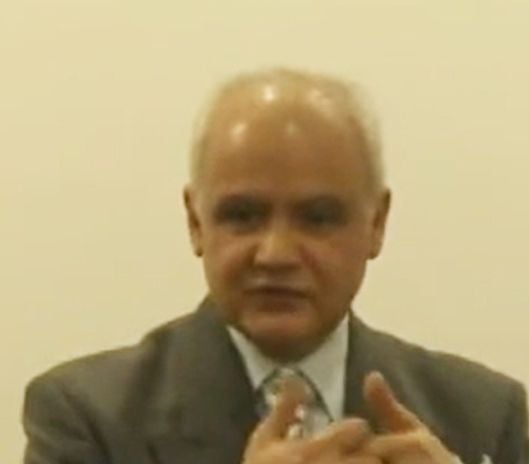
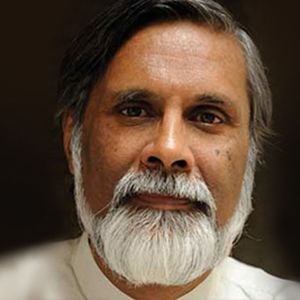
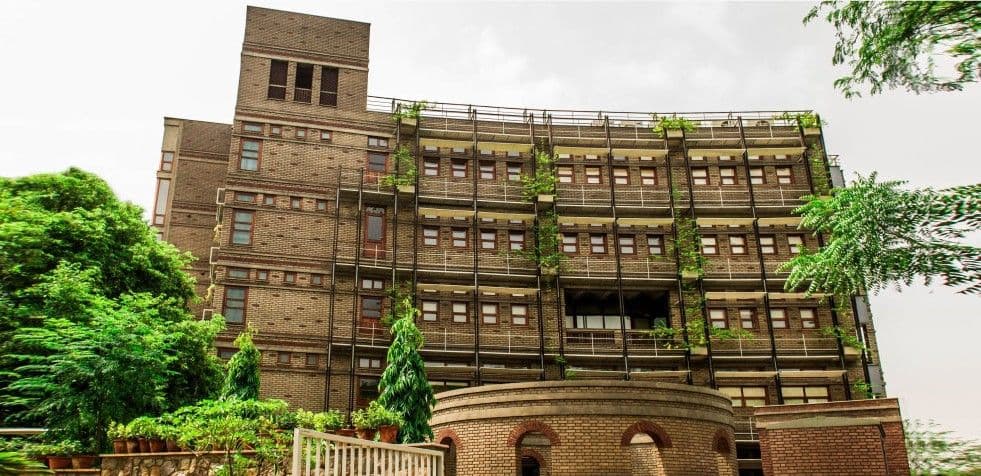
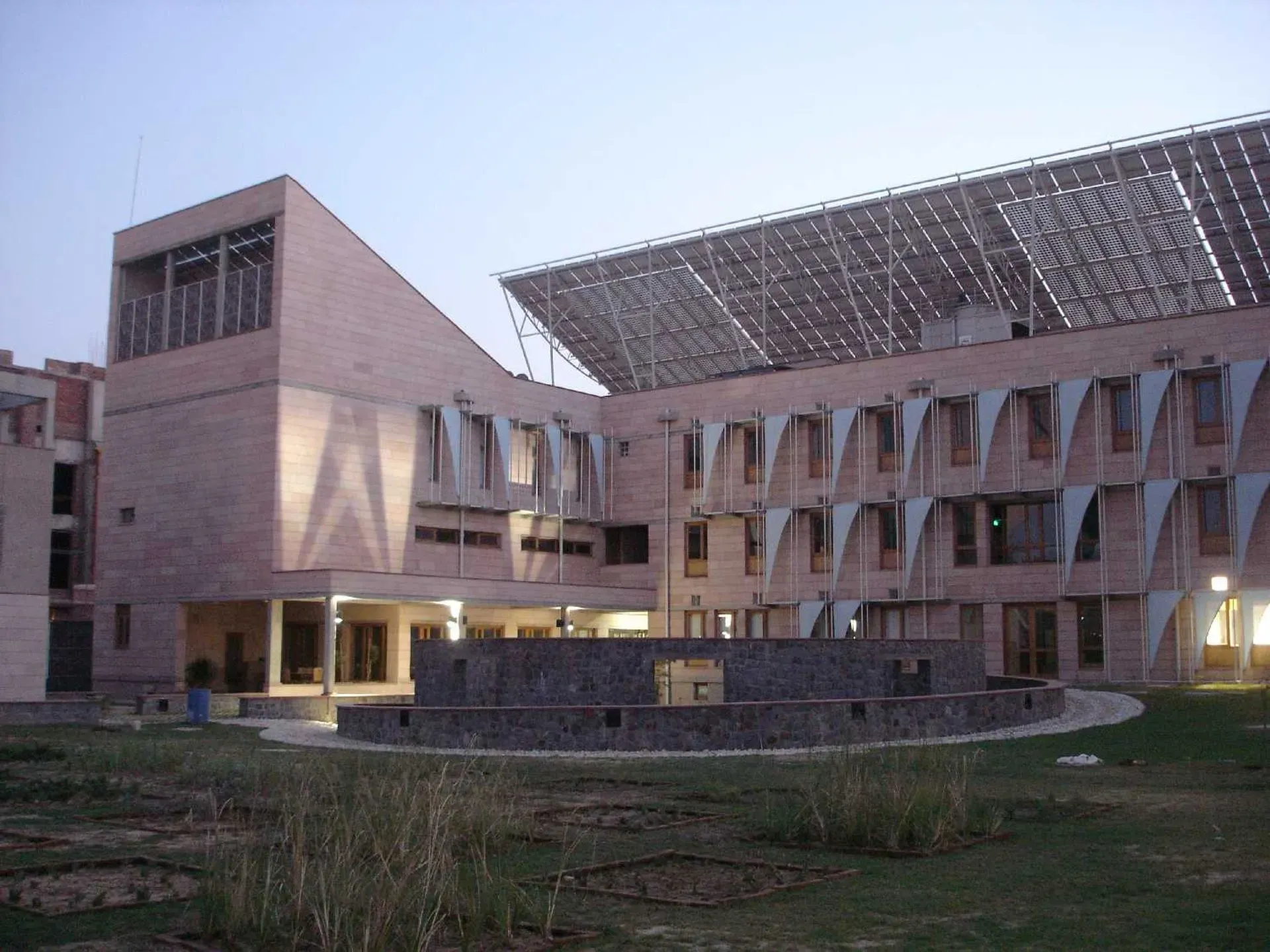
A recognized Indian architect and academic in the field of sustainable design, Ashok Behari Lall was born in 1948. He studied at the Modern Higher Secondary School in New Delhi (1960-61) then, after moving to the UK, at the Clifton College in Bristol (1962-65). Between 1965 and 1968, he completed his undergraduate architectural studies at the University of Cambridge, whilst gaining practical experience during his final summer at the Delhi-based offices of modernist architects J.K. Choudhury and Gulzar Singh. Ashok always intended to return to India to practice architecture, and in 1968, he opted to join the AA as a fourth-year student, partly attracted by the prospect of taking the Tropical Studies course which he saw as unique and essential for his ambitions. The selection board were impressed by him and his tutors viewed him as a bright student who grappled rigorously with complex problems. His interests at the AA spanned squatter settlements in Greece, colonial architecture in Delhi, and a thesis on settlements on reclaimed land in Singapore, jointly developed with his colleague Choon Peng Lee. Correspondence from Lall’s father, who was a high-level civil servant in the Indian government, to the AA suggests his father took an interest in Lall’s studies and was keen for him to eventually return and help resolve the country’s growing socio-economic challenges. In 1970, Lall completed his AA Diploma and was awarded the certificate of the Department of Tropical Architecture. Following his graduation, he first worked at Design Partnership in Singapore, then in 1974, returned to India and joined Stein Doshi Bhalla Consultants, one of the largest architectural firms in the country. That same year, he also co-founded GREHA, a society for research in human habitat and environmental development, alongside a group of practitioners one of whom, Munishwar Ganju, was also an AA graduate. In 1980, Lall founded his own practice, Ashok B Lall Architects, in New Delhi – where he continues to serve as principal architect – and went on to complete a number of projects and research outputs earning him a reputation as a prominent local figure in low-energy sustainable design, affordable housing, and net-zero buildings. His key projects include the Institute of Rural Research and Development (IRRAD), Gurgaon (c. 2008-2012) where he uses low-cost, locally sourced natural materials (such as timber and bamboo in their virgin state) and recycles waste and leftover materials (such as granite, sandstone, or broken tiles on site) to keep the project’s embodied energy to a minimum, along with design strategies that maximize reliance on natural daylight, passive air ventilation, and continuity between interior spaces and outdoor courtyards. Lall uses the project to argue that sustainable architecture need not be expensive. Another award-winning project he for which he is well known is the Development Alternatives World Headquarters in New Delhi, an office building where he similarly integrated locally-sourced materials and implemented innovative sustainability strategies for cooling and water recycling systems that reduce energy and resource consumption. The project showcases how a detail-oriented understanding of craftsmanship can simultaneously address ecological, aesthetic, and financial concerns; using ferro-cement vaults and shallow domes to reduce reliance on steel and using stabilized compressed earth blocks and fly-ash lime gypsum blocks as less energy intensive alternatives. Besides his professional practice, Lall has published widely in architectural journals and actively engaged in academic settings, including serving as the Dean of Studies at TVB, School of Habitat Studies (1990-2007), and later a visiting professor at the Guru Gobind Singh Indraprastha University (GGSIPU). His wider contributions as an advocate for sustainable building include serving as the convener of the Delhi Urban Arts Commission Workgroup on Energy, the coordinator of the EU-funded program for the development of a web-based teaching package for low-energy architecture, a jury member for Holcim Foundation awards (2006,2008,2011), as well as affiliations with a variety of fora promoting sustainability, including the Global Buildings Performance Network, the Salata Institute for Climate and Sustainability at Harvard University.
Sources
- Architectural Association Student Register 1945‐1972, AA Archives
- Architectural Association Diploma Roll Book, 1964-75, AA Archives
- Architectural Association Student Records Microfiche Files, 1968-1973, AA Archives
- CW Interiors, Simply Sustainable, January 2009, page 28-33
- An Architect for a Sustainable Future: A Conversation with Ashok B Lall, The CSR Universe, 28 Feb 2025, by Medha Gupta, https://thecsruniverse.com/articles/an-architect-for-a-sustainable-future-a-conversation-with-ashok-b-lall , accessed 04 May 2025
- GREHA, founding members, https://greha.org/people, accessed 04 May 2025
- Holcim Foundation, Ashok B Lall (profile page), https://www.holcimfoundation.org/experts/ashok-b-lall, accessed 04 May 2025