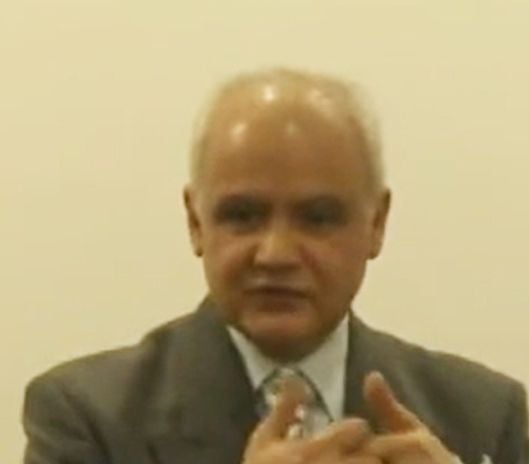
The second of six children, Ralph Stephen Mthawanji was born in 1943 in Malawi to an independent farmer. He was a attending Mbandira S.P. School (1953-56), Mtendere Secondary School (1956-58), Mzuzu Secondary School (1959-60), and Dedza Secondary School (1961-62). Prior to coming to the UK to join the Architectural Association (AA), he met Tudor Garland Ingersoll in Malawi, who was in favor of his application and who also spoke to the local government offices to ask about and assist with Mathwanji’s scholarship. In 1963, Mathawanji joined the AA, supported by Nyasaland (present-day Malawi) government scholarship. The school were keen for him to arrive early, stay at the AA Hostel, and get familiar with London. Yet, Mthawanji initially struggled to adjust to the UK environment, which prompted the school to request from his scholarship office they support his travelling on architectural trips around Britain and around Italy in the summer of 1964. After his second year, he was advised to take a year out to gain experience in practice, which he seemed to have done at the London Borough of Barnet Architects’ Department. Records also suggest that he got married in Hampsted in 1965. In fall of that year, he rejoined the AA and repeated his second year in 1966/67. His tutors later comment that he is a reliable, perseverant, and serious thinker who does not leave something until he thinks it through and works it out. In 1968, he exhibited his architectural drawings at the London Africa Centre, as part of the Exhibition of Contemporary African Arts, organized as a space for African artists to express their creative faculties and the inspiration they find in their background. For his final year of study, in 1969-70, Mthawanji elected to join the AA's Department of Development and Tropical Studies course, producing his final thesis on housing in Balntyre, Malawai. This apparently began as an attempt to do a housing scheme, but them evolved into a thorough regional study of planning strategy, urban migration, and rural development in South Malawi. Because of the broadening scope of his study, he was given a one-year extension to complete it, gaining his Development and Tropical Studies Certificate, alongside his AA Diploma. In 1971 he contributed a chapter entitled in “Urbanization in Malawi” to a book edited by Paul Oliver, the then AA head of the department of Arts and History - this presumably being the fruit of his thesis research. A project description in the Architects’ Journal also indicates he may have assisted on the Arundel Great Court project, an office development comprising five blocks arranged as a U with a garden court in the middle, designed by Frederick Gibberd and Partners in London (completed 1976). Though it is unclear when his exact involvement was, it is likely to have been in the extension year he completed his thesis. By 1973, Mthawanji had completed his RIBA Part III seminars, and his applications to the Architect’s Registration Council of the UK (ARCUK) and RIBA, as he was preparing to take a job at the Malawi Housing Corporation, Blantyre, that required him to be fully qualified. By 1983, he had started his own practice, R.S. Mthawanji and Associates in Blantyre, Malawi, and seemingly worked there until he passed away in 1992.
Sources
- Architectural Association Student Register 1945‐1972, AA Archives
- Architectural Association Diploma Roll Book, 1964-75, AA Archives
- Architectural Association Student Records Microfiche Files, 1968-1973, AA Archives
- RIBA Directory, 1983, 1990
- Mthawanji, Ralph. 1971, “Urbanization in Malawi” In Shelter in Africa, edited by Paul Oliver, pp 190-99, London, Barrie and Jenkings
- The Architects’ Journal (1976), Volume 164, Page 50
- The London Africa Centre, by Kodwo Mensah-Brown, Vol. 3, No. 3 (Spring, 1970), pp. 56-60
- High Court of Malawi, Principal Registry, Civil Case No. 975 of 1992