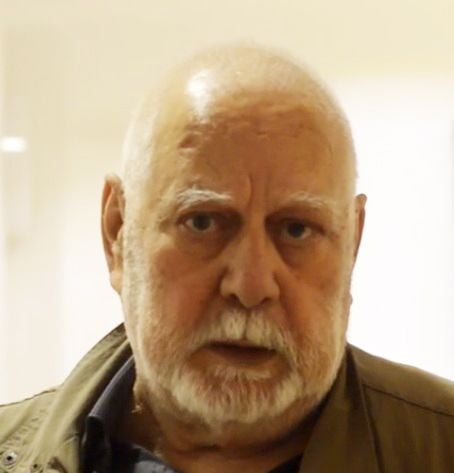
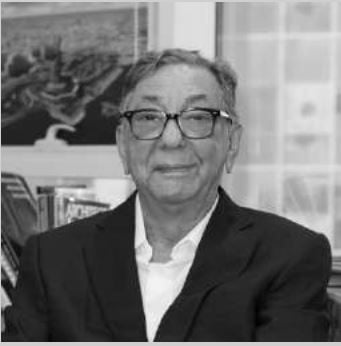
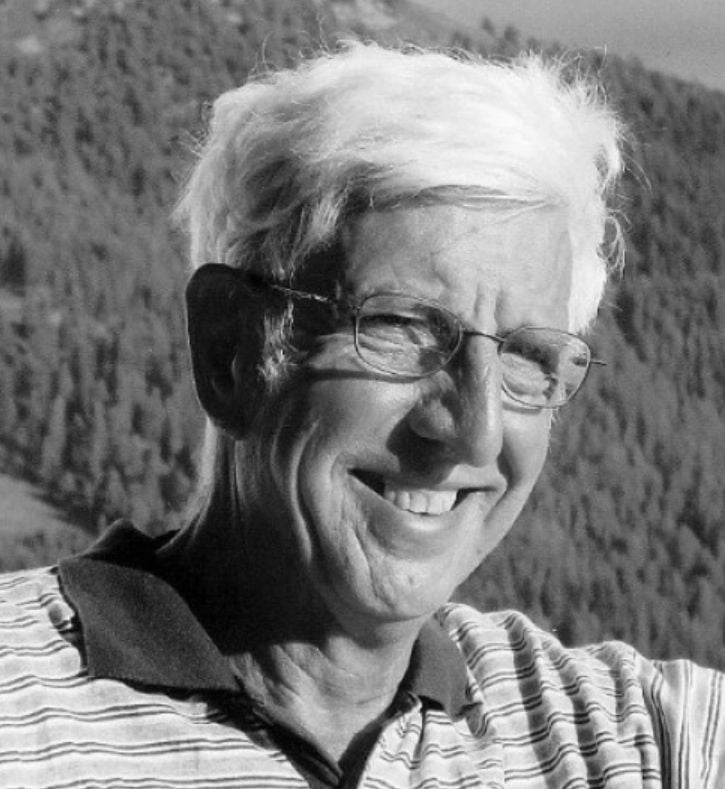
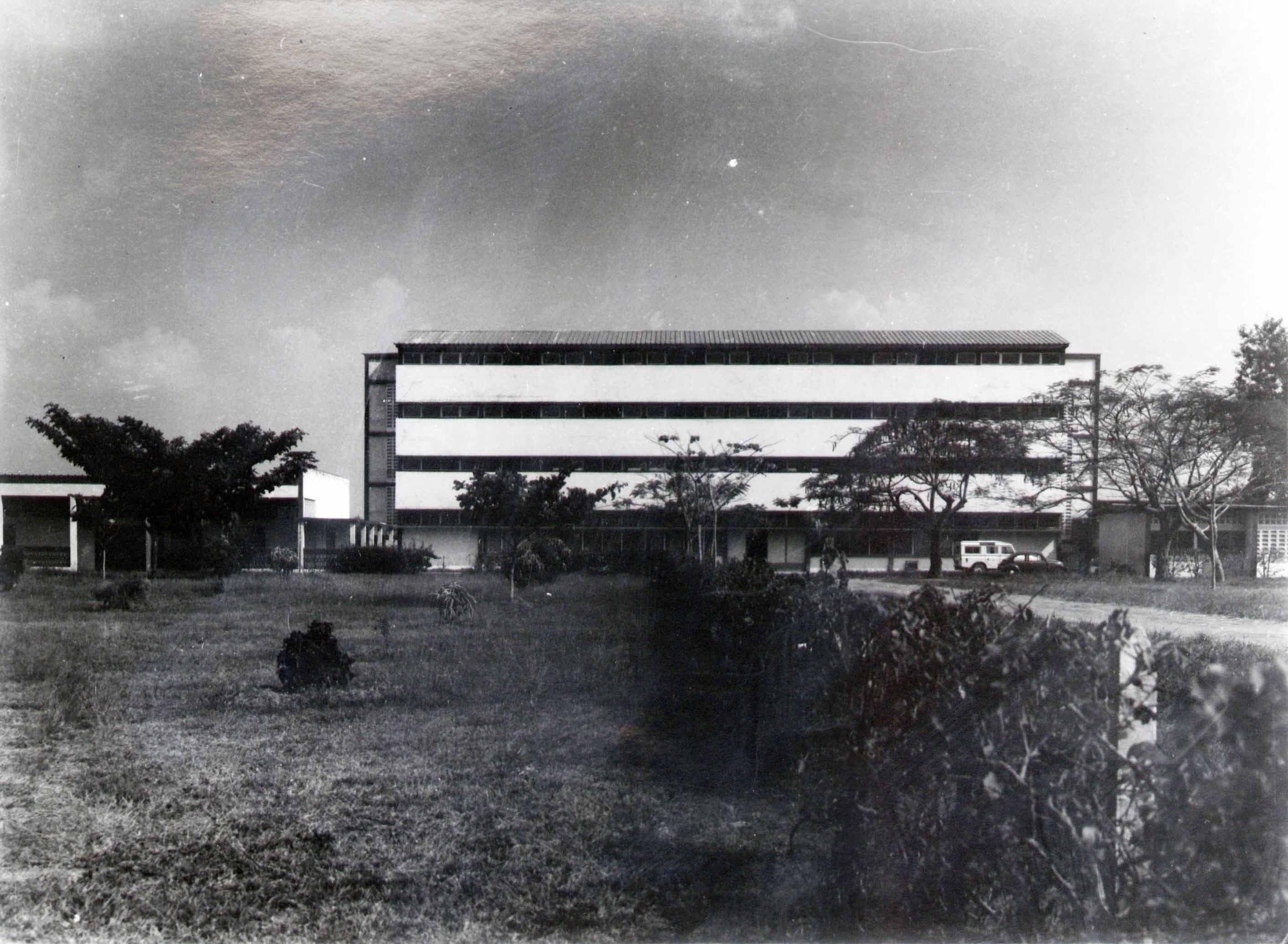
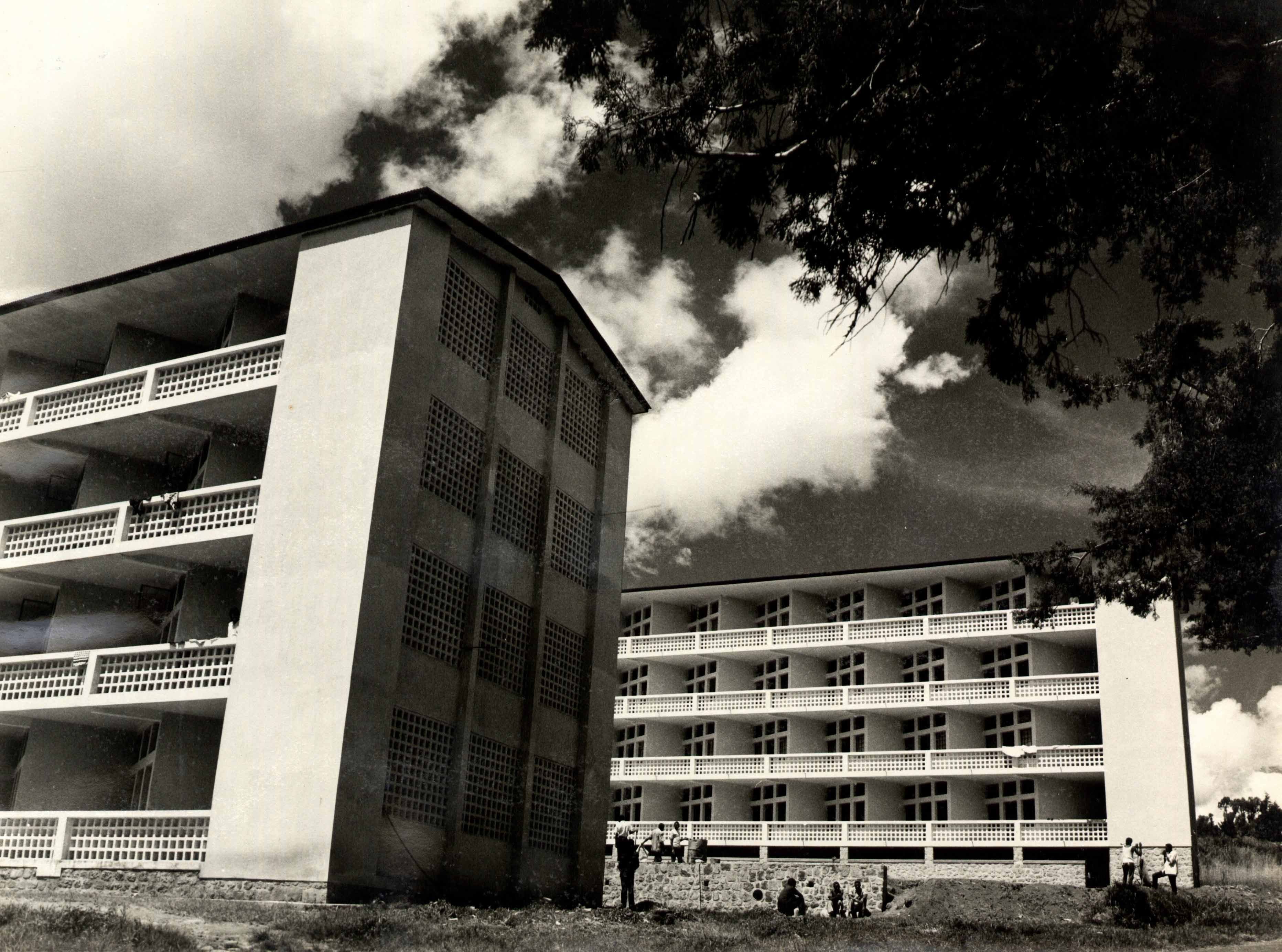
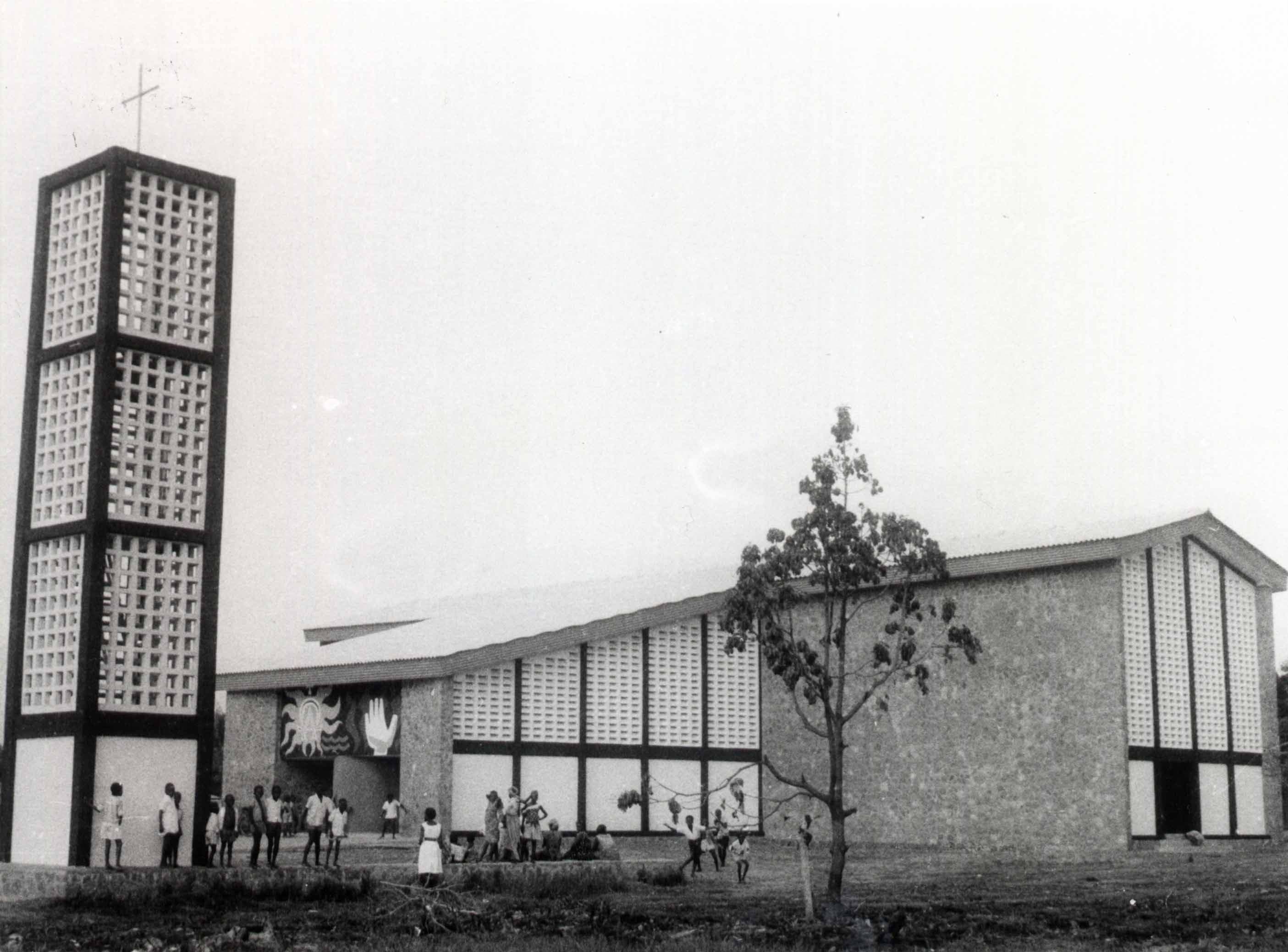
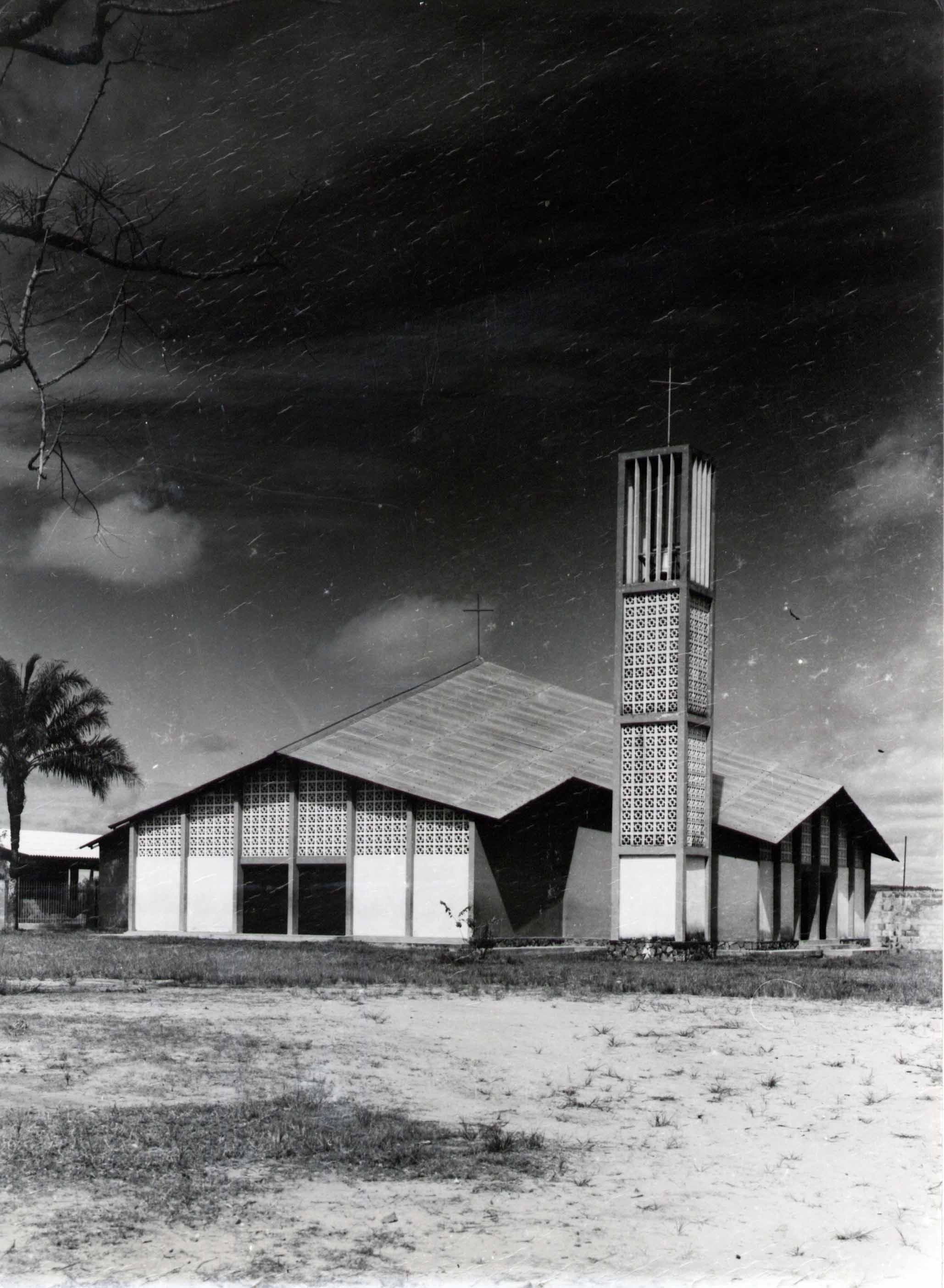
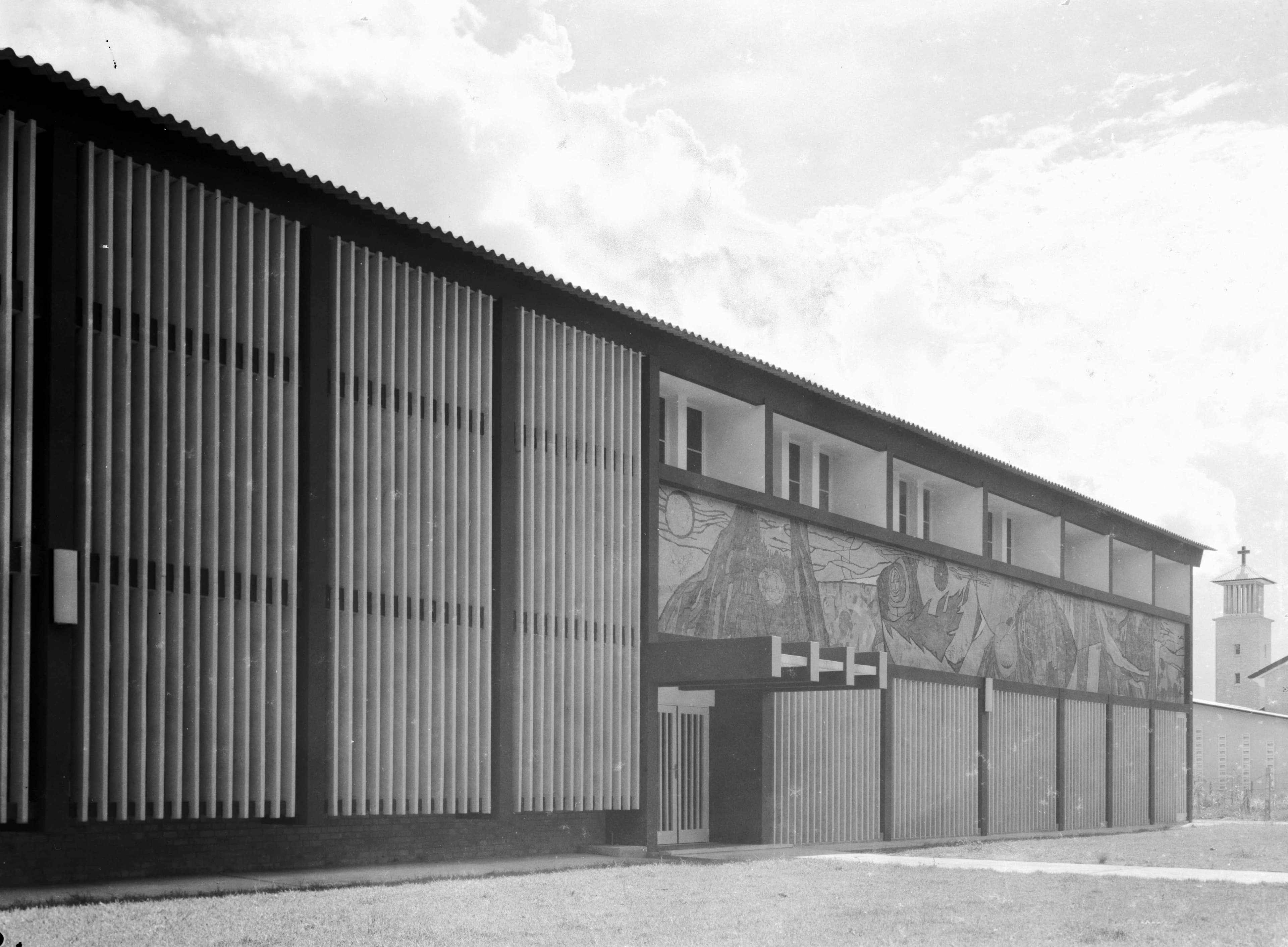
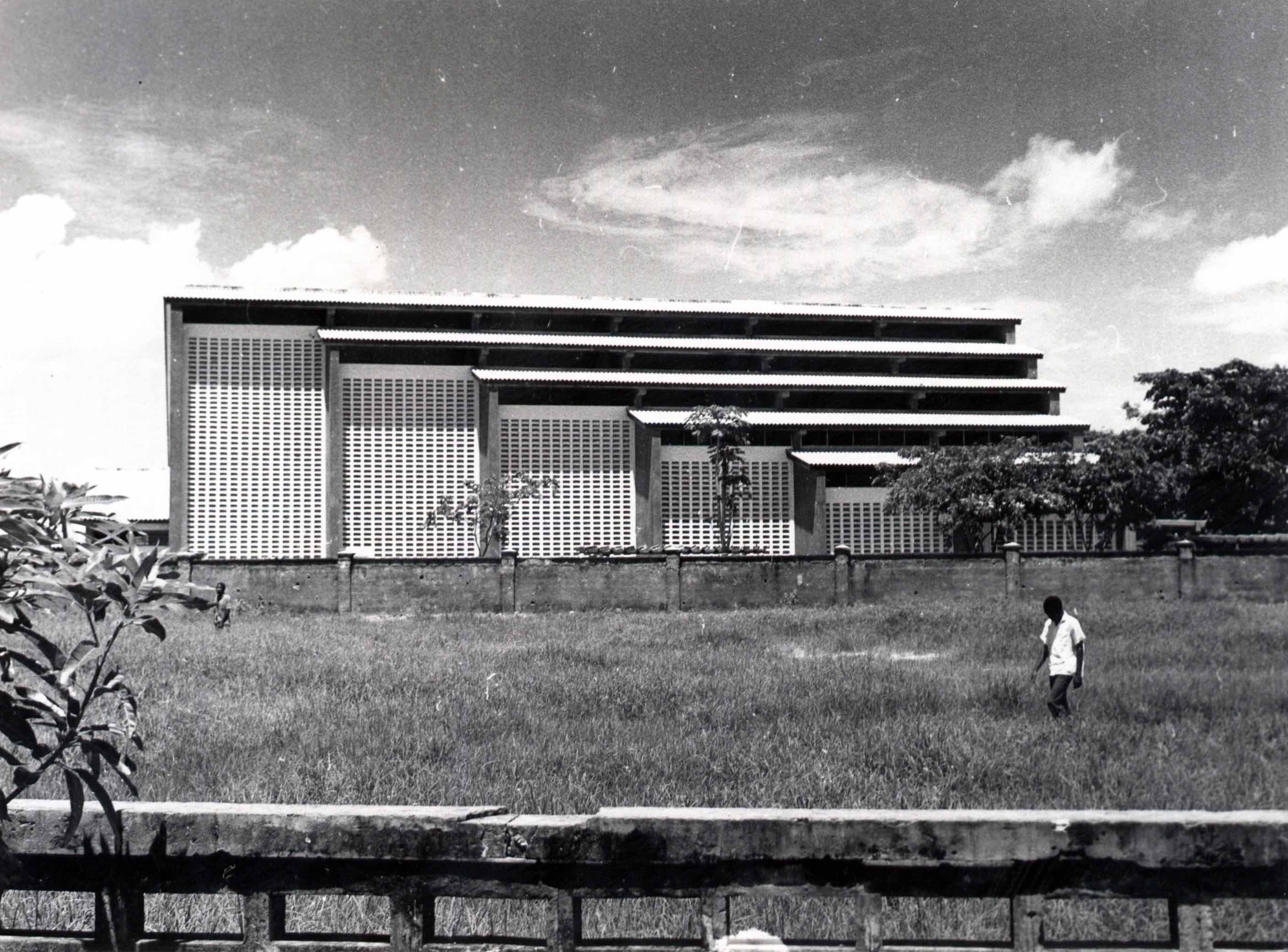
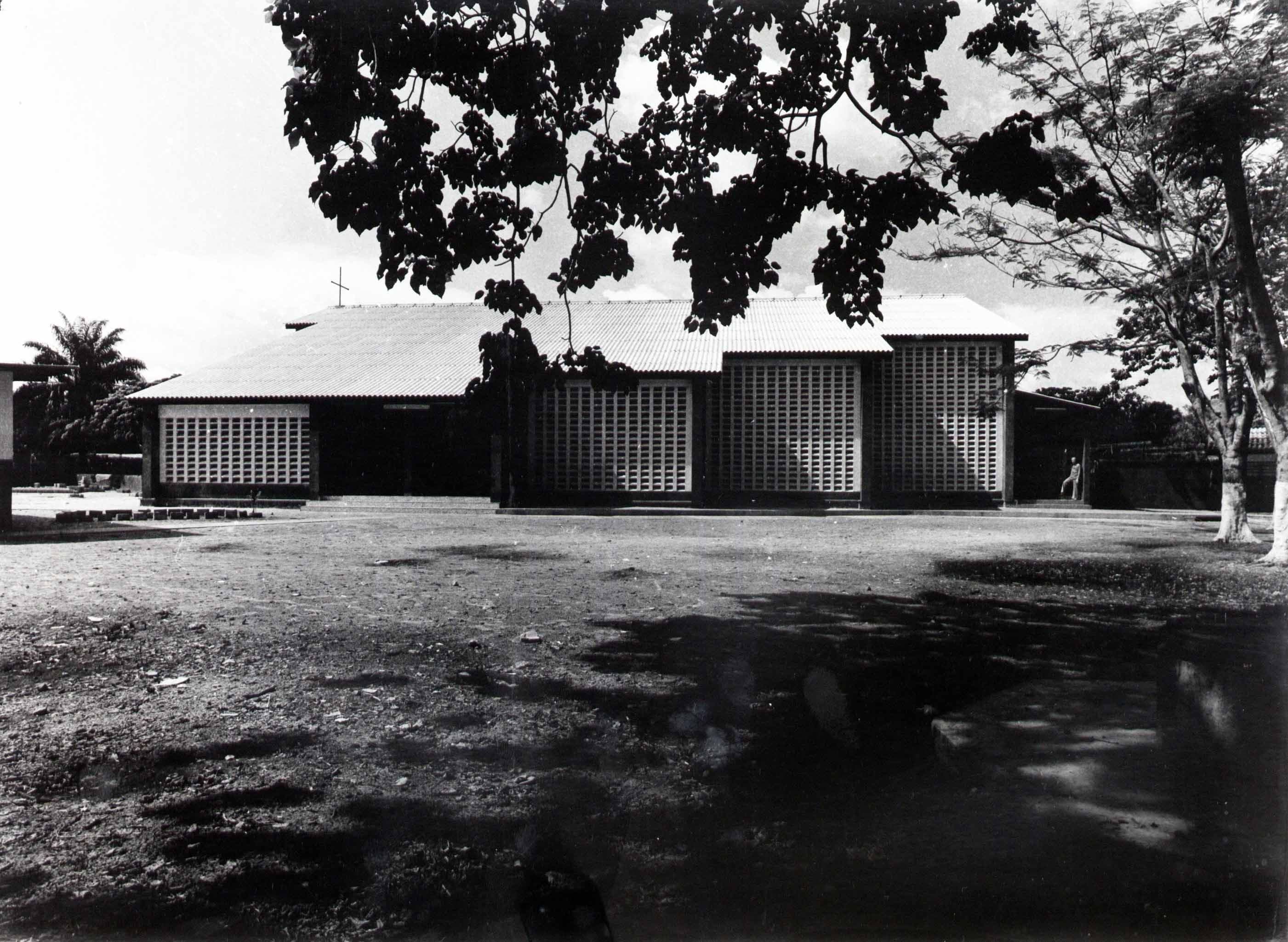
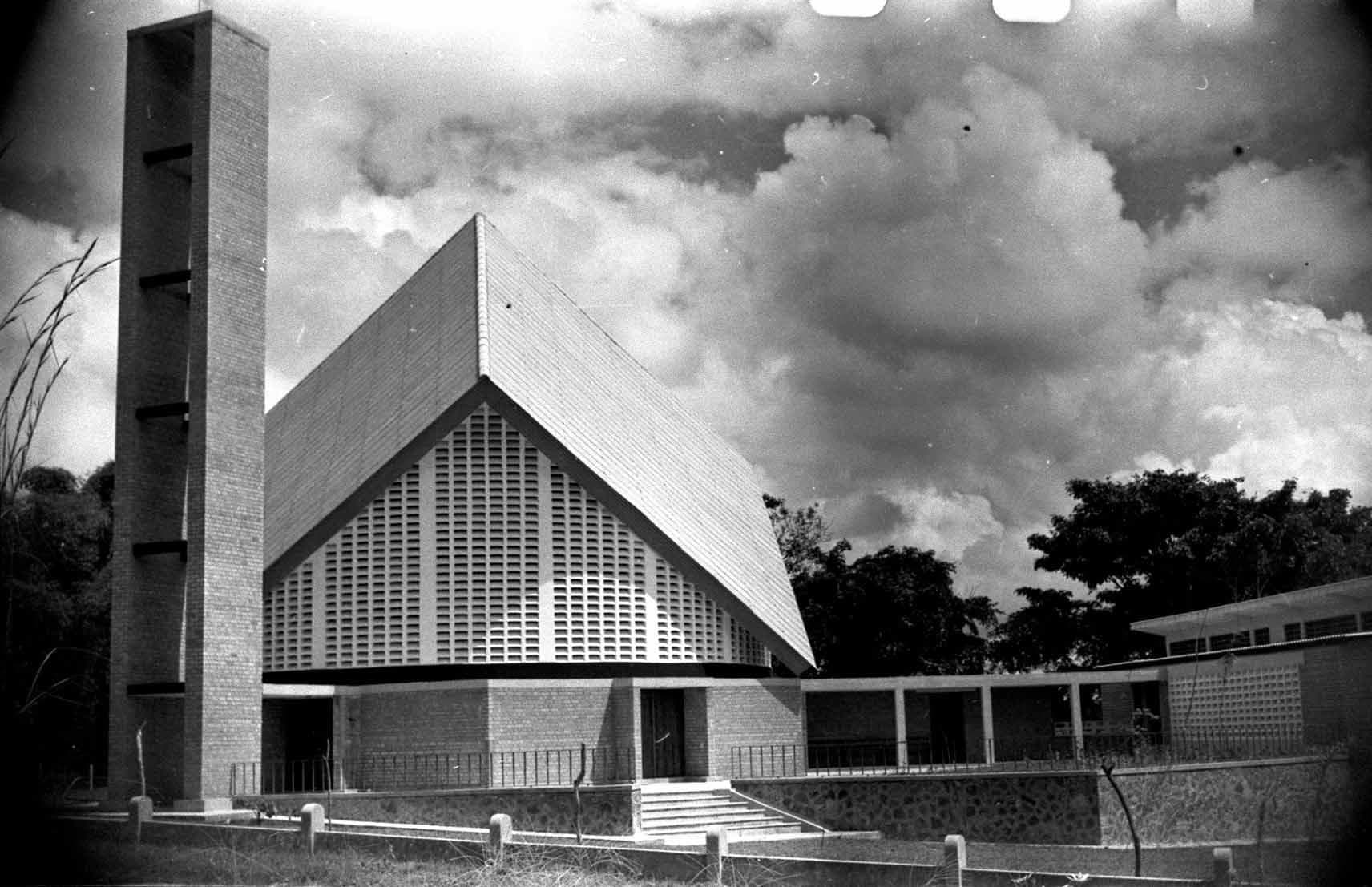
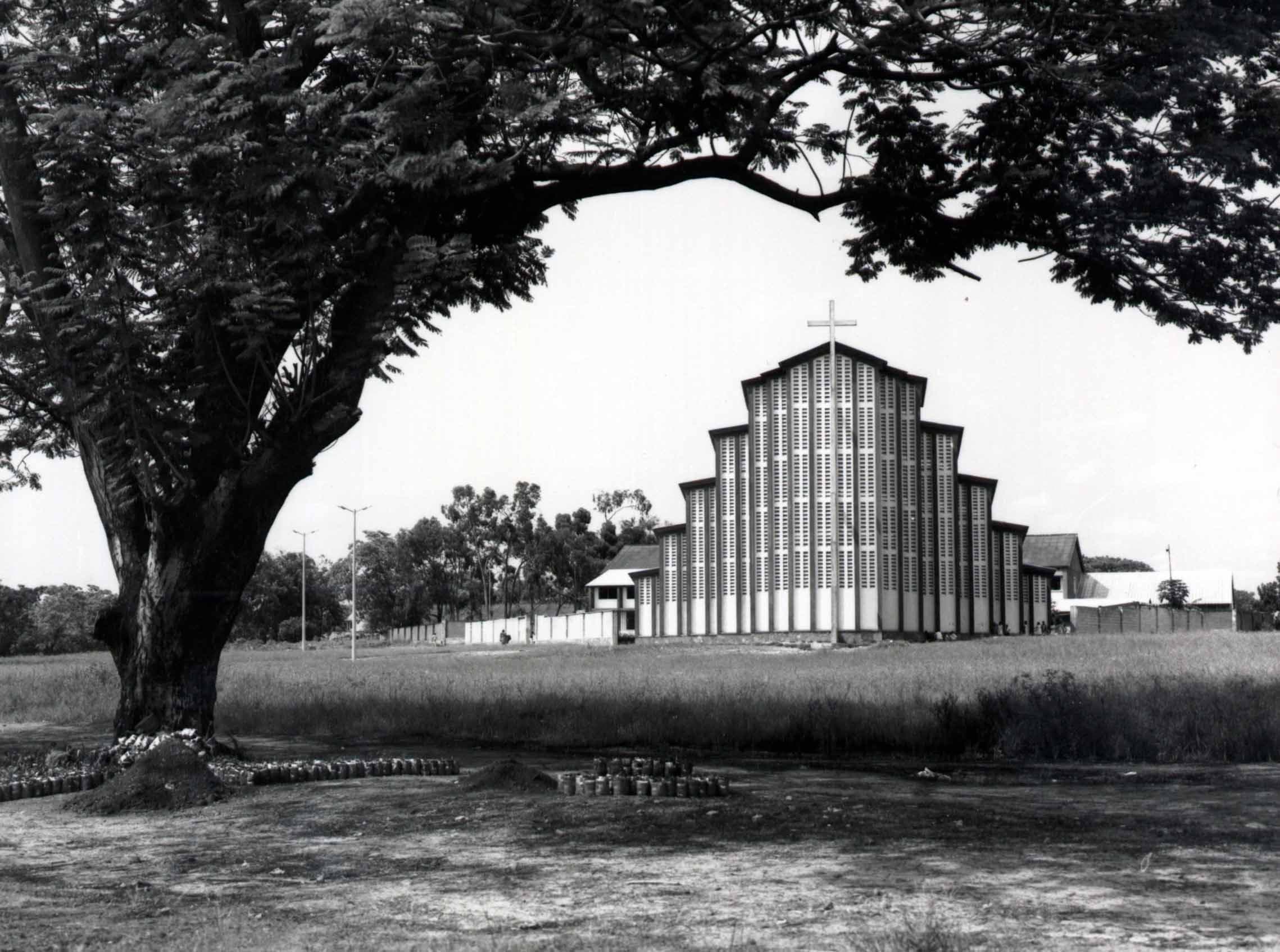
Paul Dequeker was born in Roselare, Belgium, in 1930, and trained at Sint-Pieterscollege in Leuven, where he obtained a degree in modern humanities in 1949. He then studied at the Higher Institute for Architecture and Decorative Arts Saint-Lucas in Ghent, qualifying as an architect in July 1954. He immediately took vows with the missionaries of Scheut (Congregation of the Immaculate Heart of Mary, CICM) and enrolled in the six-month, post-graduate course at the Architectural Association’s Department of Tropical Architecture (1956-57). Dequeker was clearly planning his future direction of work, his thesis project being a study entitled ‘Studies in the Design and Planning for Ndjili-Leopoldville.’ After completing the AA course, he attended KU Leuven, taking a graduate degree in African sciences, then travelling to Congo, as a missionary in August 1958. For the initial two years, until Congolese independence, Dequeker worked for the Bureau del'Enseignement Catholique, primarily designing schools, before being appointed as the head of the Bureau d’Architecture de L’Episcopat of the Centre Interdiocesain. In this role, Dequeker predominantly designed educational facilities, although he was also called upon to build housing, factories a range of utilitarian structures, including bridges and water towers. In total, Dequeker realised c600 projects between the late 1950s and 1980, his work spanning 20 cities in Congo but also including a number of projects in Angola, Cameroon, Nigeria, Burundi, Senegal, Rwanda, Toga, Haiti, the Philippines and Belgium. Amongst his most important built works are the Eglise Christ-Roi, Kinshasa (1961), the Eglise San Augustine, Lemba, Kinshasa (1977) and the Eglise Saint Raphaël, Limete, Kinshasa (1988).
Dequerker also wrote extensively upon the subject of housing in the Tropics, publishing in 1960 an influential article (with Jean Herbert e Eugen Palumbo) in the Italian architecture journal, Edilizia moderna, outlining requirements for building in tropical climes. In 1984, he published a survey, Eglises Tropicale, followed in 1992 by his L’Architecture Tropicale. Théorie et mise en pratique en Afrique tropicali humide. He was appointed a Knight of the Ordre National du Zaïre in 1990 and returned to Belgium in 1993, continuing his research at the University of Leuven and acting as Rector to the Mission House of Scheut, in Leuven, until 2006. His archives are now housed at the KADOC Documentation and Research Center on Religion, Culture and Society, KU Leuven.
Sources:
- Architectural Association Student Register 1945-1972, AA Archives
- Architectural Association Diploma Roll Book, 1924-1963, AA Archives
- Department of Tropical Architecture, student listing, Otto Koenigsberger Collection, Box OK27, AA Archives
- Michieletto, M., Mukanya, V.B. ‘L’architettura sacra di Paul Dequeker nella Repubblica Democratica del Congo’ Esempi di Architettura
- Dequeker, P. La professione dell’architetto in Congo, Edilizia Moderna, 1960.
- Dequeker, P., & Kanene, M. (1992). L’architecture tropicale: théorie et mise en pratique en Afrique tropicale humide, Kinshasa: Centre de recherches pédagogiques
- Dequeker, L. (ed.) Architectuur en missie in Afrika: Het werk van broeder-architect Paul Dequeker, scheutist