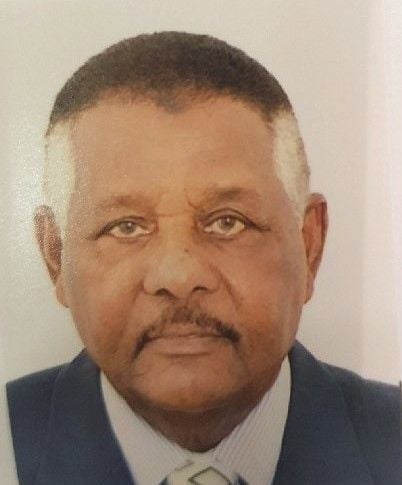
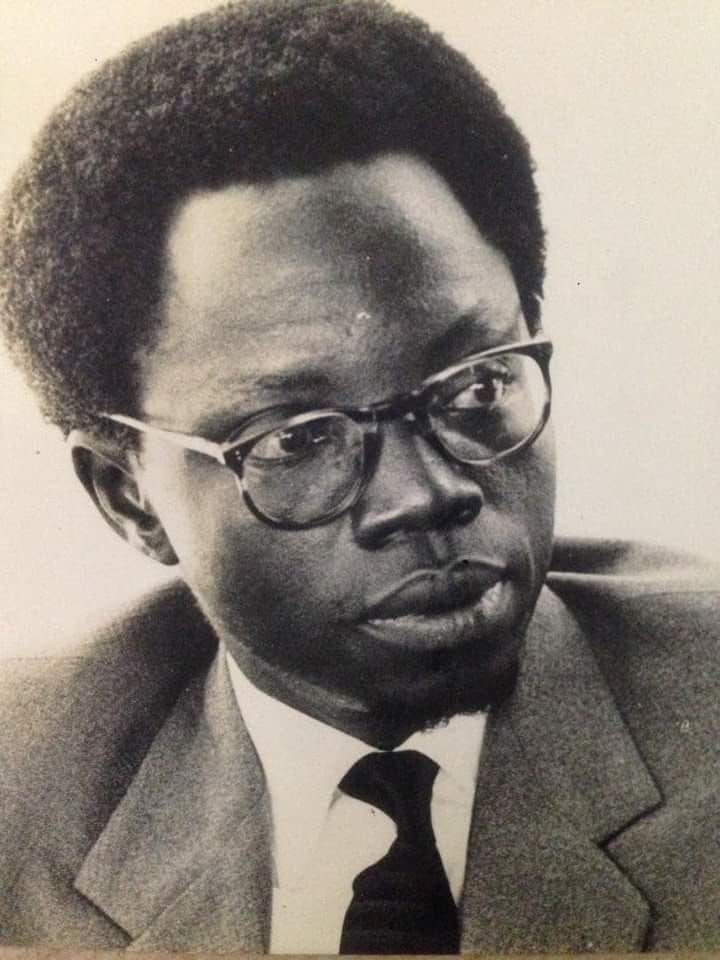
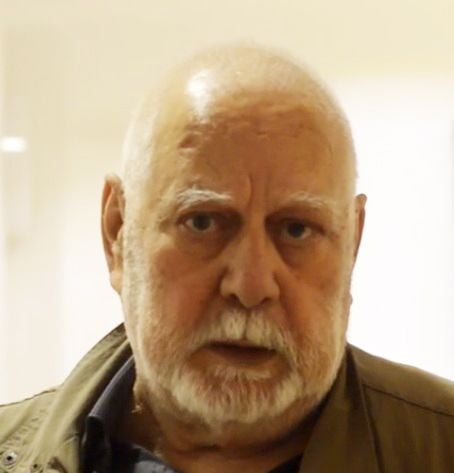
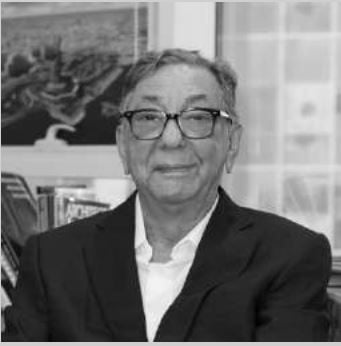
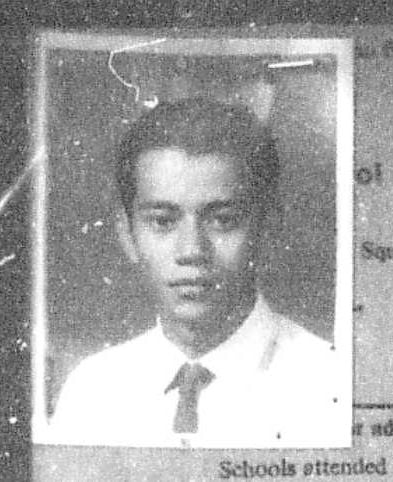
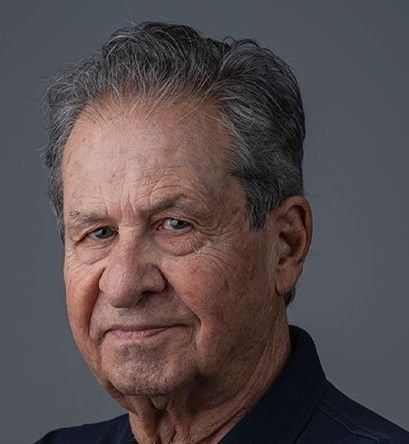
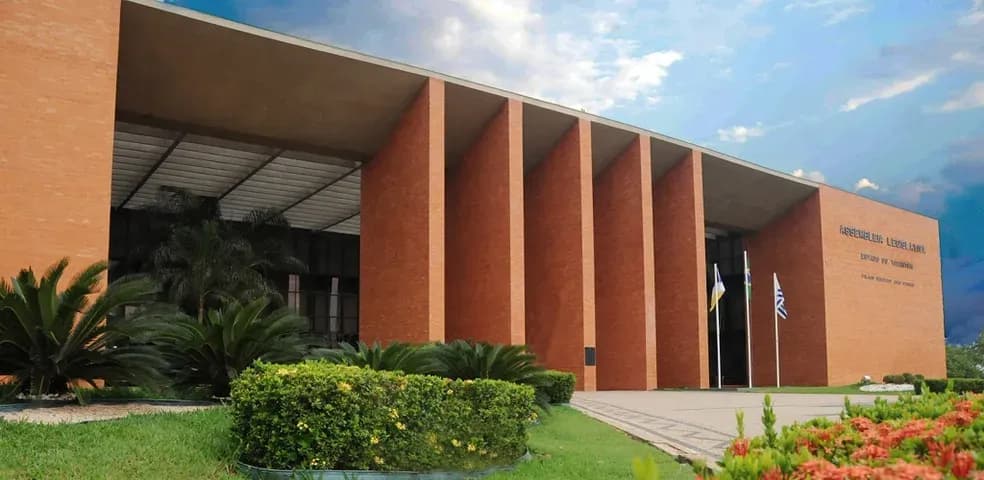
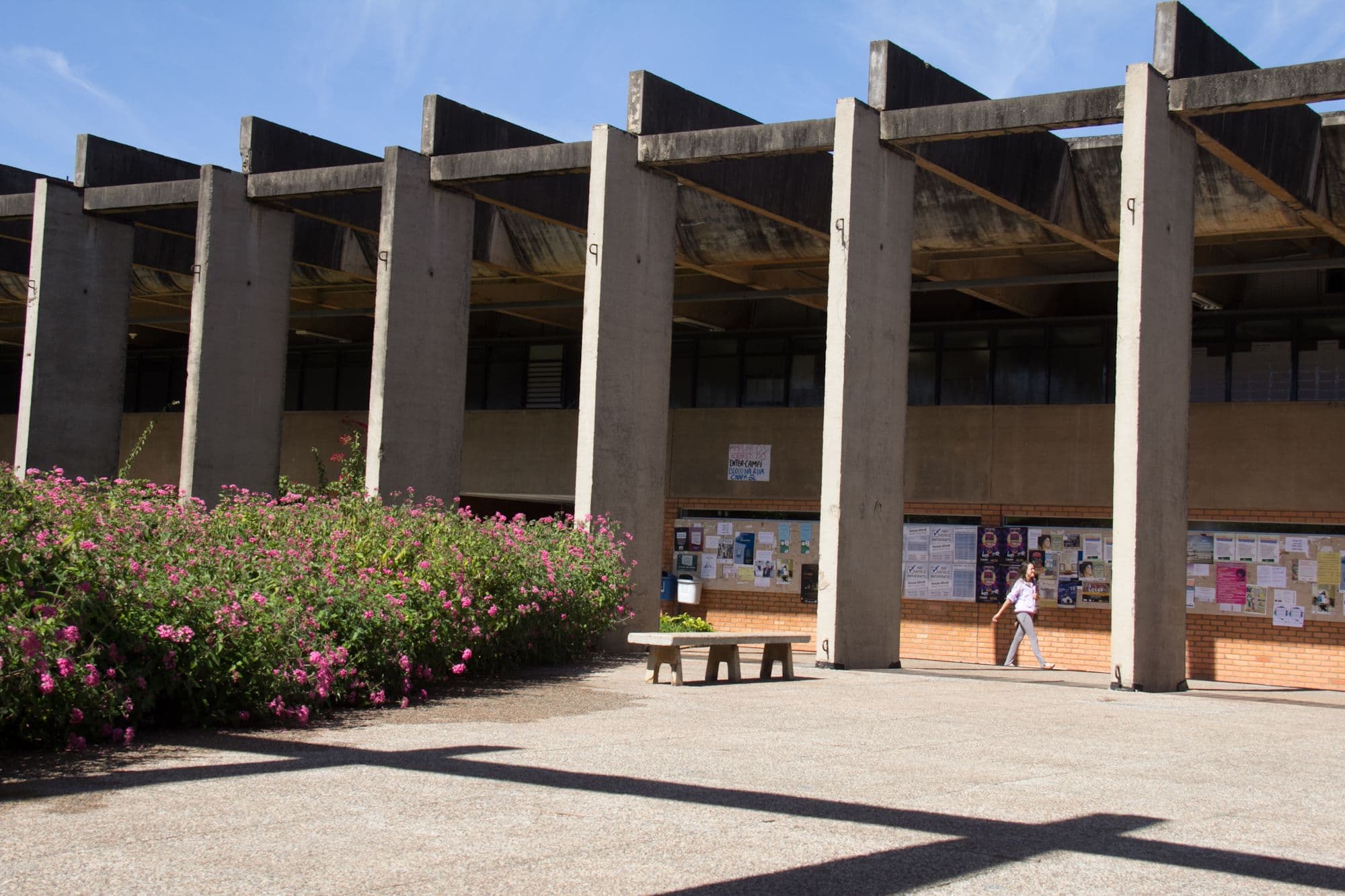
Luiz Fernando Cruvinel Teixeira was born on October 13, 1943, in Goiânia, Goiás, Brazil. He pursued his initial architectural education at the University of Brasília, where he graduated in Architecture and Urbanism in 1968. Immediately following this, he pursued further studies at the Architectural Association, enrolling in the Department of Development and Tropical Studies for the academic year 1968-69, where he undertook the Housing Course. After completing his studies abroad, Teixeira returned to Brazil and began his professional career, working in both academia and urban planning. Between 1974 and 1978, he served as a university professor and was instrumental in founding the Institute for Urban Development of Goiás (INDUR), the governmental body responsible for managing urban policy in the state of Goiás. During this time, he gained valuable experience shaping urban development strategies in Brazil’s rapidly growing cities. In 1988, Teixeira was commissioned by Governor Siqueira Campos to co-develop the master plan for Palmas, the newly established capital of the state of Tocantins. Working alongside architect Walfredo Antunes de Oliveira Filho, Teixeira designed the city’s urban layout with a focus on accessibility, mixed land use, and a flexible grid system that departed from the sectorized model of Brasília. The master plan aimed to accommodate a population of up to two million residents while integrating environmental considerations and promoting sustainable urban growth. Following the Palmas commission, Teixeira consolidated his practice in Goiânia through Grupo Quatro (GrupoQuatro), an office founded in 1974 with Walfredo Antunes, Walmyr Aguiar and Solimar Damasceno that became one of the most active modern architecture and planning firms in Goiás and Tocantins. In Palmas the group translated the ten “principles” of the 1988 Plano Básico—macro‑blocks structured by the Teotônio Segurado and Juscelino Kubitschek axes, linear parks along the river valleys, and a civic centre anchored by the Praça dos Girassóis—into a wider set of public works, including the Tocantins Legislative Assembly building and parts of the cultural and institutional ensemble around the Espaço Cultural José Gomes Sobrinho, where Teixeira experimented with brise‑soleils, pergolas and deep overhangs as bioclimatic devices. Later interviews and studies situate this work within debates on “the last planned capital” of the twentieth century. Teixeira defends high densities, mixed uses, and walkable centrality as essential to keeping the original grid socially and economically viable, while researchers note how low‑density sprawl and repeated extensions of the urban perimeter have frustrated those aims. From Goiânia, he has argued against the abandonment of historic centres, calling for more flexible land‑use rules and the return of upper‑floor housing above street‑level commerce (taking downtown Rio de Janeiro as a model) so that central districts remain lived‑in rather than emptying out at night. Through his academic, professional, and civic work, Teixeira has become both a key figure in contemporary Brazilian urbanism and a sharp commentator on his own generation of planners. In essays and interviews he reflects on encounters with figures such as Richard Rogers during his AA years and revisits Palmas less as a finished utopia than as a testing ground for the “absent time” of planned capitals and the limits of the modernist city. Drawing on his long base in Goiânia and the experience of Grupo Quatro, he asks how Brazilian cities can densify, adapt to climate, and remain socially permeable, positioning himself between the optimism of mid‑twentieth‑century planning and today’s doubts about large state‑led urban projects.
Sources:
- Architectural Association Student Register, 19698-69. AA Archives
- Enciclopædia Biográfica de Arquitetos Digital (EBAD). “TEIXEIRA, Luís Fernando Cruvinel.” Enciclopædia Biográfica de Arquitetos Digital. n.d. Accessed July 12, 2025. https://www.ebad.info/teixeira-lus-fernando-cruvinel
- Teixeira, Luís Fernando Cruvinel. “A formação de Palmas.” Revista UFG 11, no. 6 (June 2009): 91–96. Accessed August 9, 2025. https://files.cercomp.ufg.br/weby/up/694/o/06_Palmas.pdf
- Grupo Quatro. “LP – Grupo Quatro (Sobre nós).” Grupo Quatro – Fernando Teixeira e Arquitetos Associados. n.d. Accessed September 3, 2025. https://grupoquatro.com.br/lp/
- Velasques, Ana Beatriz Araujo. “A ‘última capital planejada do século XX’: o projeto de Palmas (1989) e sua condição moderna.” Docomomo Brasil (conference paper). n.d. Accessed June 30, 2025. https://docomomobrasil.com/wp-content/uploads/2016/01/wtf4.pdf
- Reis, Patrícia Orfila Barros dos. “Palmas: entre muros, vazios urbanos e ausência de vitalidade.” Arquitextos 10, no. 117.03 (February 2010). Accessed June 22, 2025. https://vitruvius.com.br/revistas/read/arquitextos/10.117/3379
- Dayan Machado Gonçalves, Peterson. “Análise diacrônica urbana configuracional da cidade de Palmas – 1990–2017.” Conference paper, Estudos Especiais de Desenho Urbano I e II, Universidade de Brasília, December 2017. Accessed September 14, 2025. https://www.researchgate.net/publication/330553964_Analise_diacronica_urbana_configuracional_da_cidade_de_Palmas_-_1990-2017
- International New Town Institute. “Palmas, Brazil.” INTI – International New Town Institute. 2011. Accessed July 1, 2025. https://newtowninstitute.org/newtowndata/newtown.php?newtownId=1564