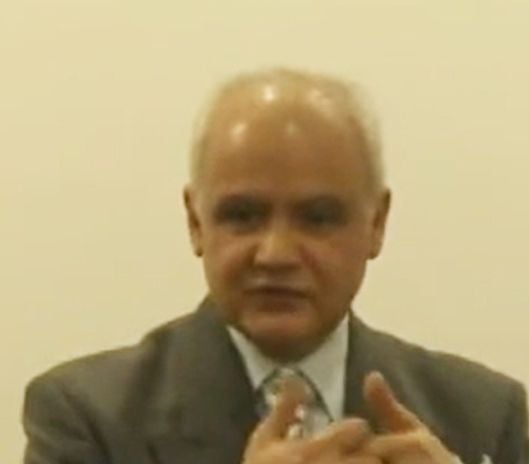
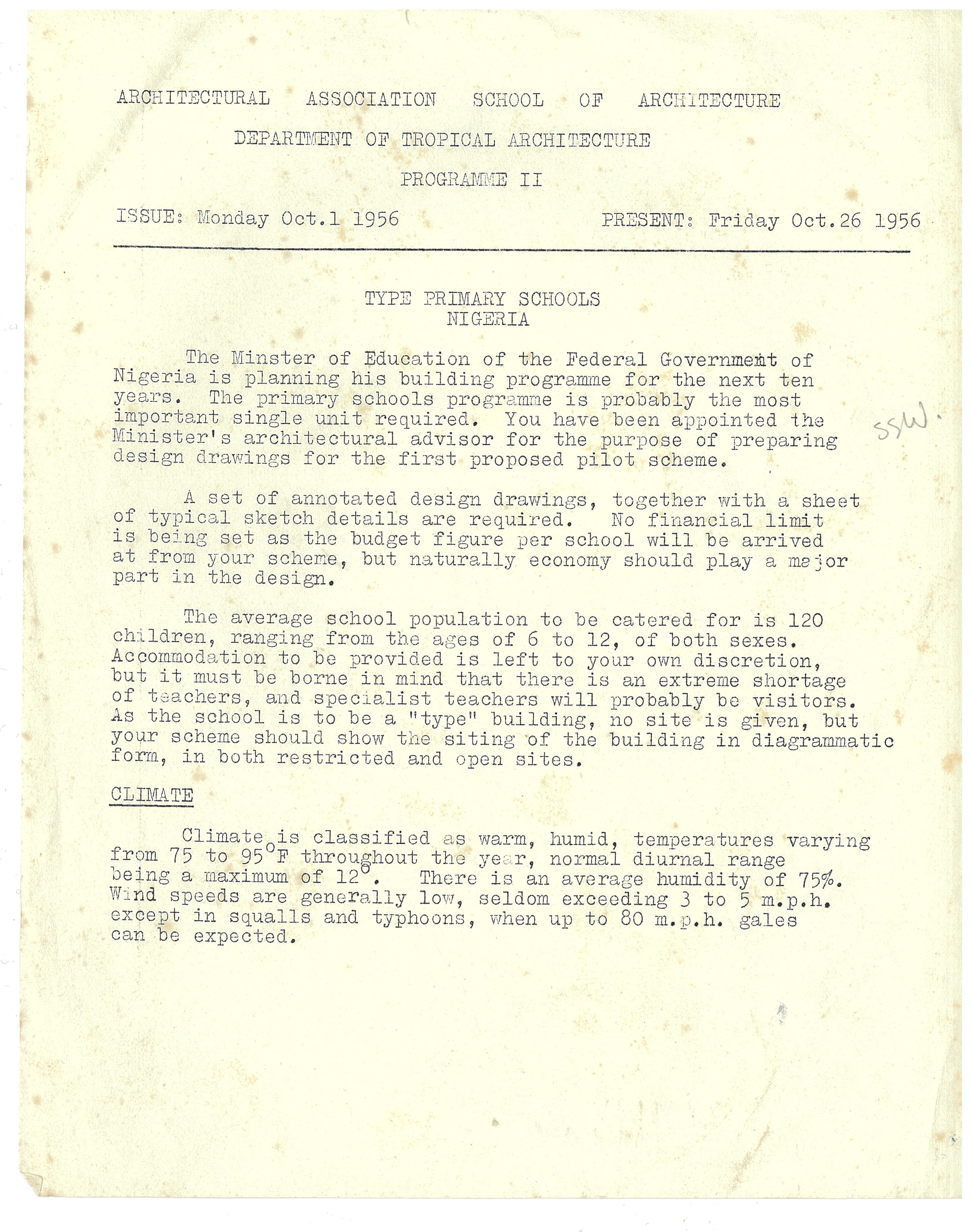
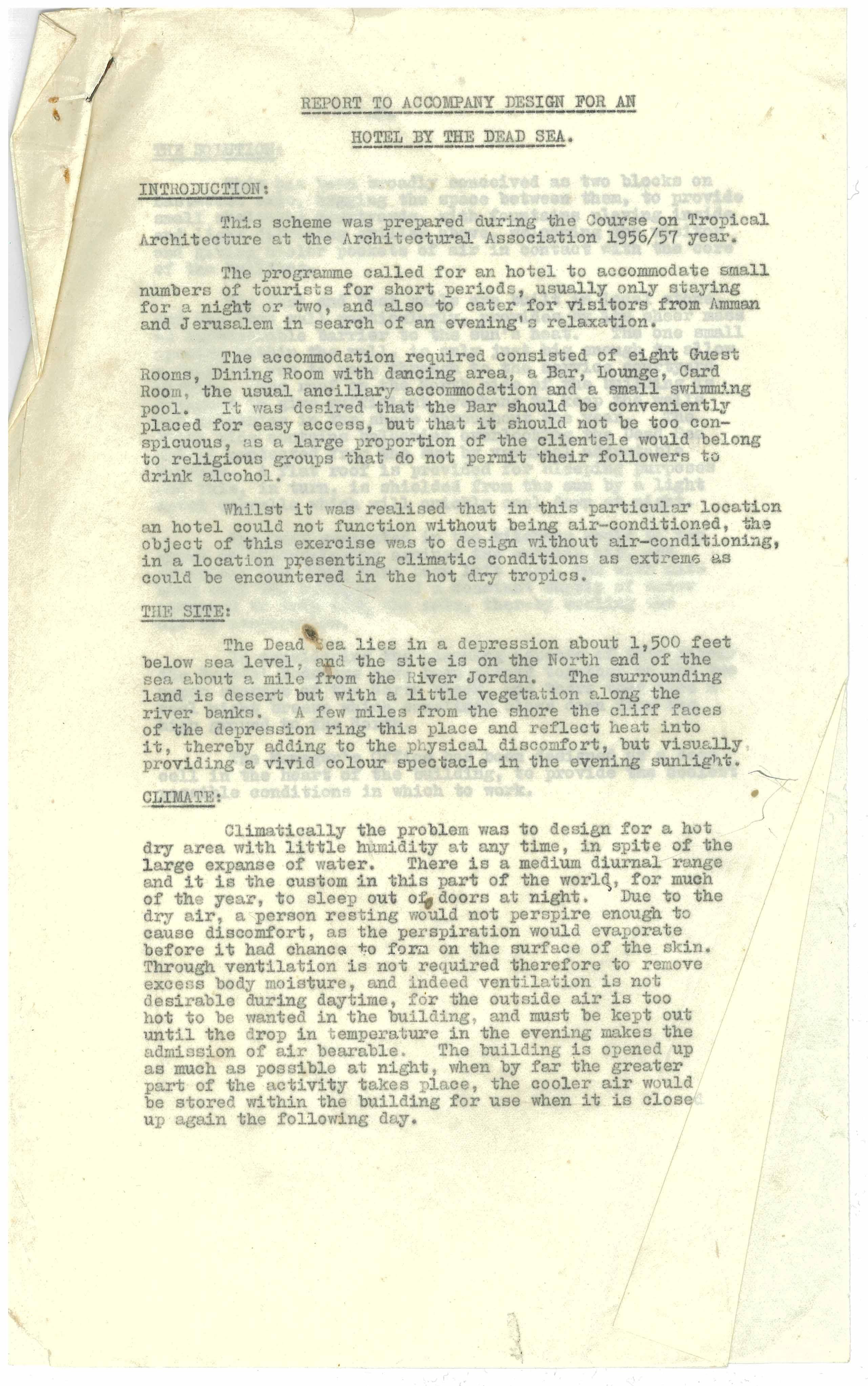
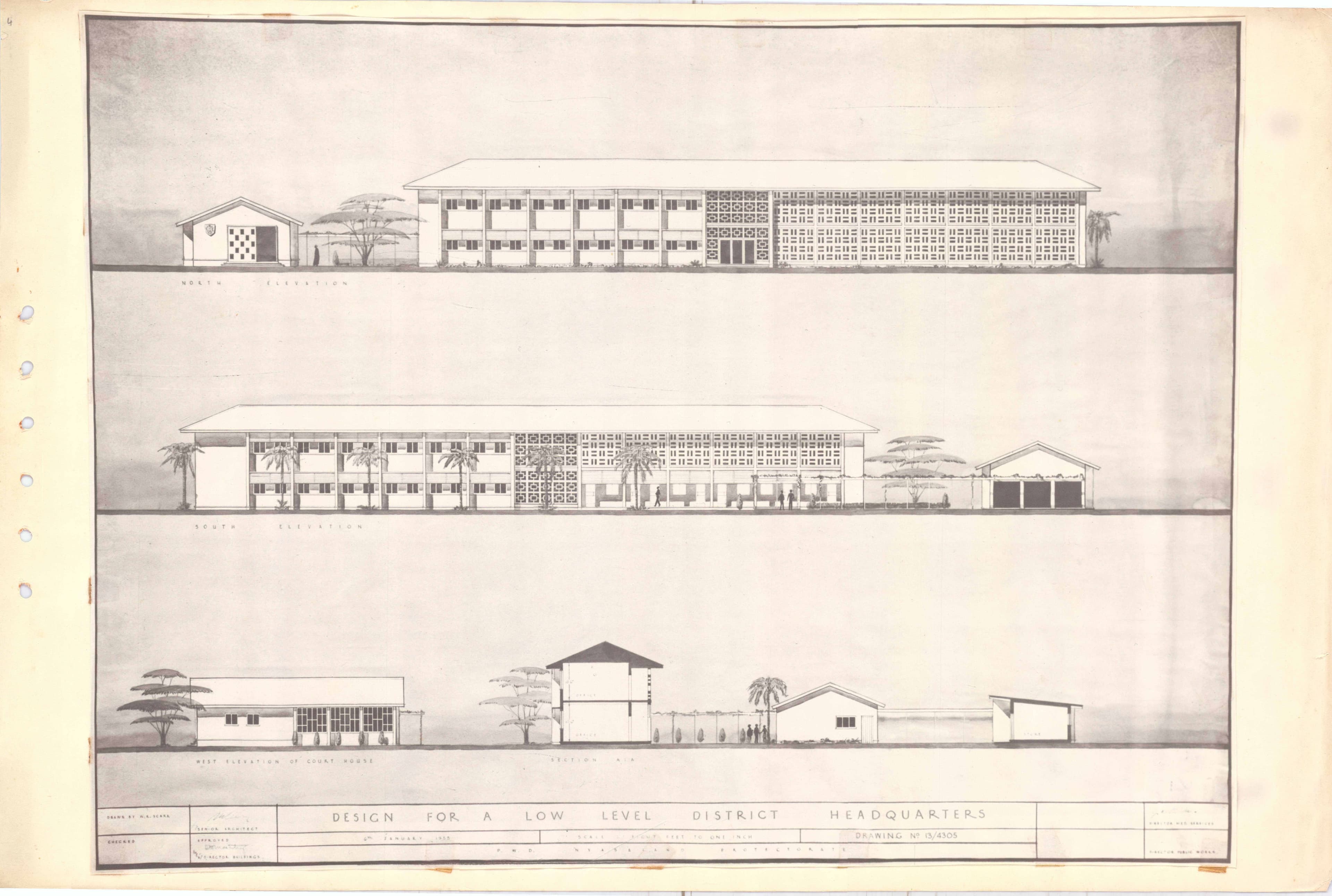
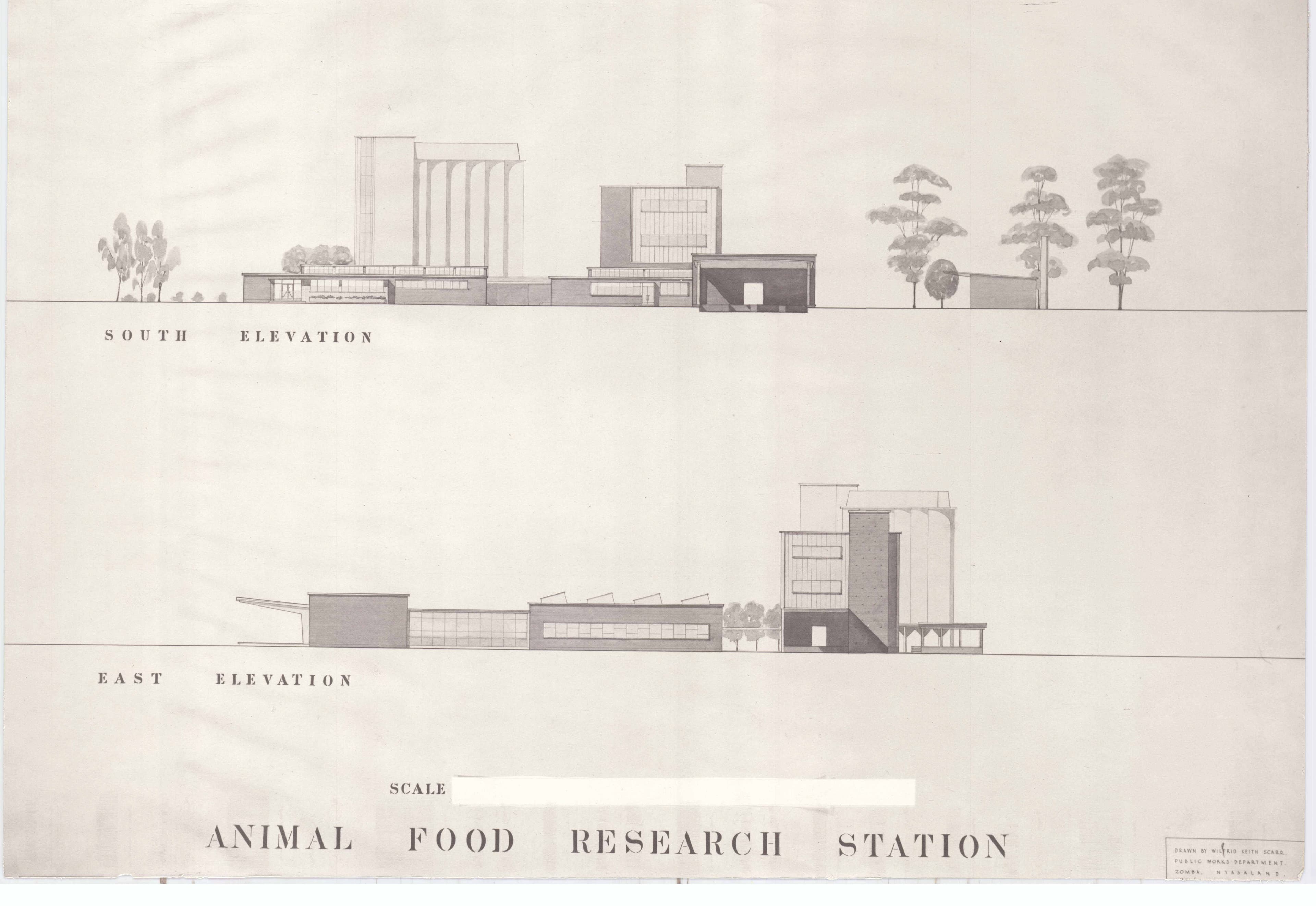
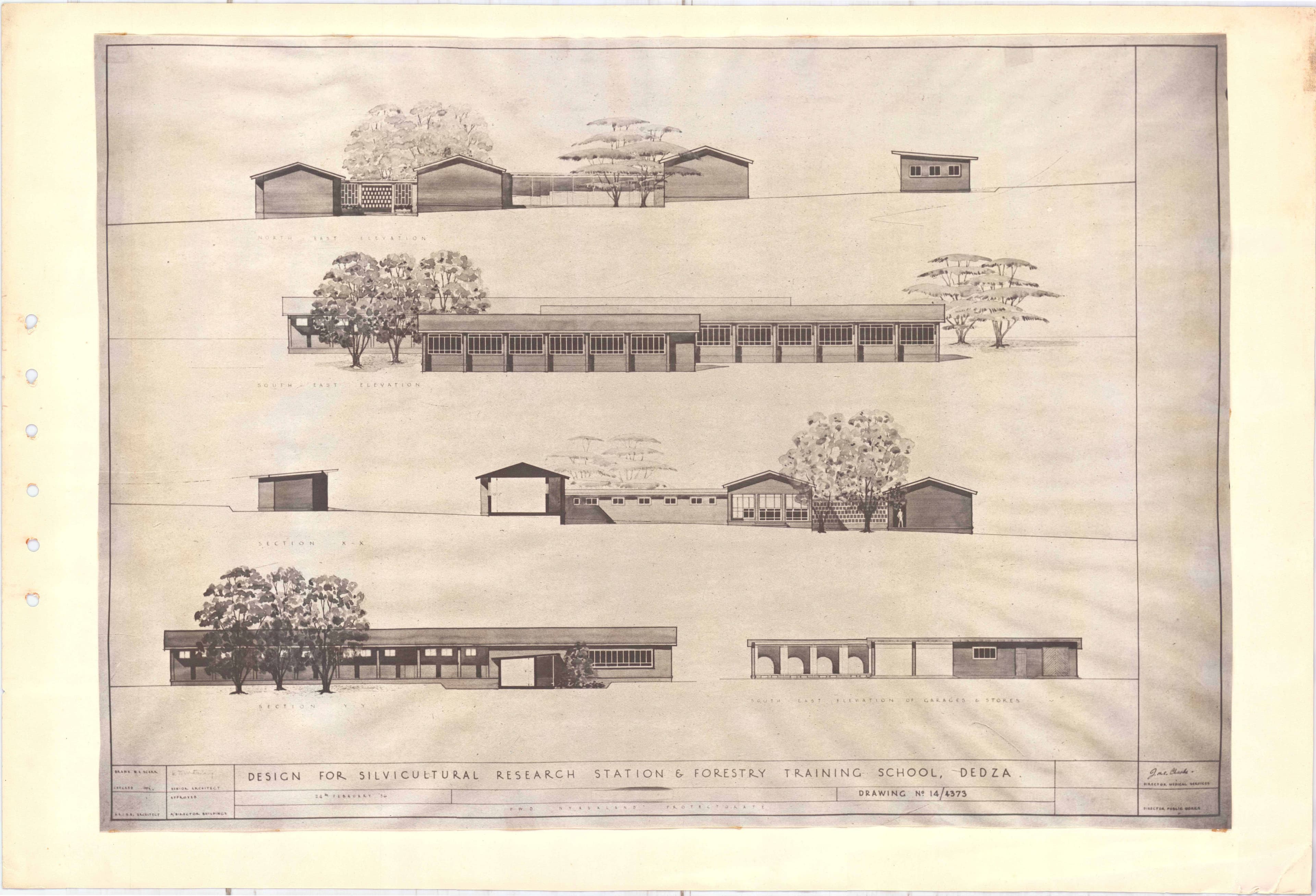
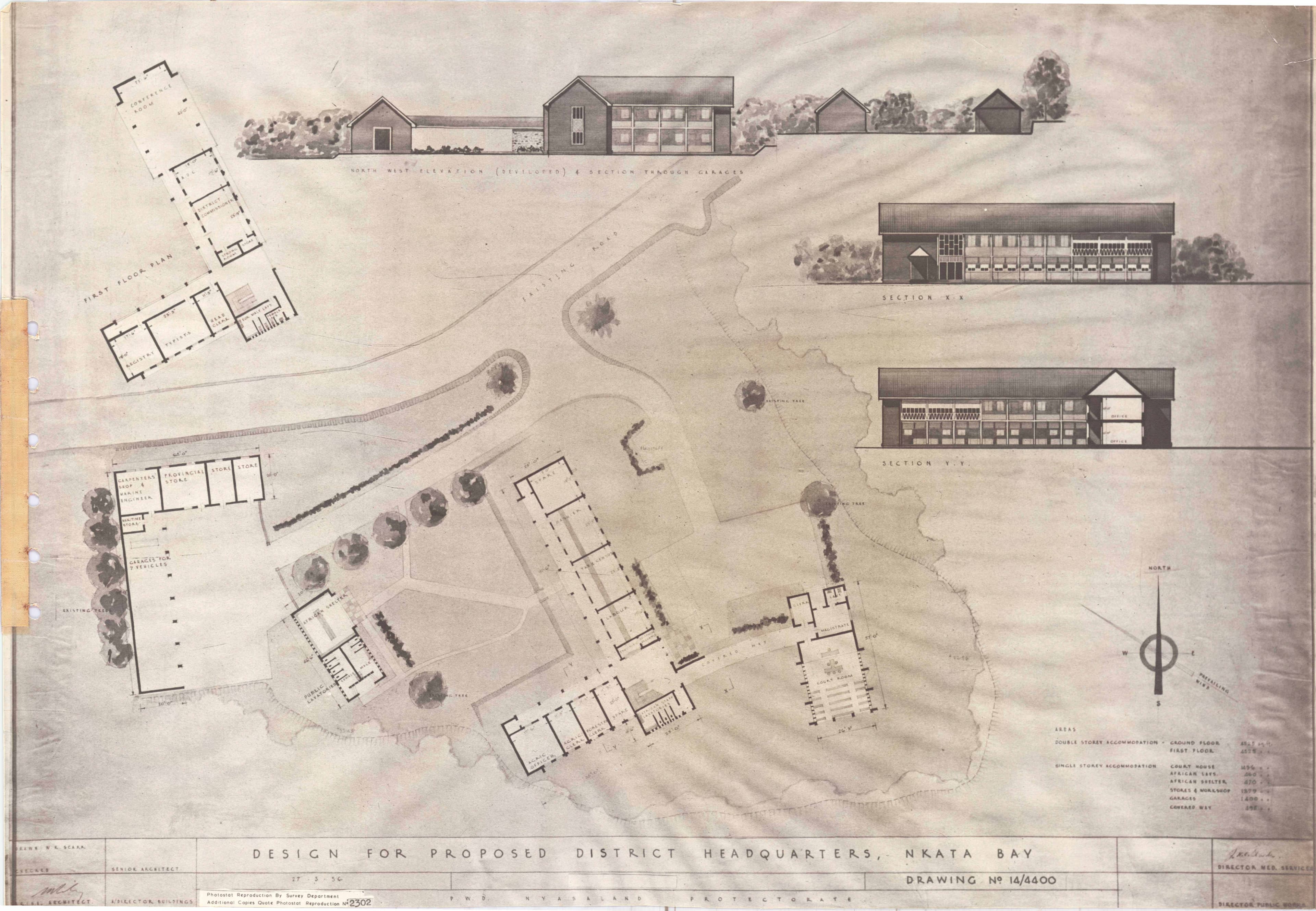
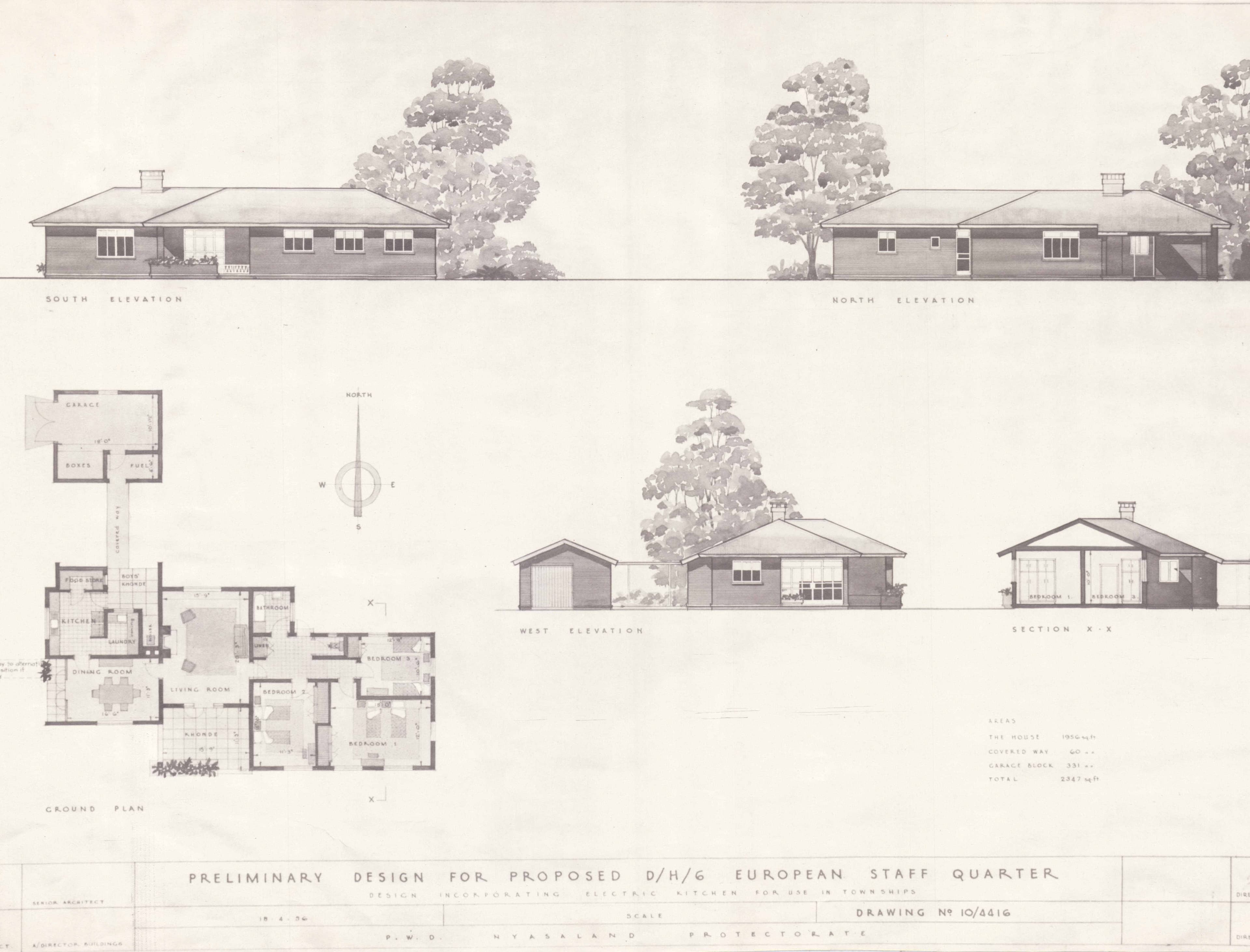
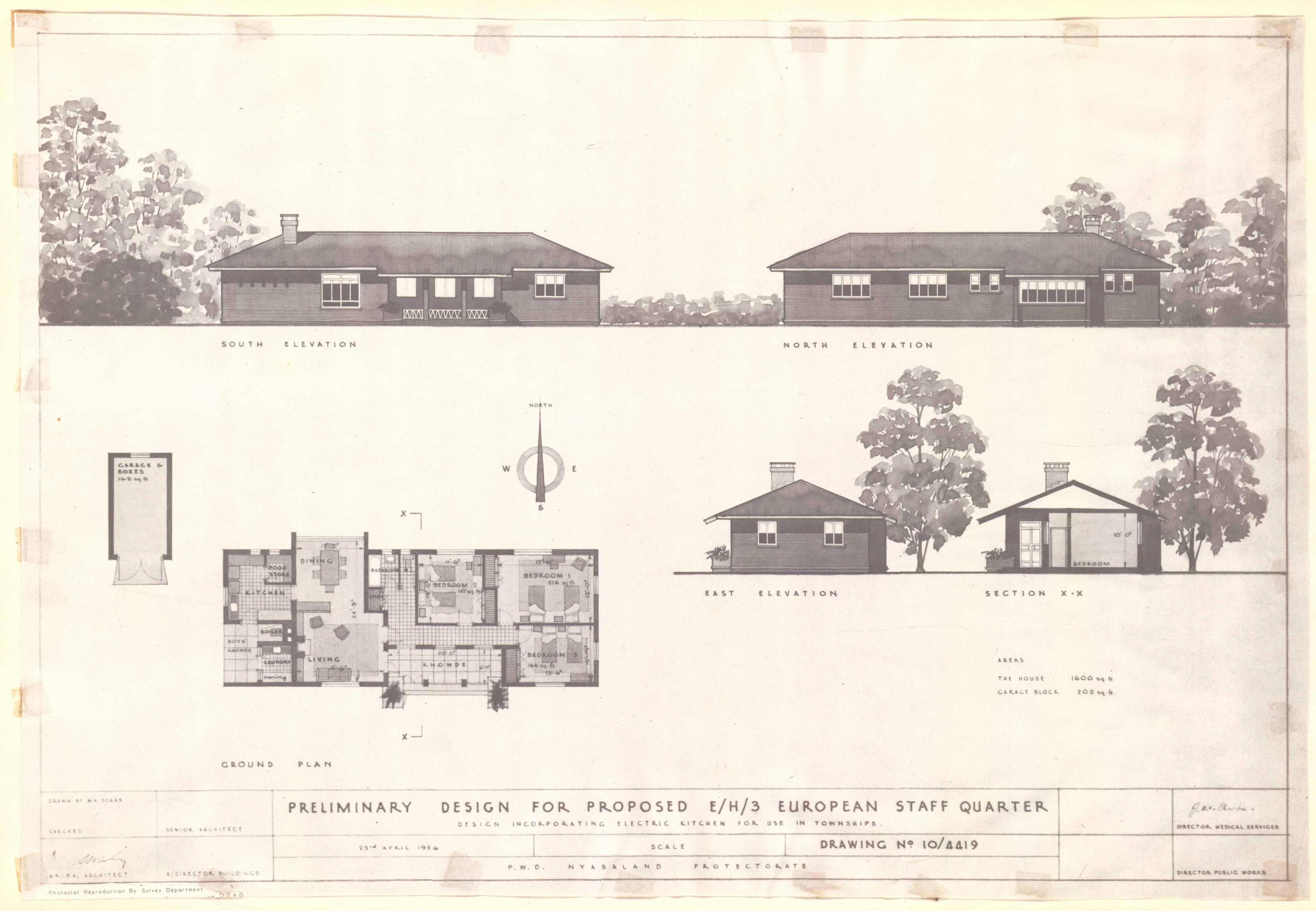
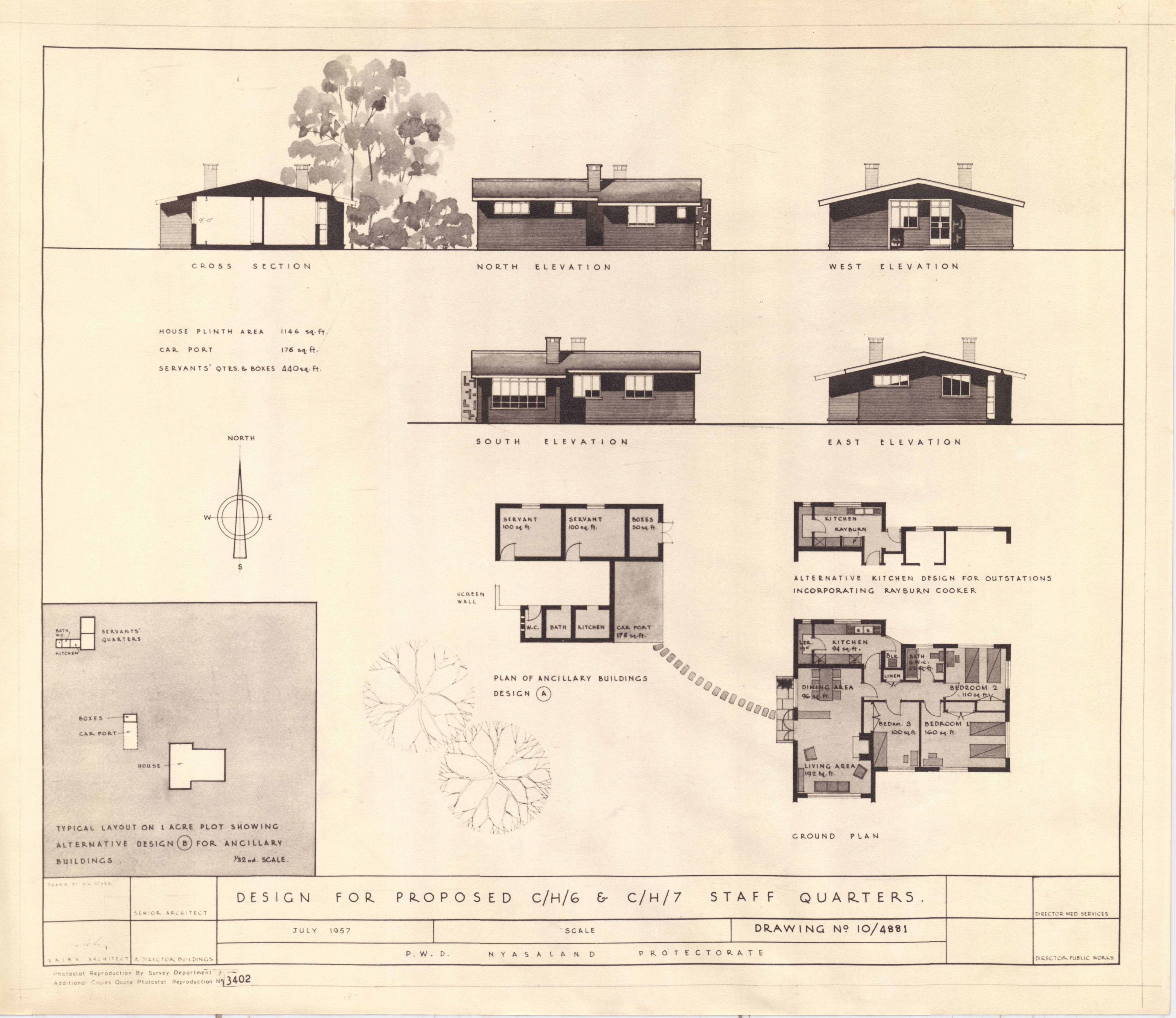
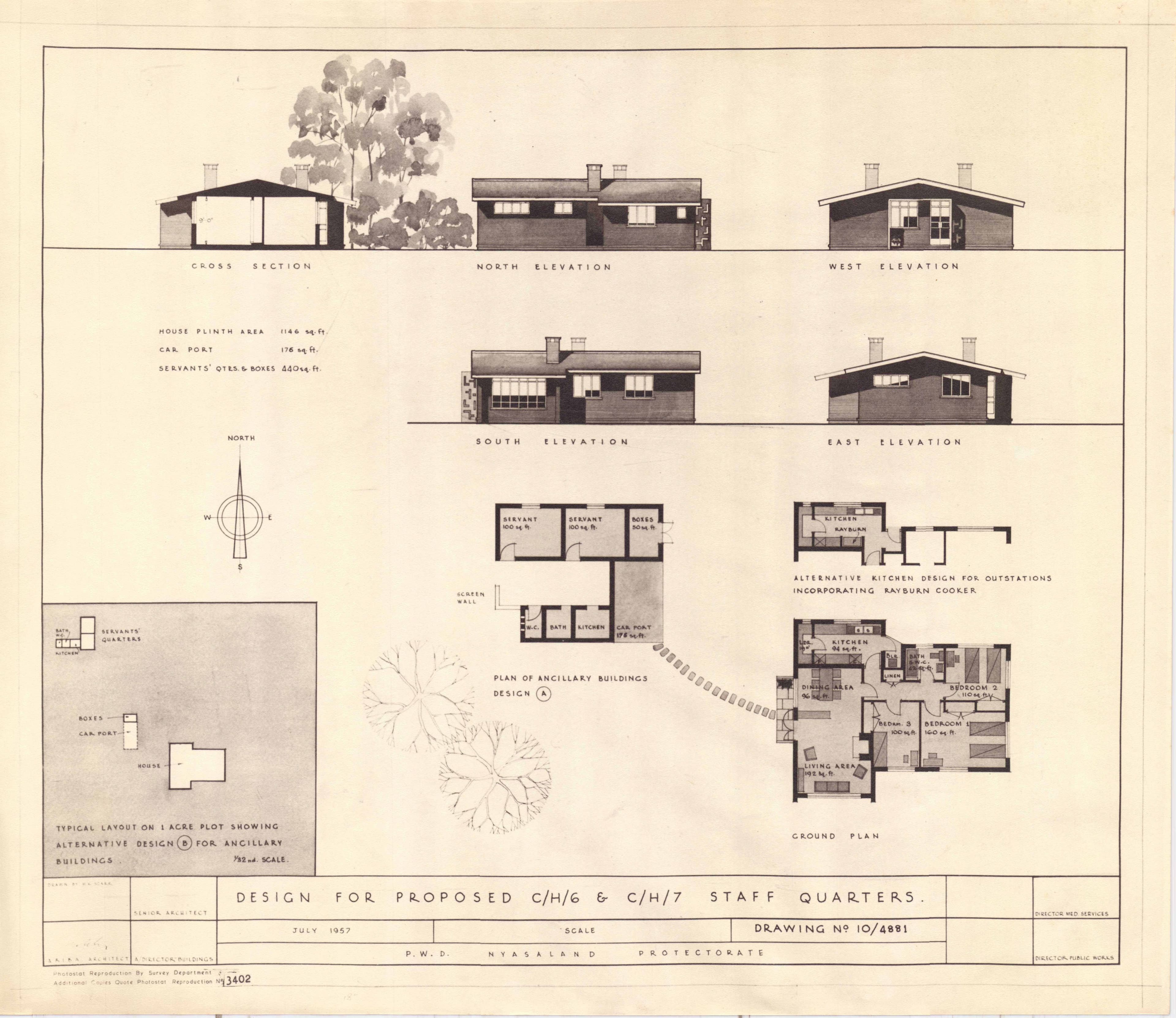
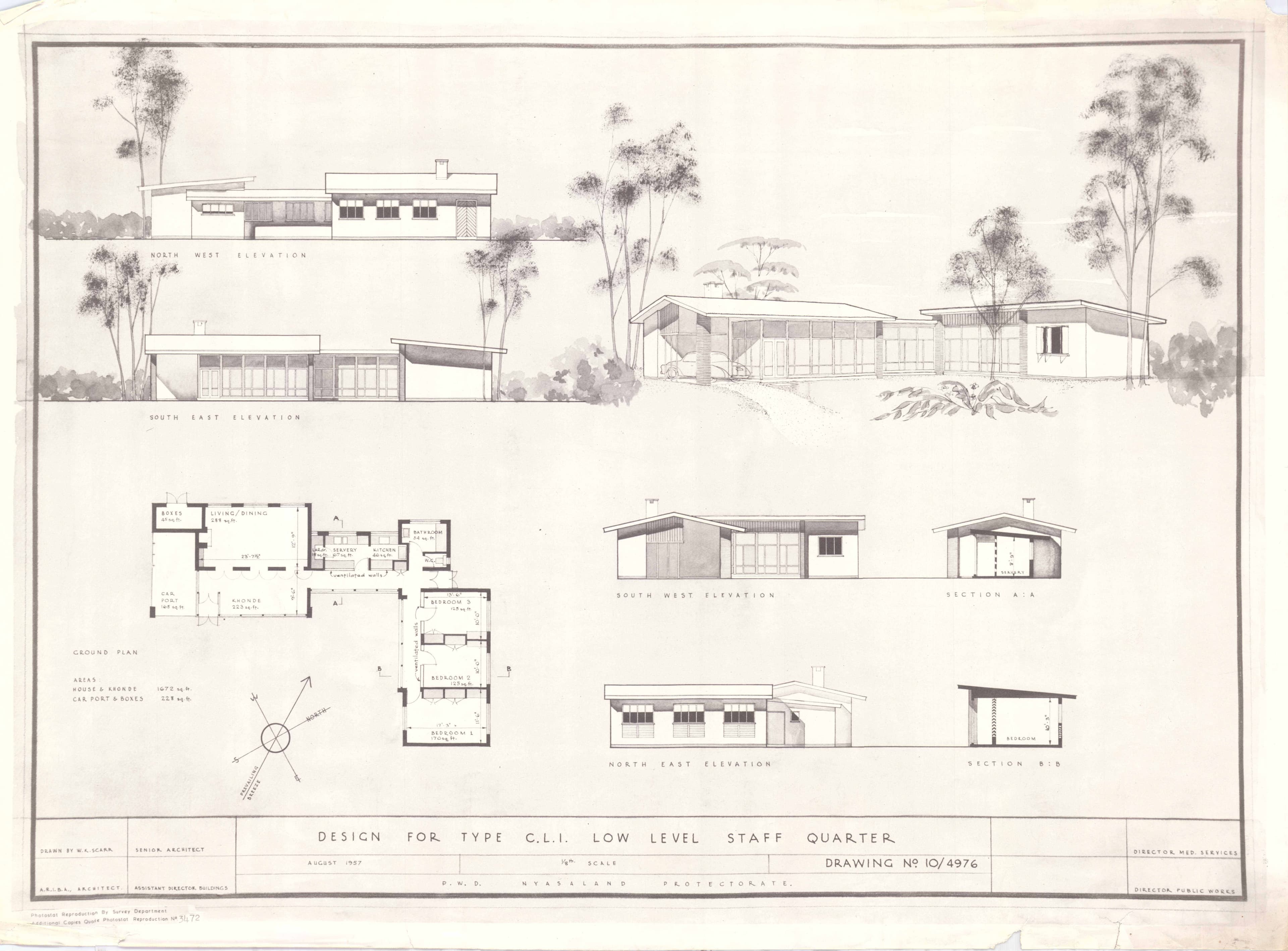
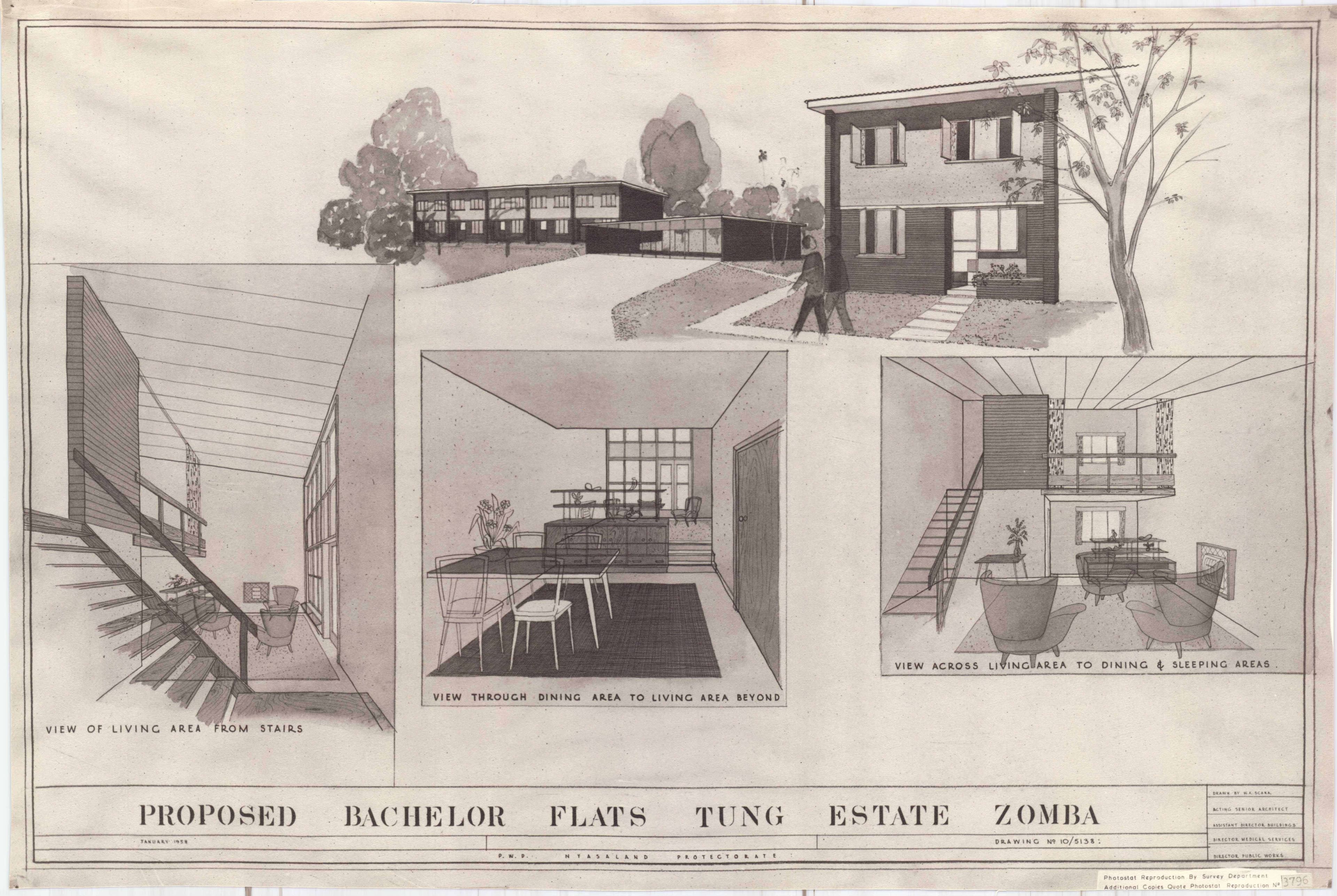
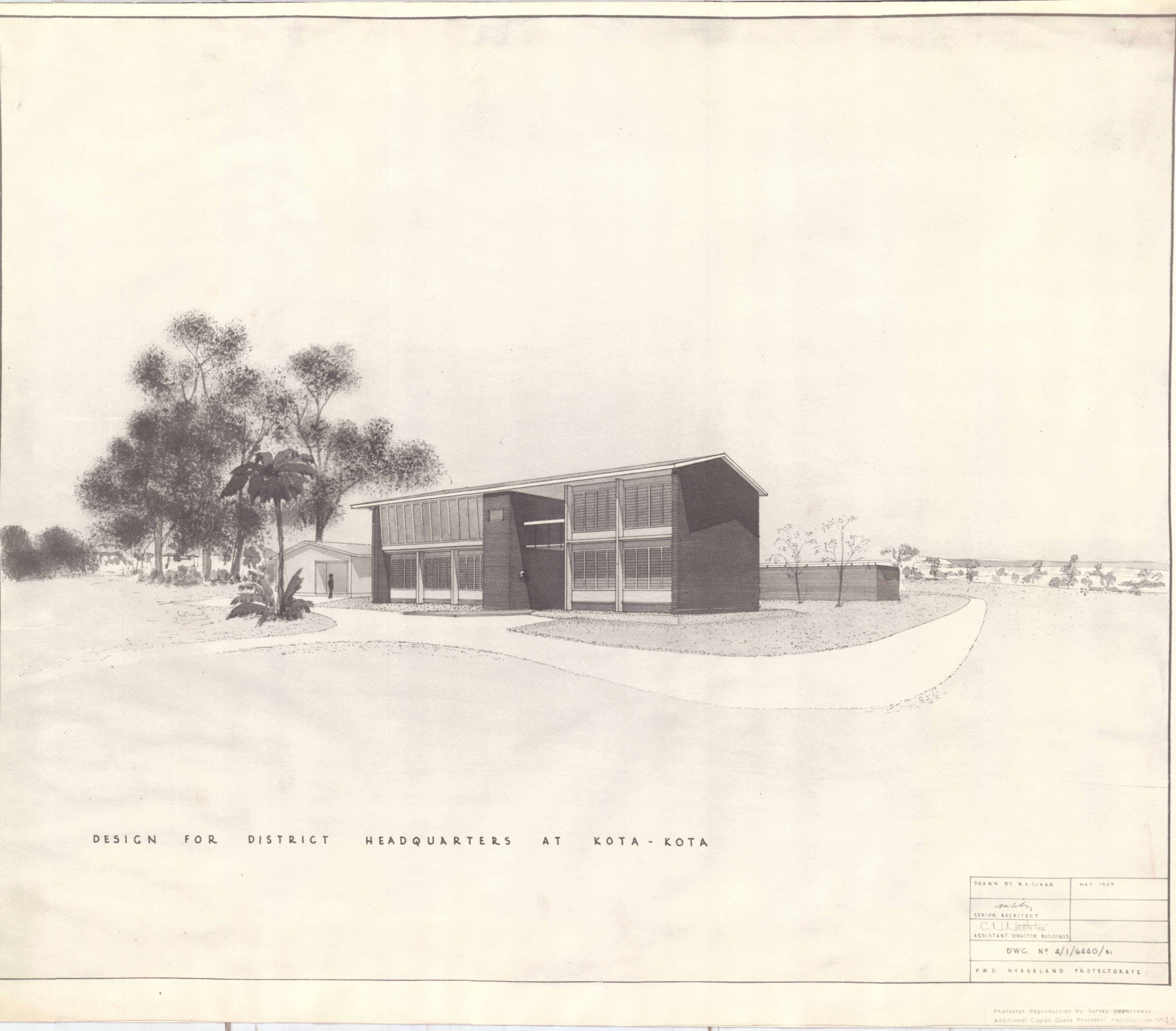
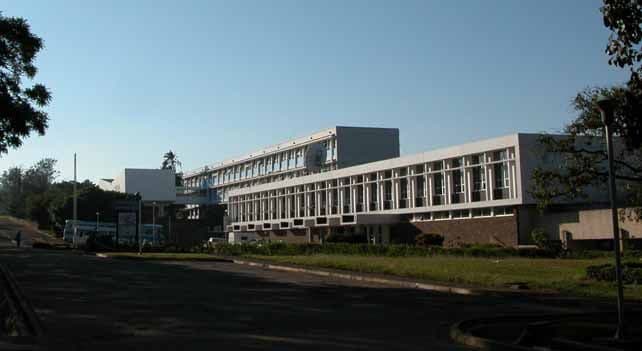
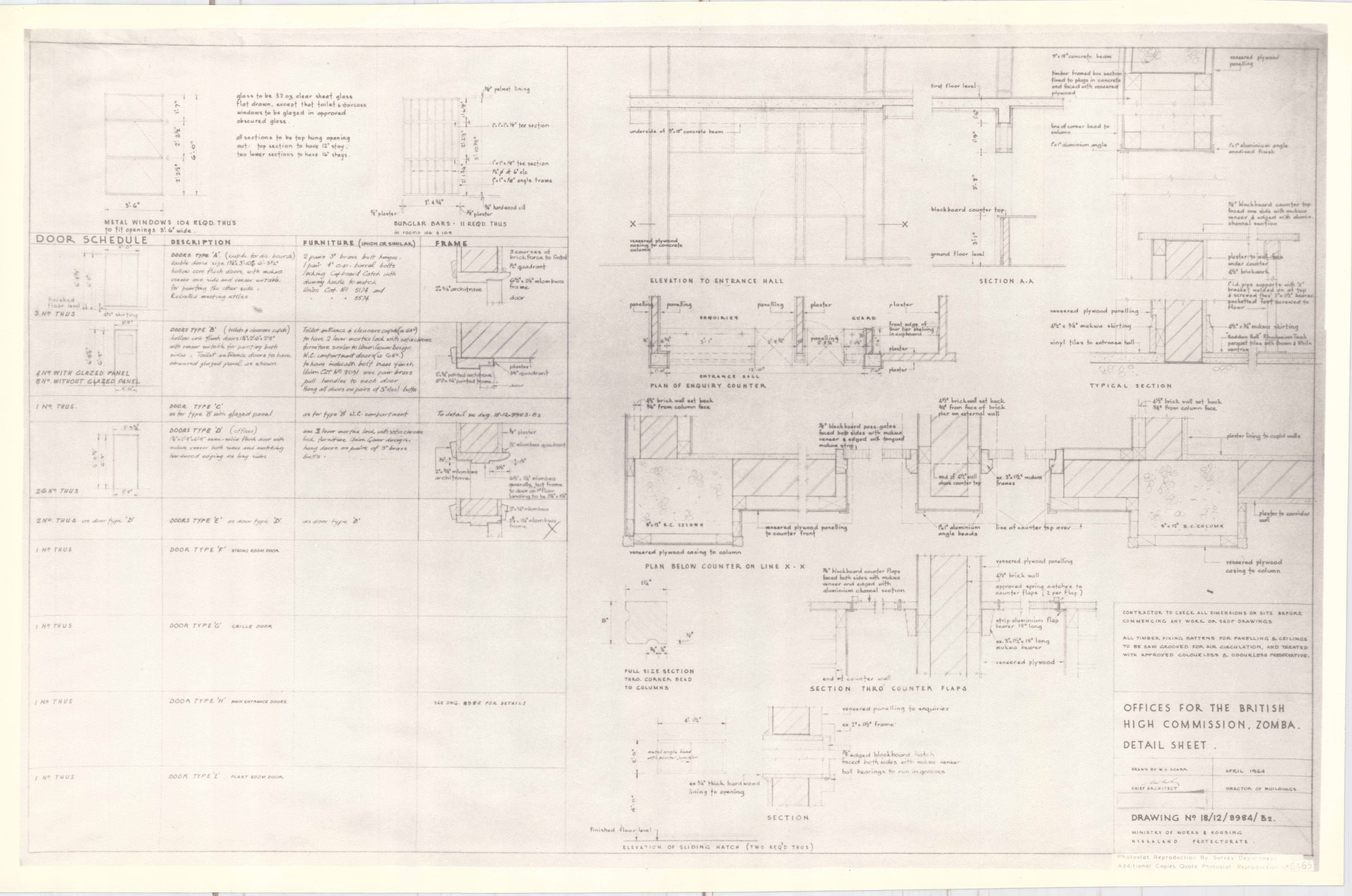
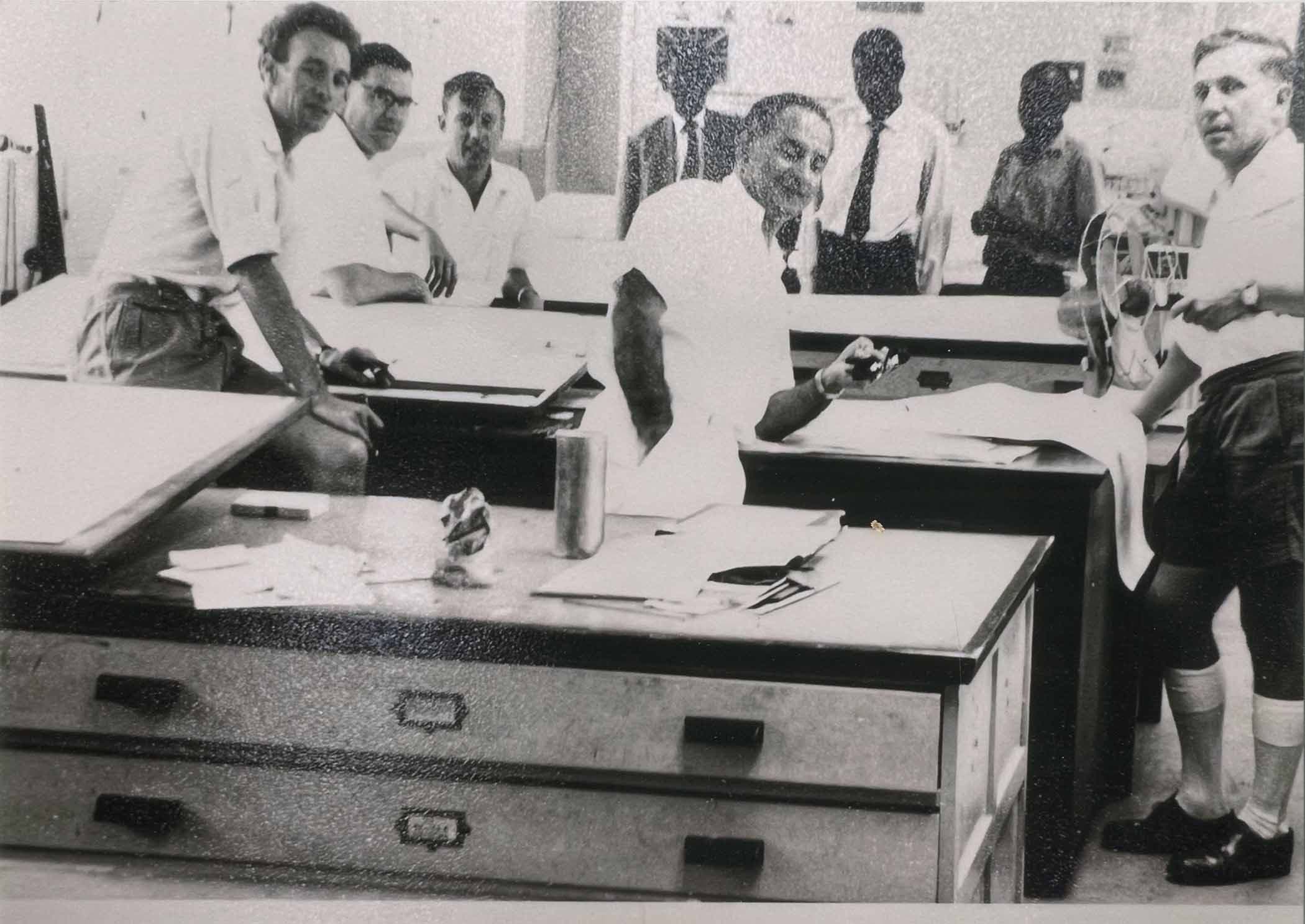
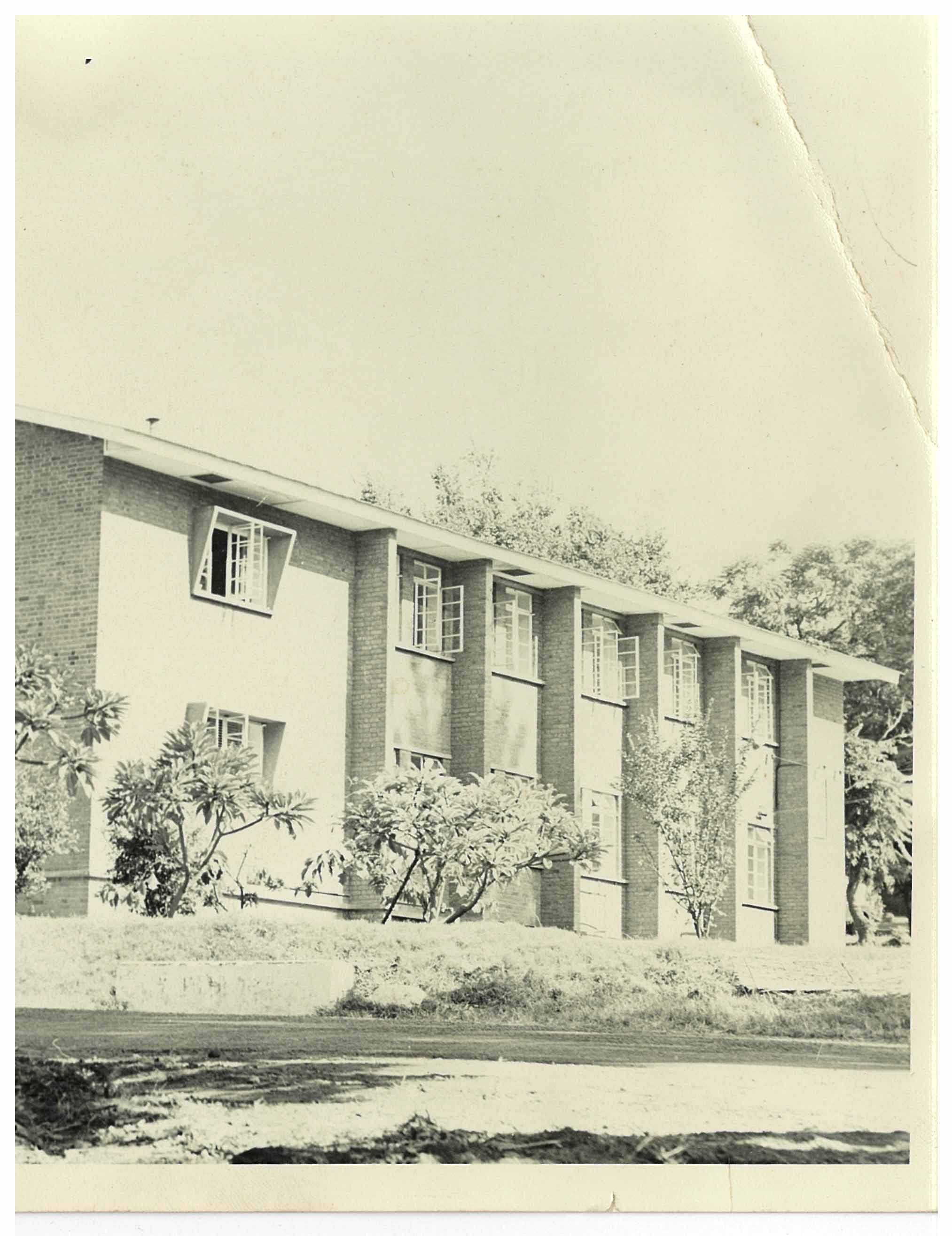
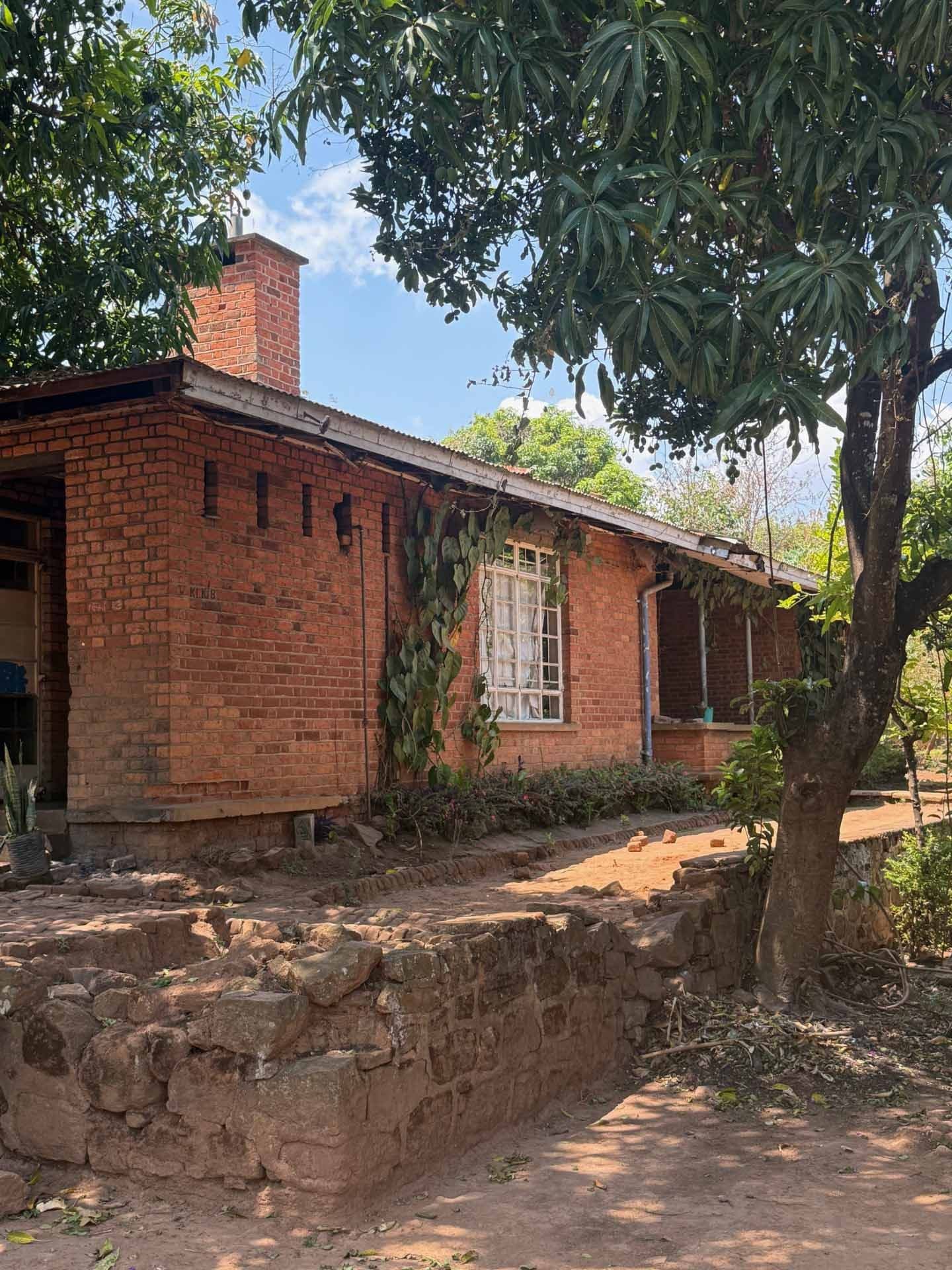
Wilfred Scarr was born in Hull, in 1926 and received his early education at Hull Senior Boy’s Demonstration School, leaving in 1940, aged 14, before winning a place at Hereford School of Art and Science. In 1942 he became an articled pupil and then Assistant in the Hereford-based practice of Herbert Skyrme, his work interrupted by a period of military service with the Royal Artillery Survey from 1945-48. Scarr subsequently was appointed as an Architectural Assistant for Hereford County Council (1949-50) and then for Shropshire County Council (1950-53). In 1953 he applied for work in Uganda through the Colonial Service but instead obtained the position of an Architectural Assistant in Nyasaland (now Malawi), working with the Public Works Department in Zomba. He undertook his RIBA qualification via correspondence course, travelling to Rhodesia to take his exams, and in 1956 persuading the H.M. Overseas Civil Service to allow him leave to attend the Architectural Association’s Department of Tropical Architecture six-month course. On his return to Zomba in 1957, Scarr was promoted to the position of Architect within the Public Works Department and acted as Chief Architect for periods totalling two years, prior to Malawi’s independence in 1964. Wilfred worked on a great variety of government buildings and design drawings, in his hand, survive for the District Administrative Headquarters for the Nyasaland government in Nkata Bay and also in Kota-Kota (now Nkhotakota). Also held within his archives are his proposals for a range of administrative staff quarters, from bachelor flats to married quarters, alongside designs for an Animal Food Research Station in Zomba. Also included are drawings for the Silvicultural Research Station and Forestry Training School, based near Dezda, and for the British High Commission headquarters in Zomba.
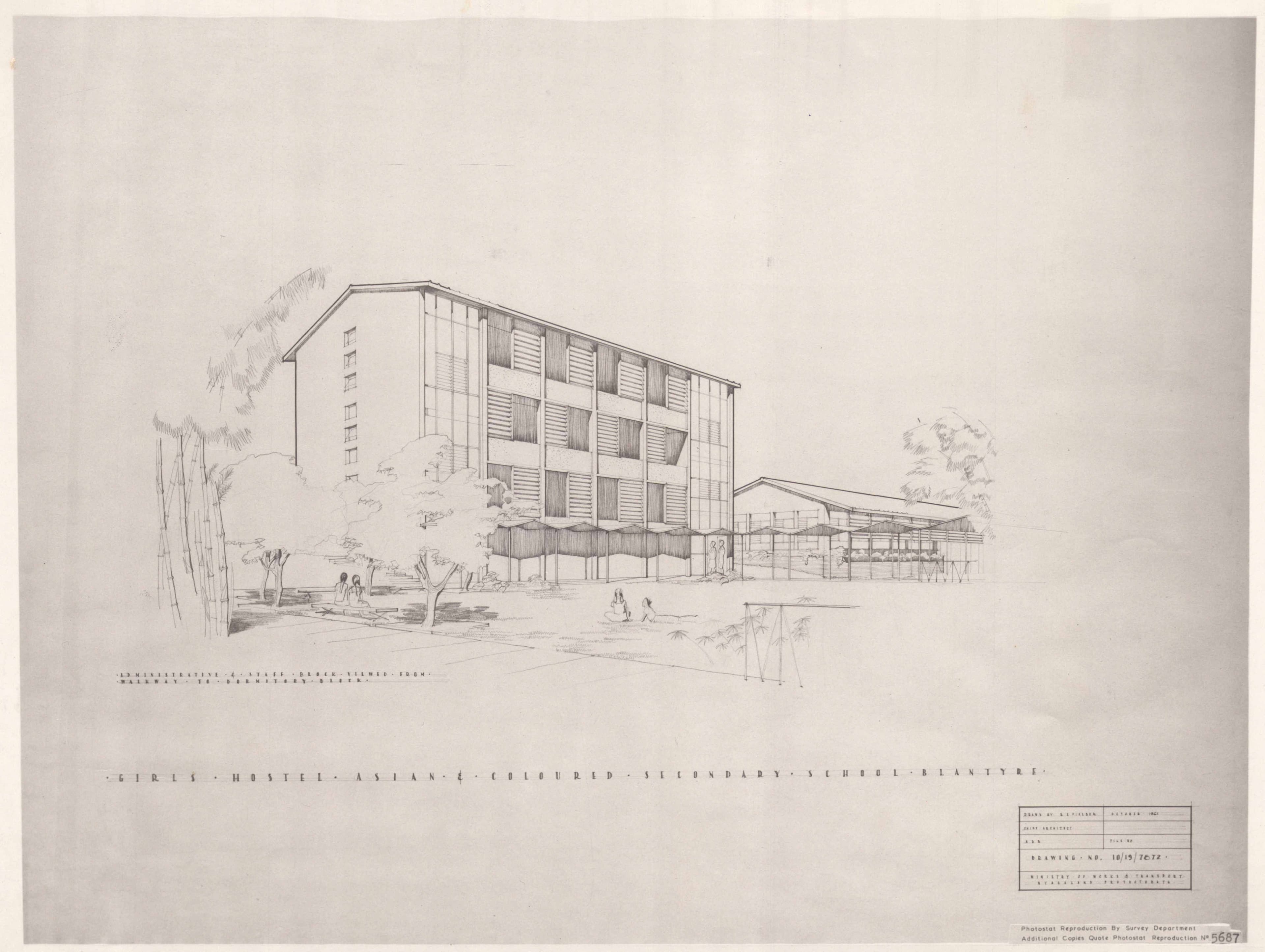
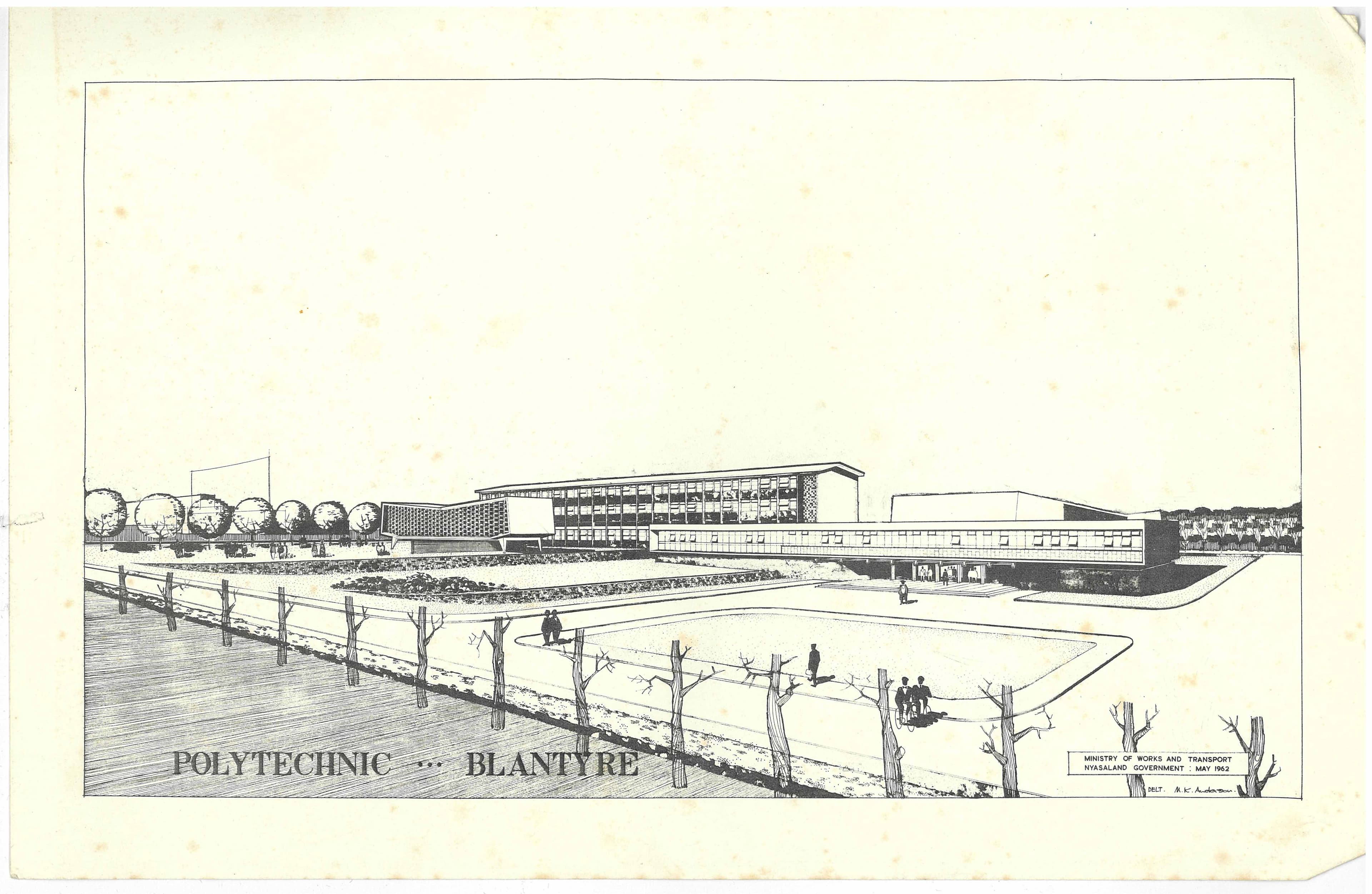
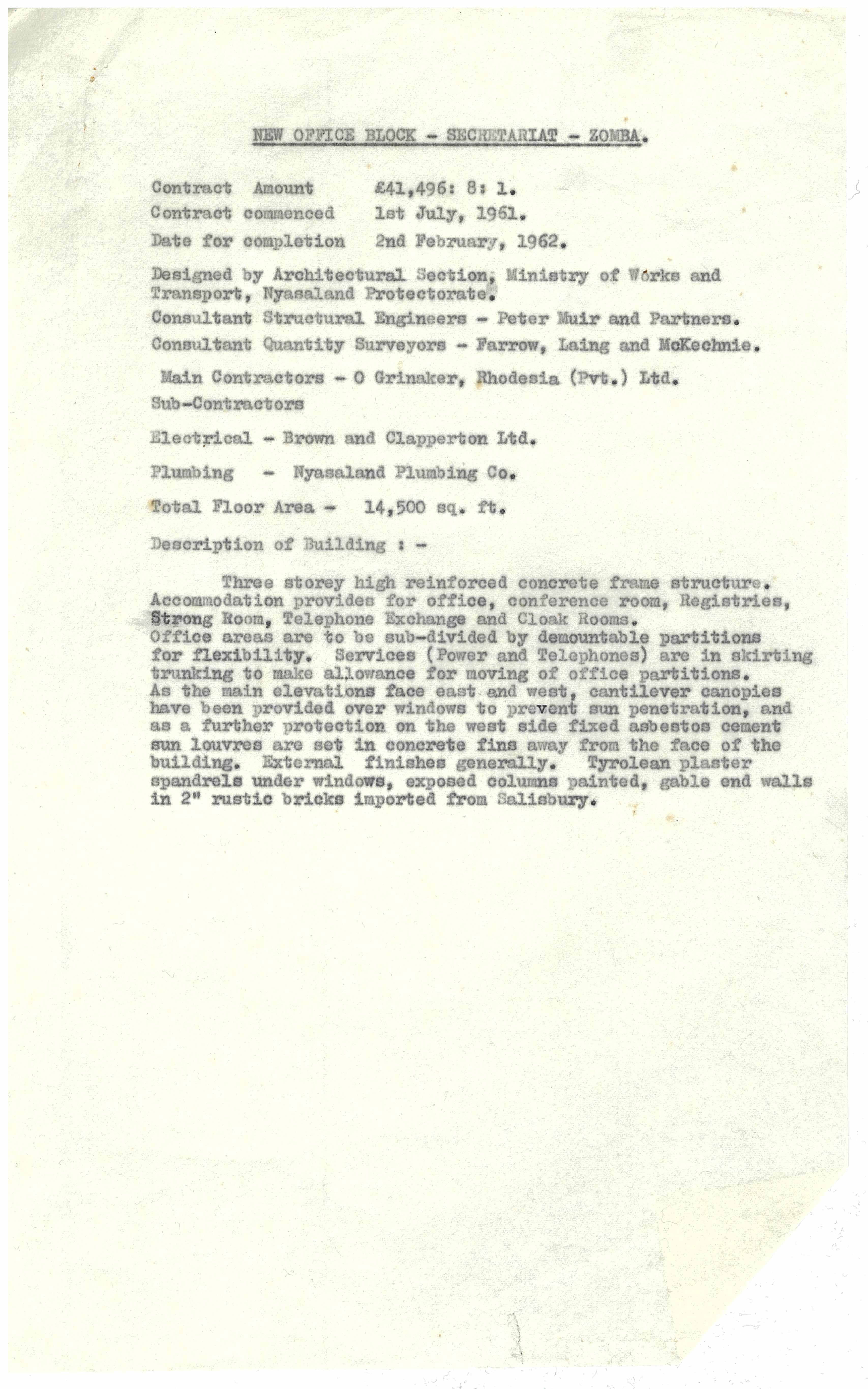
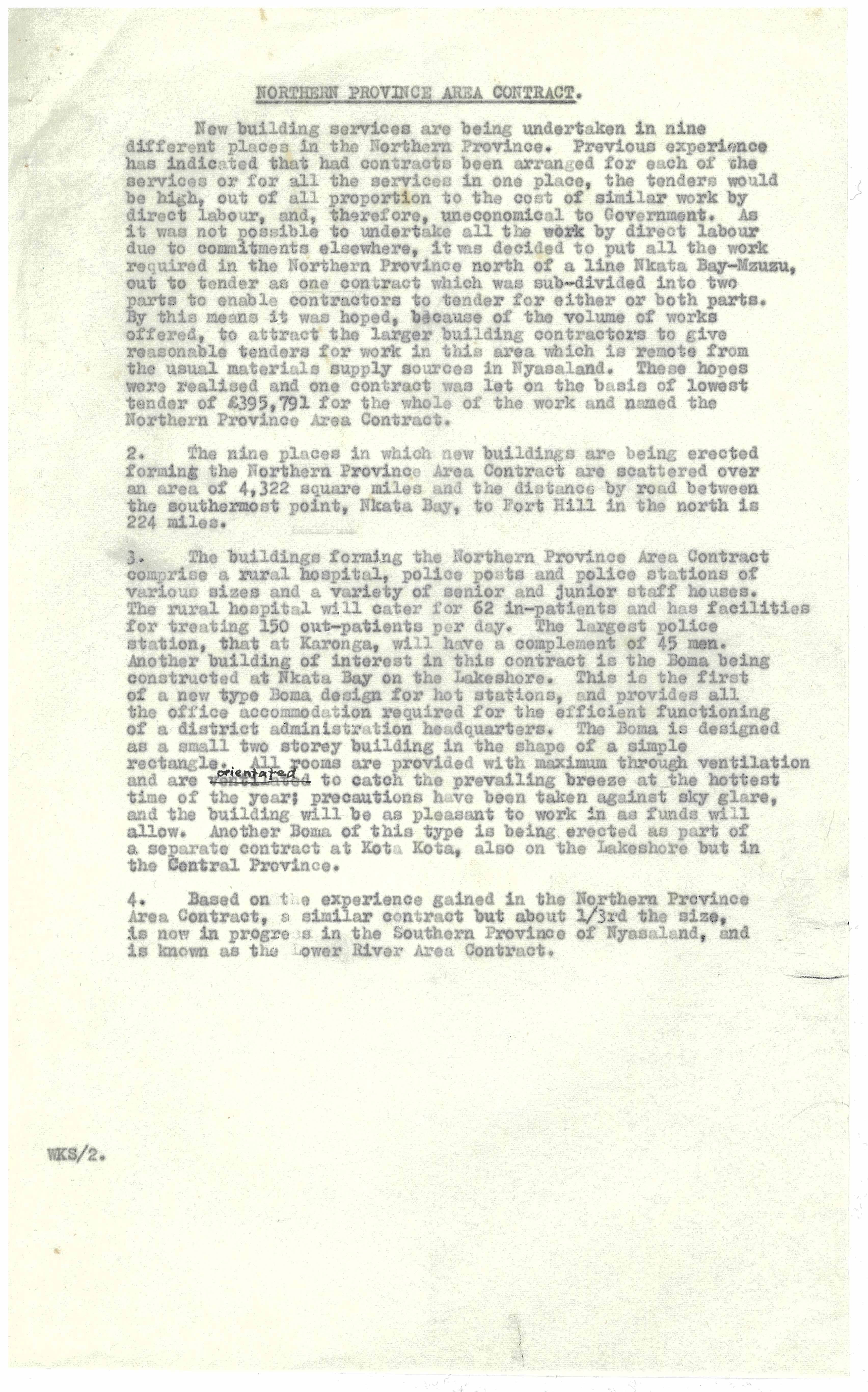
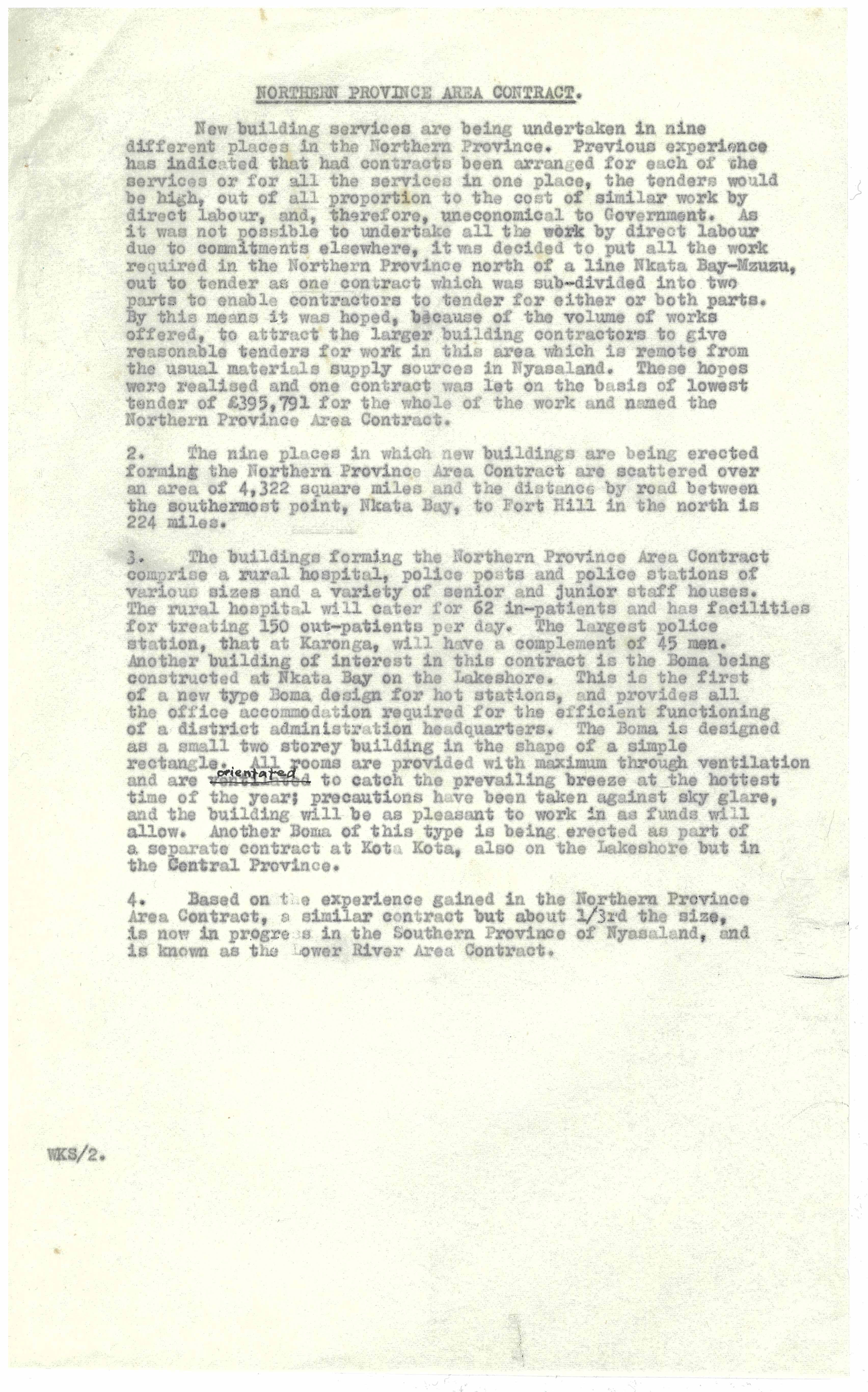
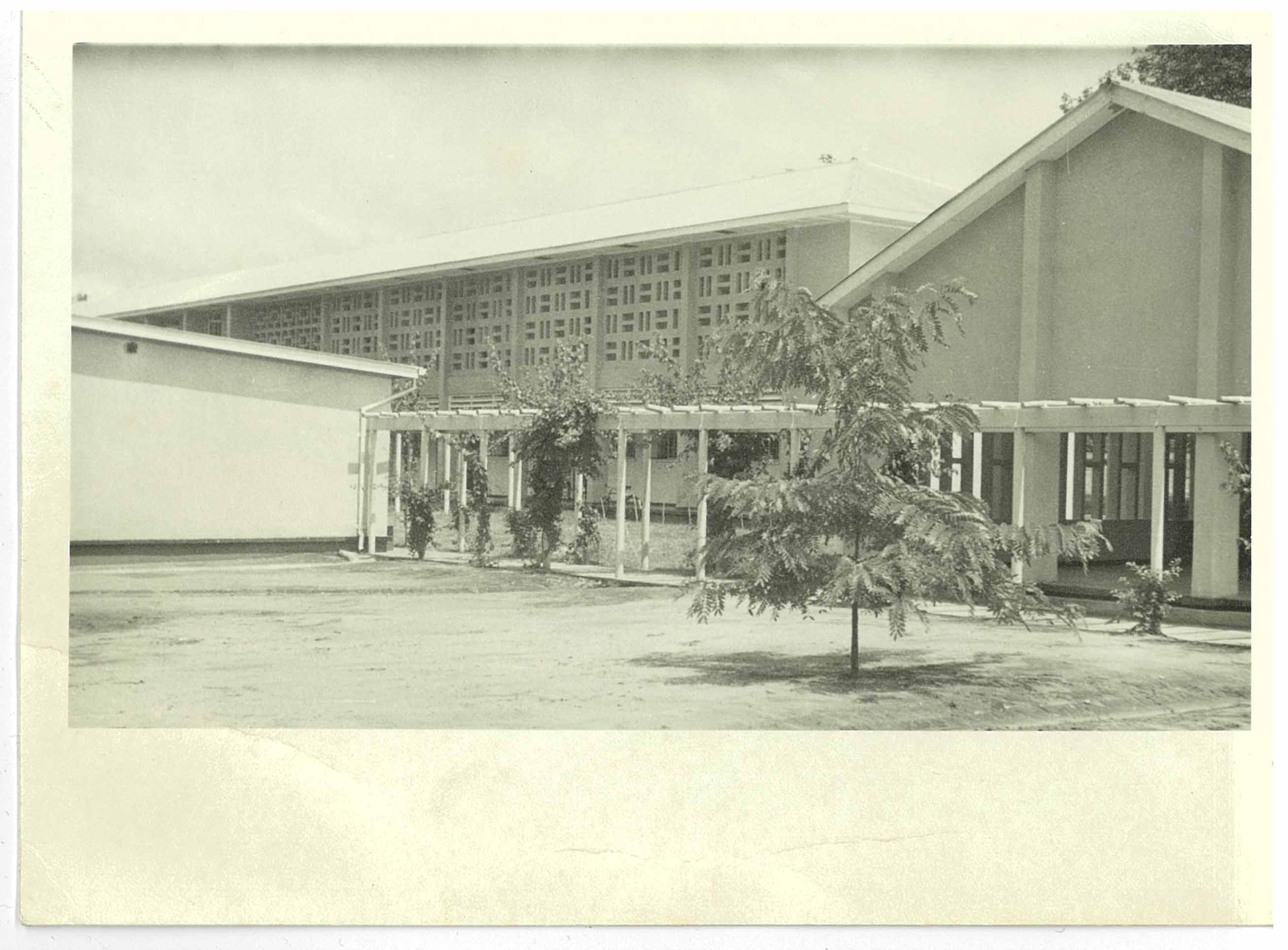
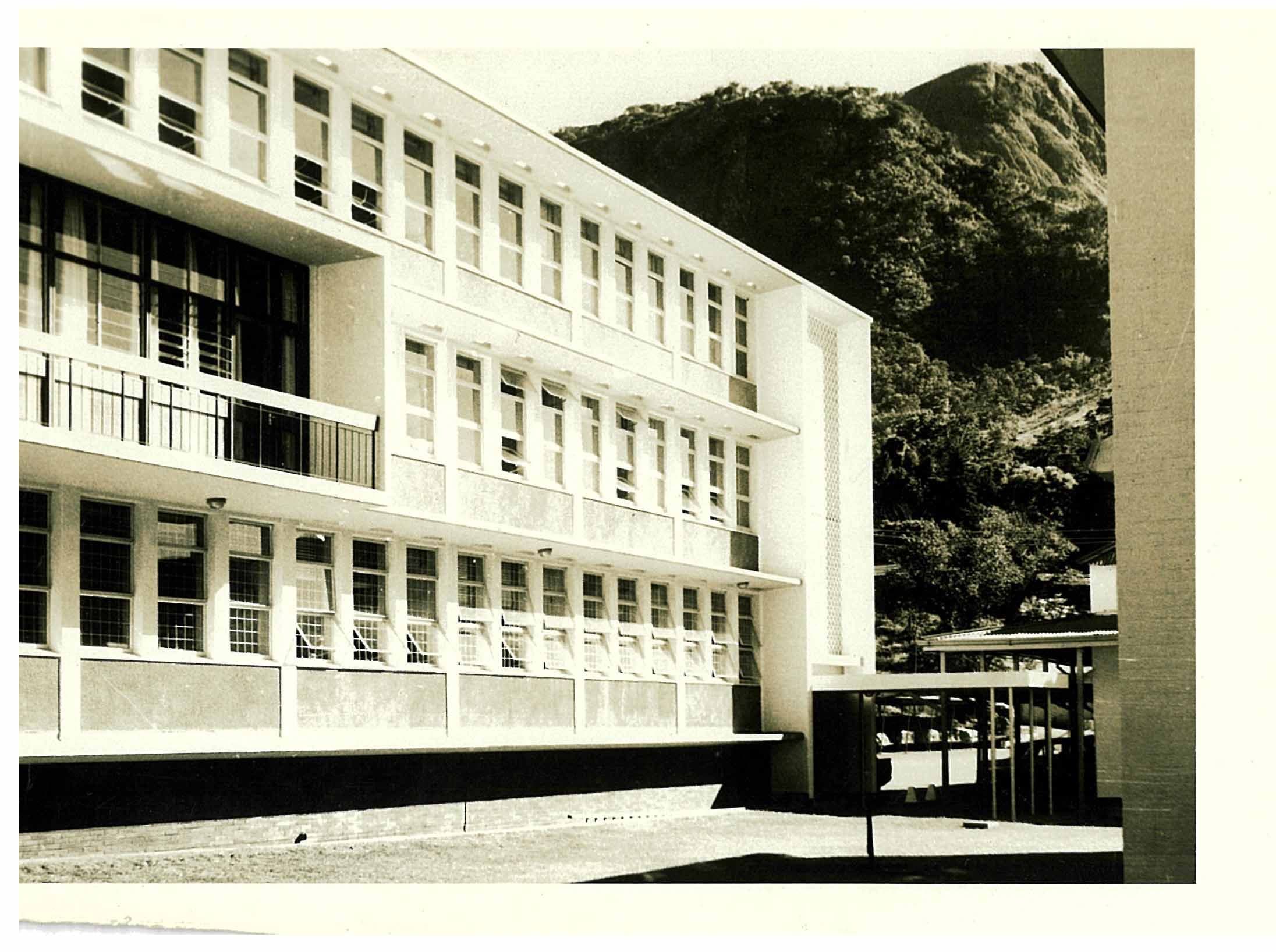
According to his CV, compiled the late 1960s, Scarr’s work as Chief Architect involved responsibility for “the programming and administration in connection with Contracts and Direct Labour work, for all Government buildings (approx. value of new work £2,750,000 per annum). Duties included the organisation, administration and functioning of the Architectural Branch of the Ministry of Works and Housing, consultations and negotiations with Heads of Departments in client Ministries, appointment of Consulting Architects and Engineers, liaison with quasi-Government bodies, and sitting on the Town and Country Planning Committee”. Accordingly, amongst his archive are preserved valuable summary documents, providing brief description and contract details for the construction of Lilongwi Secondary School for Girls, the Secretariat buildings in Zomba and for building services provided across the Northern Provenance. Also housed within Wilfred’s archive are photographs of the British Overseas Military Administration building at Port Herald and at Nkata Bay, together with drawings for the District Headquarters at Kota-Kota, administrative building for Blantyre Polytechnic (now University of Malawi), and for a hostel for Blantyre Girls Secondary School – these projects presumably having also been designed and built under his administration.
After returning to the UK in 1964 he joined the Architects’ Department of Richard Costain (Construction) Company Ltd, where he was appointed Senior Architect and worked on high-rise housing project in London and was the job architect for the Stockton-on-Tees oil refinery, for Shell Oil (closed 1989). He subsequently worked for the Department of the Environment, working on remodelling the onshore Royal Navy training base, HMS Raleigh, in Cornwall in the early 1970s. He then switched government departments and was employed by the Property Services Agency, as a Principal Regional Architect, based in Hong Kong. A period in the 1980s, with the Public Works Department, in the UK, was followed by a second career with the Historic Buildings and Conservation Division of the Cecil Denny Highton Partnership and MRDA Architects, working on major heritage restoration projects, including St. Pancras Station, London.
Sources
- Architectural Association Student Register 1945-1972, AA Archives
- Department of Tropical Architecture, student listing, Otto Koenigsberger Collection, Box OK27, AA Archives
- Architectural Association Membership List, 1961
- Wilfred Scarr personal archive.