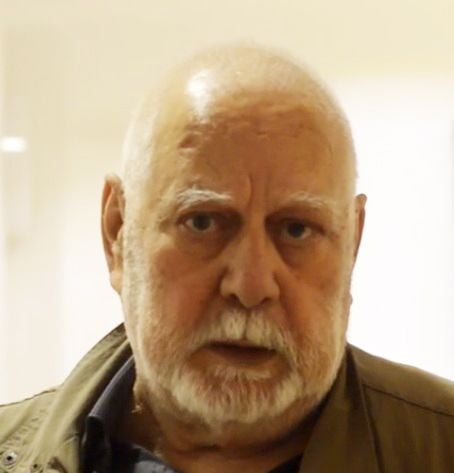
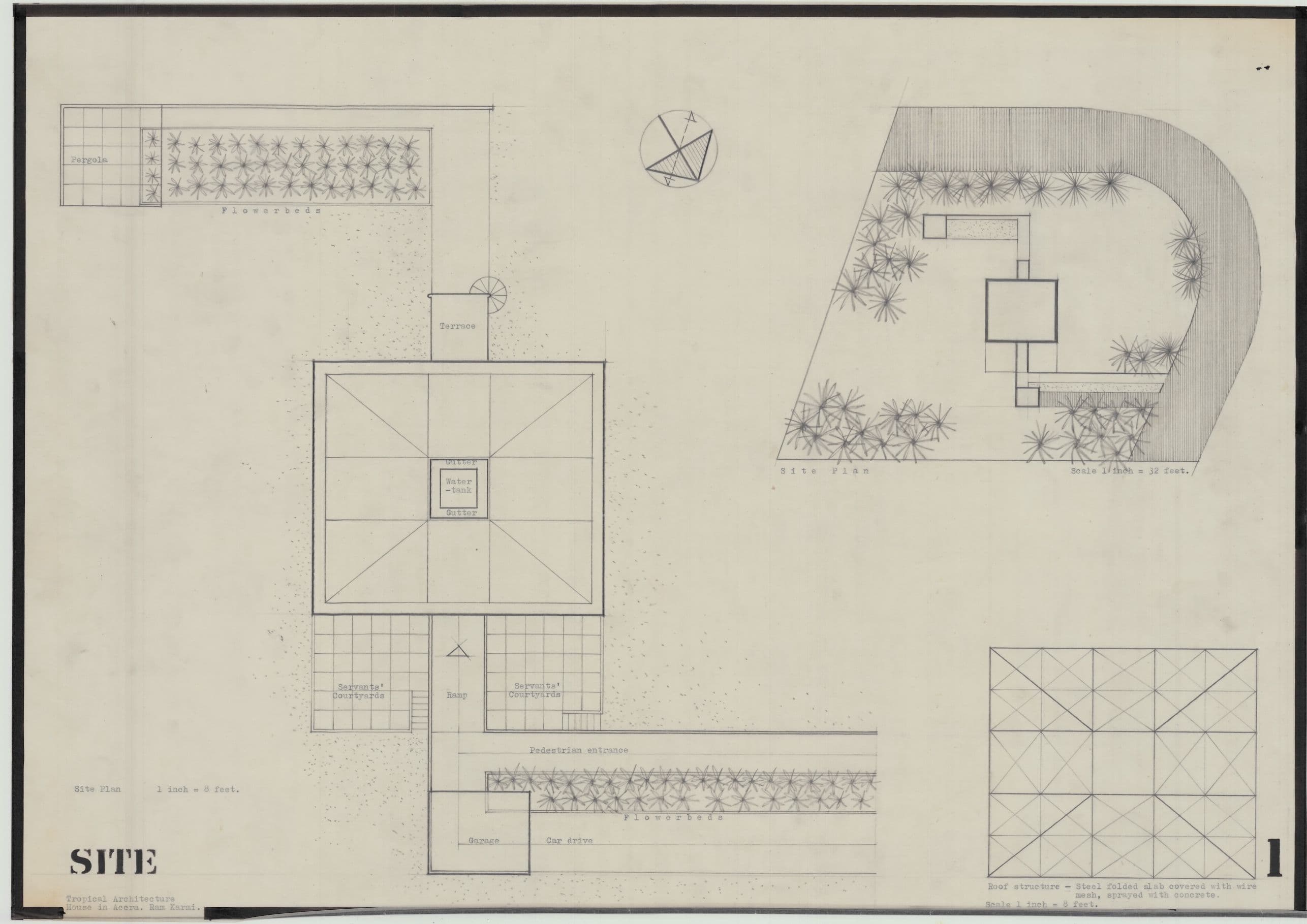
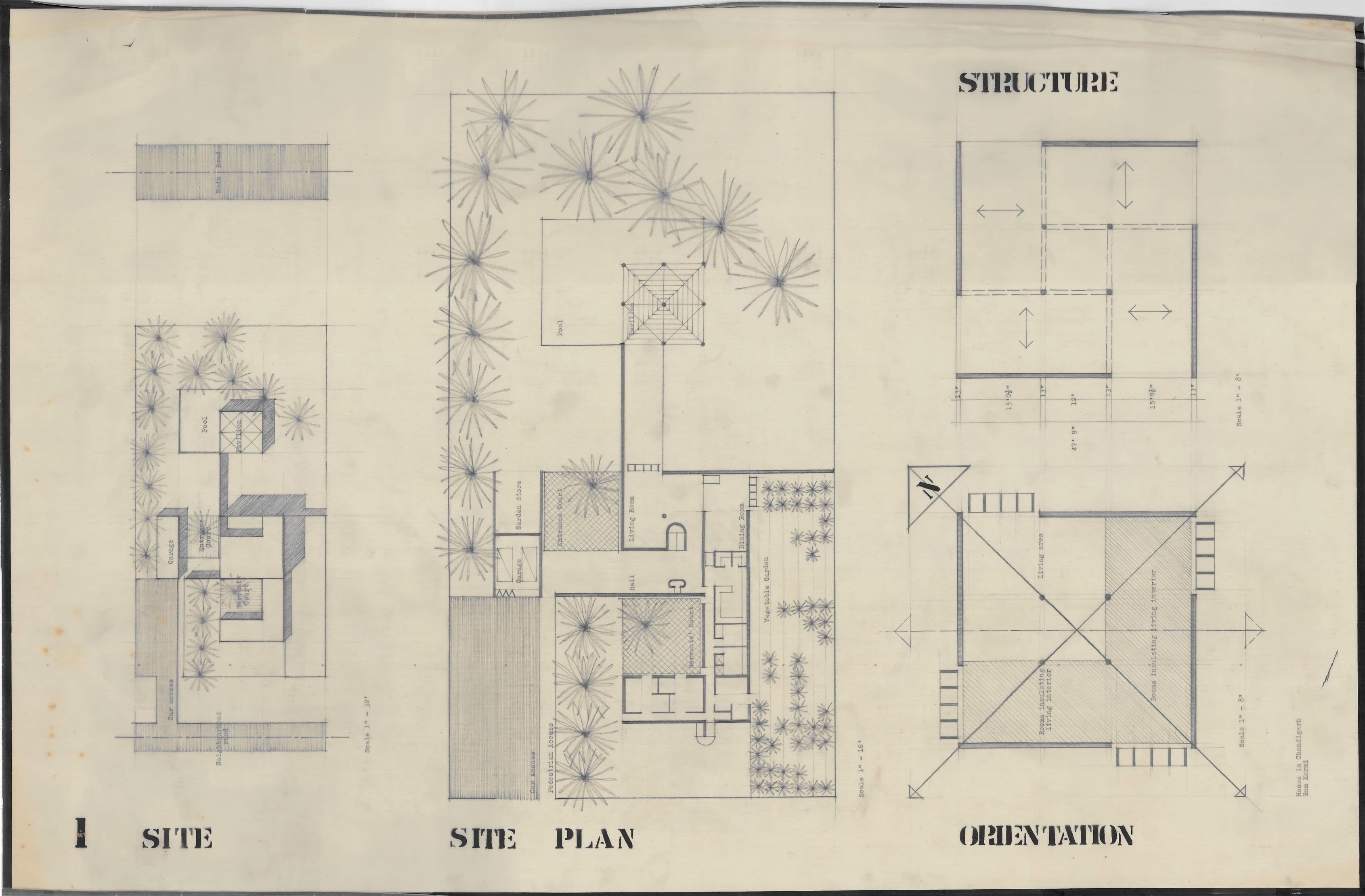
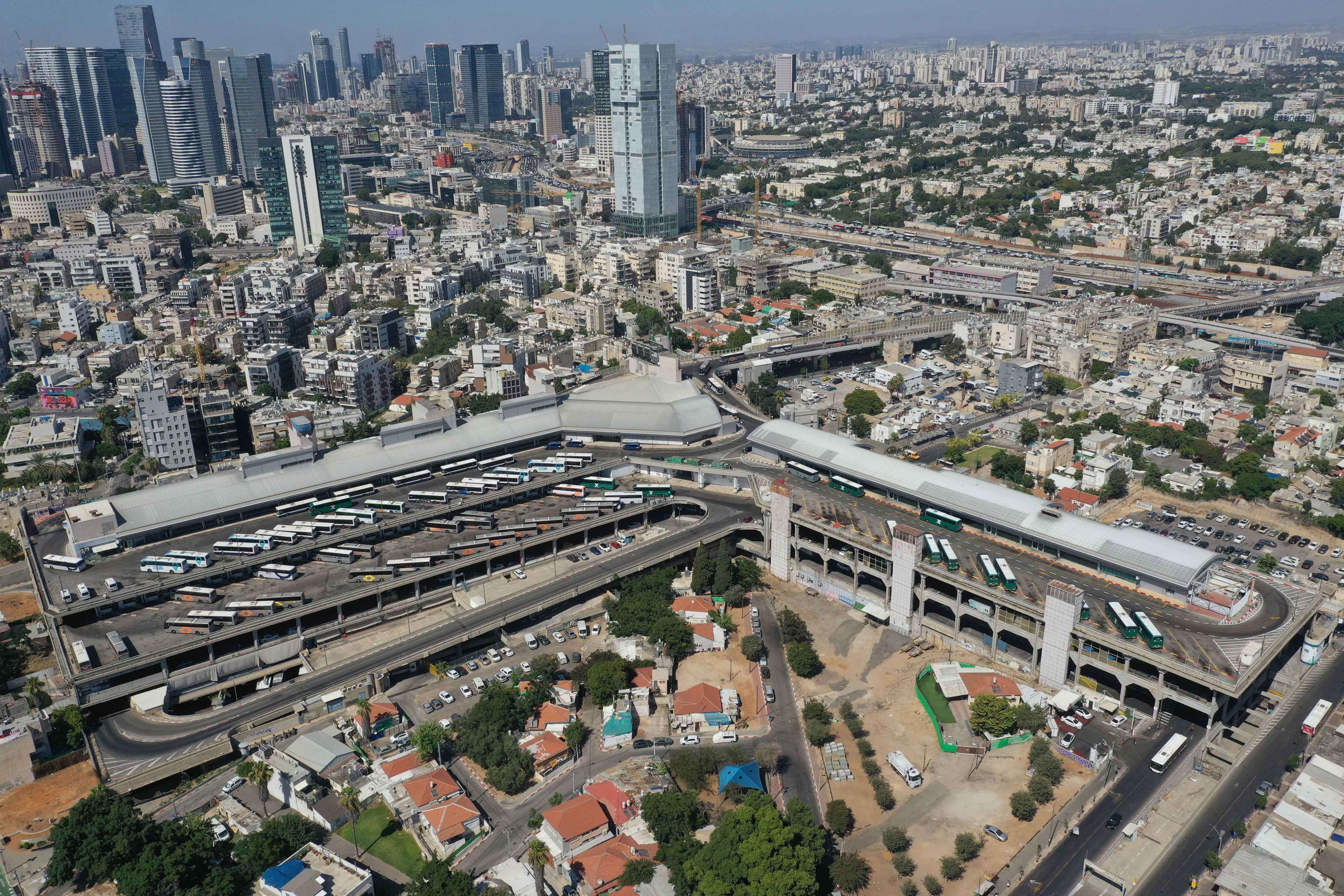
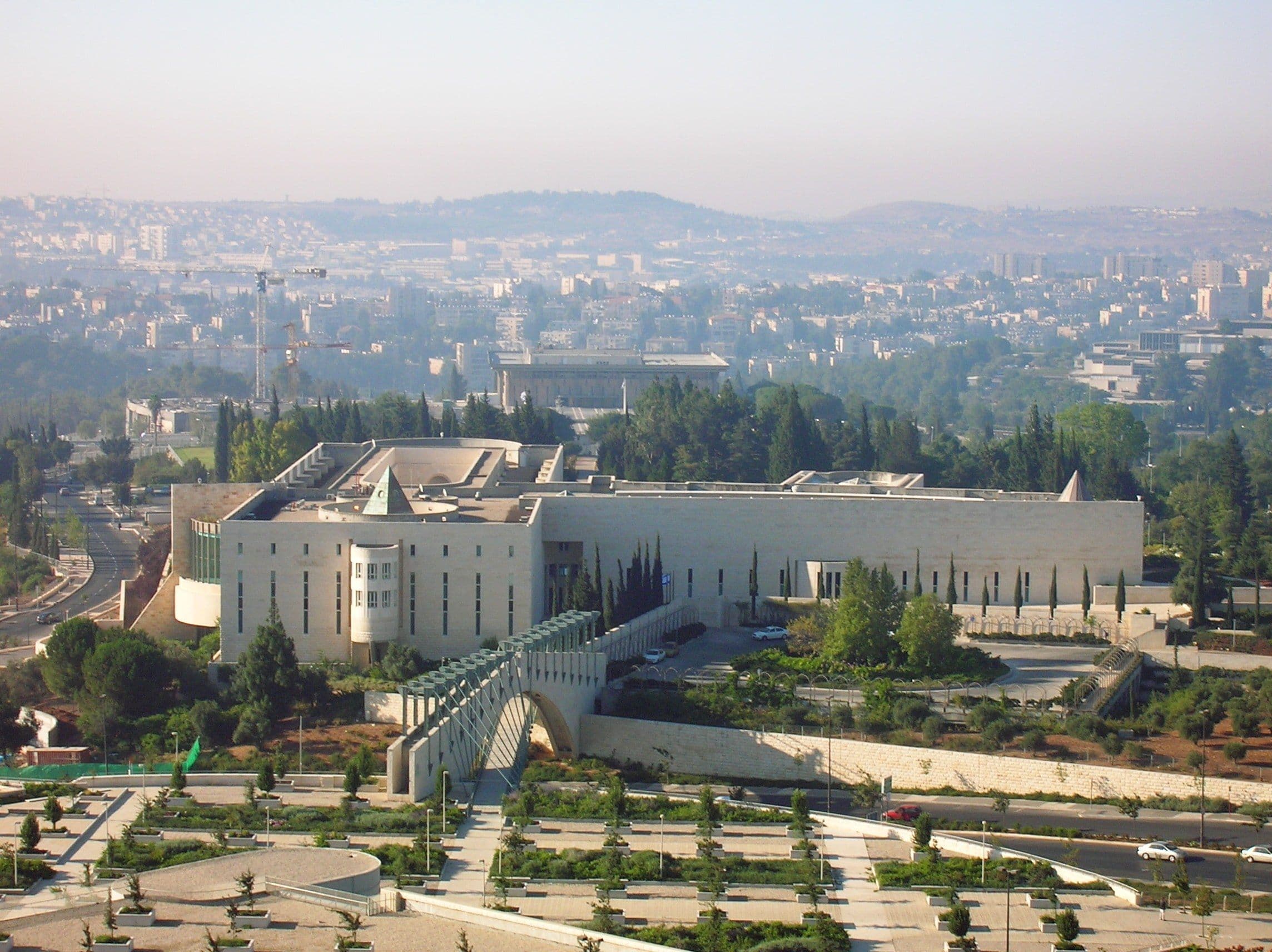
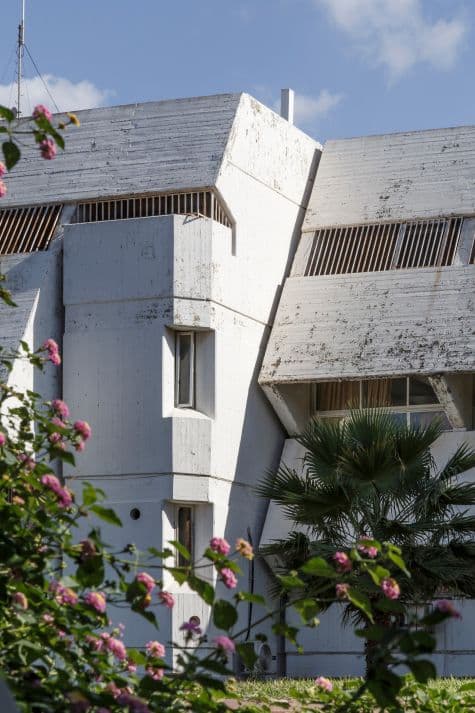
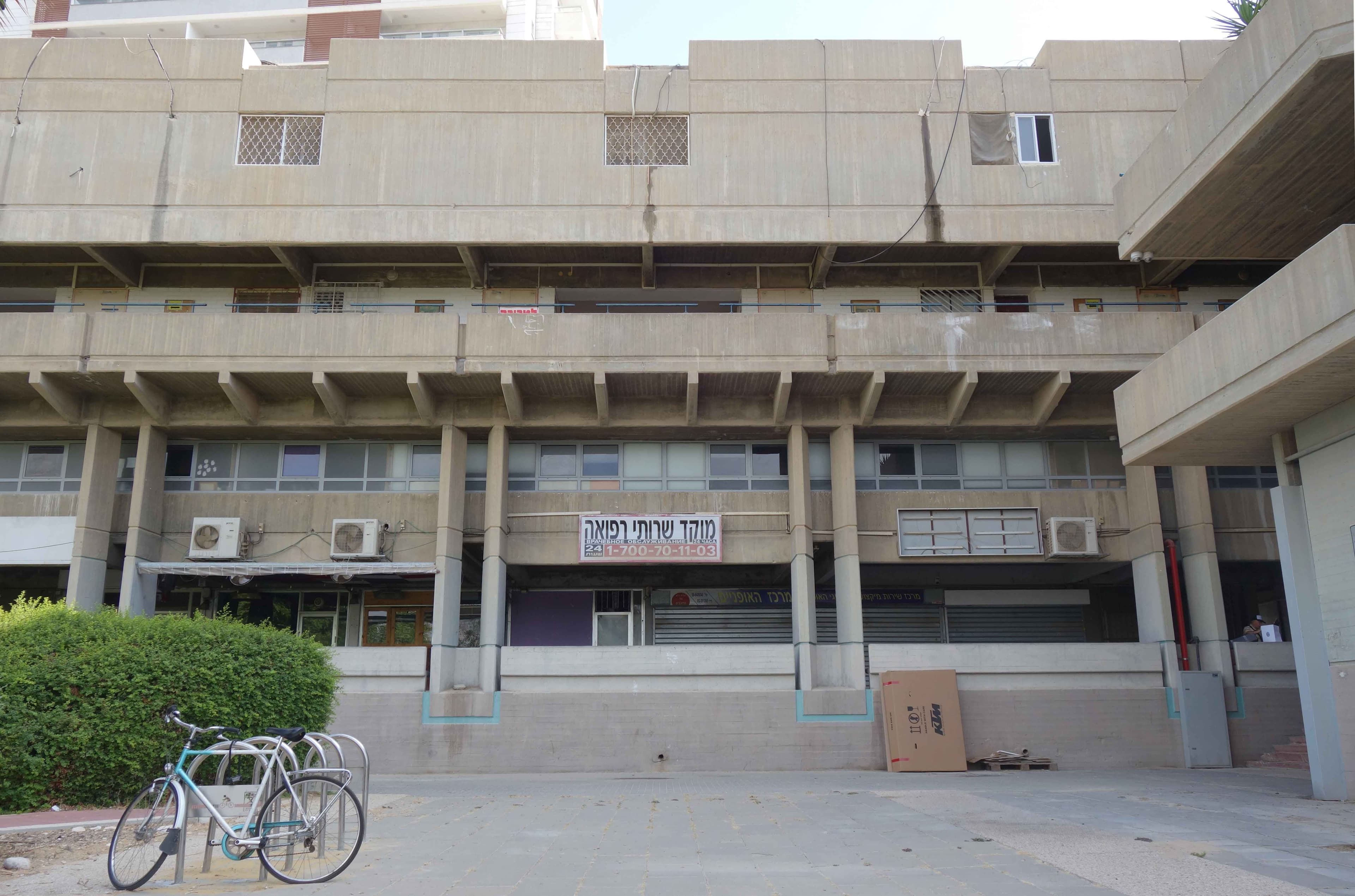
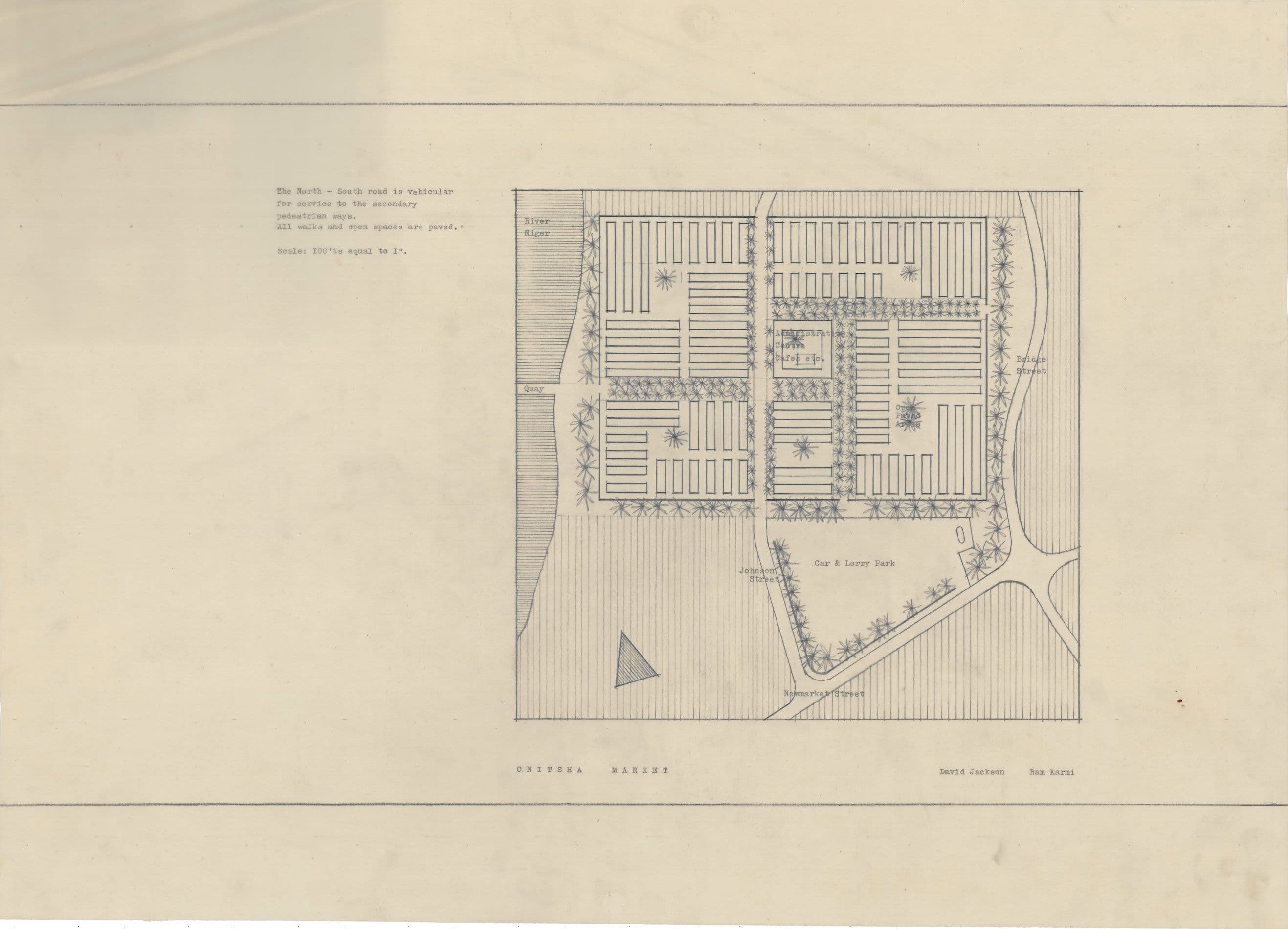
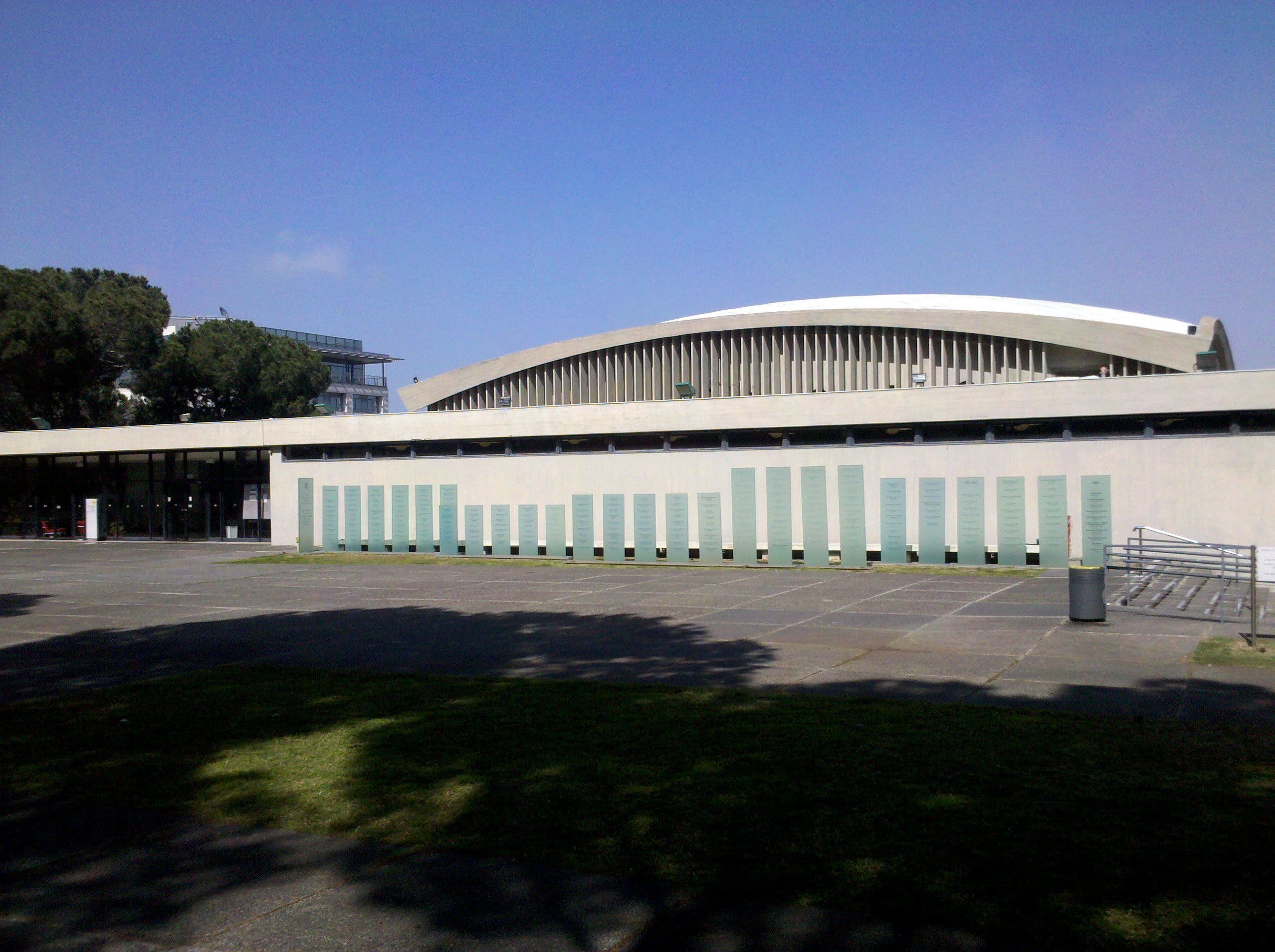
Arguably the most influential Israeli architect of his generation, Ram Karmi was born in Jerusalem in 1931 and grew up in Tel Aviv. He attended the Pardes Hanna Agricultural High School for a year, before studying at the Tel Aviv New High School and latterly at the Studia art school of Aharon Avni. During the Arab-Israeli war of 1948, aged 18, Ram served in the Israeli Defence Force as one of the earliest members of the Nahal movement. Following a short period at the Hebrew Institute of Technology (Technion) in Haifa, Ram enrolled at the Architectural Association, London, joining as a Second Year student in 1951. As part of his final year’s studies, in 1954-55, Karmi joined the first cohort of the newly formed AA Department of Tropical Architecture (DTA), sharing student digs with three of his DTA friends, Kenneth Frampton, John Miller and Roland David Jackson. Upon his return to Israel, c1957, Ram joined architectural practice of his father, the celebrated architect, Dov Karmi (1905-1962) - also briefly recruiting Kenneth Frampton as an assistant (1958-1959). As part of his father’s practice, Ram worked on plans for the Knesset, the Israeli Legislature building, in Jerusalem, together with his DTA colleague, William Gillett. Karmi’s Negev Centre, at Be’er-Sheva (1960-63), comprising a bazaar forming a central passageway, enclosed by four stories of offices, shops, apartments and cultural spaces, is a pioneering example of Israeli Brutalism, designed prior to Ram setting up his own practice, ‘Ram Karmi Associates,’ in 1962. Other early works include his Beit El-Al in Tel Aviv (designed with his father in late 1962), the ‘Amal’ school, Maoz Aviv (1966) and the astonishing megastructure of Tel Aviv’s New Central Bus Station - construction for which started in 1967 but only officially opened in 1993, following lengthy delays and controversy. In 1974 Karmi gave up his private practice to become the Head Architect for the Ministry of Housing and Construction, driven by “a need to fulfil the sense of mission that burned within me…”. Serving for five years, Karmi halted all ongoing planning work and assembled a progressive team of planners and architects as part of a centralisation programme to inject ‘new blood’ into design and planning system. Amongst many of the public housing projects his team worked upon were the developments of the Jerusalem neighbourhoods of Ramot, Ma'ale Adumim and Gilo. Returning to private practice, Karmi moved away from Brutalism in the 1980s and 1990s towards a more ‘lyrical architecture’, as exemplified by his ‘Rosemary House’, Herzliya (1990) and his designs for the Supreme Court of Israel (1993). The latter project designed with his sister, Ada Karmi-Melamide – also a student at the Architectural Association, London, from 1956-1959. Alongside his practice, Karmi taught at the Technion, Haifa, from 1964-1999, also holding Visiting Professorships at many international institutions, including Columbia University, MIT and the University of Innsbruck. He was awarded the prestigious Israel Prize in 2002 (an honour shared by both his father, in 1957, and sister, in 2007).
Sources:
- Architectural Association Student Register 1945-1972, AA Archives
- Architectural Association Diploma Roll Book, 1924-1963, AA Archives
- Department of Tropical Architecture, student listing, Otto Koenigsberger Collection, Box OK27, AA Archives
- City of Westminster Archives Centre; London, England, UK; Westminster Electoral Records; Reference: RE/Pad/1955
- Neuman, E. ‘Ram Karmi and the New Central Bus Station in Tel Aviv’, Architectural Theory Review, Vol. 20, 2015, pp202-227.
- Alon-Mozes, T., Yael Sofer, Y., ‘Israel’s landscapes of Brutalism’ Journal of Urban Design, DOI: 10.1080/13574809.2024.2380413
- Israel Prize Official Website ‘Professor Ram Karmi - Curriculum Vitae,’ archived by The Wayback Machine, https://web.archive.org/web/20081122023243/http://www.education.gov.il/pras-israel/pras_11k.htm Retrieved 28th December, 2024.