The AA Diploma Committee has announced the winners of this year's AA Diploma with Honours, the AA's highest award.
Diploma with Honours recognises and celebrates student excellence within the AA's five-year Diploma programme.
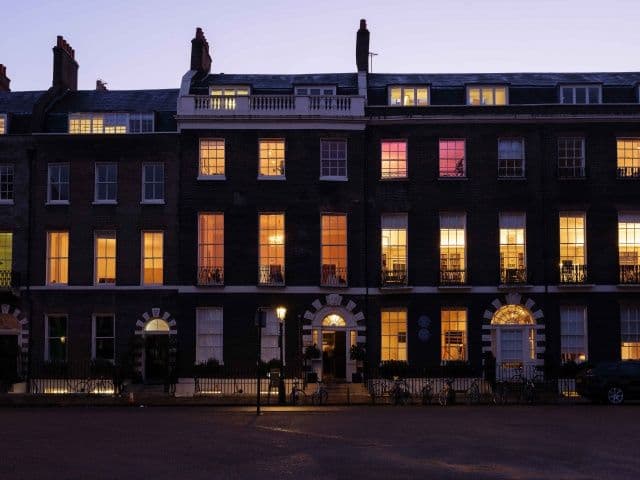
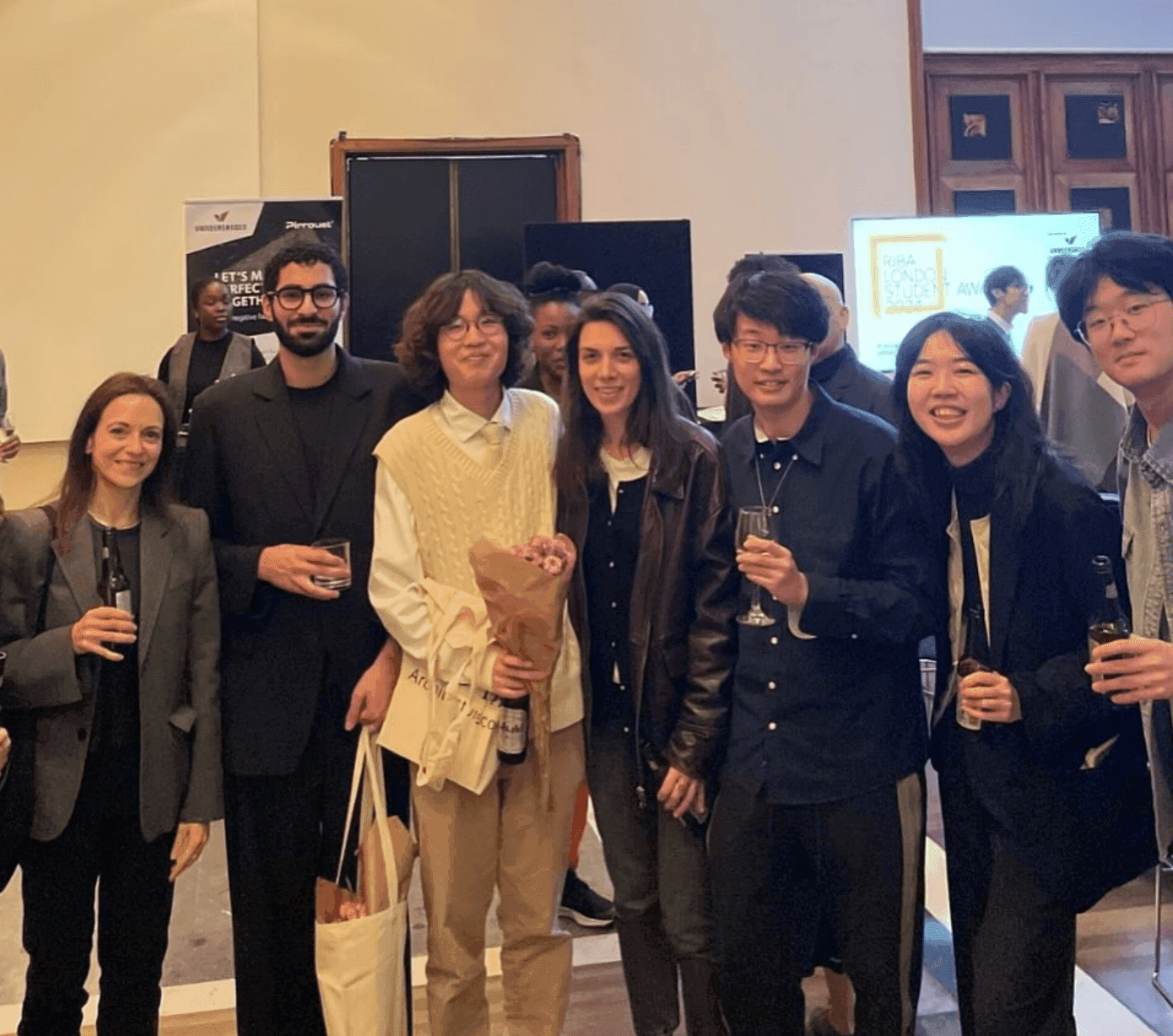
18 fifth-year Diploma students were nominated as part of this year’s honours award selection process, each giving a presentation of their work at AA in Habitation, Heals. Of those 18 the following six were chosen as winners:
Ylam Monique Raky Deme (Diploma 7)
Place holders: a choreography of stones and strips
The shift from nomadism to sedentary and the simultaneous development of agriculture transformed the way we read the land. Lines drawn by a walk, and a territory read as a constellation of points due to constant flux was exchanged for an anchored network of lines. Behind the vivid greens and pale yellows marked by the furrows of harvests lie schemes disrupting autonomous modes of working the land and their constituent.
The project is set in Brittany. Learning from the way a pilgrimage enables moments of temporal exceptions in the cadaster, it proposes a new agricultural framework based on a cyclical calendar. It tells the story of temporary ownership, interdependent strips of land, and retrofitted users. It aims at exchanging the rigid and fixed regime established by the mode of representation that is the cadaster for impermanence and an architecture of points that orchestrate use and movements.
Walk around, walk over the footsteps and marks of wheels draw the landscape and points choreograph the use. By applying the quasi-unchanged values of the pilgrimage to a highly modern and homogenous system it puts a halt to a whirlwind of changes and emphasises on moments of pause and friction. Six years, nine months, or seasons: the sounds of the harvester, the scent of the soil in the winter or the meadow’s flowering the project evolves at different paces and therefore, aims to preserve the exception and seeks moments of changes and mishaps.
James Emery (Diploma 12)
Fecund Vacancy: The Architecture of Succession
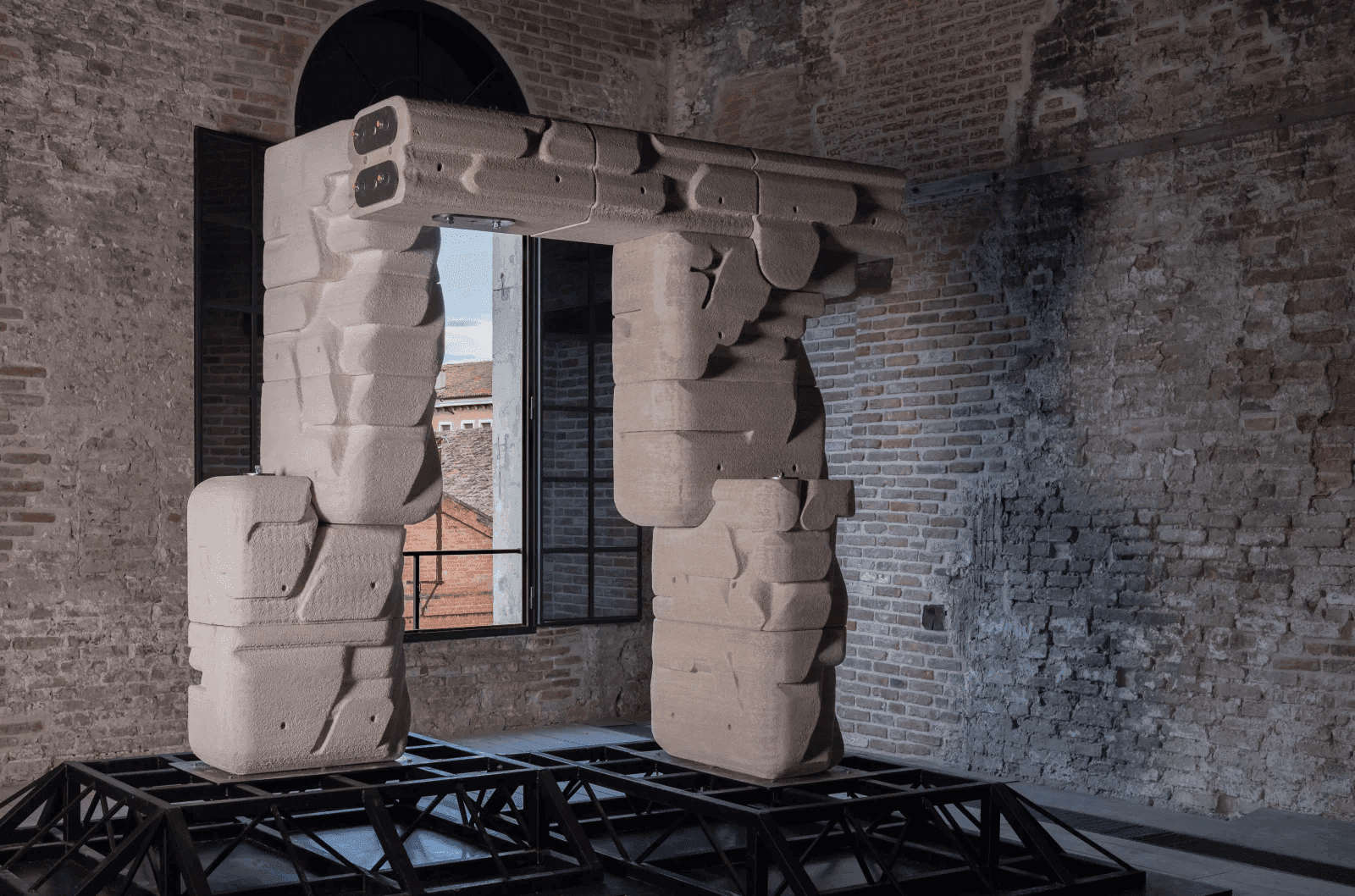
Recognising London as a microcosm of the global ecological and existential crisis, the project seeks to safeguard brownfield sites across the city as vital spaces for non-human inhabitation and increased biodiversity. More than this though, the project sets in motion a practice positioning the architect as a mediator between the human and non-human worlds. Striving for the integration and symbiosis of these two disparate worlds, the project is less concerned with finding architectural resolve, believing this to be impossible, and instead calls for the architect to embrace uncertainty in partnership with the processes of ecological succession; challenging the architect to think in extended periods of time regarding the succession of the material and social structures we put in place.
The architect’s agency will always cede to the processes of ecological succession, isn’t it time we embraced that?
Thomas Andrew Faulkner (Diploma 1)
The Art of Getting By: From Domestic Abuse to Social Housing
It is architecture that provides the stage set for domestic abuse; furthermore, it is architecture that provides the tools of violence for abuse. It is architecture that gives the abuser the privacy and power to perpetrate their violence and it is architecture that casts the characters of abuser, abused and the peripheral reticent neighbour. Therefore, it is imperative to recognise the significant role of the architecture of social housing within domestic abuse and consequently, the role it must play, following such incidents, to become an architectural antonym, transitioning the perception and application of the house from a place of violence, into a home of refuge.
Amaya Hernandez (Diploma 18)
Sisyphus and the Portland Stone
It was a bit surprising to me that it took an overly enthusiastic architecture student to connect a material reseller with a demolition contractor to ensure the reclamation of the yorkstone paving from a demolition on Fleet Street. After realizing there is no one actor directly responsible for overseeing the reclamation of materials, I decided to propose is a new consultant in the building industry whose sole responsibility is to ensure the reclamation and reintegration of building materials. The Material Broker facilitates negotiations between material resellers, demolition contractors, architects, and their clients to promote the reclamation and reintegration of our existing building stock.
Not only have I been conceptually developing this new role, but I have been actively performing as one. First with the reclamation of the Yorkstone paving, and second with the attempted reclamation of the Portland stone found on both 80 and 71 fleet street.
I have sent 93 emails, made 38 phone calls, 22 site visits, and have over 5 hours of audio recording from various interviews…
I have talked to stone conservationists, stone masons, stone enthusiasts, geologists, resellers, demolition contractors, demolition operatives, sustainability managers, architects and their receptionists, I've contacted businesses from established quarries to random people on Facebook...
"Where demand does not yet exist it can be sparked, where supply is lacking it can be encouraged." - Lionel Devlieger
Tetsuya Saito (Diploma 15)
Across the Wall
On February 2nd 2022, the UK government published its Levelling Up the United Kingdom white paper; An extensive document proposing 12 missions under 4 objectives to address and narrow the economic and social disparities across the country. It is not merely a political act, but can also be seen as an opportunity to reimagine our everyday life, through alternative architectural approaches for living collectively in a rural condition.
The project would explore this notion, by introducing a new horticultural community in a former coalfield, where their social, economic and communitive knot had been loosened by the closure of mining facilities in the early 2000. Alternative heated wall systems using the abandoned mining water would create a landscape of fruit production and 99 homes. By reimaging the clean, the intimate, the exposed, the hot and cold, the alternative way of collective living would bridge the gap between the sensorial atmosphere and the social action.
Sinan Asdar (Diploma 14)
A Void: Reintroducing the Patio to Karachi
Housing has homogenized itself into a debate between autonomy and governance. Poised between shifting meanings of home and property this debate questions its overall existence. Presently, large-scale public housing has rendered itself a historical phenomenon and its provision is increasingly based on theories of individuality in a predetermined market economy. This illustrates a clear shift in agency, which raises the question, Who decides and Who Provides?
In Pakistan the state itself cannot afford to construct large scale housing from initiation to completion. Instead their solution has been to deny the need altogether, leaving the squatter settlement (Katchi Abadi) as the predominant form of housing in Karachi, a city of 22 million residents. This thesis undresses the katchi abadi to expose the formality existent in the informal and acknowledges its success of scalable, affordable and incremental housing.
This project proposes a division of agency between three actors, the state, the material supplier and the inhabitant, in order to mitigate the middleman and empower the prefabrication yard, in which the role of the architect is that of an enabler rather than a designer of specifics. The Patio, at the scale of the typology and the morphology is used as a space of divded agency during the construction and inhabitation of public housing scheme in Karachi.
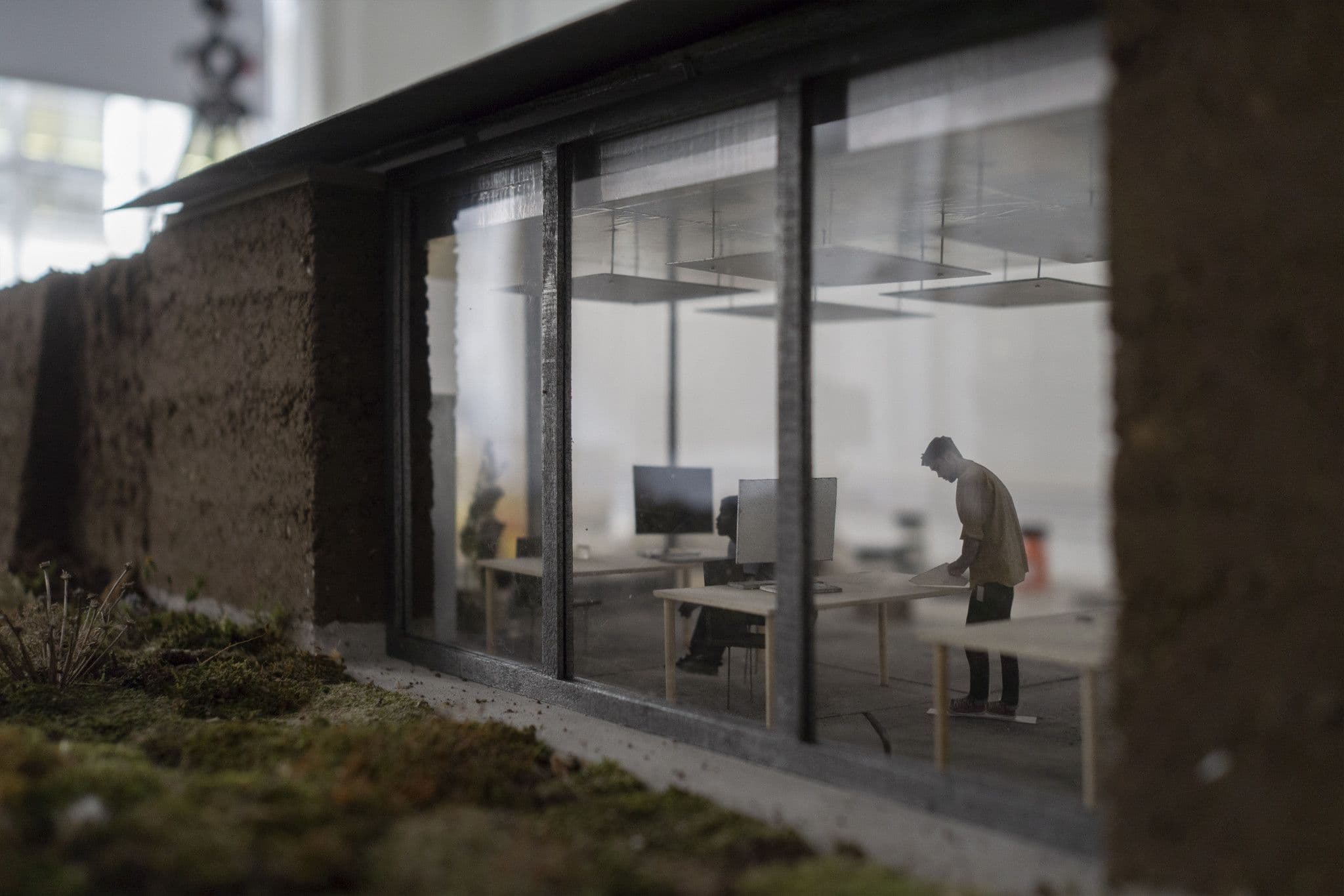
Image: Fecund Vacancy: The Architecture of Succession. Courtesy of James Emery.