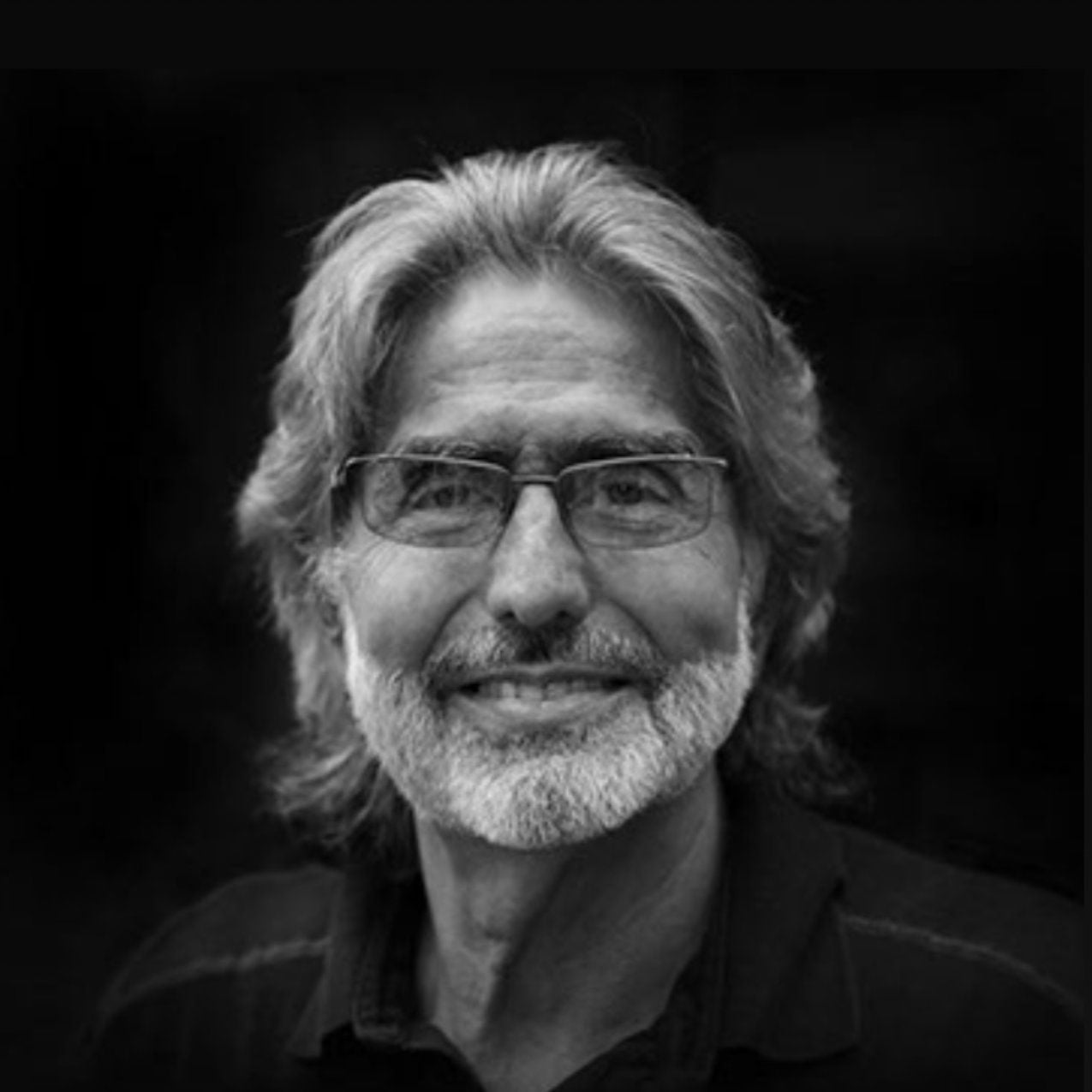
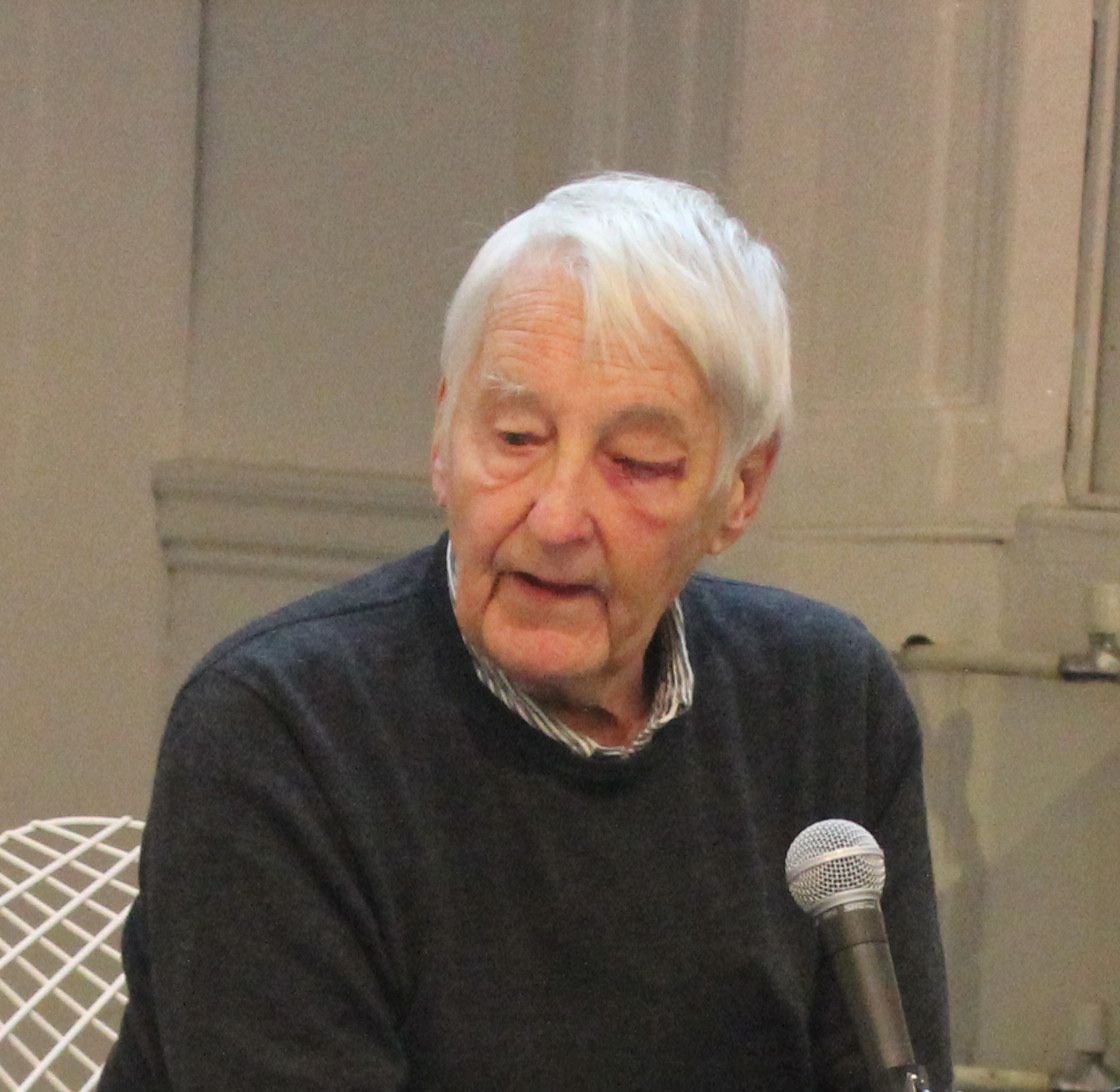
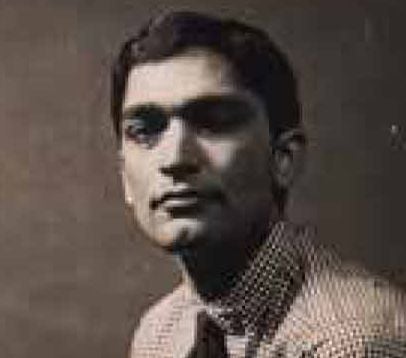
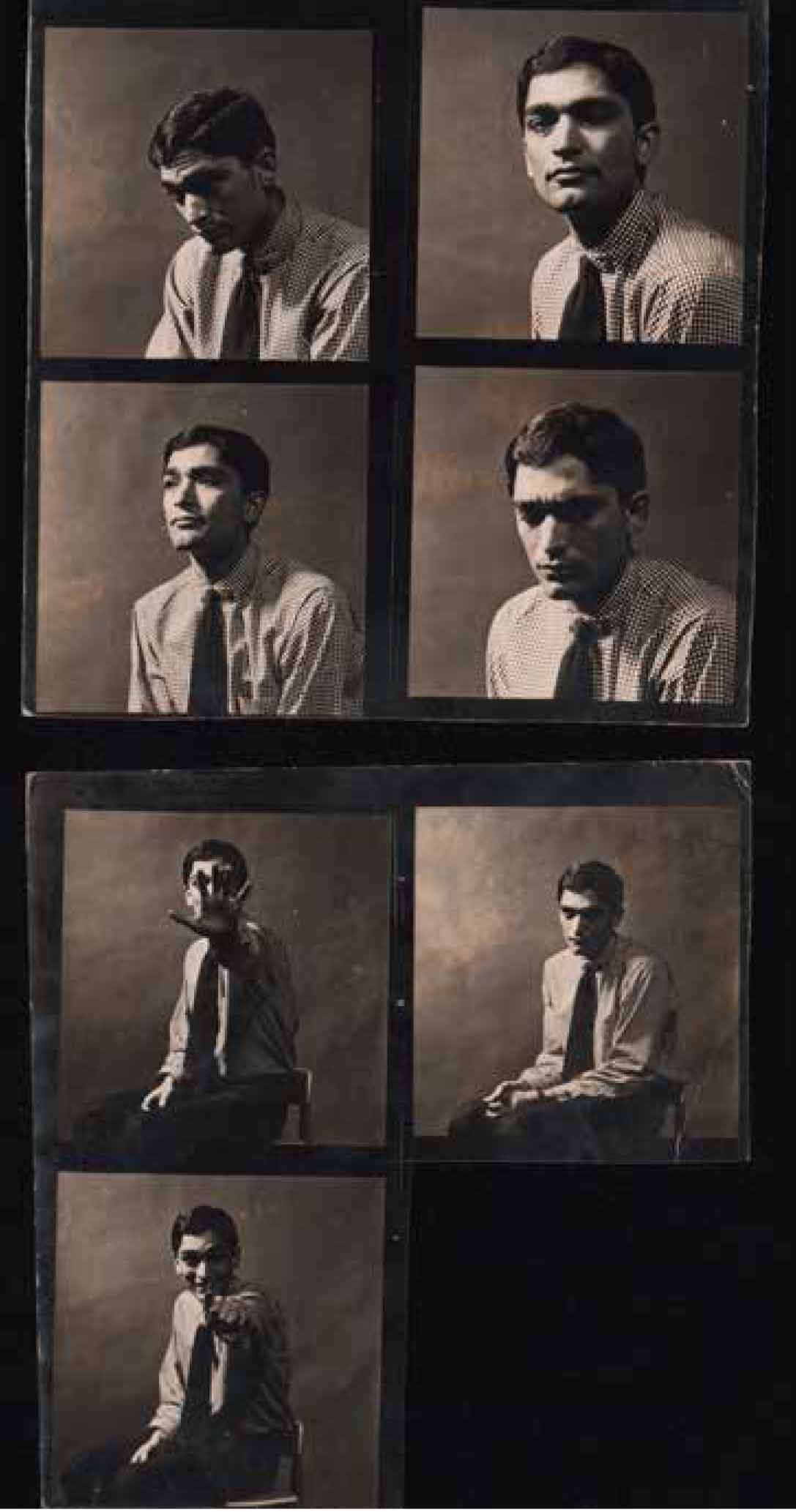
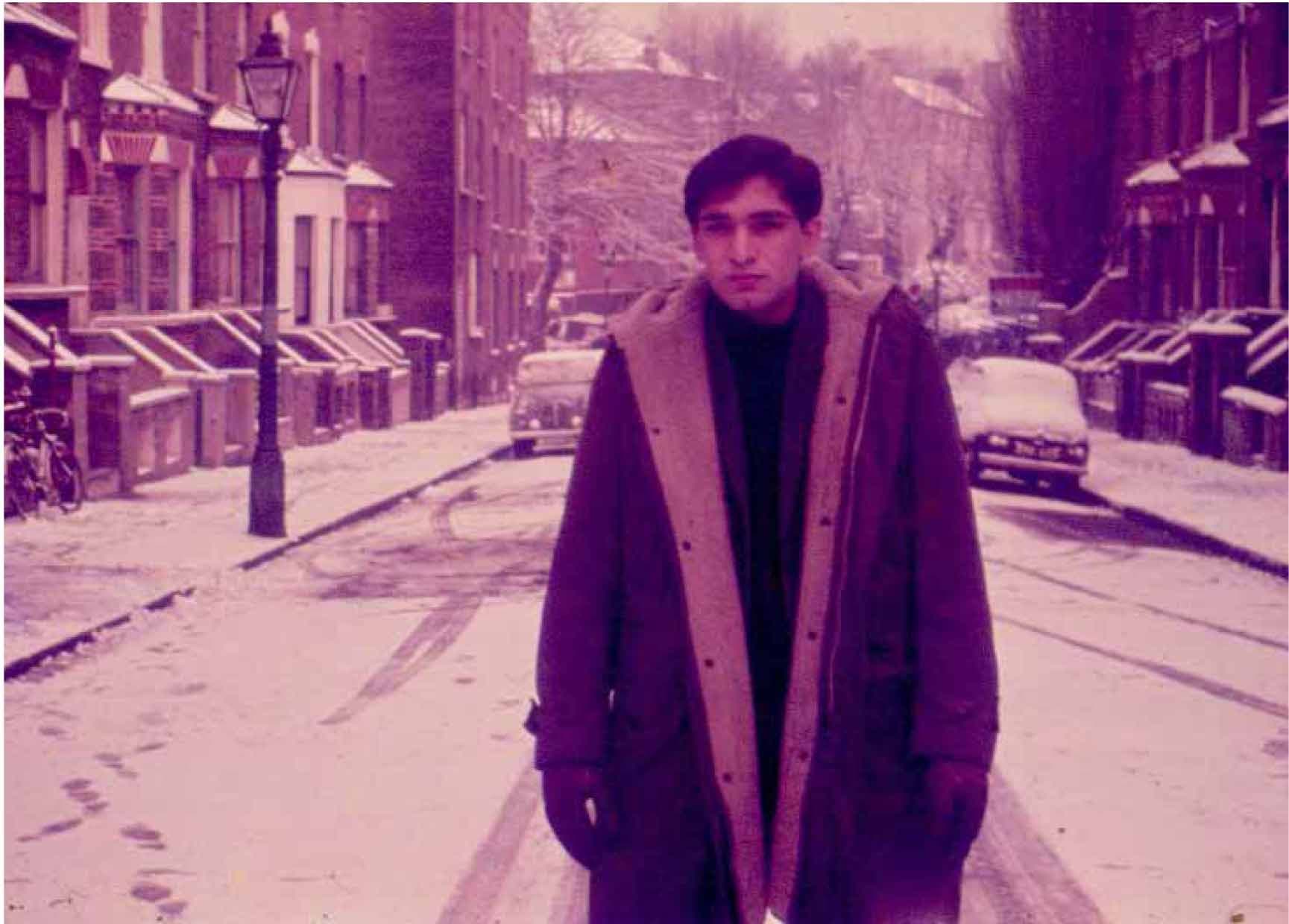
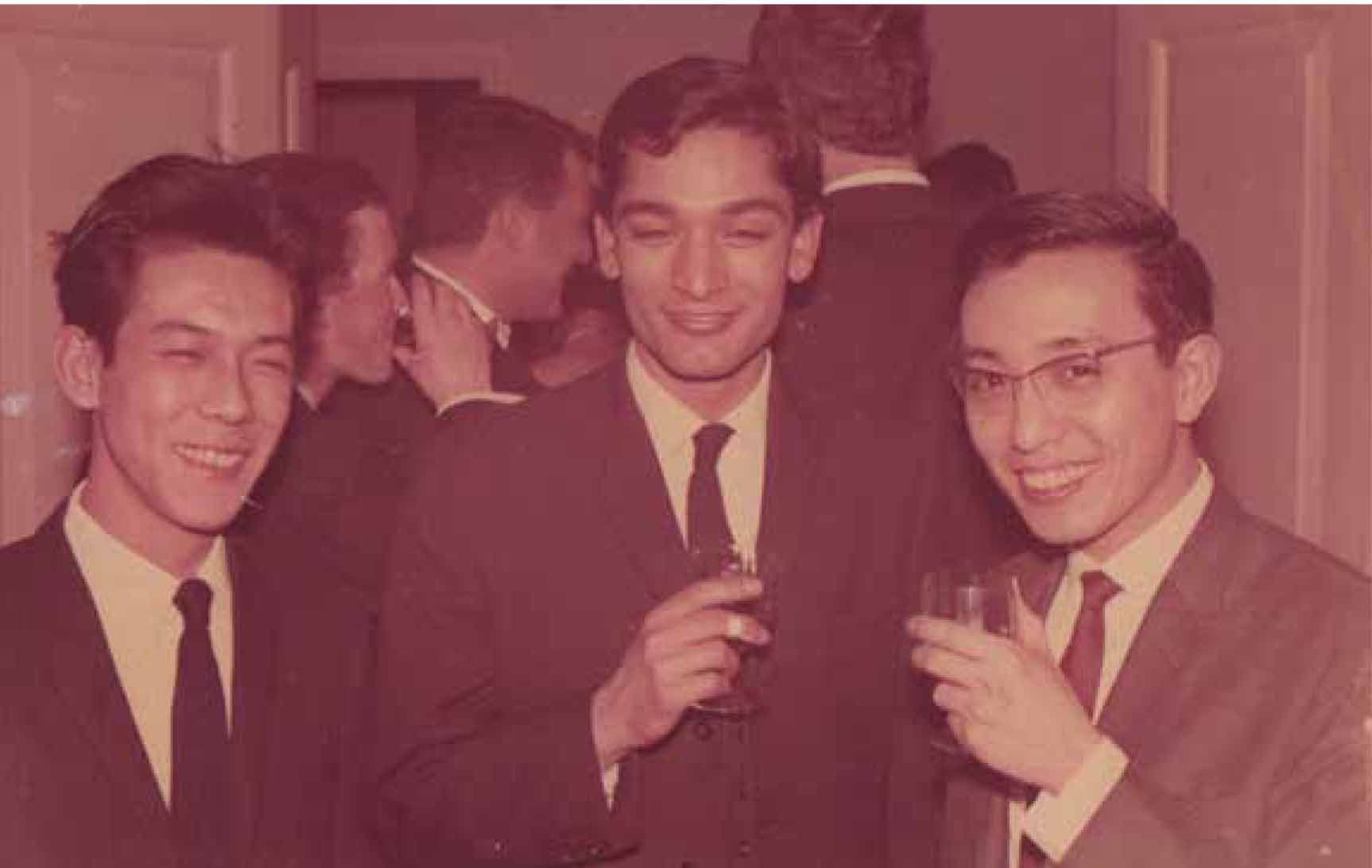
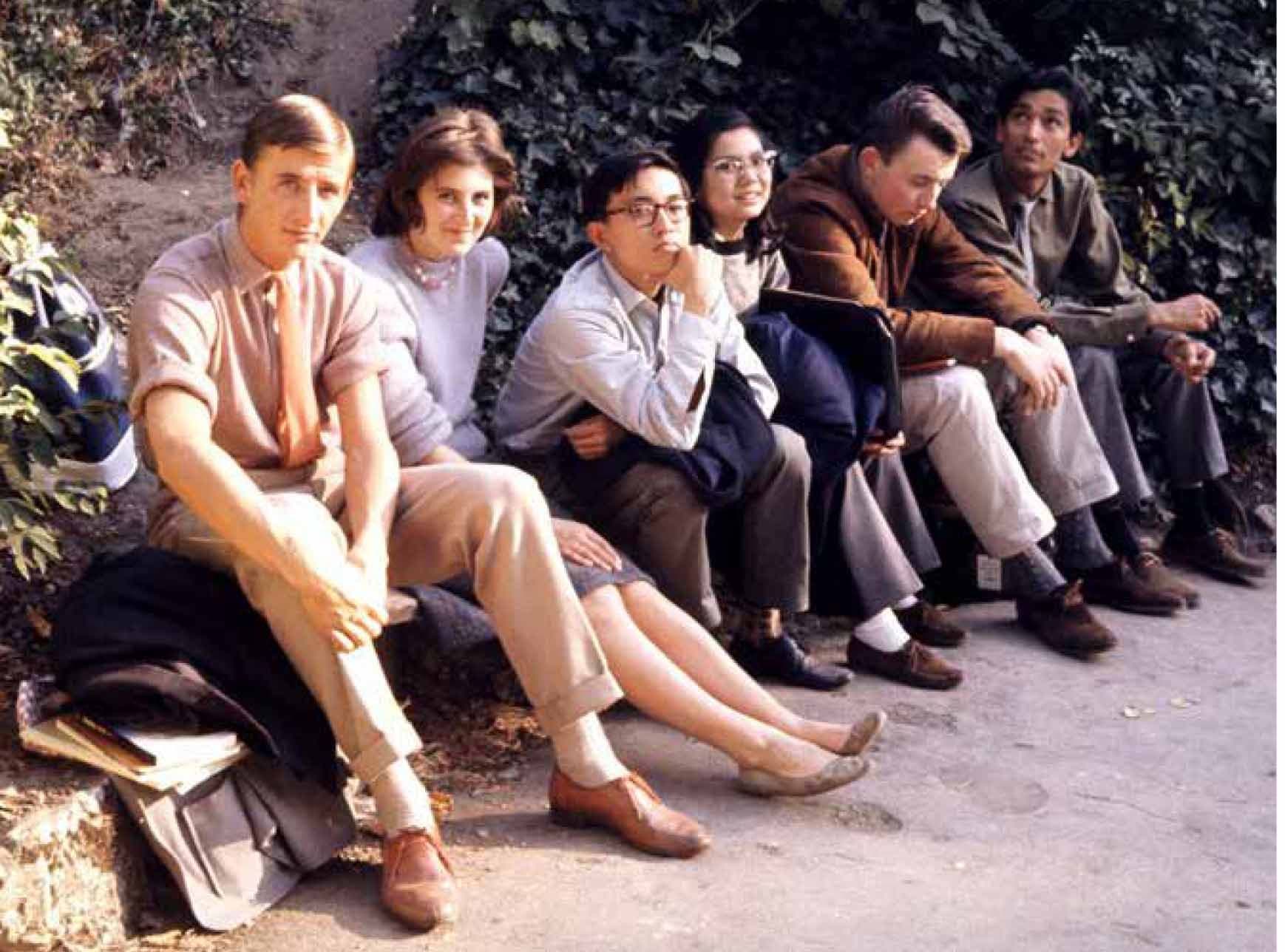
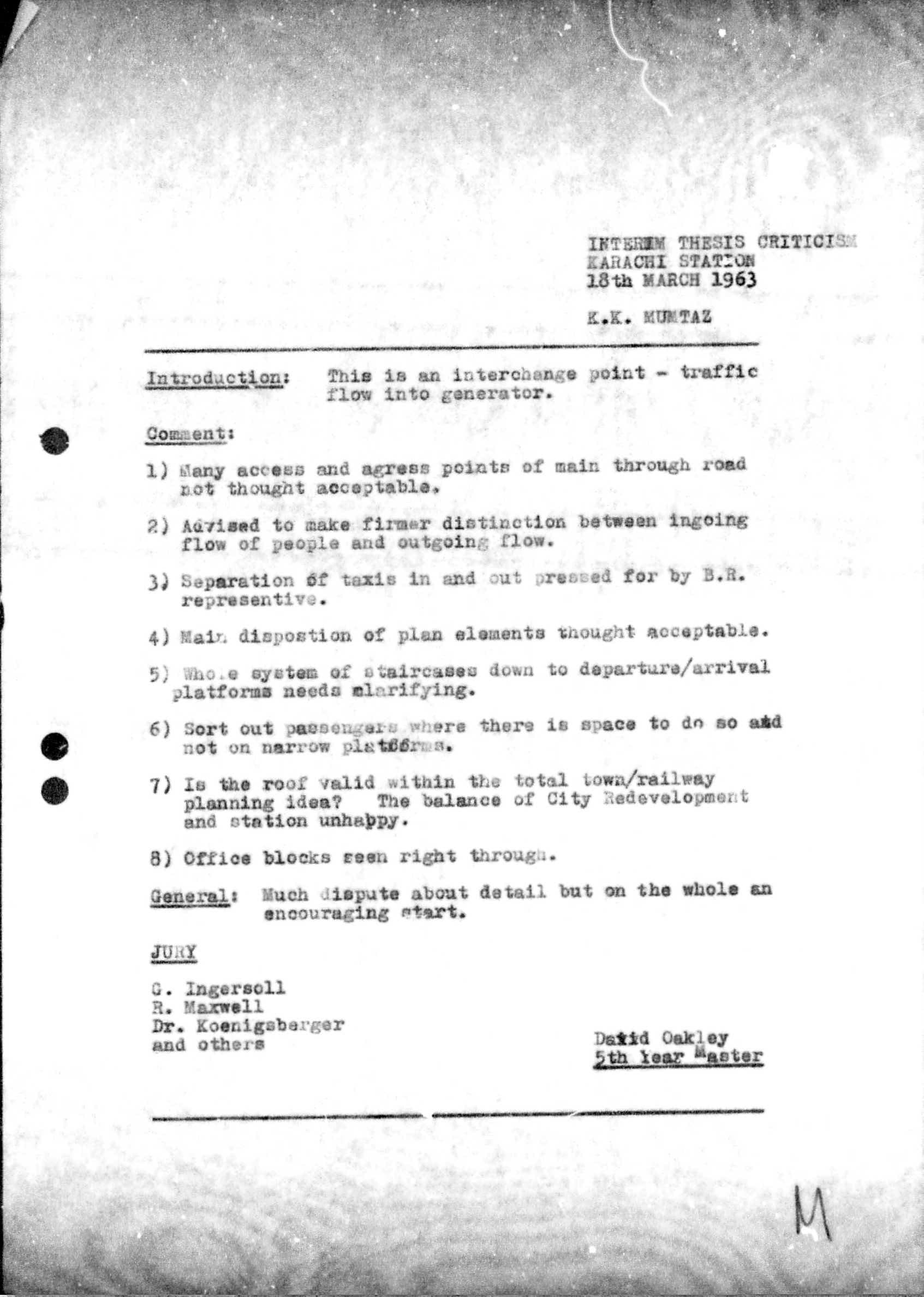
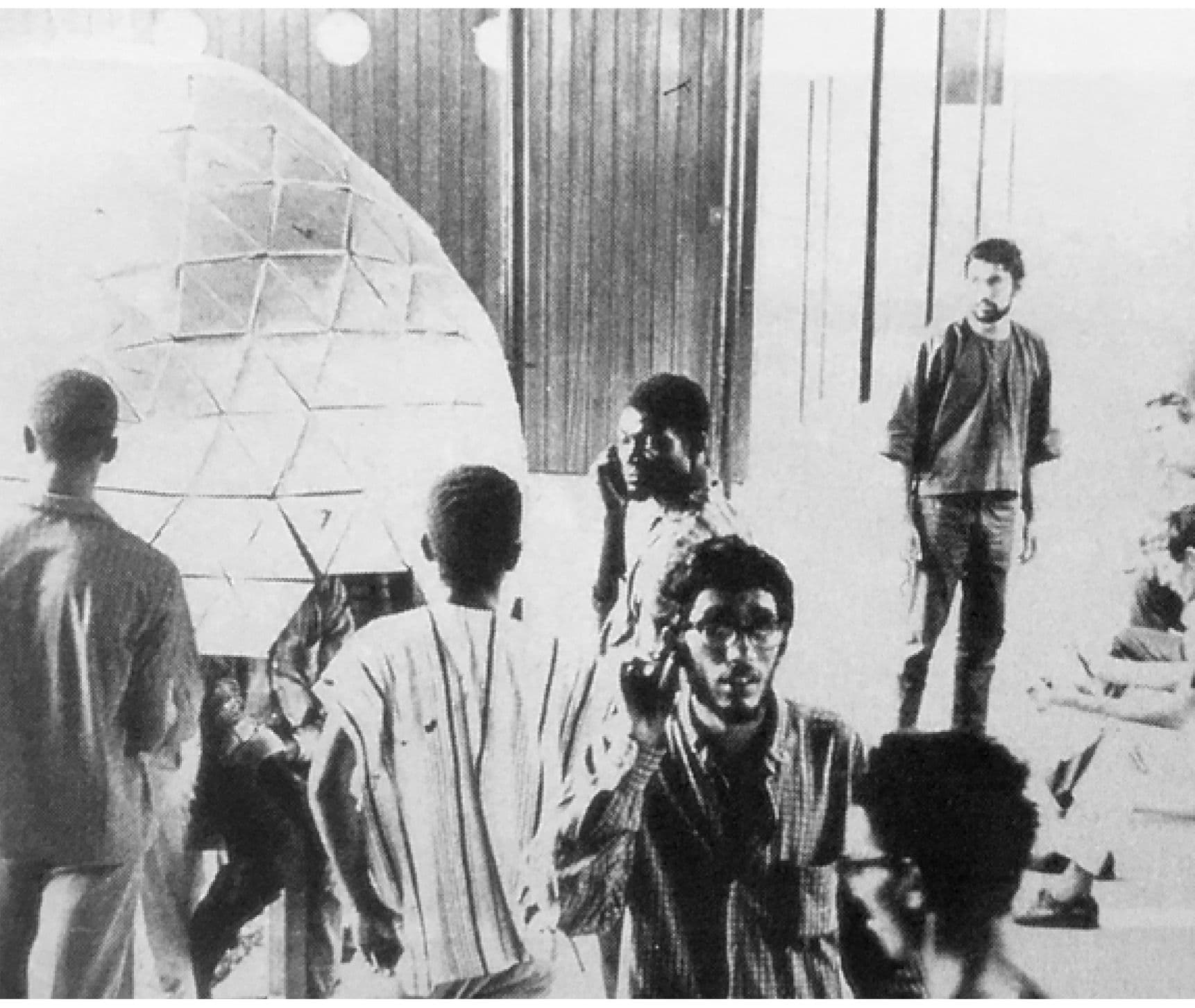
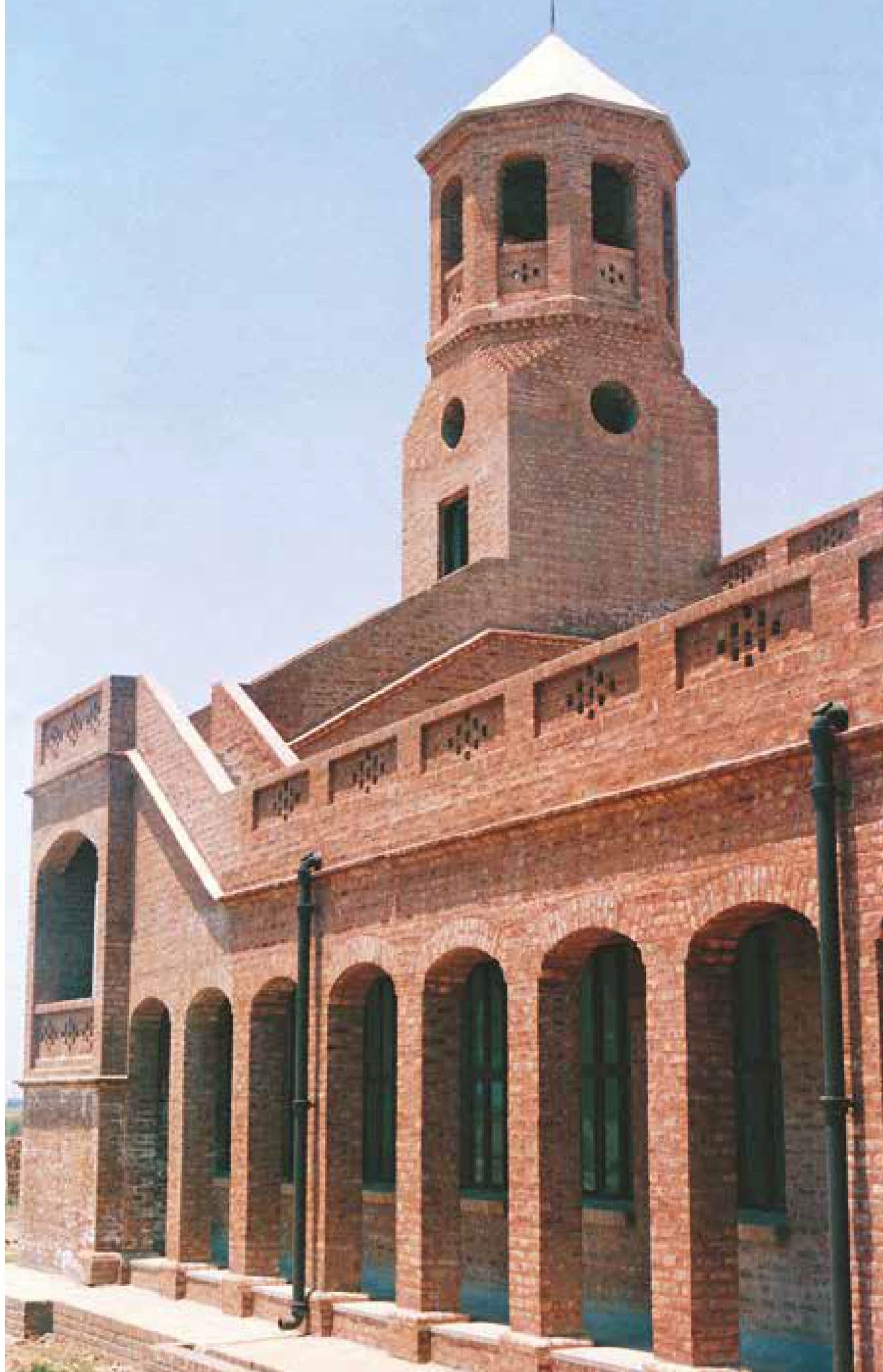
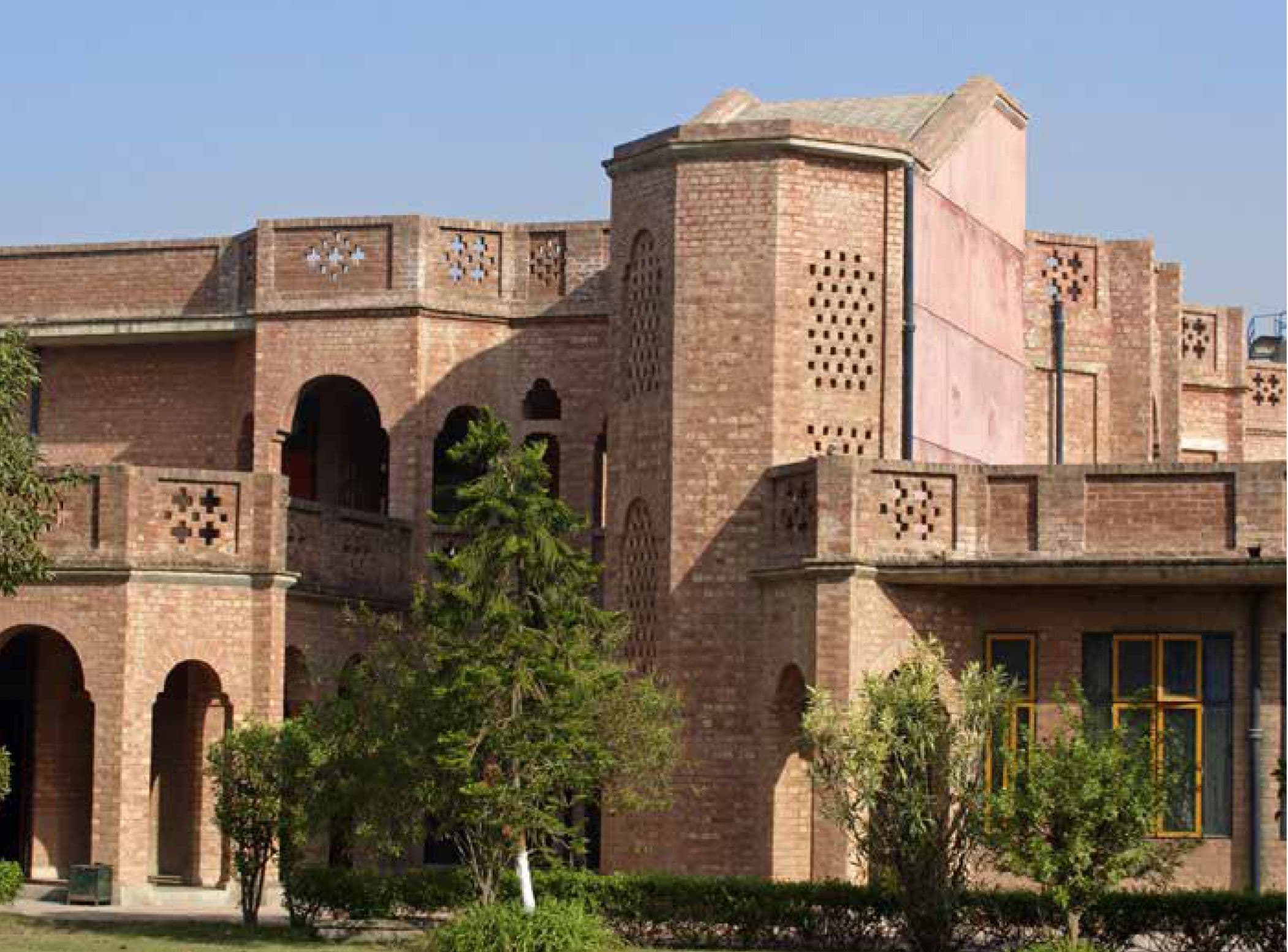
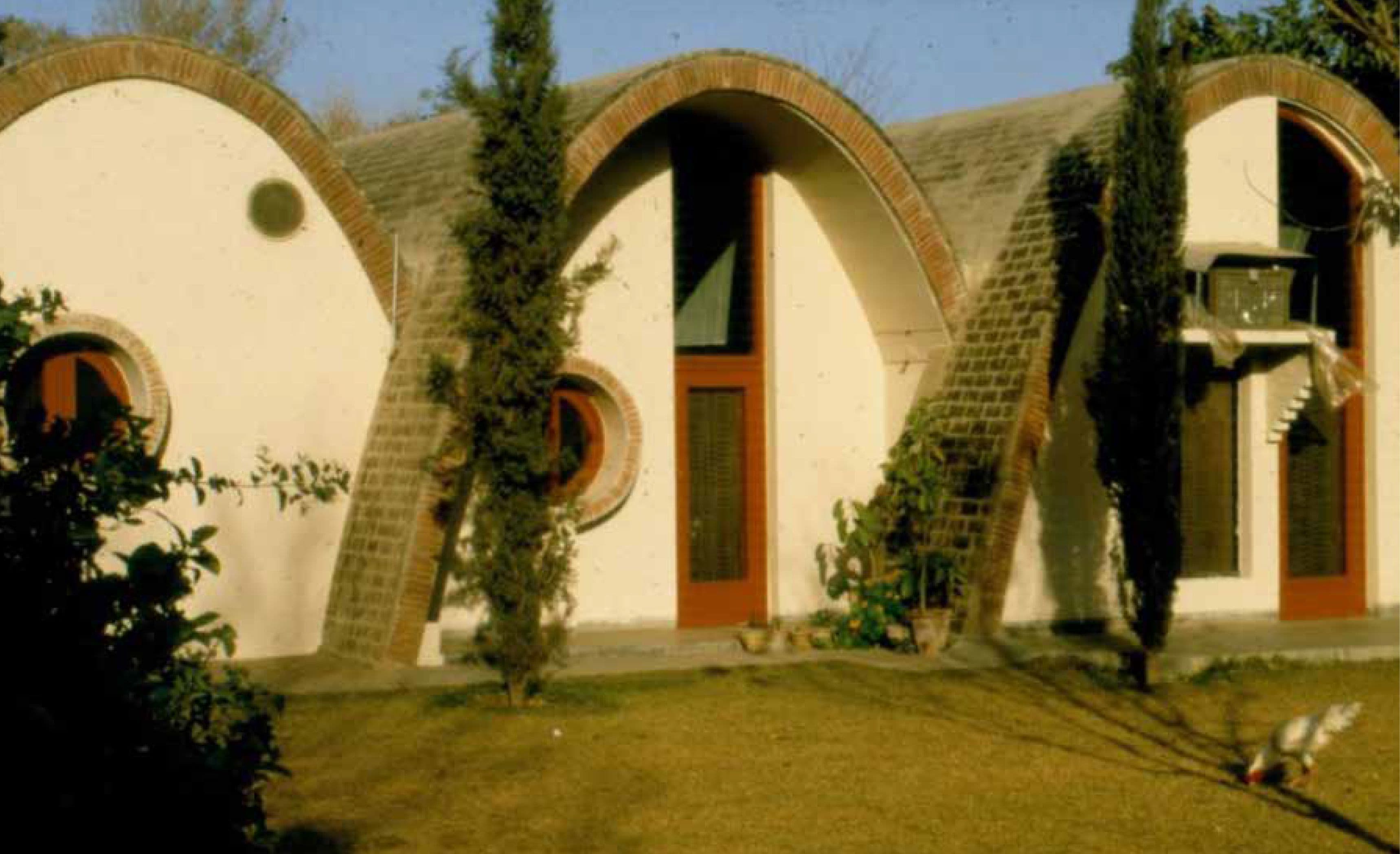
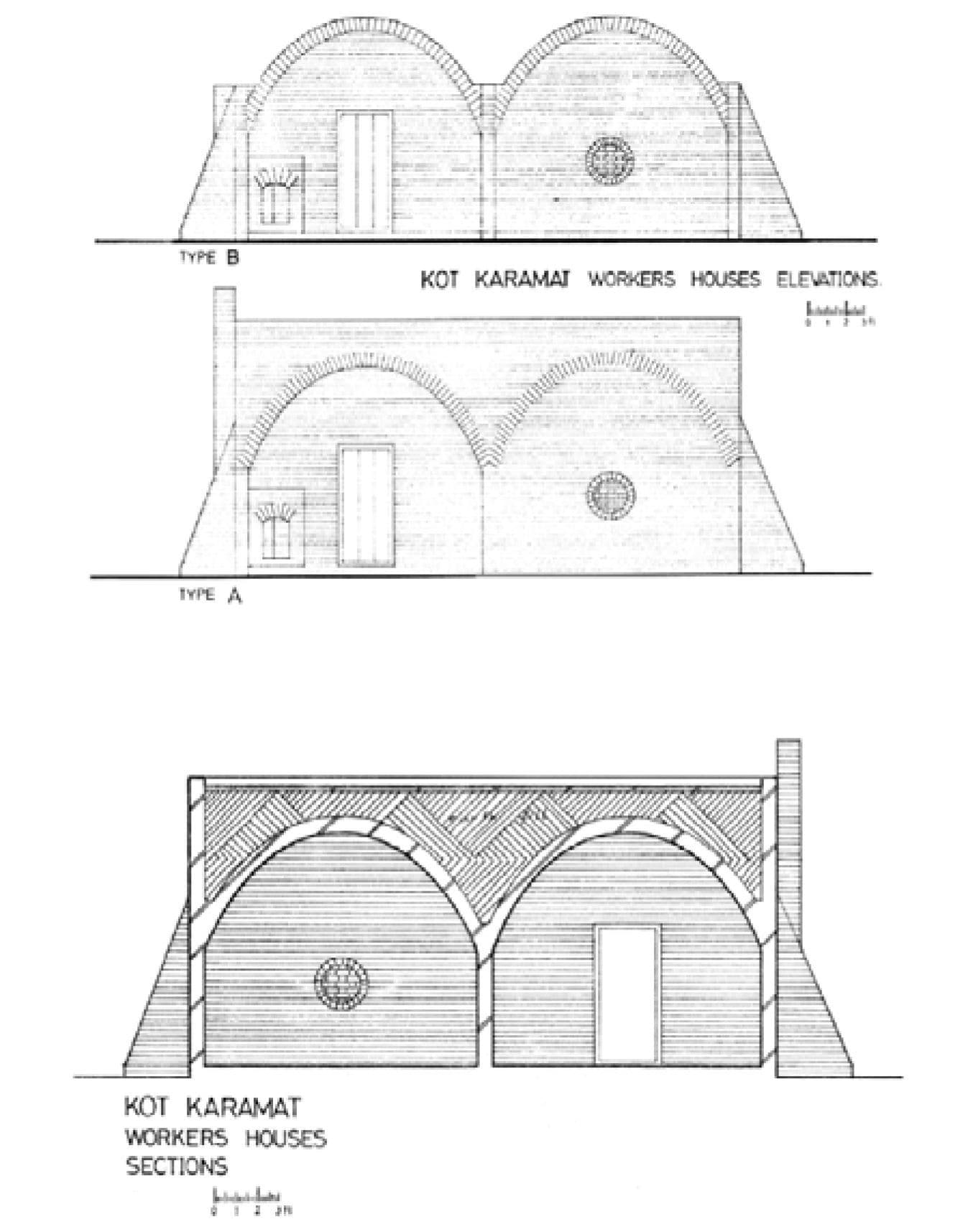
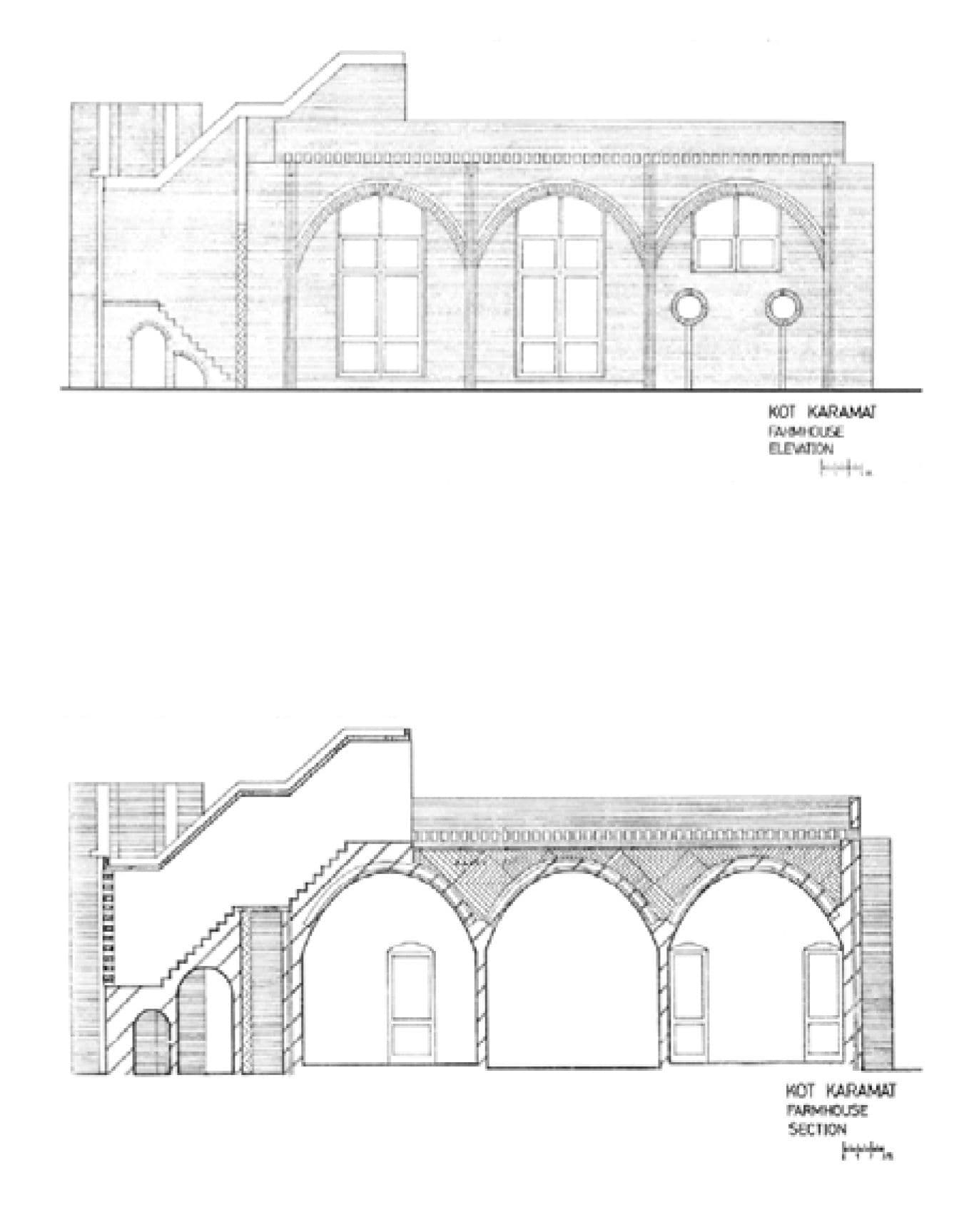
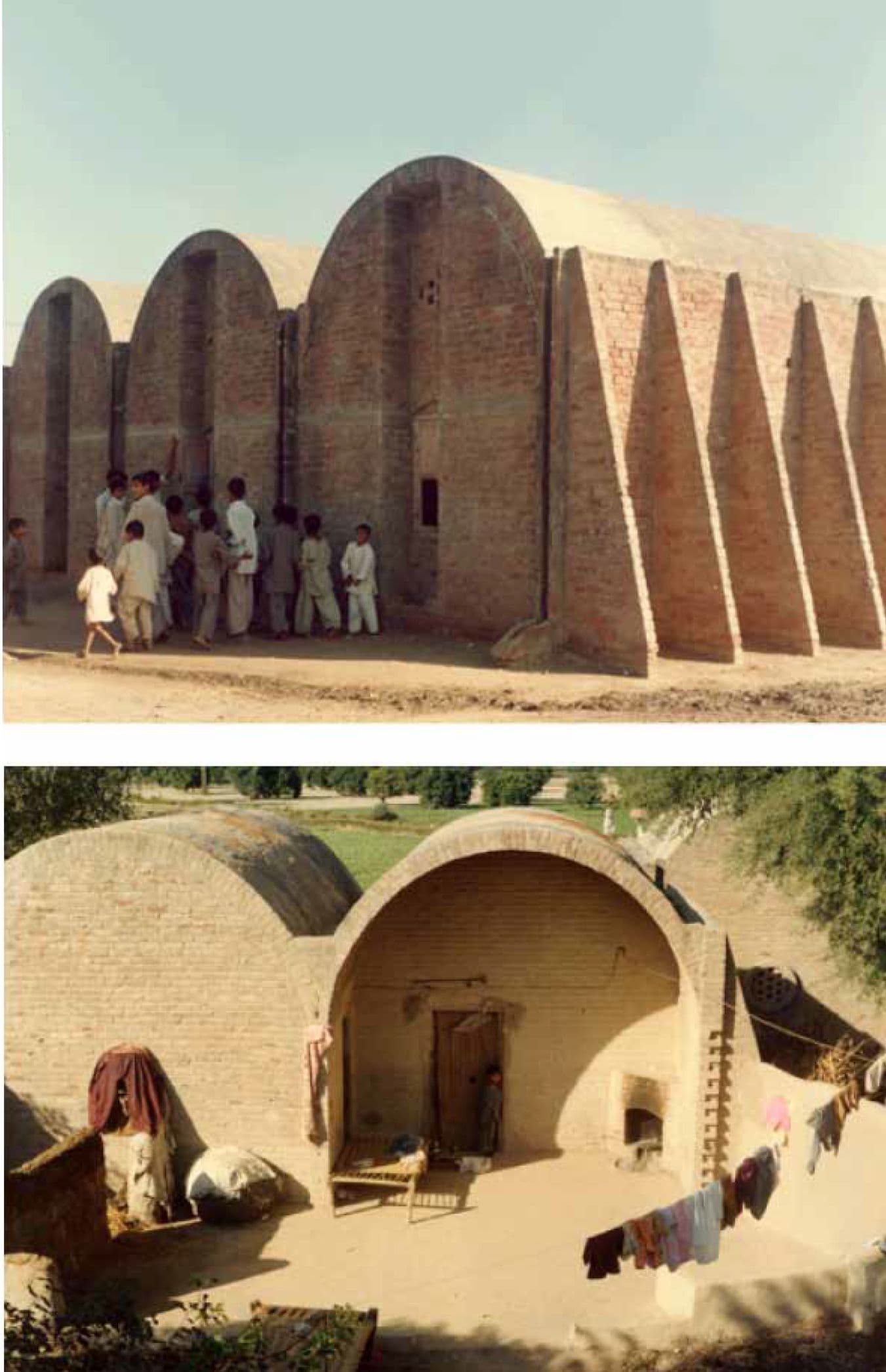
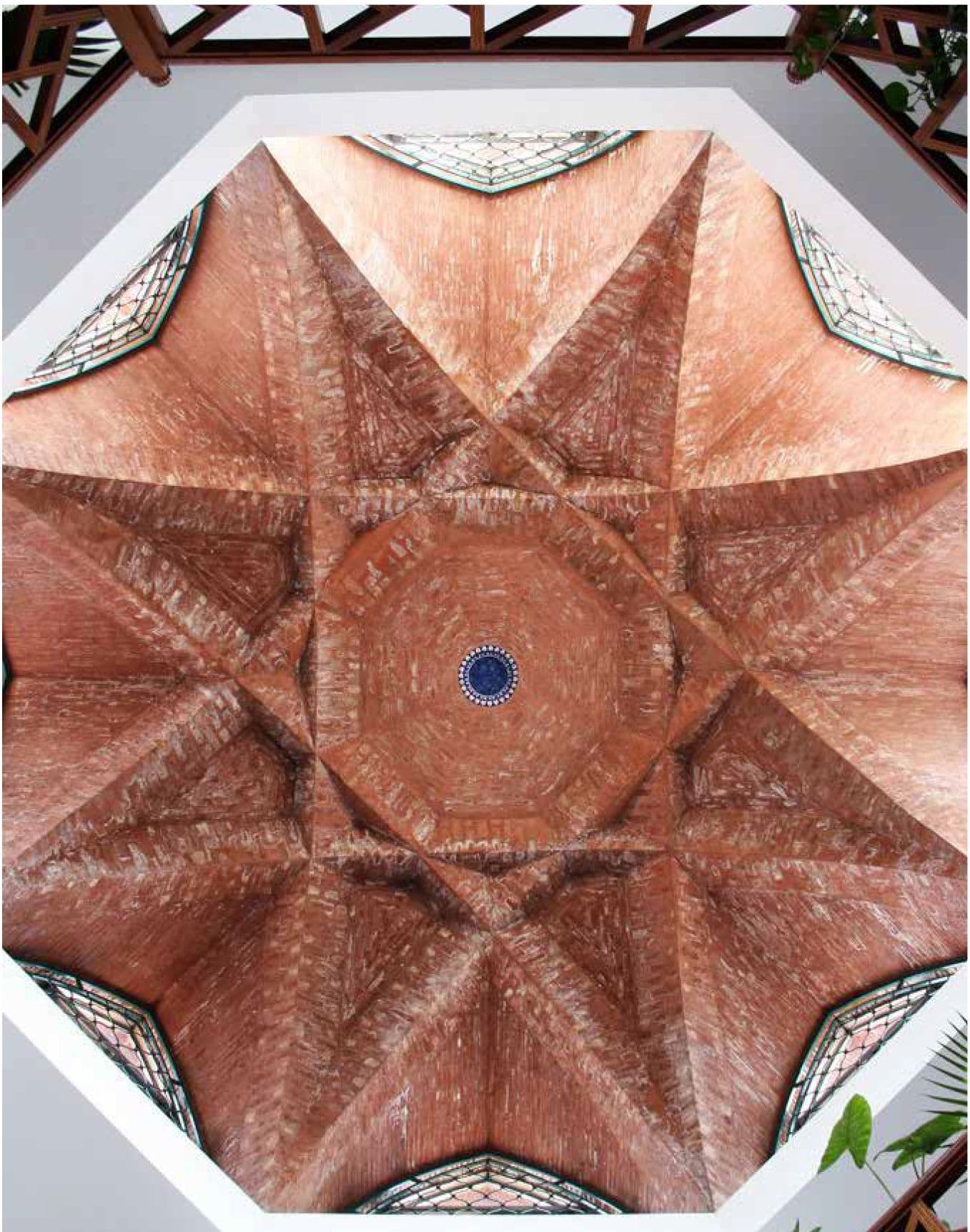
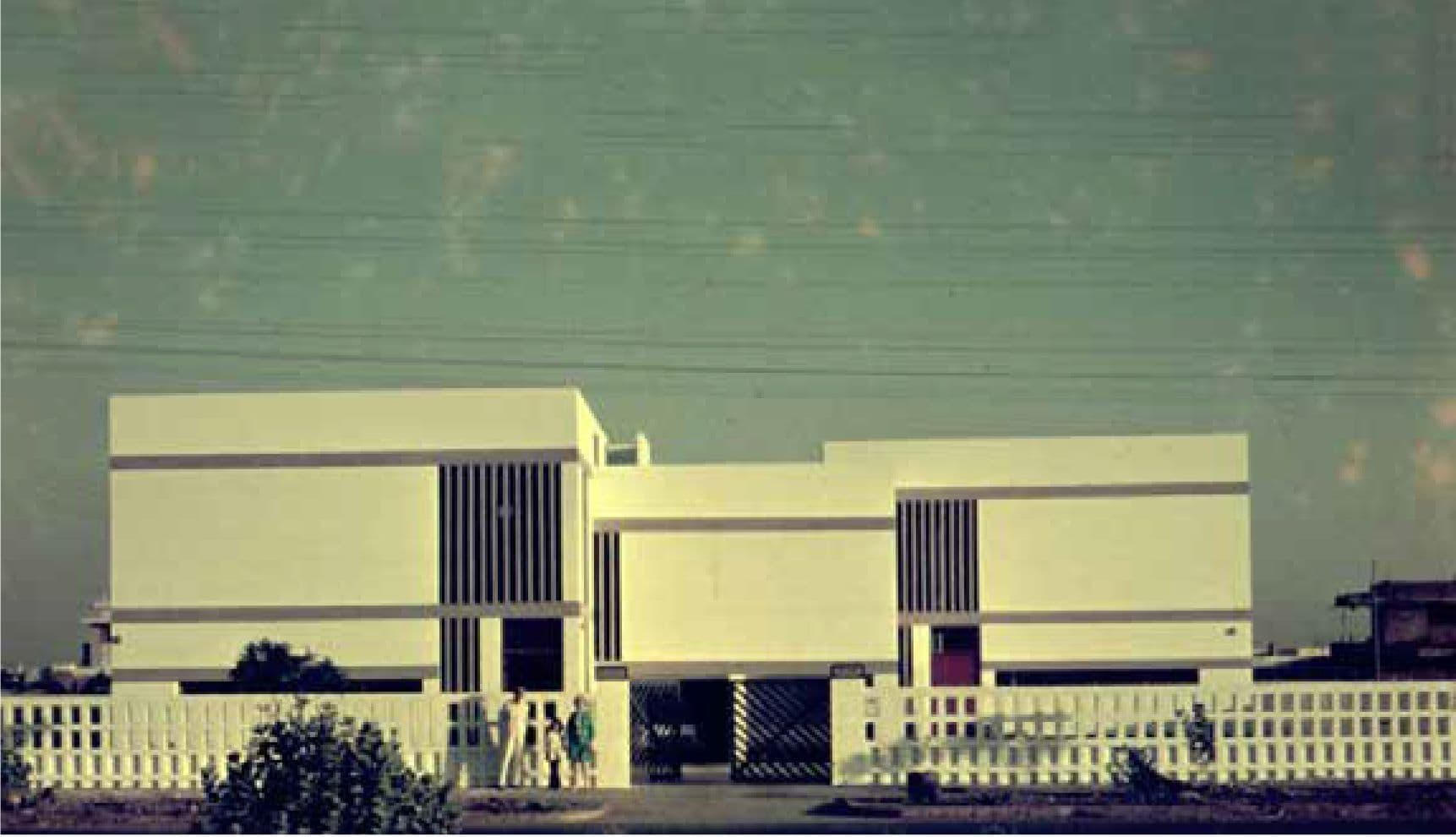
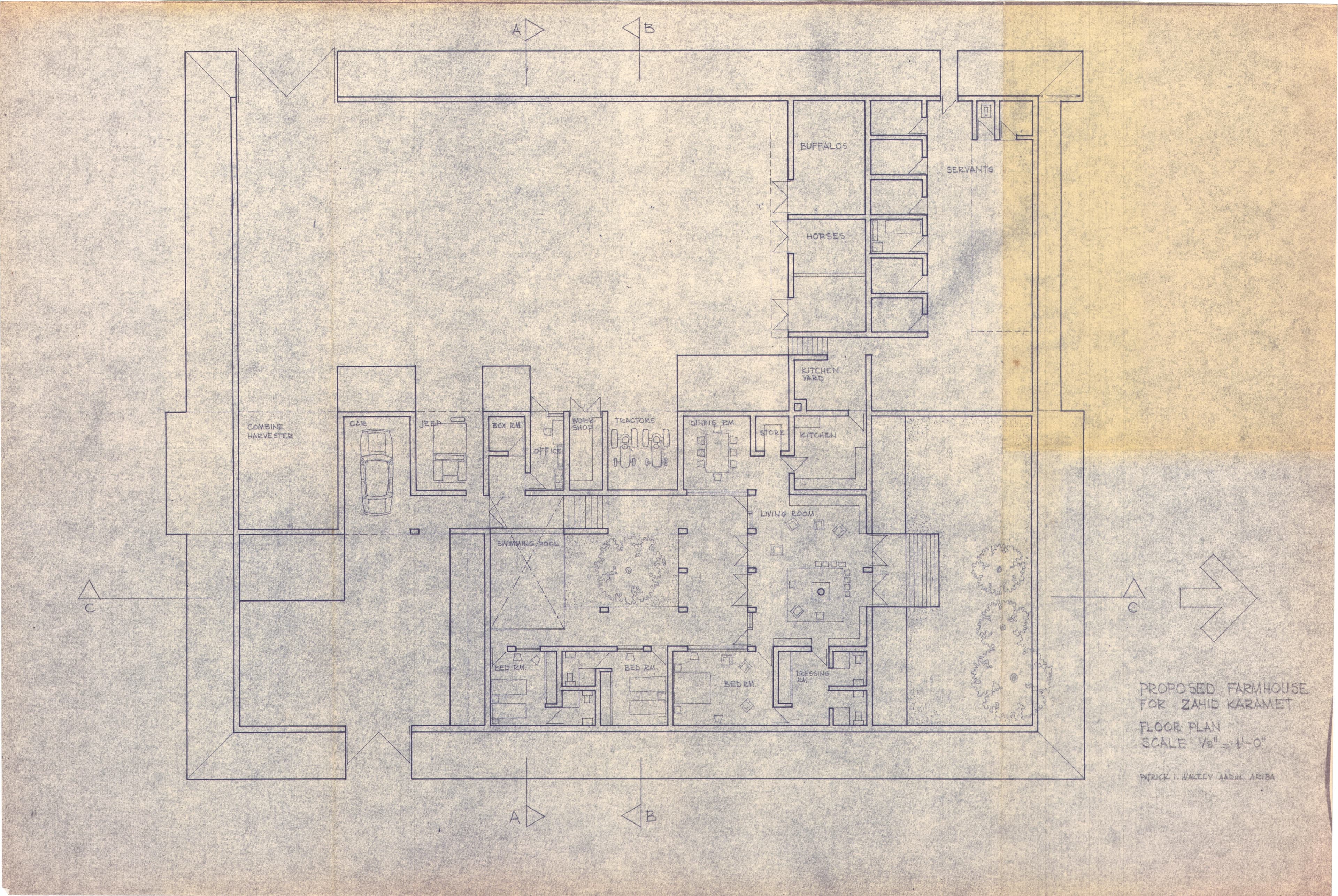
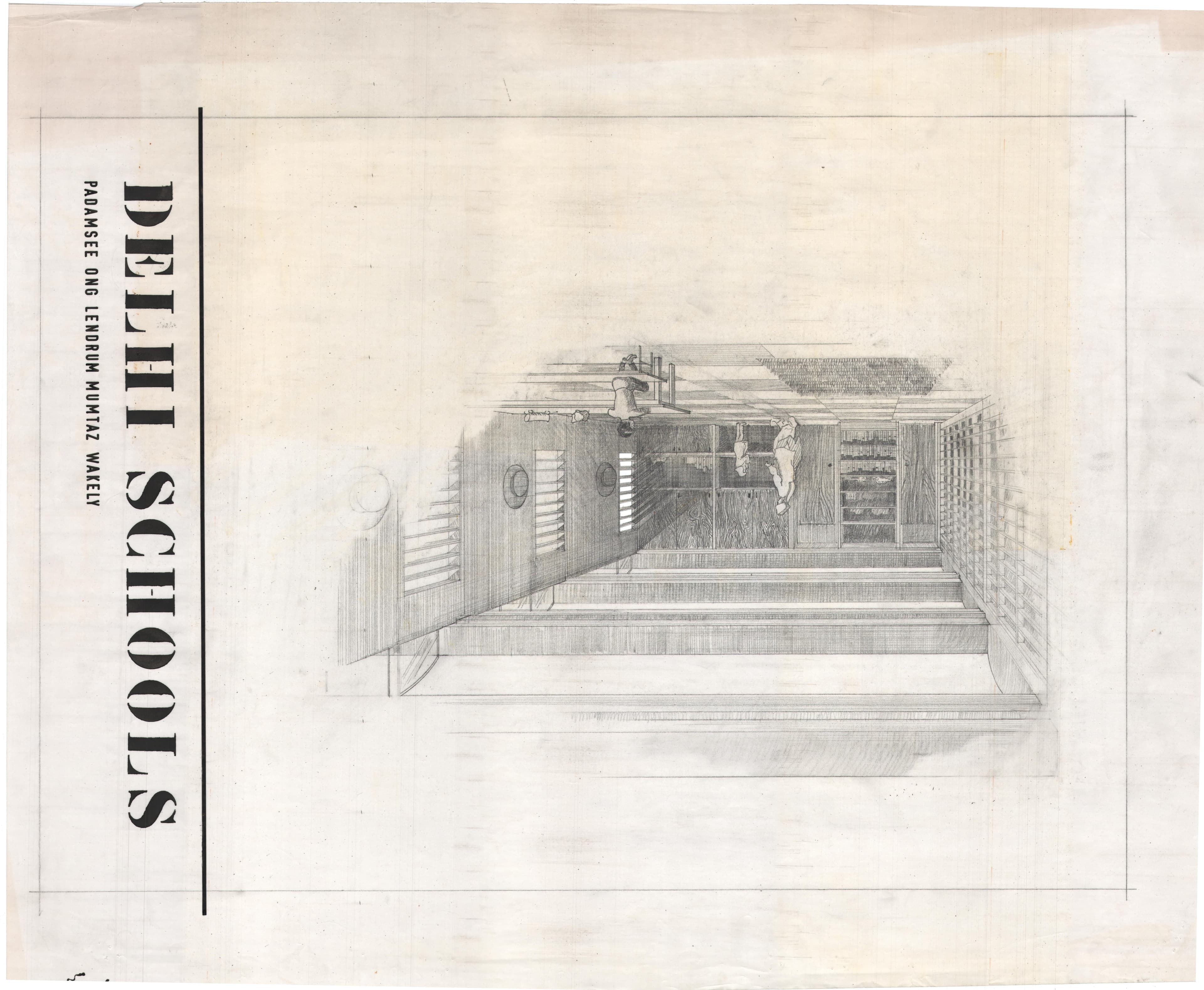
Kamil Kahn Mumtaz was born in Calcutta, now Kolkata, in 1939, the son of an engineer. By the time of Partition, in 1947, he was living in the city of Muree, where he attended the Presentation Convent. His father subsequently moved to work at the port in Karachi and Kamil moved accordingly, studying at a number of schools including St Patrick’s High School and the Sindh Madressatul Islam school in Karachi, together with a Railway School at Chittagong and, finally, Aitchison College, Lahore, which he attended from 1952-1956. At Aichison, Kamil developed his interest in Art and guided by the example of Habib Fida Ali (1936-2017), who was a year ahead of him at Aichison College, decided to study architecture at the Architectural Association (AA), London. He entered the AA Diploma course in September 1957, taking a year out to work with the London practice of Quine and Newberry in 1960-61. As part of his final year’ studies, for the AA Fifth Year, in 1962-63, Kamil elected to study at the AA’s Department of Tropical Studies, leading to the award of a Diploma in Tropical Studies, as well as the AA’s standard Diploma. In an interview with Chris Moffatt, Mumtaz describes the Tropical Studies course in terms of having ‘more a kind of south, Third World or developing world kind of focus. We were conscious of there being a different set of problems, agendas, a need to relate to issues of post-colonial societies, which were different from the developed world… [the course] really gave us a systematic, theoretical base. It offered great clarity about the need for different kinds of thinking – physically, economically, technologically – and different kinds of solutions for that context” Amongst the jurors for Kamil Kahn’s final AA projects was Leo De Syllas (1917-64) who, immediately after Mumtaz’ graduation, offered him a position within the London office of Architects Co-Partnership (ACP). During his two years with ACP, Mumtaz worked on designs for a number of schools in Tunisia and a children’s clinic in Bromley, Kent. During 1964 the AA was drawing up a partnership with Kwame Nkrumah University of Science and Technology, in Kumasi, Ghana, and Mumtaz, together with his Tropical Studies classmate and friend, Patrick Wakely, applied to join the Faculty there, being appointed as a Lecturer and Studio Master. Whilst teaching there, from 1964-55, Mumtaz was tasked with designing a history course comprising of the comparative study of world cultures, with a special emphasis on African studies, rather than the Eurocentric architectural narrative he had been brought up with. In 1965 Mumtaz returned to Pakistan, where he was appointed Head of the Department of Architecture at the prestigious National College of Arts in Lahore, a position he was to hold until 1975 and during which time he was to reframing architectural education in Pakistan, implementing what Chris Moffatt describes as a ‘rigorous contextualism’ inspired by Koenigsberger’s teaching at the AA. Whilst Head, Mumtaz was also politically active, joining radical Marxist groups in organising and mobilising students and workers, culminating in two short spells in prison. Alongside his educational work Mumtaz also continued to work privately, initially at a relatively small scale - his early works including a modernist house for Zakaullah Khan at Nazimabad, Karachi (1967) and a scheme for low-cost, workers’ housing and farm structures at the village of Kot Karamat, near Lahore. This design utilised local materials and was based around an ideology of self-help, but the completed buildings were deemed by the inhabitants as impractical - the brick and lime-mortar vaulted roof could not be slept upon in the hot nights, and the roof space could not be efficiently used for drying of spices. Looking back, Mumtaz sees this as a transformational point in his thinking, gradually coming to recognise the limitations of an approach based purely upon ‘scientific logic and a framework of efficiency.’ He questioned the value of many of the approaches espoused by the AA Department of Tropical Studies, seeking for a means by which, instead of just adapting scientific innovation to the local environment and climate, traditional ways of thinking about structure and space, alongside craftsmanship, could be revived. In 1975, Mumtaz established his own formal practice, ‘BKM Associates’, based in Lahore and formed with fellow architect, Fuad Ali Butt, and engineer, Hashim Kahn. Amongst their most significant works are the House for Dr. Farrukh (1976) and the Darul Hikmat Education Centre (1991-994), in Lahore and the Chand Bagh School, Muridke, Sheikhupura, Pakistan (1999). More recent, and ongoing projects include the Ali and Mahjbeen Residence (2001) and the Mazaar Baba Hassan Din, in Baghbanpura, Lahore (2001-). The latter project exemplifying his approach to traditional Islamic architectural form and the significance of craftsmanship and artisanal labour. Aligned with such ideas, Mumtaz has also been a pioneer in the field of conservation in Pakistan, his work on the Lahore Urban Development and Traffic Study (1977-81) setting the groundwork for the study and preservation of Lahore’s Walled City. Mumtaz was also a founder member of the Lahore Conservation Society (1984) and his ‘Architecture in Pakistan’, published in 1985, after ten years of research, remains an exemplary survey of the historic built environment. He has travelled widely, lecturing in numerous universities, internationally, and was a member of the Steering Committee for the Aga Khan Award for Architecture between 1981-1984. He was awarded the Pakistan State Honour of Tamgha-i-lmtiaz medal in 1993.
Sources
- Architectural Association Council Minutes, 13th February, 1963. AA Archives
- Architectural Association Student Register, 1963. AA Archives
- Architectural Association Admissions Records, AA Archives
- Moffat, Chris, Ahmad, Kiran and Jaffer, Amen. "The Time of Building: Kamil Kahn Mumtaz and Architecture in Pakistan." Folio Books, 2023.
- Moffat, Chris. "Building, Dwelling, Dying: Architecture and History in Pakistan." Modern Intellectual History 18, no. 2 (2021): 520-46. doi:10.1017/S1479244320000025.
- Mumtaz, Kamil Khan. “Architecture in Pakistan”, Mimar, 1985.
- Mumtaz, Kamil Khan. 'Modernity and tradition: contemporary architecture in Pakistan.' Oxford University Press, Karachi, 1999.
- Mumtaz, Kamil Khan. “Architecture of Sufi Shrines” in Sacred Spaces edited by Samina Quraeshi, Harvard University Press, 2009, 41-68.