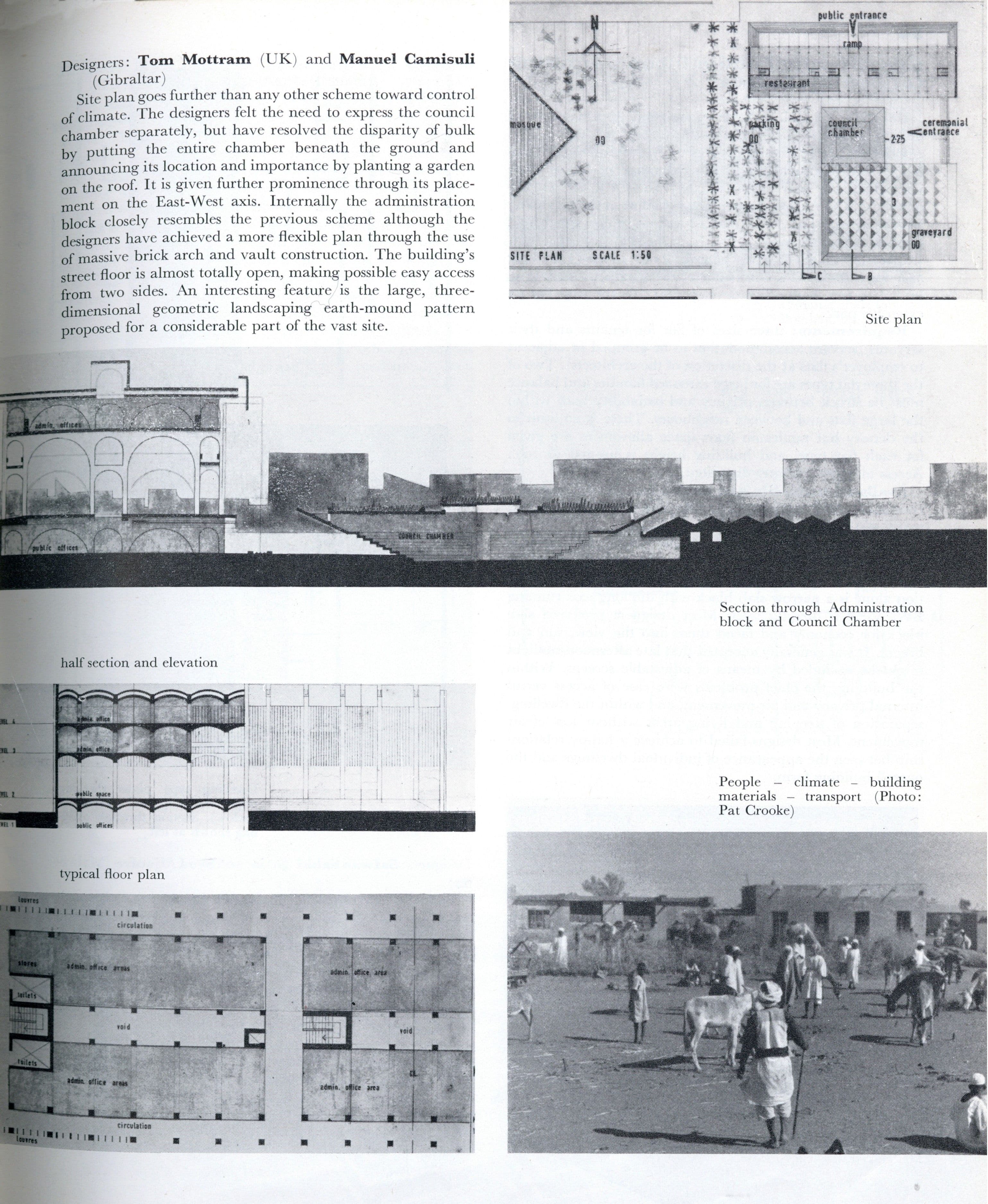
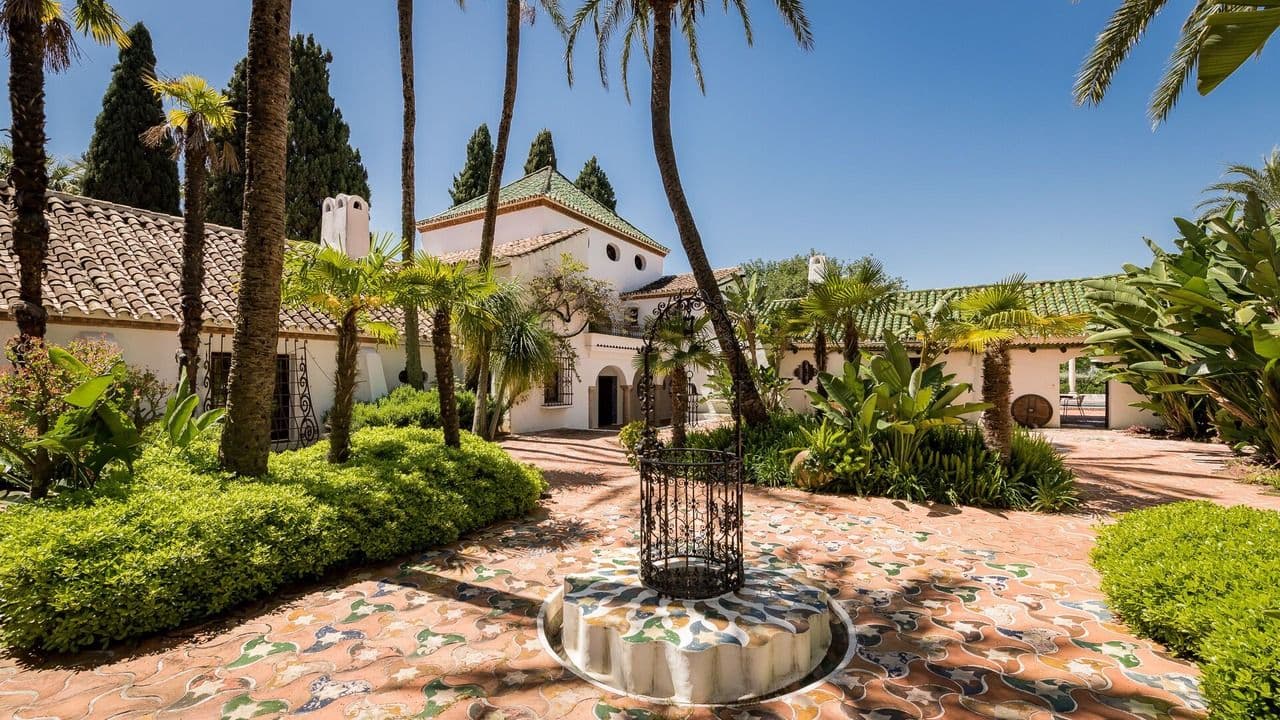
Manuel Camisuli was born in Gibraltar in 1940 and attended Gibraltar Grammar School from 1951-57. He gained experience Whatlings Ltd, a Gibraltar firm of building contractors and engineers, before travelling to the UK, where he studied part-time at the Glasgow School of Architecture from 1958-61. During this period he also worked for the Glasgow practice of Gillespie Kidd & Coia. In September 1961 he was accepted on the Architectural Association’s five-year Diploma course, in London, joining the Third Year cohort. During the summer vacation of 1962 he attended a course at the Instituto Edouardo Torreja, in Madrid, returning again, to work there, for the summer vacation of 1963. As part of his final AA Diploma year, he elected to study within the AA’s Department of Tropical Studies, successfully graduating in 1964. He appears to have had a successful final year, with his design for ‘Khartoum Town Hall’ (with fellow student, Tom Mottram) being published in the AA Journal of June 1964 and his History Thesis, ‘The development of pre-stressed concrete in Spain,’ being very well received. Immediately after graduating, Camisuli moved to Uganda, where he worked for the Central Planning Bureau, in Kampala, and was involved in the ‘State Hotel ‘project, which opened in 1967 as the ‘Apolo Hotel’ (now Sheraton Kampala Hotel). Camisuli appears to have been working in Kampala together with Colin Frank, a fellow alumni of the Departure of Tropical Studies - however, in 1967 Camisuli is recorded as living in Mombasa, Kenya. A move to the Costa del Sol, Spain, followed in 1970 and he established his own practice which was well enough respected, three years later, to be commissioned by the Hollywood actor, Stewart Granger, to build a luxury villa in Estepona (the ‘Cortijo San Francisco’ - now a filming location for the 2025 Amazon Prime series ‘The Girlfriend’). Camisuli was to design numerous high-end villas and residential complexes in the Costa del Sol region, over his career, but his work always displays a sensitivity and desire to integrate with the local environment and natural surroundings.
Sources
- Architectural Association Council Minutes, 16th March, 1964. AA Archives
- Architectural Association Student Register 1945-1972, AA Archives
- Architectural Association Student Records, Registrar’s Office. AA Archives
- Architectural Association Membership List, 1969
- Allen, A., ‘Eclectic Home of a Hollywood Swashbuckler’, New York Times, July 2nd, 2015. Accessed 11th September, 2025: https://www.nytimes.com/2015/07/03/greathomesanddestinations/eclectic-home-of-a-hollywood-swashbuckler.html
- Edgar C. Taylor, Jonathon L. Earle, Katherine Bruce-Lockhart, Nakanyike Musisi (eds), ‘Decolonising State and Society in Uganda: The politics knowledge and public life’, James Currey, 2022, p.327