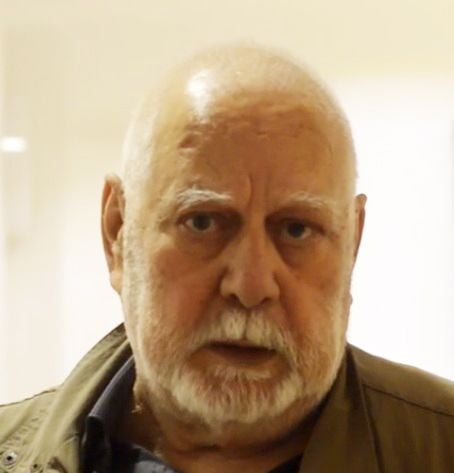
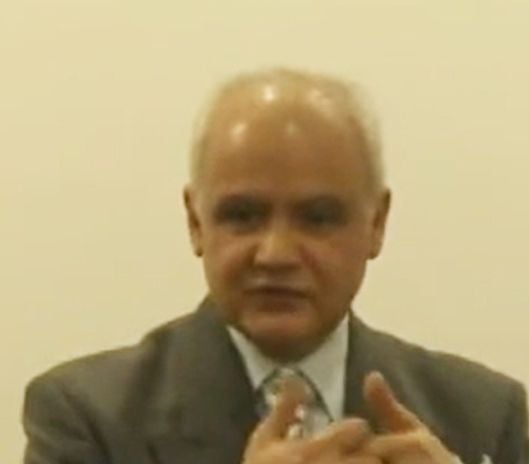
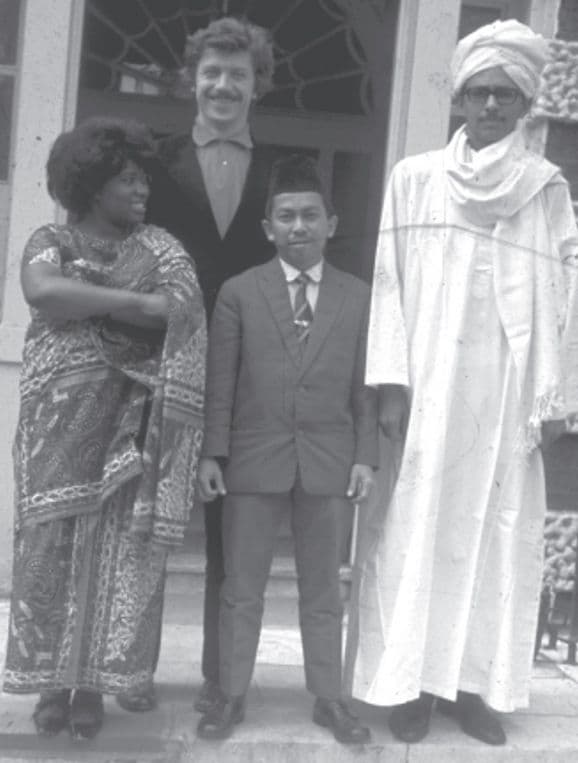
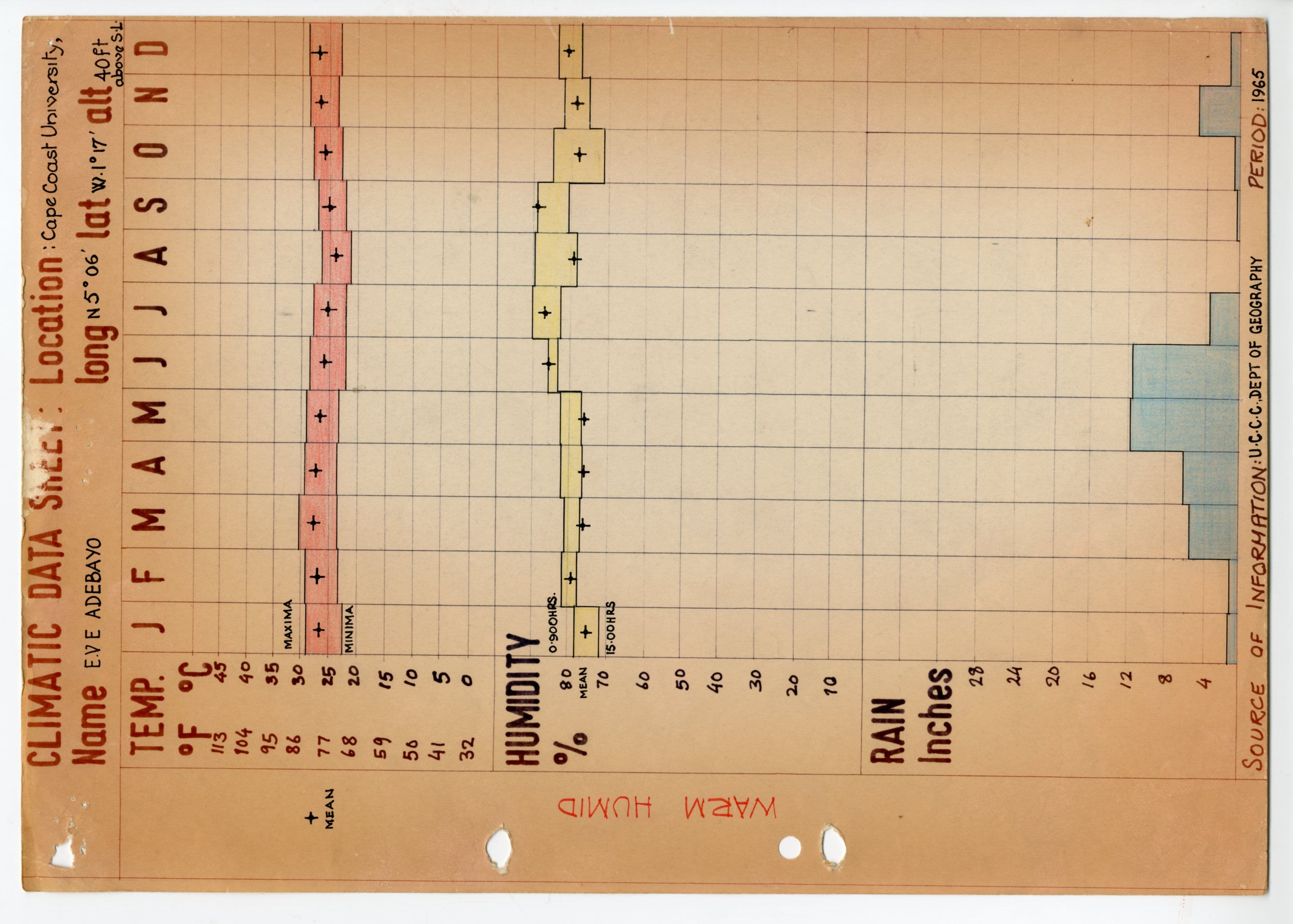
Elizabeth Valentina Edna Adebayo, also known as Eve, was born in Ghana, where she began her architectural studies in 1963 at the Kwame Nkrumah University of Science and Technology (KNUST) in Kumasi. She continued her education at the Architectural Association (AA) in London, enrolling in the Department of Tropical Architecture (DTA) in 1968, where she undertook the housing course. Joining the DTA the same year as fellow KNUST graduate Clement Berku Karikari, Adebayo was among a number of students who benefited from the close ties established between KNUST, and the Architectural Association (AA), London -the two institutions having entered a contract to work together to develop the architecture programme at KNUST earlier in the 1960s. After her studies, Adebayo moved to Nigeria and joined the Ministry of Works in Lagos. During the course of the 1970s she rose to the position of Deputy Chief Architect, making her one of the highest-ranking women in Nigeria’s architectural public sector at the time. In this role, which she held until retiring in 1980, Adebayo would have been involved in planning and overseeing major government building projects during the post-independence and oil-boom years, a defining period of Nigeria’s development. Parallel to her public sector work, in 1971 Adebayo co-founded Adebayo and Adebayo Consultants in Lagos with her partner, Alexander Adebayo, which undertook major projects such as the competition-winning design of Cocoa House in Ibadan and several state library buildings and hospitals in Nigeria. Transitioning from a government role to running a consultancy reflects a very common career arc for this period in West Africa, where procurement for large commissions often favored private firms over senior civil-service architects, and where the rise of private foreign-funded developments provided further incentives for leaving the public sector. Adebayo’s career, although under-documented, positions her as an important figure linking the transnational training circuit of KUNST and the DTA with Nigeria’s momentous nation-building projects.
Sources:
- Architectural Association Student Register 1945–1972. AA Archives.
- Climkit archive, Pat Wakely Collection, AA Archives, Box 2011:07
- Punch. “Singing now pays than going to school — Adebayo.” Punch. Published/updated n.d. Accessed September 30, 2025. URL: https://punchng.com/singing-now-pays-than-going-to-school-adebayo/
- The Nation. “Celebrating Cocoa House at 50.” The Nation. Published/updated n.d. Accessed September 30, 2025. URL: https://thenationonlineng.net/celebrating-cocoa-house-at-50/
- Figueira, Jorge, and Bruno Gil. “Otto Koenigsberger and the Course on Tropical Architecture at the AA.” Docomomo Journal. Published/updated 2013. Accessed September 30, 2025. URL: https://www.docomomo.pt/wp-content/uploads/2019/04/DocomomoJournal48_2013_JFigueiraBGil.pdf