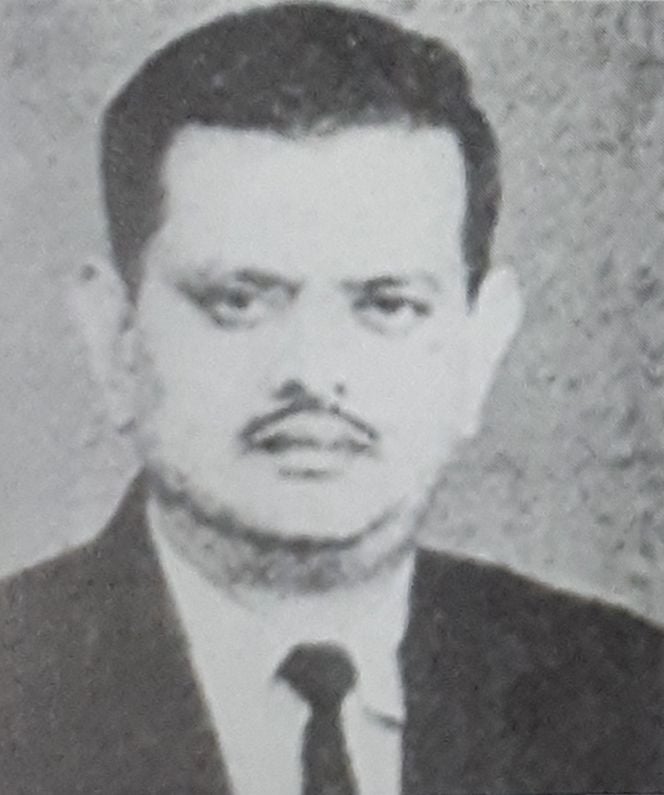
Mir-Nais Habibi was born in Afghanistan and is believed to have undergone early architectural studies abroad, possibly in India. He attended the Architectural Association’s (AA) Department of Development and Tropical Studies in 1968–1969, where he undertook the postgraduate Hospital Course. Habibi returned to Afghanistan after his graduation, however his long career there has remained largely undocumented, with the decades of conflict following his return eroding official archives. The only verifiable work associated with him remains his role as a health facility adviser for the Afghan Ministry of Health and USAID around 2004–2006, shortly following the US and UK’s invasion of Afghanistan in 2001. In this role, he advised on programming, planning, design, and construction documents for health centers, hospitals and nursing schools. A particular report by Habibi on the Qalai Qazi clinic, in which he noted fire hazards, unreliable plumbing and sewage leakage, has been widely cited as an example of the critical engineering flaws with US-funded health facilities. Indeed, his experience would have exposed him to the deep administrative and infrastructural failures that defined two-decades of US reconstruction attempts in Afghanistan, ending with the Taliban’s return to power in 2021. By 2006, Habibi had relocated to the US, where he continued working as a Senior Health Facilities Planner based in New Jersey. Considering Afghanistan’s turbulent recent history, Habibi’s long career in the local health facility sector would have undoubtedly endured enormous challenges, reflecting a remarkable commitment to the country’s development.
Sources:
- Architectural Association Student Register 1945–1972. AA Archives.
- Department of Tropical Architecture, student listing, Otto Koenigsberger Collection, Box OK27. AA Archives.
- Nawa, Fariba. “Afghanistan, Inc.: A CorpWatch Investigative Report.” CorpWatch. Published December 2005. Accessed April 11, 2025. https://www.corpwatch.org/sites/default/files/Afghanistan%20Inc.pdf
- Stephens, Joe, and David B. Ottaway. “A Rebuilding Plan Full of Cracks.” The Washington Post. Published November 20, 2005. Accessed April 14, 2025. https://www.washingtonpost.com/archive/politics/2005/11/20/a-rebuilding-plan-full-of-cracks/f8a71b24-f364-48f0-8e64-df88ce626bcb/ The Washington Post
- LinkedIn. “Mirwais Habibi — Senior Health Facilities Planner.” LinkedIn. Accessed April 8, 2025. https://www.linkedin.com/in/mirwais-habibi-47025371