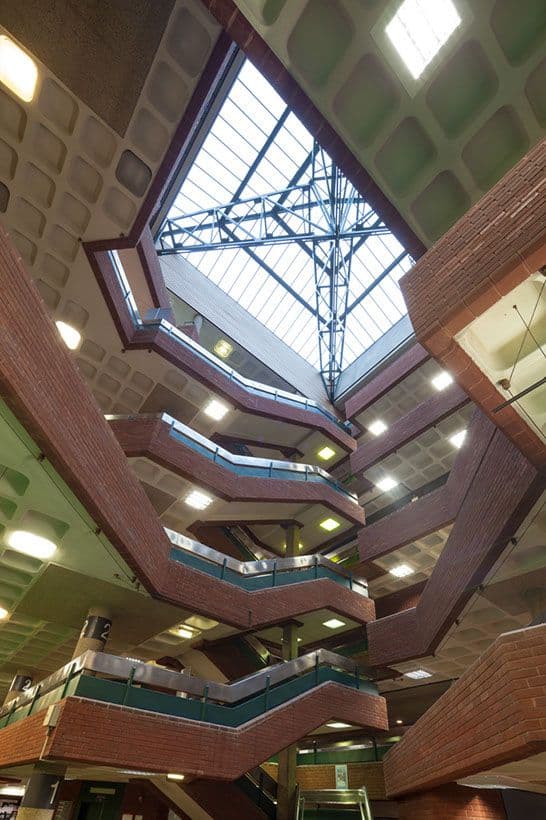
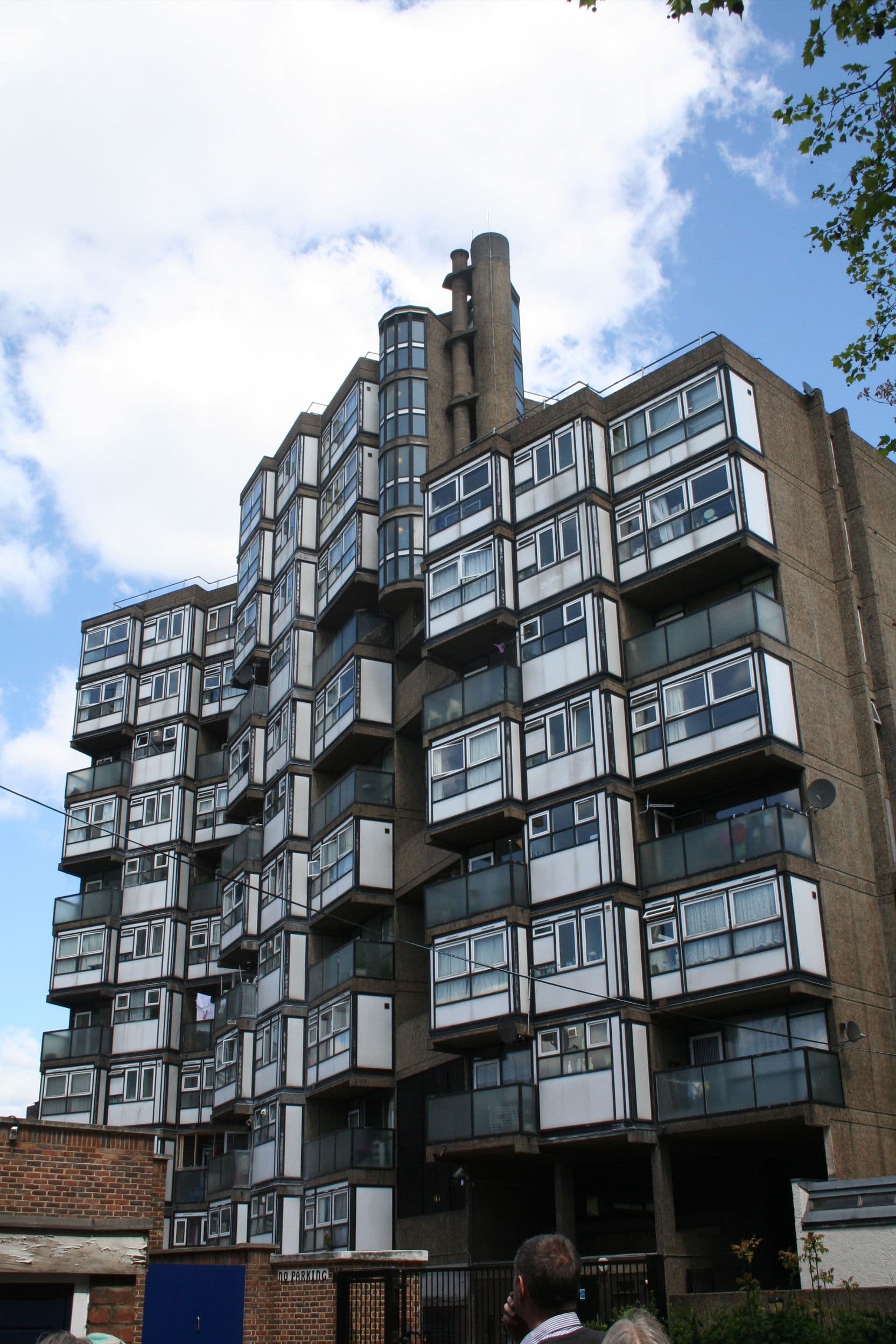
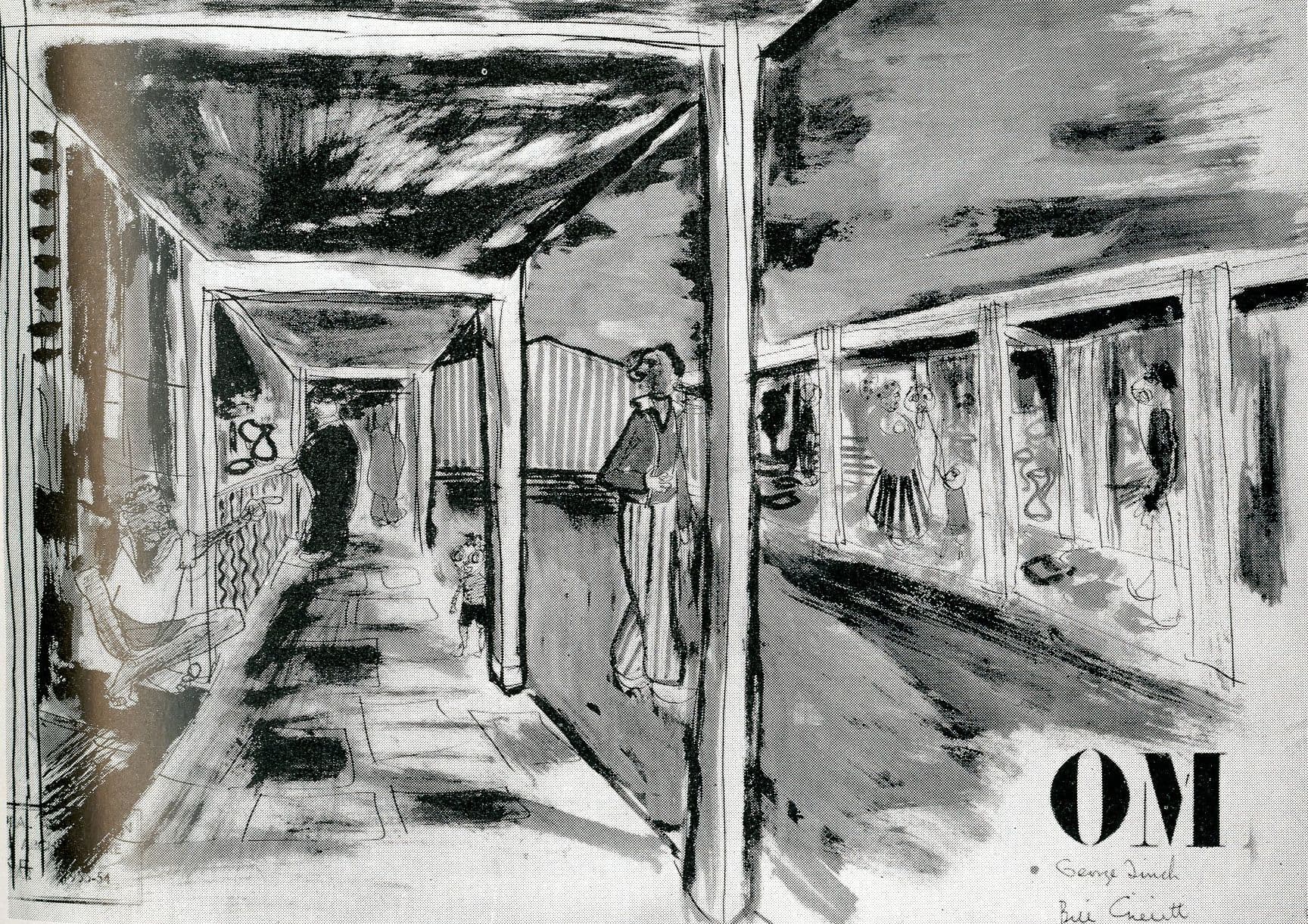
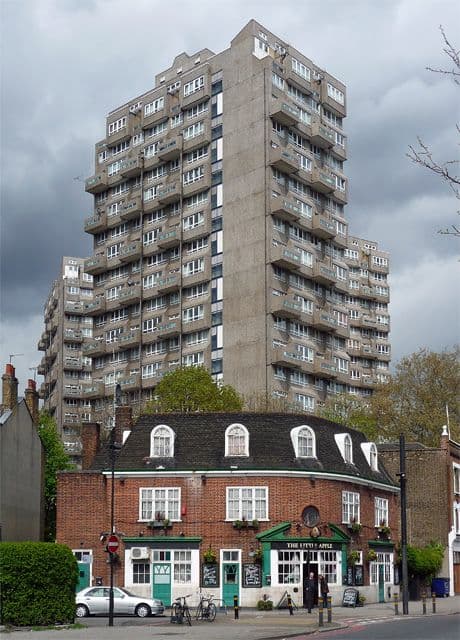
George Finch was born in Tottenham, north London, but evacuated to Saffron Walden, Essex during the Second World War, where he attended the highly regarded Newport Free Grammar School. On his return to Tottenham, he attended night classes at the North London Polytechnic, transferring to the Architectural Association in 1952. As part of his final year’s studies, Finch joined the first cohort of the AA Department of Tropical Architecture, before graduating in 1955. He worked initially for Howard Crane and Partners but joined the London County Council Architect's Department in 1956, where he worked on a number of large-scale projects, including a high-rise scheme for Whitechapel Road and designs for the Suffolk Estate, Haggerton. Following the restructuring concomitant upon the London Government Act of 1963, Finch joined the newly formed Lambeth Borough Council Architect’s Department, under Ted Hollamby (1921-1999), where he was to remain until 1971. Amongst his most important work during this period was the cluster of towers at Cotton Garden Estate (designed 1966, completed 1968) and his Lambeth Towers, Kennington (designed 1964. completed 1972). Inspired by the work of Moshe Safdie (1938-), Lambeth Towers provides ten stories of flats, each articulated within a cranked concrete frame, irregularly stacked so that each maisonette has its own balcony and dual aspect. His final project for Lambeth was the celebrated Brixton Recreation Centre, designed in 1971 and completed in 1985 – subsequently awarded Grade II heritage listing in 2016. On leaving Lambeth in 1971, Finch joined another AA graduate, the theatre architect, Roderick Ham (1925-2017), and together they worked on a number of schemes, including Derby Playhouse and the Wolsey Theatre, Ipswich. A spell in academia, also saw Finch as head of design in the architecture faculty at Thames Polytechnic from 1973-78. Never far from practice, Finch subsequently went into partnership with Bob Giles, as ‘Architect’s Workshop’, and then established himself as a consultant to Hampshire county council in the late 1980s - before finally joining in partnership his wife, Kate Mackintosh (1937- ).
Sources:
- Architectural Association Student Register 1945-1972, AA Archives
- Department of Tropical Architecture, student listing, Otto Koenigsberger Collection, Box OK27, AA Archives
- Architectural Association Diploma Roll, 1924-1963, AA Archives.
- Boyle, P. ‘George Finch and the London Point Block’, AA Files, 68, 2014 pp16-21