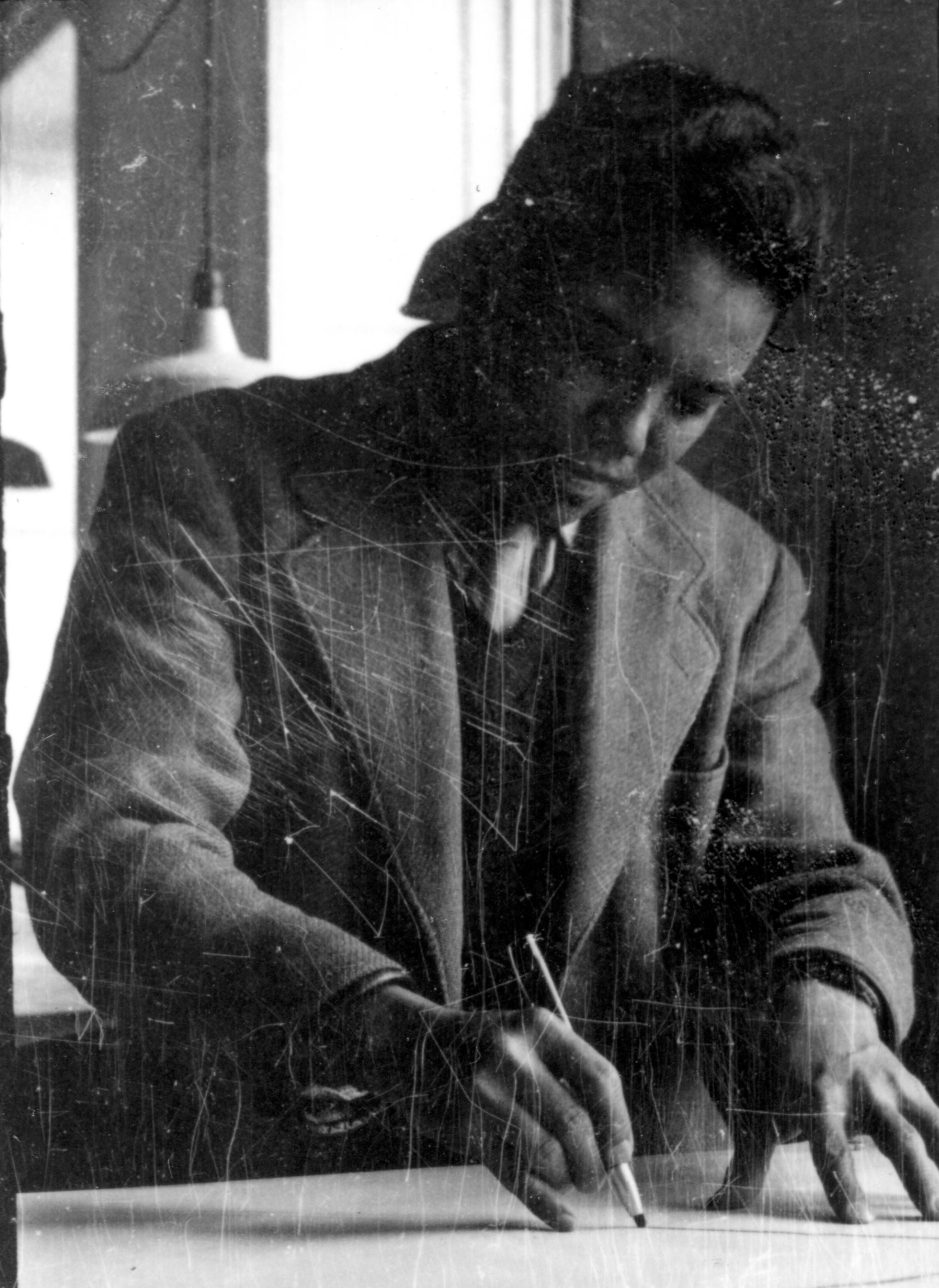
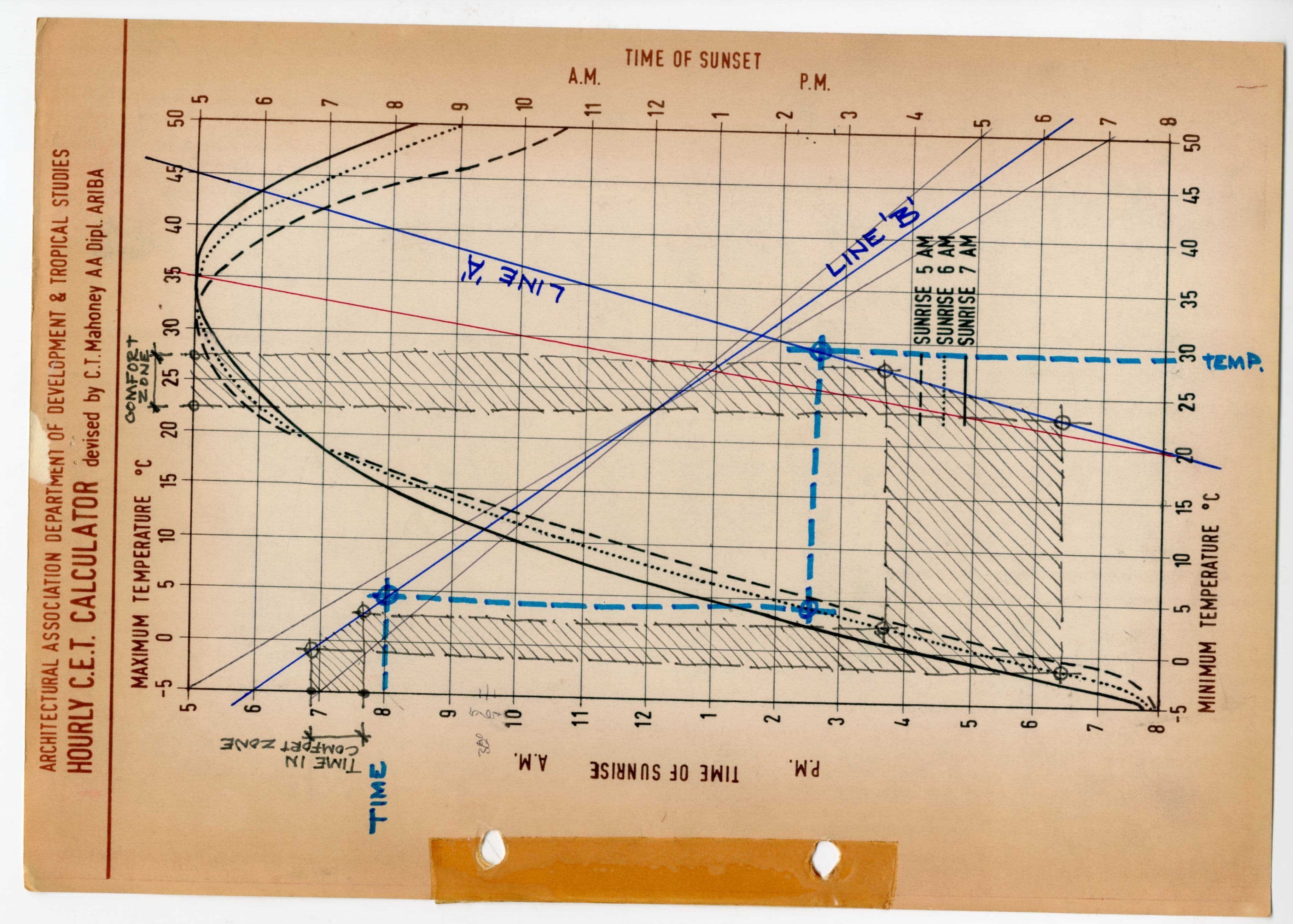
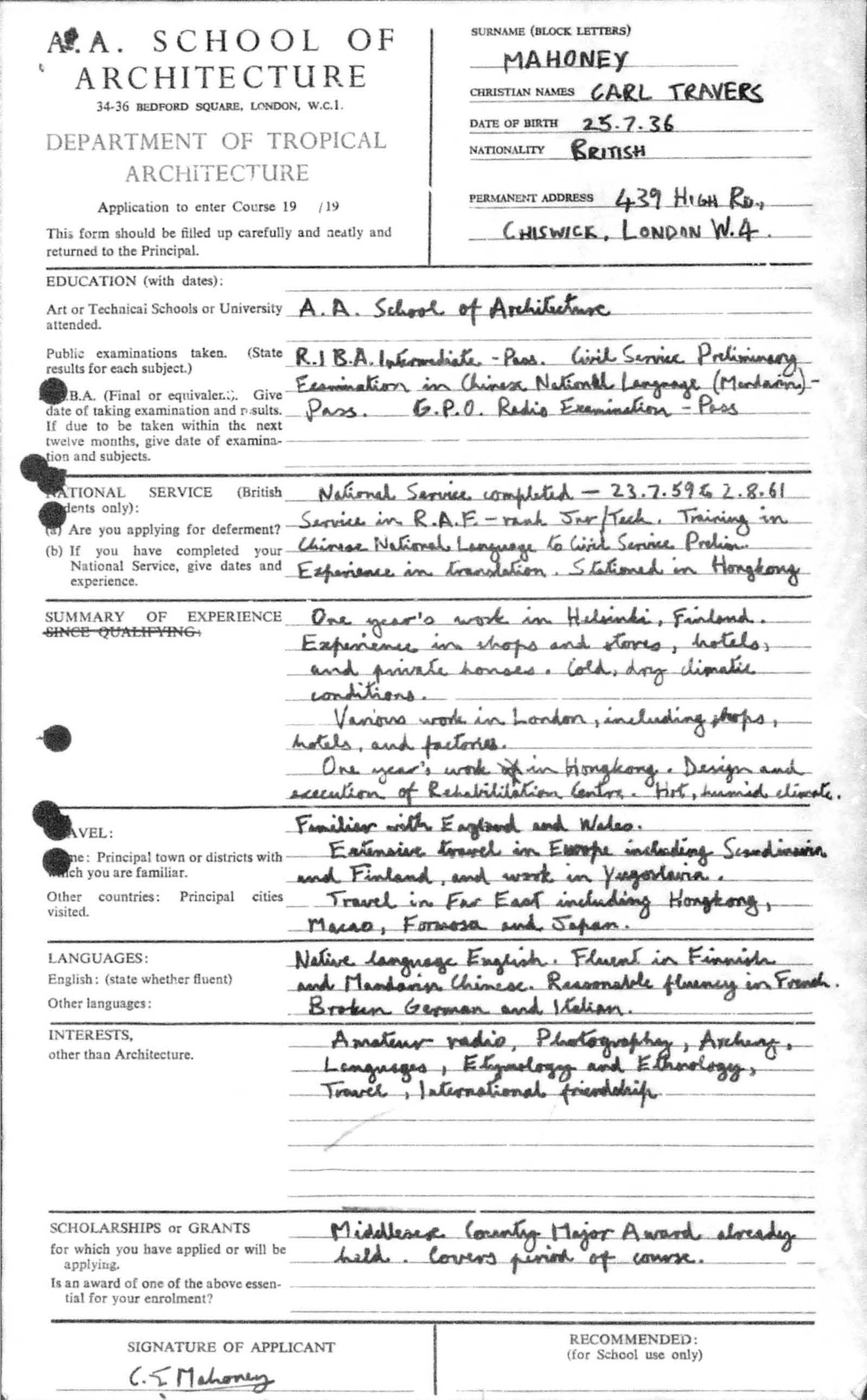
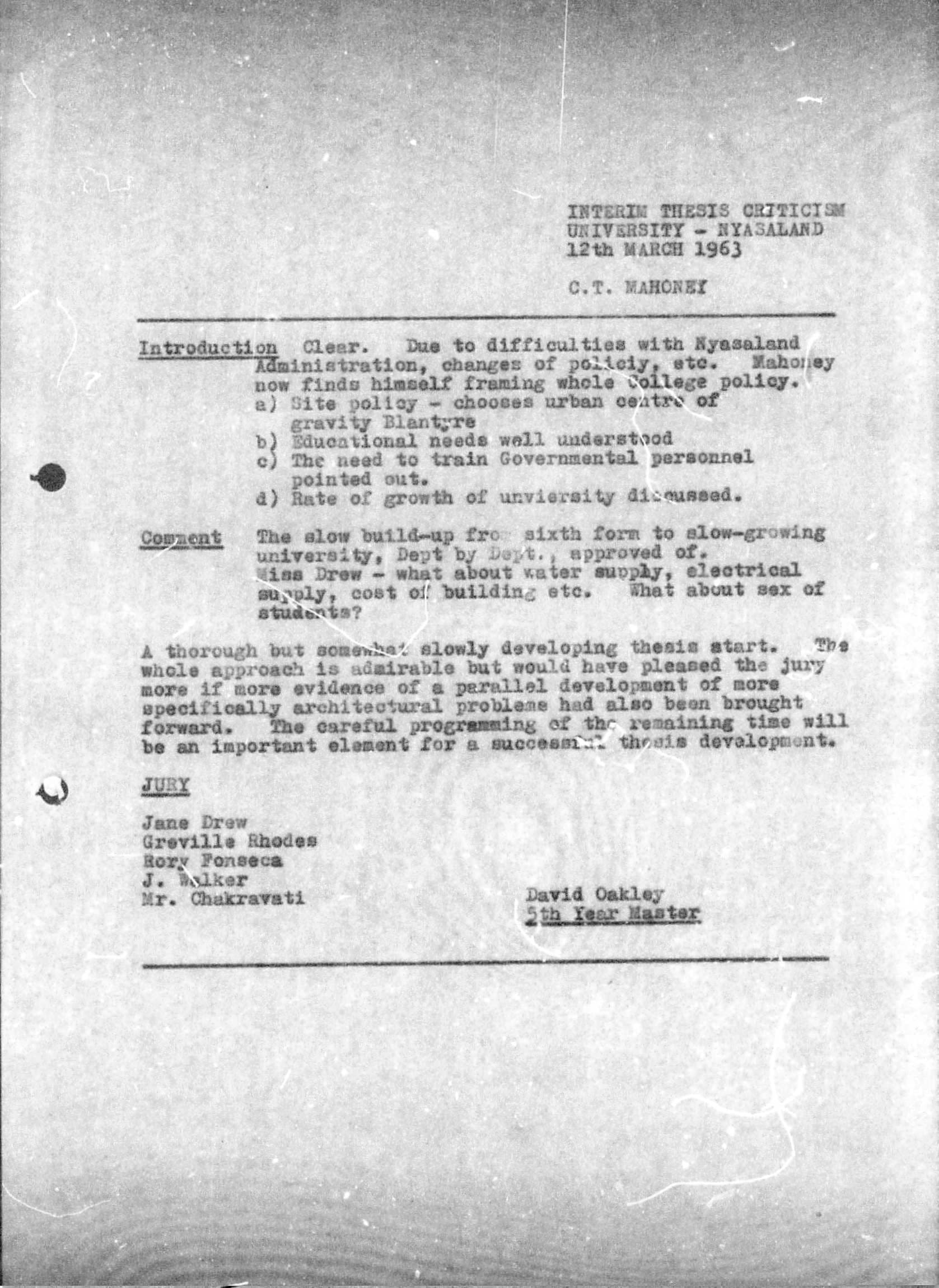
Carl Mahoney was born in the UK in 1936 and educated at St. George’s, Weybridge, Surrey, before entering the Diploma Course at the Architectural Association (AA), London, in 1954. He took periods of time out from his studies, including a stint on National Service, posted to RAF Little Sai Wan signals intelligence base, in Hong Kong, where he was engaged in the design and execution of a rehabilitation centre. For the final year of his Diploma course, in 1962-63, he elected to study at the AA’s Department of Tropical Studies. His application card for admission to the Department survives in the AA Archives and Mahoney describes himself as fluent in both Finnish and Mandarin Chinese and as having travelled widely in the Far East, including Japan, Macao and Formosa. Mahoney’s final thesis project for the Department was for a university for Nyasaland, in preparation for which, he met in 1962 with Colin Cameron, the Minister of Works and Transport for Nyasaland. Mahoney was permitted an extension until June 1964, for his thesis submission, and his interim and final jury reports are preserved within the AA Archives. Mahoney is credited with the invention and development of the 'Mahoney Tables', a very influential set of reference tables widely used as guide for climate appropriate design. These tables clearly have their origins in the work of the Department of Tropical Studies, and were developed in conjunction with Mahoney's Dept. of Tropical Studies colleague, John Martin Evans and Departmental Head Otto Koenigsberger. The exact chronology of his subsequent career is not known to us, but by 1968 he was living in Honolulu, working for the University of Hawaii - his Selective Service card stating that he was employed as an Architect/Building Climatologist. By the late 1970s, he had transferred to Papua New Guinea, where he was serving as Professor of Architecture and Building, at the PNG University of Technology, in Lae.
Sources
- Architectural Association Council Minutes, 13th February, 1963. AA Archives
- Architectural Association Student Register, 1963. AA Archives
- Architectural Association Admissions Records, C.T. Mahoney. AA Archives
- National Archives, Washington, US, Korean War Era Draft Registration Cards, 1948-1959, 147-76A-0768
- ‘Letters to the Editor’, Papua New Guinea Post – Courier, 31st August, 1977, p.2
- Mahoney, Carl T & Papua New Guinea University of Technology. Department of Architecture and Building (1980). First Aseki road traffic survey June/July 1980. Dept. of Architecture and Building, P.N.G. University of Technology, Lae