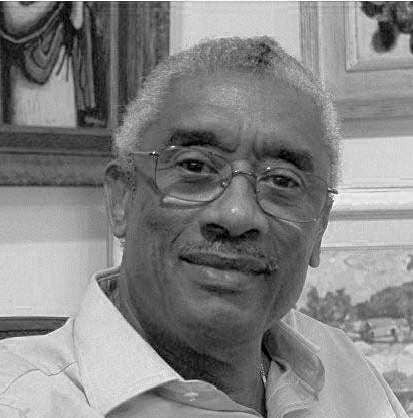
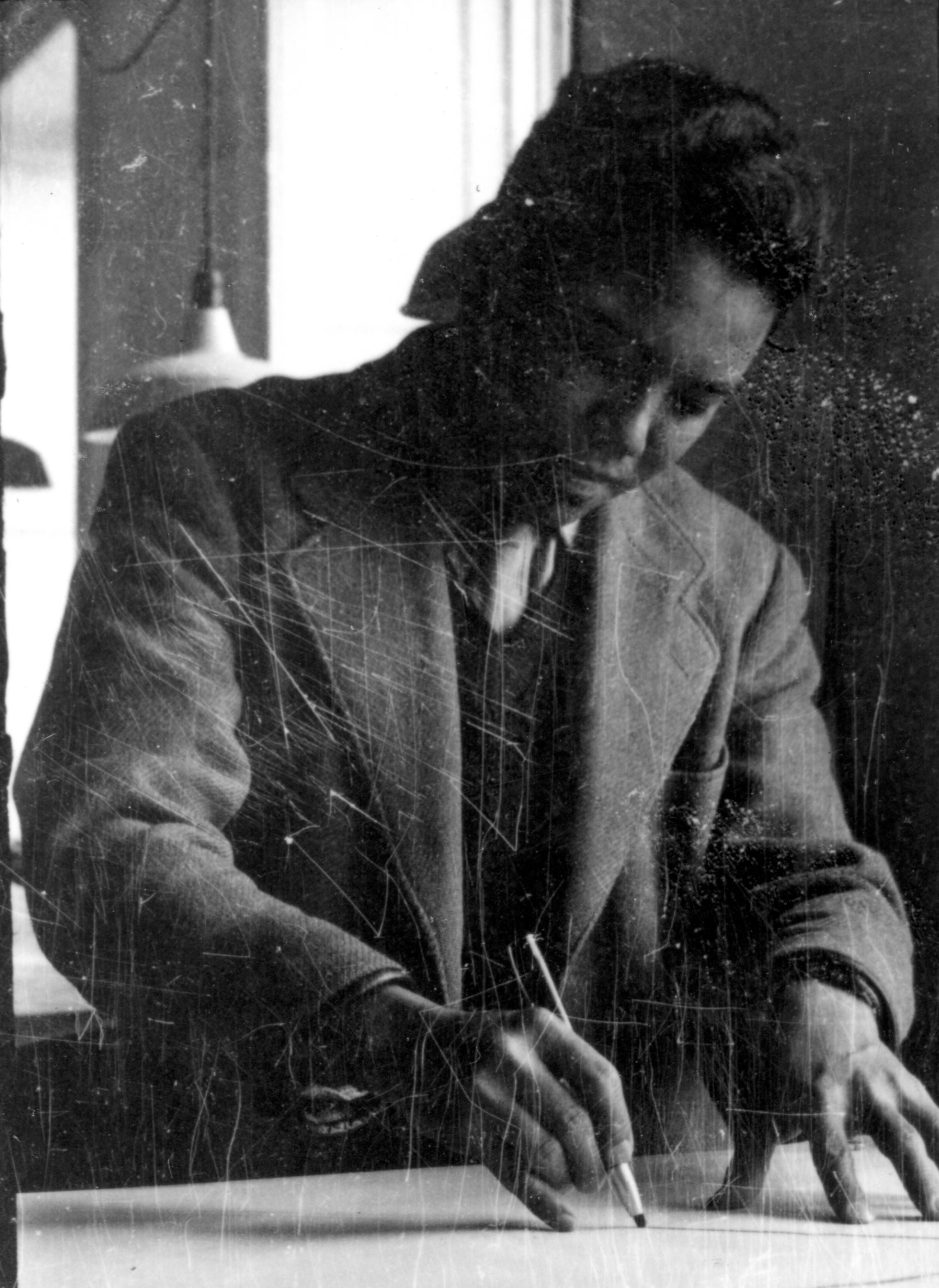
Saadi Majid Al-Timimi was born on 28 February 1941 in Iraq. He studied at Hastings College of Further Education (now East Sussex College, Eastbourne) from 1960–62, specialising in maths and physics, before attending the Architectural Association, London (AA) over three separate periods spanning from 1962-69. After completing his second year at the AA, Al-Tamimi took a year out to gain professional experience on the advice of his tutors, joining Hening and Chitty in 1965, a London-based architecture practice renowned for their post-war housing developments. He returned to the AA from 1965-66, before taking another year out to work for the Ministry of Housing and Local Government’s Research and Development Group at Caxton House from 1966–67. Al-Tamimi subsequently completed his AA studies within the Department of Development and Tropical Studies from 1968-69, where he undertook the Housing Course and produced a rural development project in Iraq for his final thesis (photographs of which are preserved in the AA Archives). Al-Timimi returned to Baghdad following his graduation, where he reportedly worked for the Iraqi Government. His public-sector engagements are largely undocumented, however, given that his return coincided with the momentous housing initiatives of 1970s Iraq and considering his own background in housing design, it is likely that Al-Timimi entered the Ministry of Housing, where he would have joined another DTA-trained Iraqi of his cohort, Matti Barsoom Hanna. Although Al-Timimi is not recorded as holding academic posts, he was evidently nonetheless involved in the local architectural intellectual scene and occasionally contributed to cultural publications. Notably, in 1982 he authored an article in Arabic titled “Interview with the Architect Abdel-Wahed Al-Wakil” published in Baghdad’s Funun Arabia magazine, a leading cultural journal edited by Jabra Ibrahim Jabra. In that piece, Al-Timimi engaged with Al-Wakil, one of Egypt’s most celebrated modernist architects, on ideas around organic architecture, craft, and Islamic architecture. His multiple contributions to Funun Arabia suggests he was a respected voice in architecture circles. By the early 1990s, Al-Timimi had relocated to the United Kingdom, leaving Iraq during a turbulent period of political instability and economic downturn that saw the scaling down of civil works and the collapse of professional conditions, prompting many other local architects to migrate abroad. Residing back in London, he became an active member of the Iraqi expatriate community and served as a director and secretary of the Arab Club of Britain in the 1990s, a cultural organization that held a number of conferences to support understanding and collaboration between the UK and the Arab world. It is uncertain whether Al-Timimi returned to practising architecture in the UK, with no record of him being a ARB or RIBA chartered architect. However, he was active in providing Arabic translation services, contributing to translation work for academic publications as late as 2018, while official UK registers also list him with the occupation of Graphic Designer. As of 2024, Al-Timimi continues to reside in London.
Sources:
- Architectural Association Student Register 1945–1972. AA Archives.
- Department of Tropical Architecture, student listing, Otto Koenigsberger Collection, Box OK27. AA Archives.
- Subhi Al-Azzawi to Edward Bottoms, email of August 27, 2024 (notes Al-Timimi’s cohort and Iraqi employment). AA Archives (private email correspondence).
- East Sussex College. “College History.” East Sussex College. Accessed April 5, 2025. East Sussex College Group
- Art & Architecture Research Database. “Chitty, Anthony Merlott (Hening & Chitty practice entry: post-war housing work).” Art & Architecture Research. Accessed April 9, 2025. architecture.arthistoryresearch.net
- Great Britain. Ministry of Housing and Local Government, Research & Development Group. “Housing: Research and Development.” Google Books. Published 1966. Accessed April 12, 2025. Google Books
- Companies House. “THE ARAB CLUB OF BRITAIN — Officers.” GOV.UK: Find and Update Company Information. Accessed April 14, 2025. Company Information Service
- Companies House. “Saadi Majid AL-TIMIMI — Personal Appointments.” GOV.UK: Find and Update Company Information. Accessed April 18, 2025. Company Information Service
- AlSharekh Archives. “«فنون عربية / Funūn ʿArabiyya» — Magazine Index (edited by Jabra I. Jabra; includes 1982 issues).” Al-Shārikh Archive. Accessed April 21, 2025. https://archive.alsharekh.org/magazineYears/330
- AlSharekh Archive. “Interview with the Architect Abdel-Wahed Al-Wakil (Funūn ʿArabiyya, Issue 7, October 1, 1982).” Al-Shārikh Archive. Accessed April 21, 2025. https://archive.alsharekh.org/Articles/330/21330/484334.