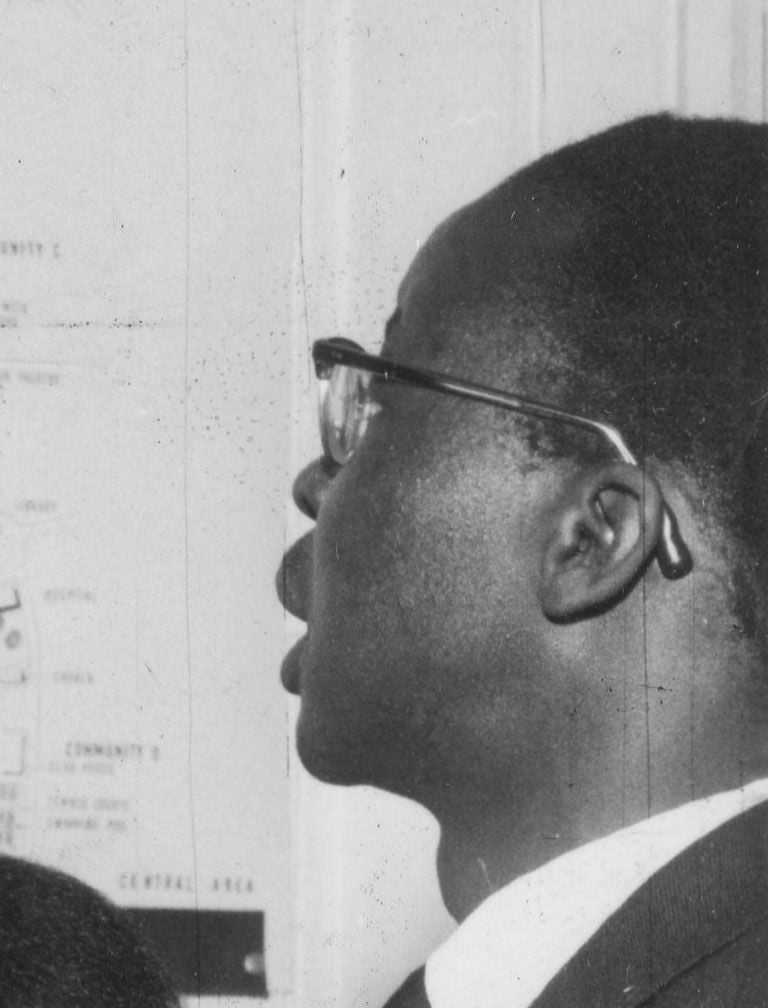
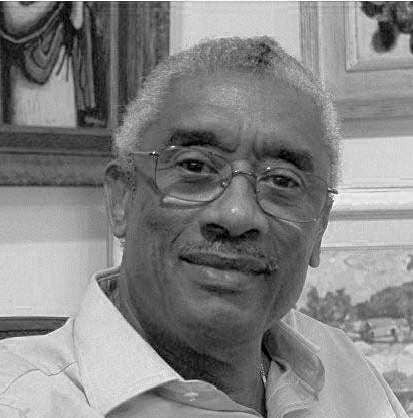
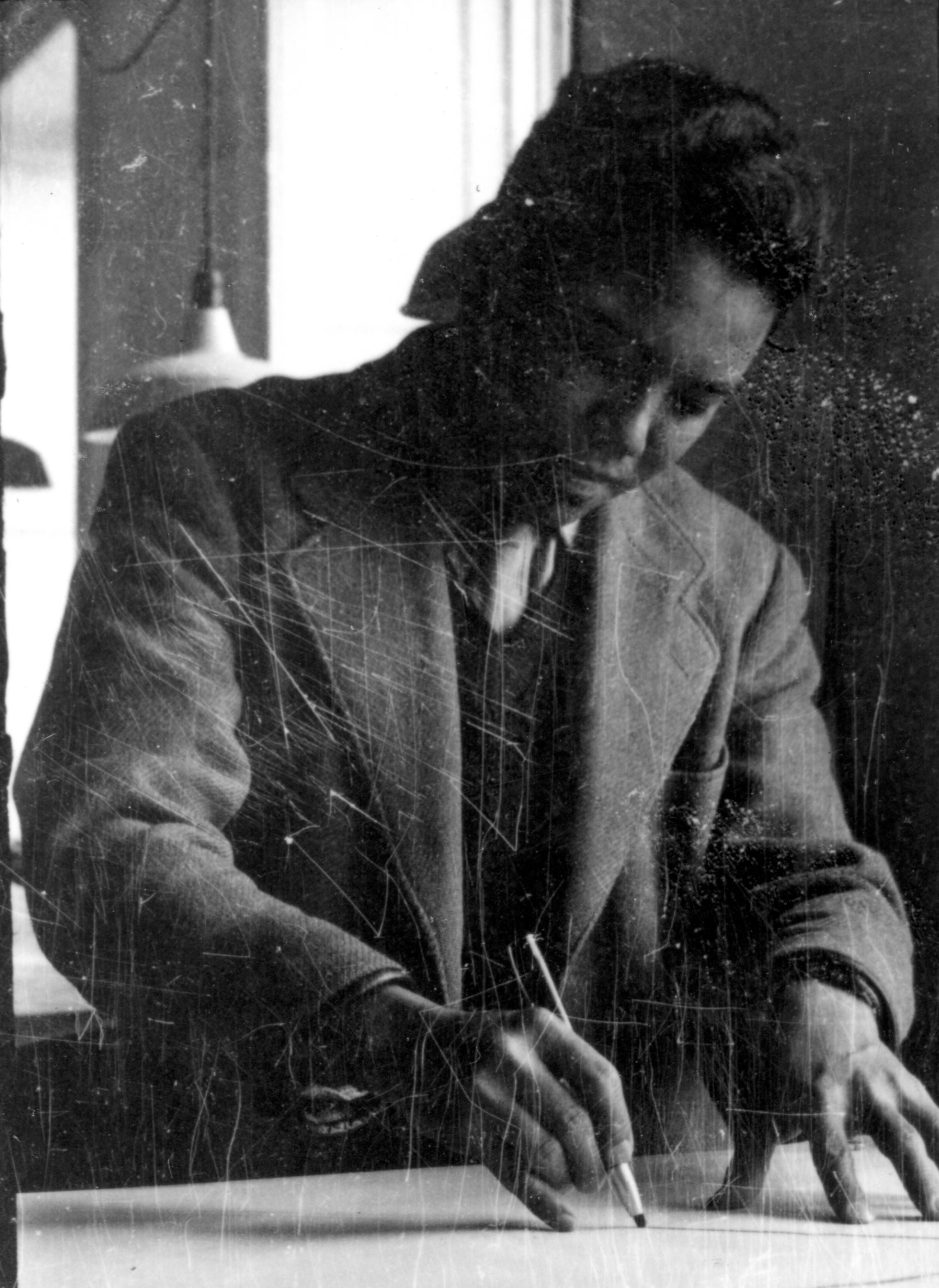
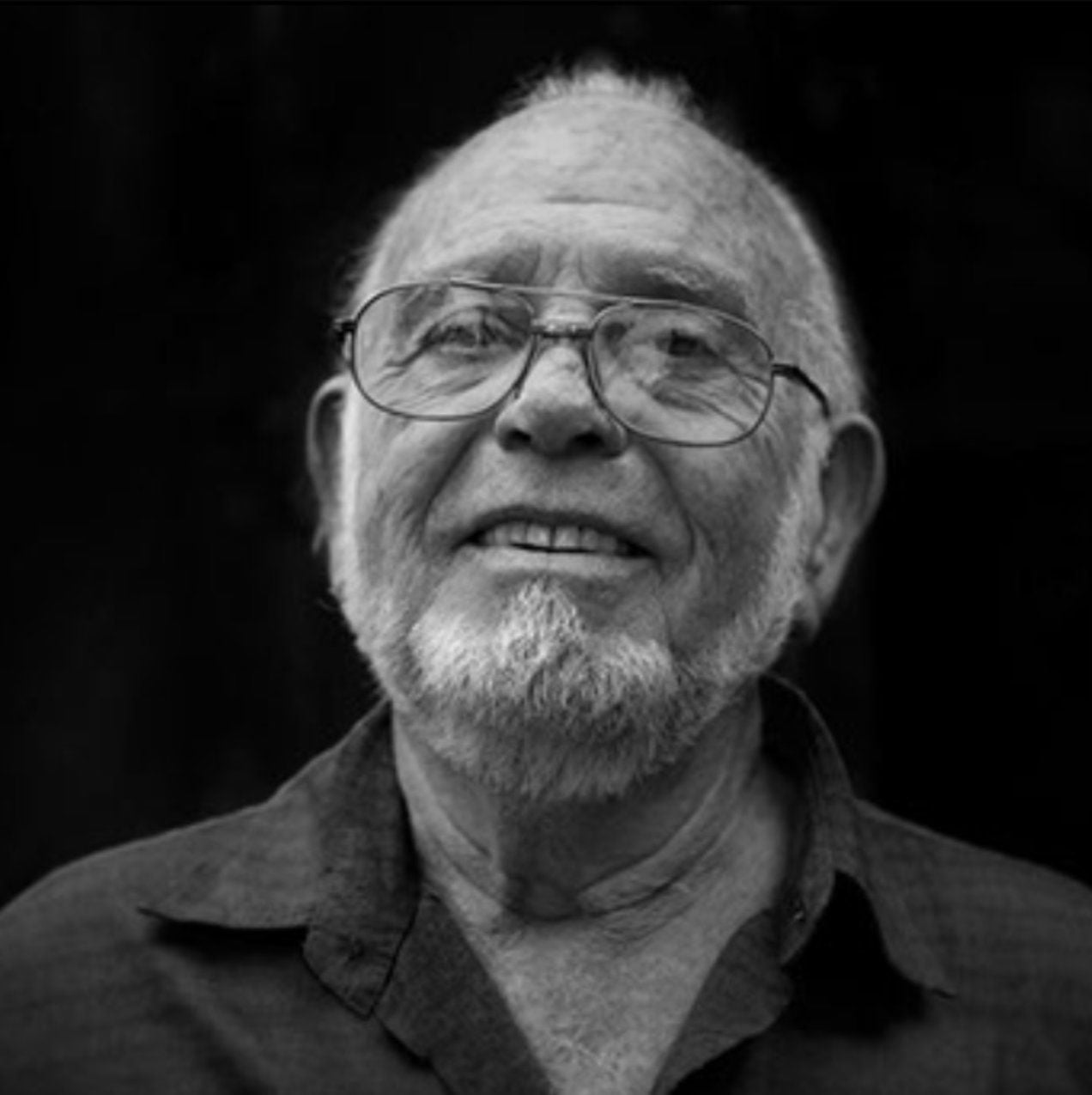
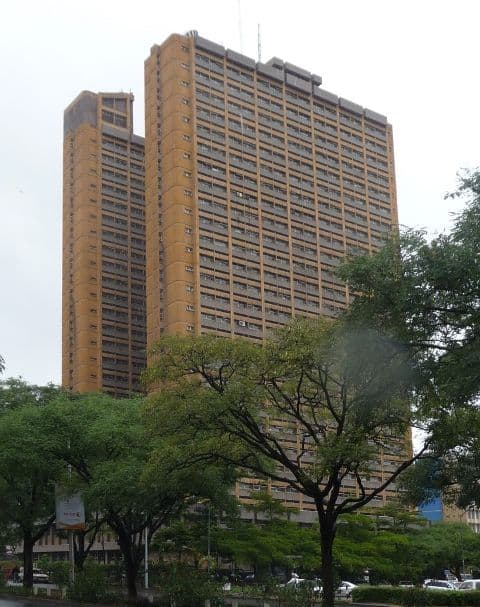
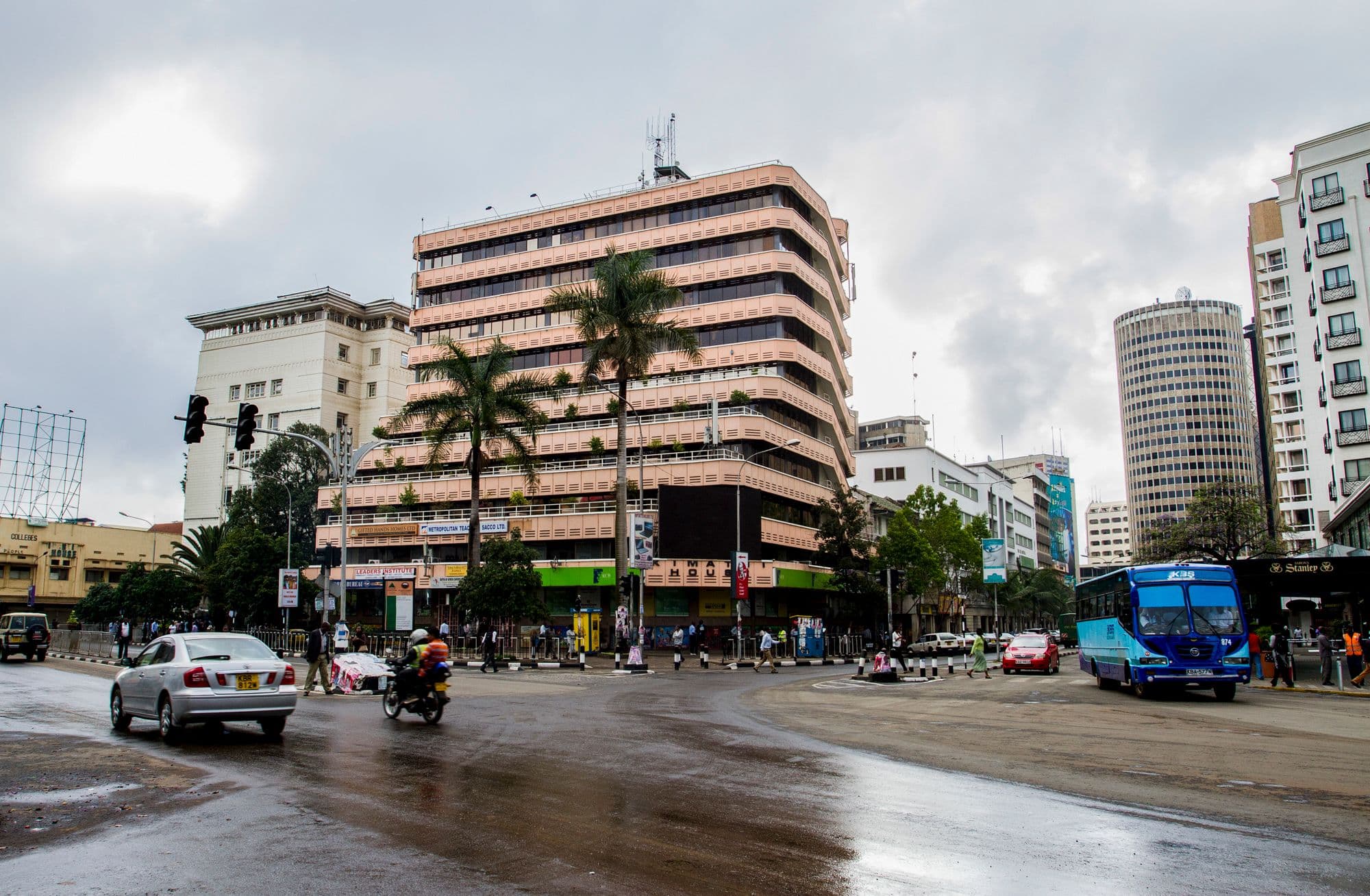
Antony Athanas Ngotho was born on 9 September 1937 in Kenya. He studied architecture at Haile Selassie University (now Addis Ababa University) in Ethiopia, completing his degree in 1966, before enrolling at the Architectural Association (AA) in London, where he studied in the Department of Development and Tropical Studies from 1967–68. On returning to Kenya, Ngotho worked with the Nairobi City Council’s Architect’s Office in 1969 before joining the Ministry of Works, where he rose rapidly through senior positions, from Superintending Architect in 1971, to Senior Superintending Architect in 1973, and then Chief Architect in 1974, when he was also appointed Chairman of the Board of Registration of Architects and Quantity Surveyors (BORAQS). Within these roles, he oversaw major public building programmes, the most prominent being Nyayo House in Nairobi, a 27-storey government office tower organised around a twin-wing plan and completed in 1983. Initially called ‘Nairobi House’, the building was renamed after President Daniel arap Moi’s nickname, and became both an administrative landmark and, controversially, a site associated with political repression during the decades-long presidency of Moi, now remembered for the notorious torture chambers created in its basement. Other notable projects include Kimathi House in Nairobi, an eight‑storey commercial block built in 1980 with a stepped upper massing and distinctive coloured façade. He later founded Ngotho Architects and, as part of a national teacher‑training expansion programme, also designed Garissa Teachers Training College, a 480‑student residential campus outside Garissa town, which opened in 1992 and remains in operation. A sister scheme, Taita Taveta Teachers Training College at Mariwenyi, was also designed by his firm and largely constructed, but never functioned as intended - its near‑completed campus was later repurposed as a public university site. Today, Ngotho’s legacy lies in his key role in producing Kenya’s late twentieth‑century public architecture, even as much of his wider output remains under‑documented.
Sources:
- Architectural Association Student Register, 1945–1972. AA Archives
- Kenya. Kenya Gazette. May 17, 1974.
- United Nations. Habitat: United Nations Conference on Human Settlements, Vancouver, Canada, 31 May–11 June 1976: List of Participants. New York: United Nations, 1976.
- Nyabola, Nanjala. “Nyayo House: Unravelling the Architecture and Aesthetics of Torture.” The Elephant, August 17, 2017. Accessed June 18, 2025. https://www.theelephant.info/analysis/2017/08/17/nyayo-house-unravelling-the-architecture-and-aesthetics-of-torture/
- Wikipedia. “Nyayo House.” Wikipedia, The Free Encyclopedia. Last modified September 11, 2025. Accessed July 9, 2025. https://en.wikipedia.org/wiki/Nyayo_House