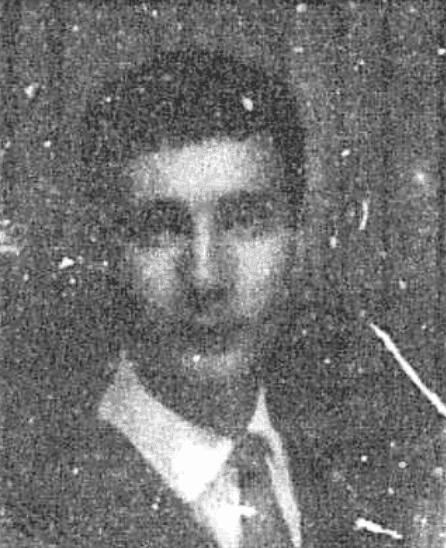
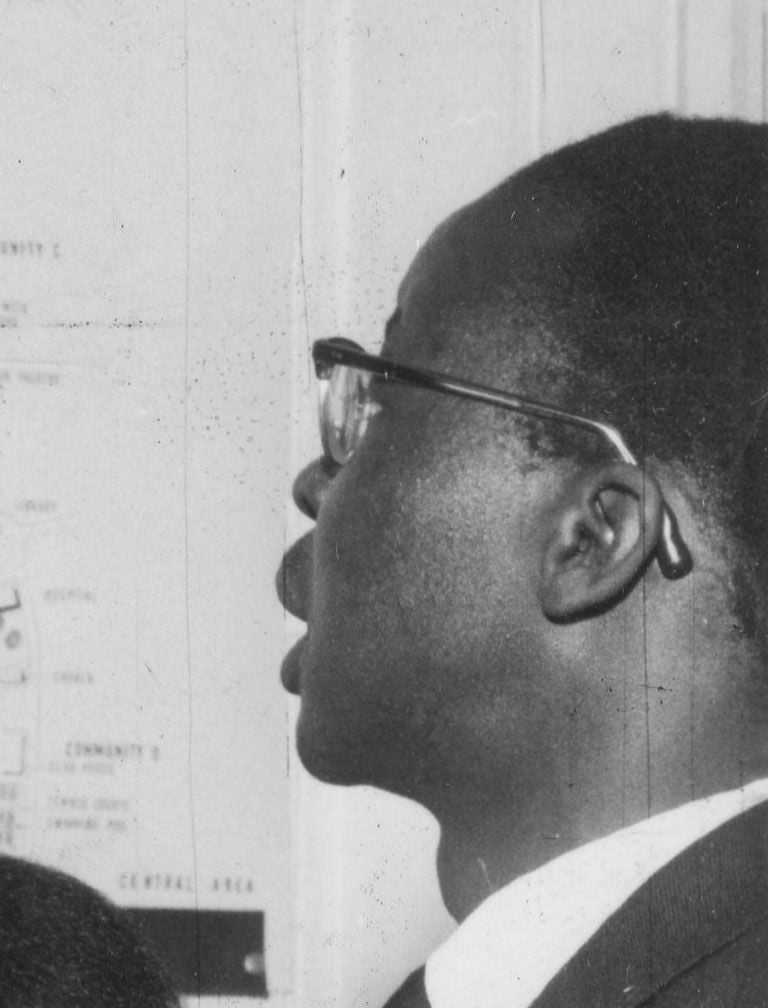
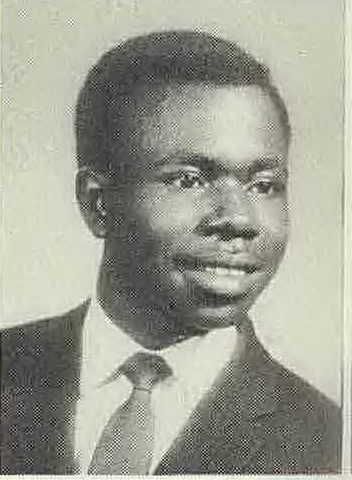
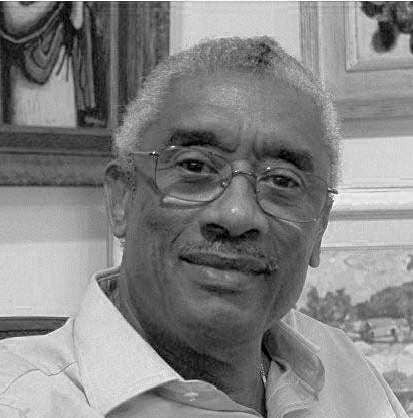
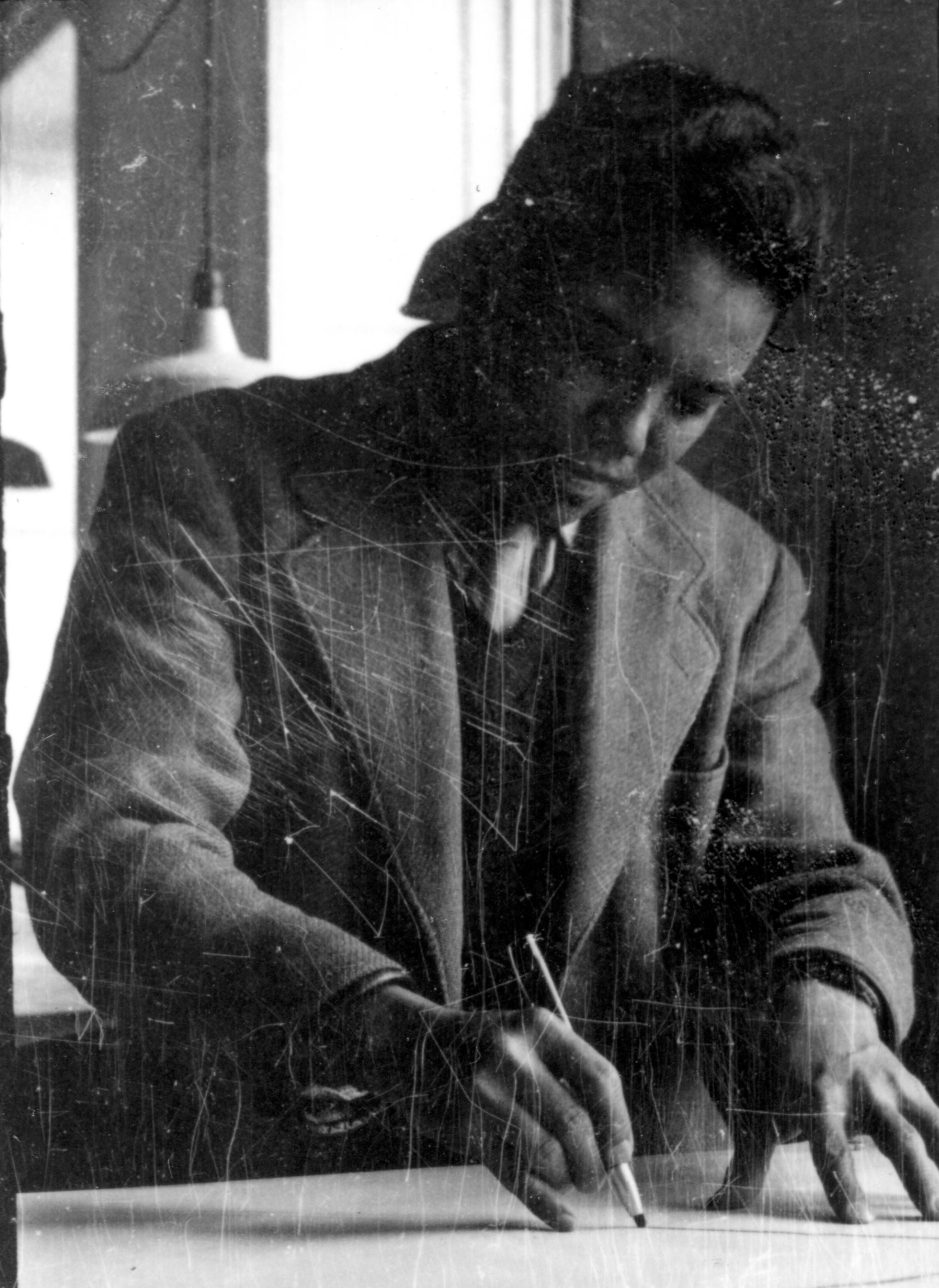
A pioneer of educational architecture in Colombia, Rafael Maldonado Tapias was born in 1936, in Bucaramanga. He was fourth child but the only survivor out of his siblings which meant his mother, an established dressmaker, showered him with care and love during his youth. Maldonado studied architecture at the Faculty of the Arts, Universidad National De Colombia, Bogota (1958-63) and was subsequently appointed a professor of architectural design there in 1967. His lifelong contribution to school design started when he served as the head of the Architecture Section in the Colombian Institute of School Construction (ICCE), from its founding in 1968 and until 1973. In the midst of the aformentioned academic and professional engagements, he earned a British Council Scholarship to attend at the Architectural Association in London in the academic year 1969-70, where he subsequently earned a post-graduate Diploma from the Department of Tropical Architecture. Building on his knowledge of educational architecture, he wrote a thesis at the AA – jointly with his fellow student Kaizer Enayet Talib – entitled “Buildings for Primary Education in Colombia” which compiled design standards and proposed architectural prototypes for school buildings. After returning to Colombia in 1971, Maldonado continued his work at the ICCE alongside teaching at the Universidad National. In 1972, he also took on the role of professor and Vice-Dean of Architecture at the Universidad de los Andes, Bogota and his academic engagements and teaching span around three decades. Professionally, Maldonado has also left a lasting contribution: in 1974, he founded an office and has gone one to complete myriad buildings which are almost exclusively educational and mostly located in Bogota and Bucaramanga, but which range from private to public projects, and from preschool to graduate levels.
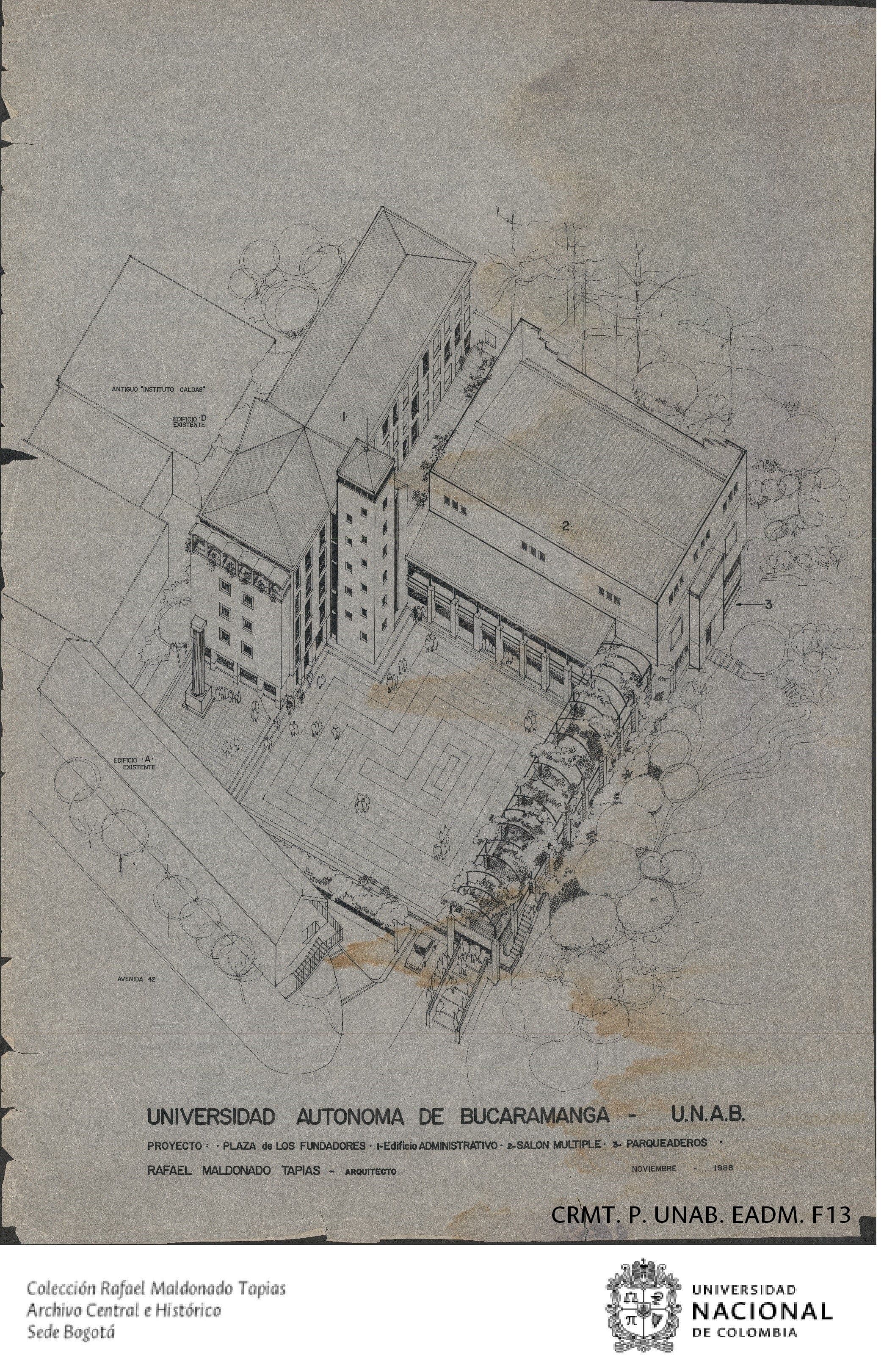
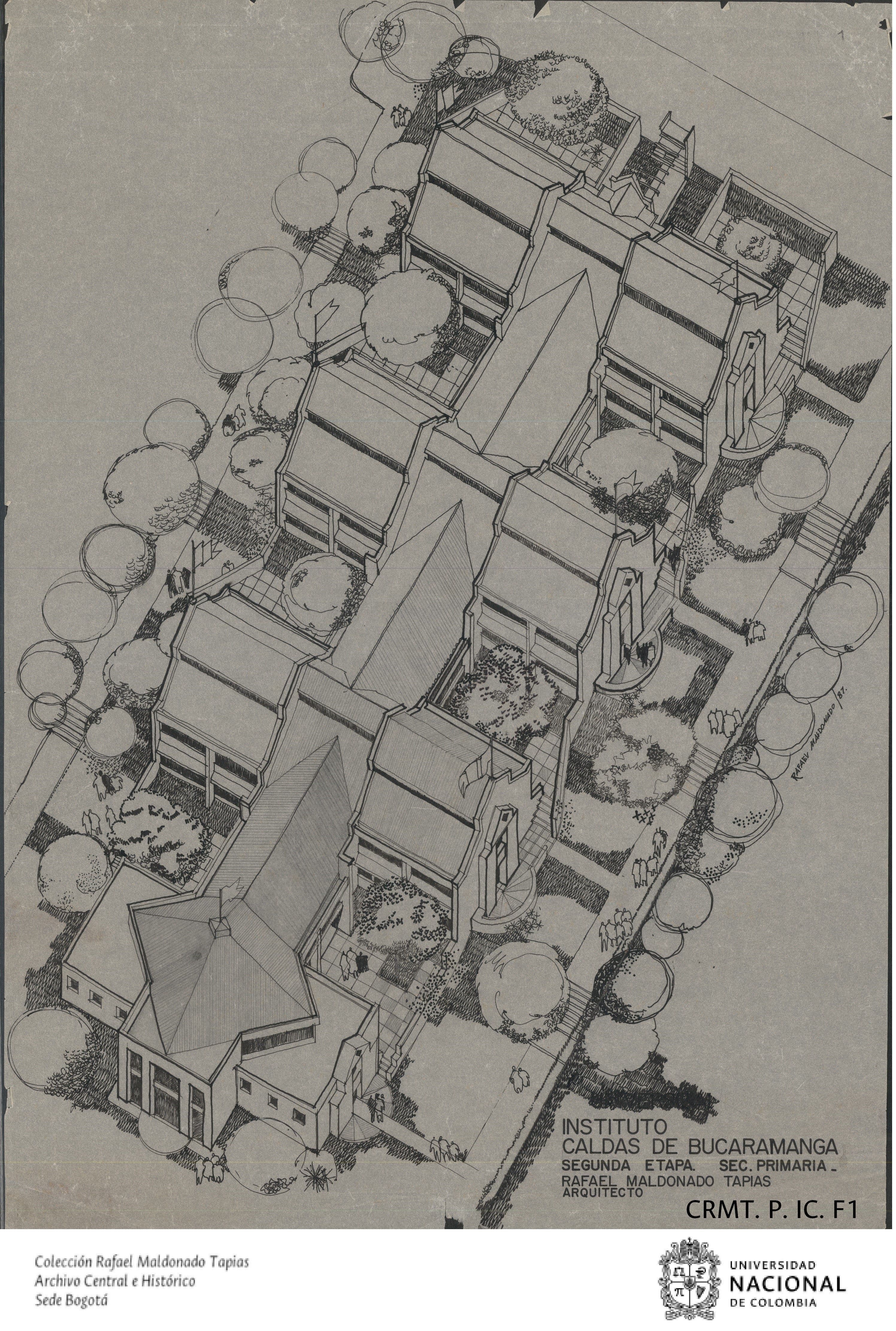
Amongst his most important works include the Caldas Institute in Bucaramanga (1984), and the Colsubsidio School (CEIC) in Bogotá (1990-92), both of which exemplify his ambitions to design educational places that are serve as public, human-centric anchors which are well-connected to their urban context. Along his career, he also built a range of facilities at the Universidad Autónoma in Bucaramanga, including the Central Library and Cafeteria (1978-79), Rector’s Office building (1988), the Multimedia Center and the Graduate Building (1993-1994), the Faculty of Medicine (1995-1996), and the Engineering Laboratories (1999-2000).
Besides his architectural practice, he led a years-long comprehensive research project supported by COLCIENCIAS into the history, theories, and typologies of educational buildings in Columbia – a project whose early seeds were arguably laid in his work at the AA. The project developed into formal research proposal in 1986 and its scope expanded in geography and time as it progressed. The project culminated in the publication of his seminal book “Historia de la Arquitectura Escolar en Colombia” (1999), which was awarded an Honourable Mention in the XV Columbian Architecture Biennial. Maldonado was married to well-known filmmaker Camila Loboguerrero. Outside his working hours, his interests expanded to theatre and acting. In fact, he performed a leading role in a film titled “The Reward,” for which he earned the first prize in acting at the Third Bogotá Film Festival. Maldonado passed away in 2001. His memory lives on not only through his buildings and writings, but in the biographical book “An Architect from a Hot Land” (2018) which his eldest son, filmmaker Lucas Maldonado, working with architect María Acosta, wrote about his public and personal life. The idea for the book came on the day of Maldonado’s funeral, when his son was approached by an editor who had an archive of Maldonado’s important works. The book celebrates not only his architecture and teaching, or his acting, but also his friendship and nightlife as a provincial native of Bucaramanga living uninhibitedly and affectionately in Bogotá.
Sources:
- Architectural Association Student Register 1945‐1972, AA Archives
- Architectural Association Diploma Roll Book, 1964-75, AA Archives
- Rafael Maldonado Tapias. ‘Historia de la Arquitectura Escolar en Colombia.’ Universidad Nacional de Colombia, Facultad de Artes (1999)
- Rafael Maldonado. Un arquitecto de tierra caliente, de María Acosta, Lucas Maldonado. Serie 9587833683, vol. 1. Editorial Universidad Nacional de Colombia, tapa blanda, edición 2018 en español, 2018
- Mercado, Luisa. “La Increíble Historia Del Constructor de Centros Educativos.” El Tiempo, June 22, 2018. https://www.eltiempo.com/vida/educacion/biografia-de-arquitecto-rafael-maldonado-constructor-de-centros-educativos-234102., accessed on 12 July 2025
- Camilo Augusto Muñoz Cadena, Orlando Martínez Castro.‘Rafael Maldonado Tapias: un símbolo de la arquitectura escolar en Colombia’ Dearq No. 11. December, 2012, pp. 76-81