Thursday 25 April - Thursday, 30 May 2019
AA Gallery, 36 Bedford Square
WAR IN RAQQA : RHETORIC vs. REALITY
How the most precise air campaign in history left Raqqa, Syria,
the most destroyed city in modern times
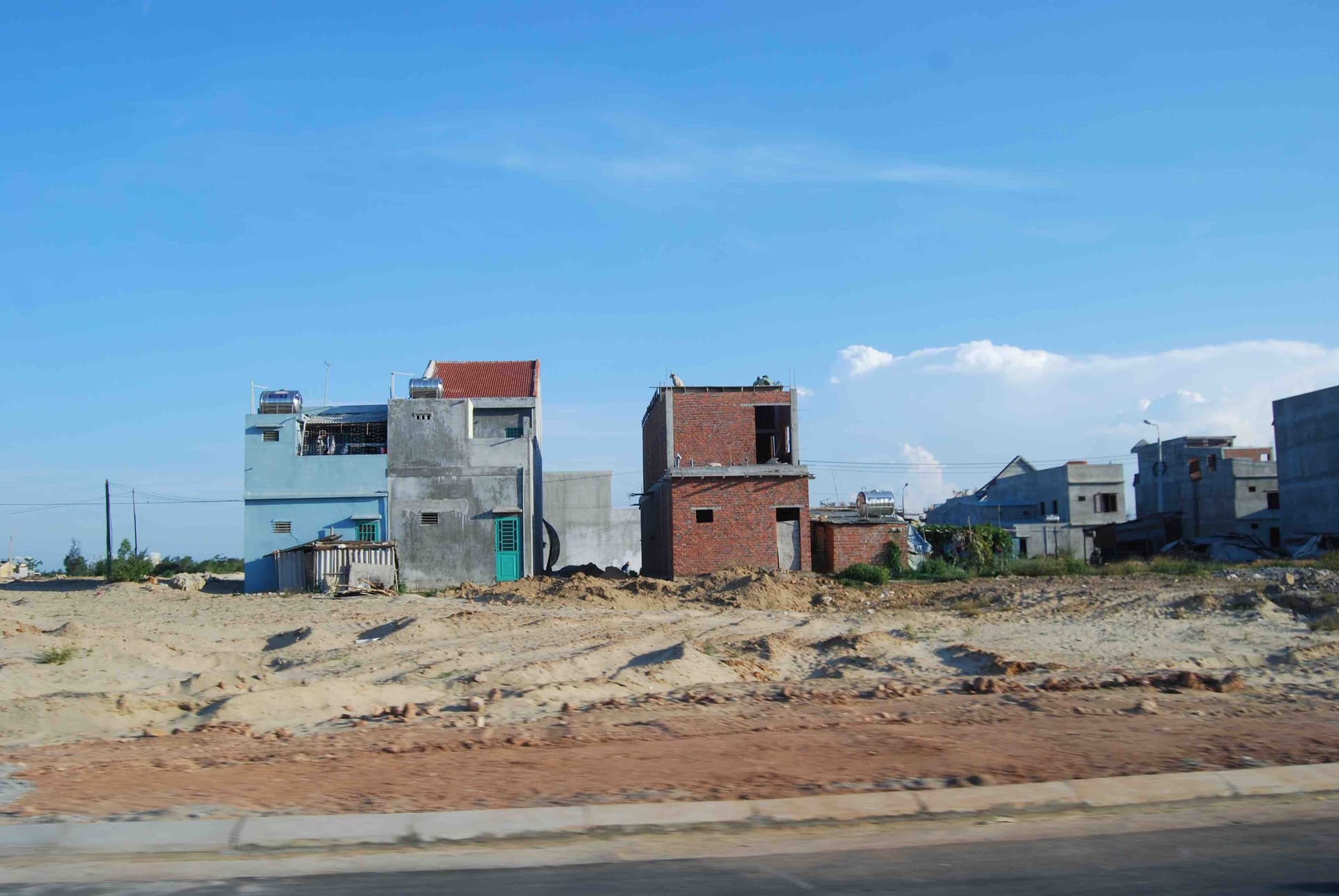
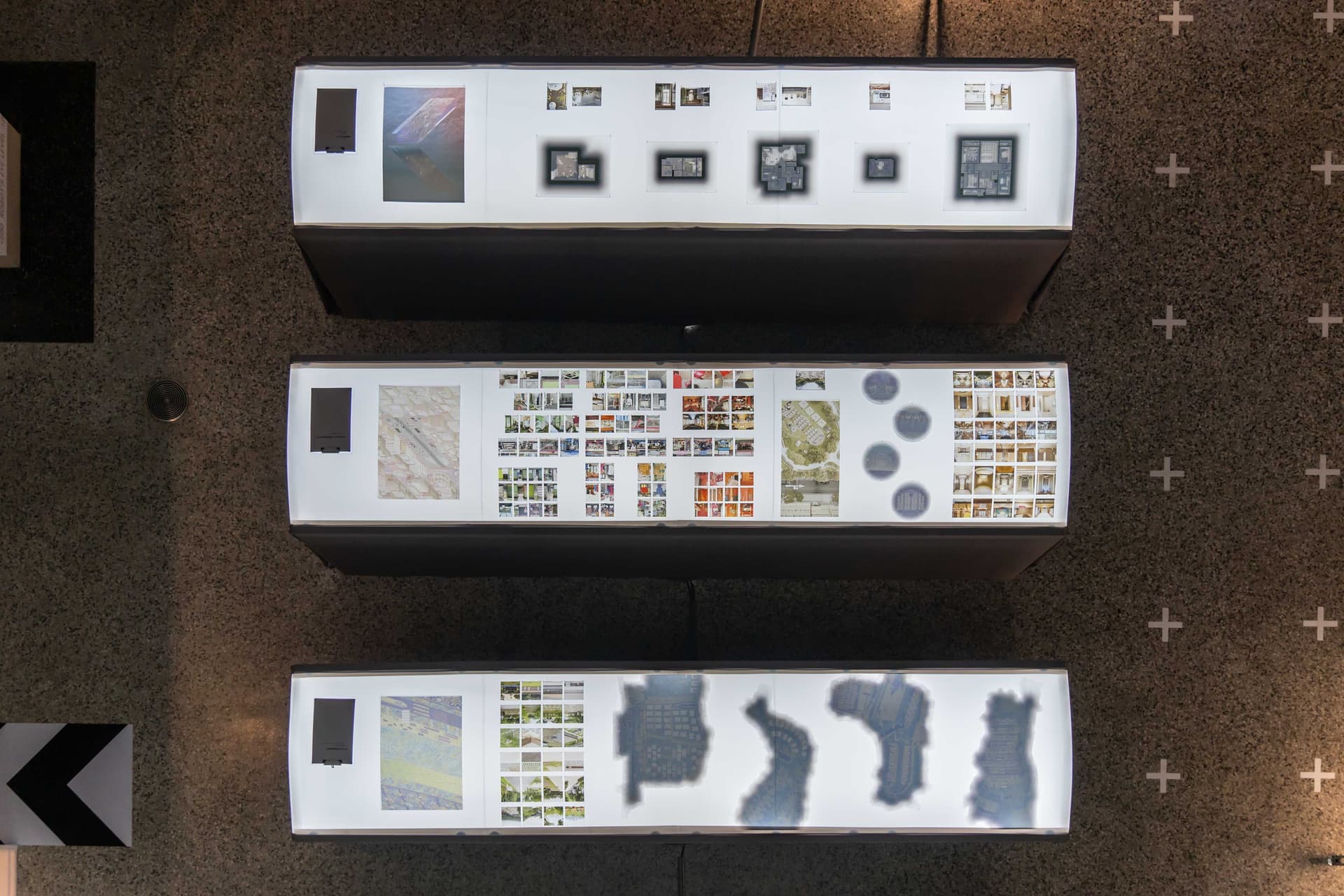
London, UK. WAR IN RAQQA : RHETORIC vs. REALITY is an exhibition and a series of talks organised by Amnesty International in collaboration with the Architectural Association. This project provides a glimpse into what life is like in the most devastated city in the world. The US-led Coalition’s military operation in Raqqa, Syria, including air bombardments by UK forces, between June and October 2017 was among the most destructive in modern warfare. Amnesty’s investigators traveled through the city of Raqqa and met survivors, their families, and recorded their stories. Documented in photographs and surveys of the wreckage, the city can be explored through immersive technologies, and audiences will get a first look of Amnesty International’s new interactive web-based platform that details the findings of the investigation.
Amnesty International reports exist in a media saturated environment that has a short attention span. Their written reports are often hundreds of pages long, intended for a highly specialised audience and occasionally making it to wider audiences in the media and the political arena. As a way to test and expand the format of the report, this exhibition aims to spatialise its content, and make visible a situation known only to a few, which is often only registered as a fragment, in a relentless news feed displaying the consequences of contemporary geopolitics in cities and territories around the world.
Amnesty International has been investigating the Raqqa offensive for over 18 months, including investigations that took place during multiple site visits to the destroyed city after thousands of air and artillery strikes were launched over a four-month period in 2017, which killed hundreds of civilians and rendered large parts of the city uninhabitable. The exhibition presents a series of documents and images of the impact of the military campaign on the people and communities of Raqqa.
“On the ground in Raqqa we witnessed a level of destruction not comparable to anything we’ve seen in decades of covering the impact of wars,” says Donatella Rovera, Senior Crisis Response Advisor, Amnesty International.
Visitors will get a first look of Amnesty International’s new interactive web-based platform that details the findings of the investigation.
“We need to go beyond the aestheticisation of ruins and devastation and question the politics and economics of destruction and reconstruction. I hope this exhibition by Amnesty International can make us all think further about how we operate in a geopolitical context and how we think and act in relation to issues of preservation, history, legacy, memory and accountability,” says Eva Franch, Director of the AA.
A pavilion will be opened in Bedford Square in June as part of the Projects Review that will continue the conversation through a series of material experiments, debates, and conversations.
Exhibition Credits:
Installation Designer: Francesco Merletti
Lead Investigator: Donatella Rovera
Exhibition Curator: Natalie Kane
Exhibition Producer: Marion Lagedamont
Contributions by: Donatella Rovera, Francesco Merletti, Milena Marin, Benjamin Walsby, Livia Saccardi, Elena Sergi, Conor Fortune, Rossalyn Warren, Scott Edwards, Micah Farfour, Sam Dubberley, Christine Henry, Tirana Hassan, Ben Fogarty and the Holoscribe team.
Schedule of Events
Exhibition Opening
Thursday 25 April-Thursday 30 May, Monday-Saturday 1pm-7pm, AA Gallery
WAR IN RAQQA: RHETORIC VERSUS REALITY
Press Preview on Thursday 25 April at 10am at the AA Gallery, by invitation only.
Opening on Thursday 25 April at 7.30pm at the AA Gallery, all welcome.
Lectures and Events
Monday 29 April, 18:30, AA Lecture Hall
LOOKING FOR CLUES IN THE RUBBLE OF RAQQA - HOW THE “MOST PRECISE AIR CAMPAIGN IN HISTORY” LEFT RAQQA THE MOST DESTROYED CITY IN MODERN TIMES
Destroying a city to liberate it. Who decides, and on what basis? How much destruction is necessary or acceptable? Some argue that the bombing campaign that destroyed most of the city was the only way to liberate it from the brutal rule of the self-styled “Islamic State” (IS). Others maintain that much of the destruction resulted from reckless strikes and ask why so much of the city had to be destroyed, only for IS fighters to be allowed to leave. Reconstructing the battle is crucial to understanding what happened. This lecture will analyse the work presented as part of the exhibition produced through a multidisciplinary methodology involving field investigations of strike sites and witness interviews, combined with remote sensing and OSINT analysis – including a satellite imagery analysis project, Strike Tracker, which involved the participation of thousands of online volunteers to review over 130,000 frames of buildings throughout the battle.
Speakers: Donatella Rovera, Milena Marin
Free and open to everyone. Seats are first come first serve.
To reserve a seat become a AA Member.
Wednesday 8 May, 18:30, AA Lecture Hall
SYRIA’S DESTRUCTION AND RECONSTRUCTION: CONSOLIDATING POWER OR PURSUING RECOVERY?
This talk will discuss how the urban sphere has been manipulated by the Syrian regime to suppress the uprising, escalate the conflict, and further consolidate its authoritarian power in the post-conflict phase. The speakers will discuss how how destruction and reconstruction processes across the country have been appropriated as part of a systematic strategy to set the ground for a homogenised post-conflict Syria that awards regime cronies and punishes opponents and explore how a just and inclusive reconstruction process may be pursued in the current context in areas outside regime control, using housing as an entry point.
Speakers: Sawsan Abou Zainedin, Hani Fakhani
Free and open to everyone. Seats are first come first serve.
To reserve a seat become a AA Member.
Wednesday 29 May, 18:30, AA Lecture Hall
URBICIDE IN SYRIA - USE OF EXPLOSIVE WEAPONS IN URBAN ENVIRONMENTS, AND HOW TO DEAL WITH THE CONSEQUENCES.
The use of explosive weapons in urban areas can have devastating consequences, turning entire neighbourhoods into rubble, destroying the familiar and reshaping the urban, social and cultural fabric of cities. This talk will explore the emerging relations between the urban past and present as citizens struggle to survive, to sustain lives and to envision a future. In Homs, Syria’s third city, despite the mass destruction and displacement, local architects, urbanists and residents are showing incredible levels of resilience; rehabilitating their partially damaged homes and providing shelter to the internally displaced population. Memories of the pre-war Homs, and the surviving parts of the city, have become imagined and material places of refuge for many. Homs is still remembering, reflecting and seeking to reconstruct a vanished past—but this process of remembering might also be used to rethink the city, and to imagine its future.
Speakers: Ammar Azzouz, Anna de Courcy Wheeler
Saturday 8 June, 14:00, 33 First Floor Front
TRAINING: INTRODUCTION TO DIGITAL VERIFICATION FOR HUMAN RIGHTS
Please note that places are limited and booking is required to to participate in this workshop.
Join Amnesty’s Evidence Lab for a hands-on session where you will learn digital investigation techniques such as citizen media verification, geo-location, remote sensing and satellite imagery analysis, weapons analysis and data visualisation. This hands-on training is designed for students, activists, journalists and technologists who want an introduction to this fast-developing field of open source investigation and digital verification.
Speakers: Milena Marin, Mikah Farfour, and Scott Edwards.
Free and open to everyone. Limited places: RSVP to Milena Marin, milena.marin@amnesty.org, with the title "RSVP: Digital Verification Training." If you confirm attendance and cannot join, please let us know ASAP so that someone else can take your place. Please bring a laptop to make sure you can follow the training.
Members of the Press
All events are free and open to the public. For press images or if you would like to arrange an interview with the Curators, Head of the AA Public Programme, the AA Director, the participants, or to cover WAR IN RAQQA : RHETORIC vs. REALITY please send an email to communications@aaschool.ac.uk.
About the Participants
Ammar Azzouz is an architect at Ove Arup & Partners International Ltd, London. He studied architecture in Homs, Syria, and completed his PhD in architecture at the University of Bath, UK. Current research focuses on local and international responses to destruction and displacement in Syria and the politics of reconstruction. His recent article ‘A tale of a Syrian city at war: Destruction, resilience and memory in Homs’, was published at CITY in 2019.
Anna de Courcy Wheeler is an Advisor for Article 36, a UK-based not-for-profit organisation working to prevent the unintended, unnecessary or unacceptable harm caused by certain weapons, and member of the International Network on Explosive Weapons (INEW). Anna’s previously worked on conflict prevention at the International Crisis Group, the Freedom Fund, Columbia’s School of International Political Affairs and NYU’s Law School. She began her career in Rwanda, investigating and documenting crimes committed during the 1994 genocide, and working on post-genocide access to justice.
Donatella Rovera, Amnesty International’s Senior Crisis Response Adviser, led the Raqqa investigation. She has been leading Amnesty International’s field investigations into war crimes and other grave abuses in armed conflicts for over two decades, including Syria, Iraq, Yemen, Libya Somalia, South Sudan, Central African Republic, Ivory Coast, Nigeria, Israel/Palestine and Algeria. She holds a Master degree in Middle Eastern politics and economics from the School of Oriental and African Studies (SOAS), London University, and pursued further studies in international human rights and humanitarian law and criminal investigations.
Hani Fakhani is a Syrian architect and urban practitioner. His work focuses on housing and post-conflict reconstruction in Syria. He holds a MSc with distinction in Building and Urban Design in Development from University College London where he researched the interrelations between reconstruction, governance, and peace in Syria. He is the co-founder of PLUStudios, an architectural design and visualisation services firm that has been working on a range of projects including urban regeneration, housing, and public service projects. He co-founded Cube Team Architects, a local firm in Damascus that won national awards for urban development and infrastructure project proposals with Damascus Municipality and Governorate.
Micah Farfour is a Special Adviser in Remote Sensing for the Crisis Response Team at Amnesty International. After returning from Peace Corps in Africa, Micah received her Master’s in GIS and spent four years working with high resolution satellite imagery to monitor events globally. She developed skills to align open source information with the analysis of remotely sensed imagery to produce visual evidence of human rights abuses all over the world from her home in Colorado. Micah's work has provided corroboration of mass graves, attacks on civilians, indiscriminate bombings and other humanitarian crises to support research for numerous NGOs and government entities. Currently, she is working on projects in Syria, Nigeria, Sudan, Myanmar and Iraq.
Milena Marin, Amnesty International’s Senior Adviser, Evidence Lab, led the Strike Tracker project. She has over ten-year experience working at the intersection of technology, data and social good on issues like public sector transparency, corruption, open data and human rights. Before joining the Crisis Response Team, she led the development of Amnesty Decoders, an innovative platform using data science, crowdsourcing and artificial intelligence to process and analyse large volumes of data such as documents, satellite images and pictures. Previously she worked as programme manager of School of Data and also with Transparency International where she supported TI’s global network to use technology in the fight against corruption. Milena holds a Master in Interdisciplinary Research and Studies on Eastern Europe, with a focus on EU-Russia relations.
Sawsan Abou Zainedin is a Syrian architect and urban development practitioner. Her work tackles the impact of urban processes and reconstruction efforts on social justice and peace. She is the co-founder of Qibaa; a studio established in 2013 in Syria's north to address conflict-related urban challenges through alternative localized practices. Sawsan holds MSc in Urban Development Planning with distinction from the Bartlett’s Development Planning Unit of University College London, where she researched the role of communities' coping strategies in the pursuit of just and sustainable recovery in Syria.
Scott Edwards is a Senior Analyst with Amnesty International. His work focuses on the development of early warning mechanisms for humanitarian crises, as well as the practical use of new methods and technologies for human rights compliance monitoring and evidence collection, especially as it relates to international justice and accountability. He completed his doctoral work in Political Science at the University of Illinois, Urbana-Champaign, focusing on causes and consequences of violent political conflict, and has written and consulted extensively on complex humanitarian crises, forced displacement, and armed conflict. He is currently a Professorial Lecturer at George Washington University’s Elliott School of International Affairs.
About Amnesty International
Amnesty International is the world's leading human rights organisation, campaigning against injustice and inequality everywhere. They work to protect people wherever justice, freedom, truth and dignity are denied. As a Nobel Peace Prize-winning global movement of over 7 million people, Amnesty International investigates and exposes abuses, educates and mobilises the public, and helps transform societies to create a safer, more just world.
Download press release here