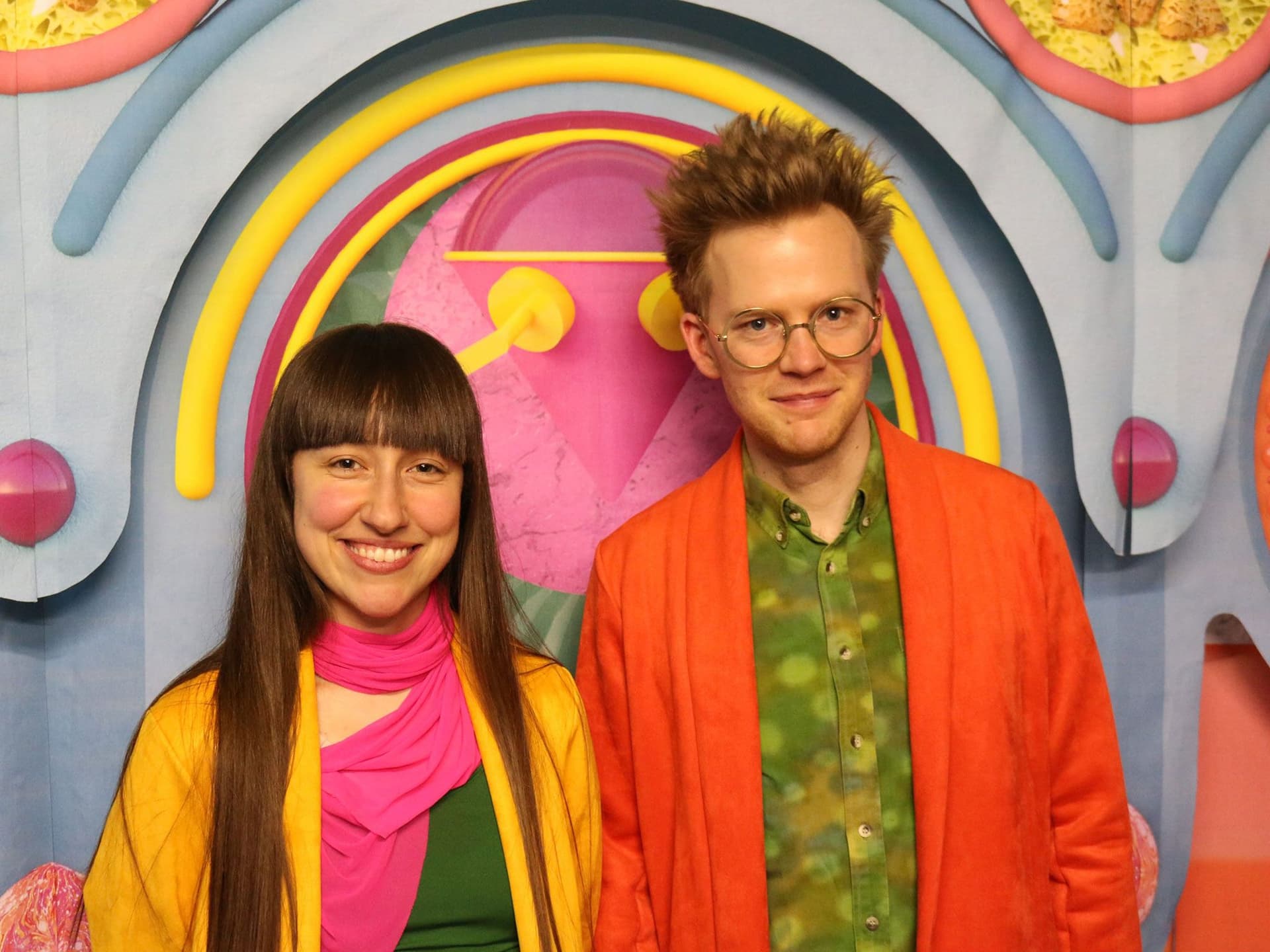
Matthew Lloyd Roberts: Congratulations Hyunuk on winning the Lasdun prize, would you like to tell us how your project developed over the course of this year?
Hyunuk Kim: In Term 1, we started with a single object, doing broad research about London as a city, and I chose a smart camera. I was thinking about how that object could transform and change spaces within the city and the people that occupy them. I made this weird, quirky experiment with the camera in the fish tank, which was located in a corridor in the AA first floor, and people would talk about this object and the space, the condition and the health of the fish. This led into the narrative in my project about health, this was before Covid-19, and I had a strong interest in mental health, so I started to research the current conditions of health provision in London.
MLR: So where did your research lead you?
HK: I started by investigating the architectural typology of the hospital, and health clinics. Researching the deep history of this typology, it has often been cross-programmed with religious structures in Ancient Egypt and Greece, or as a part of infrastructure in Ancient Rome, or combined the idea of the ‘academy’ in early modern French medicine. I was interested in this combination of spatial typologies, especially the Paimio Sanatorium by Alvar Aalto, exclusively for the treatment of tuberculosis in the middle of a forest in Finland. This sanitised, modernist architecture was represented in photos where doctors and architects were looking down from the roof of the building before the patients arrived. I started thinking about that dynamic of authority and control between patients and doctors, even the bigger political structure. What would it take to bring doctors and architects together down from the roof, from that model of top-down policy making, and integrate the community and patients into the decision making process?
MLR: And how does ‘Wellness Exhibition’ try to tackle those problems?
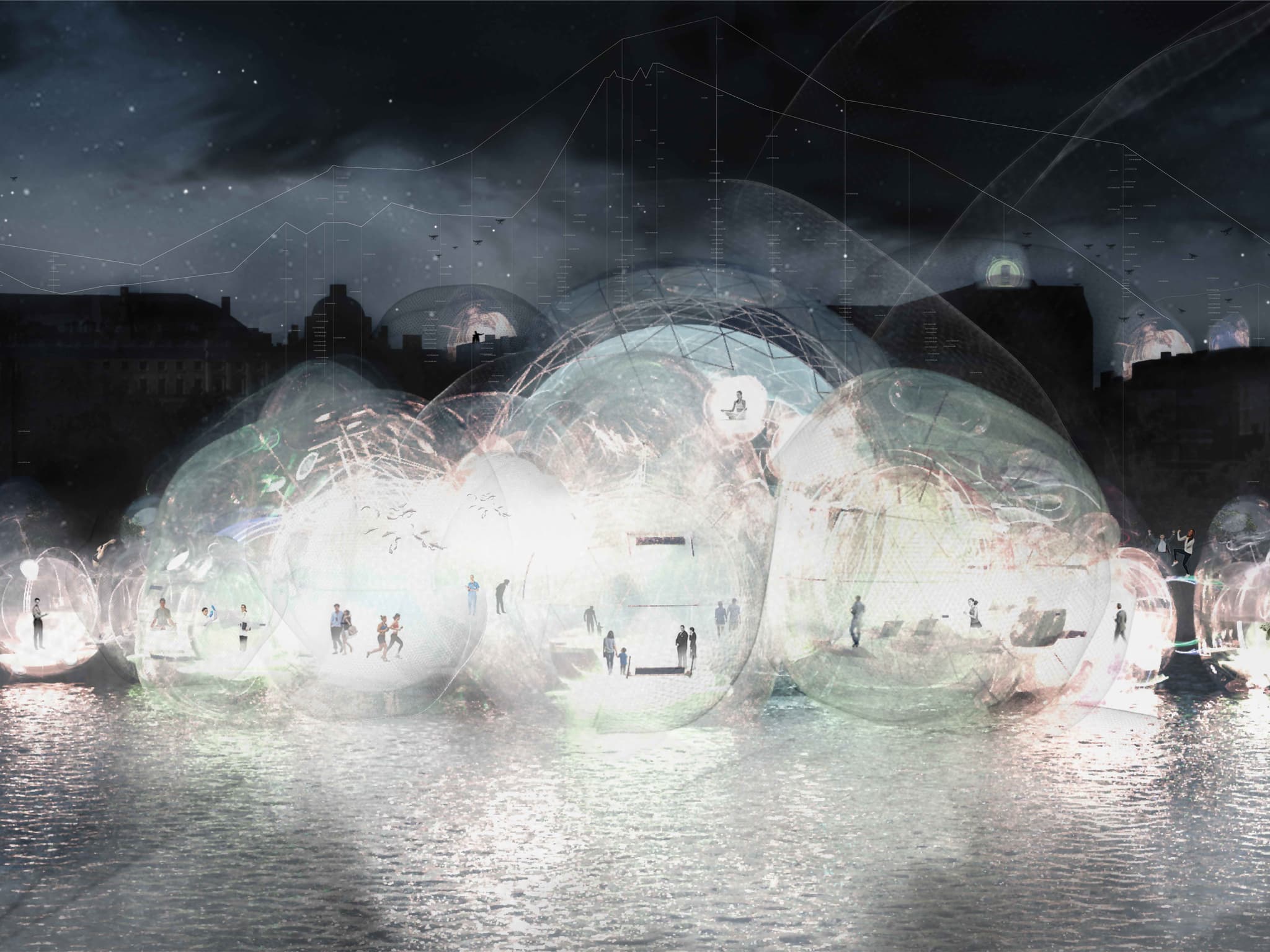
HK: In London, the crisis in mental healthcare provision is deeply connected to the ongoing problems with the NHS. I spent some time comparatively researching healthcare provision in other countries, and found that technological and demographic change in specific locations, combined with underfunding and Brexit have stretched resources almost to breaking point. So my project proposes waterborne ‘Incubators’ from Regent’s Canal to the Thames, that provide malleable, modular, mobile support to existing healthcare facilities in London. I wanted to put them on the river because of the therapeutic potential of water as a part of the treatment. The incubators are designed to integrate into people’s routines, they can move across the underused waterways of London between commercial and residential areas, as a haven from city life. It becomes a wellness ring in London to bring research and care.
MLR: Did you engage with the current medical research on this subject?
HK: I was very interested in putting together research that combined medical policy and architecture, not just designing space but designing space based on scientific research that optimises healthcare outcomes in those environments. I had to get in touch with medical researchers, neuroscientists, doctors in hospitals across London. With these experts led me towards this idea for an integrated incubator for healthcare. I was interested in the idea of an ‘incubator’, its attachment to the experience of a baby in the womb, the way that architects might be able to recreate that experience of deep and profound calm of being ‘in-utero’. It is a very kinetic system engineered with sensory stimuli, but that metaphorical connotation, having space to relax and recover, and the connection to the water, the sensation of floating are a key part of the proposal.
MLR: How did the project grow from the work of your unit, Road to Nowhere (Experimental 5)?
HK: Through the year it was very interesting to work with other students, I was constantly surprised and inspired by the way the students in my unit thought and spoke about their work. Ryan Dillon and David Greene, who run Experimental 5 really supported this atmosphere where we learn from each other as much as we learn with them. They opened up possibilities for each student, rather than pushing us down specific project routes, they allowed us to find our own areas of interest and our own voices. My project is very pro-technology, about using technology in the best way, but there are other students in the unit that are much more doubtful about the future of technology as a positive force. That is so valuable in the AA unit system, you work so closely with people that think about design and theoretical questions in totally different ways.
Again, I express deep gratitude to people who have supported me and given feedback: tutors, peers, AA staff members and all the experts. I am sincerely grateful for the amazing conversation and discussion during my time at the AA.