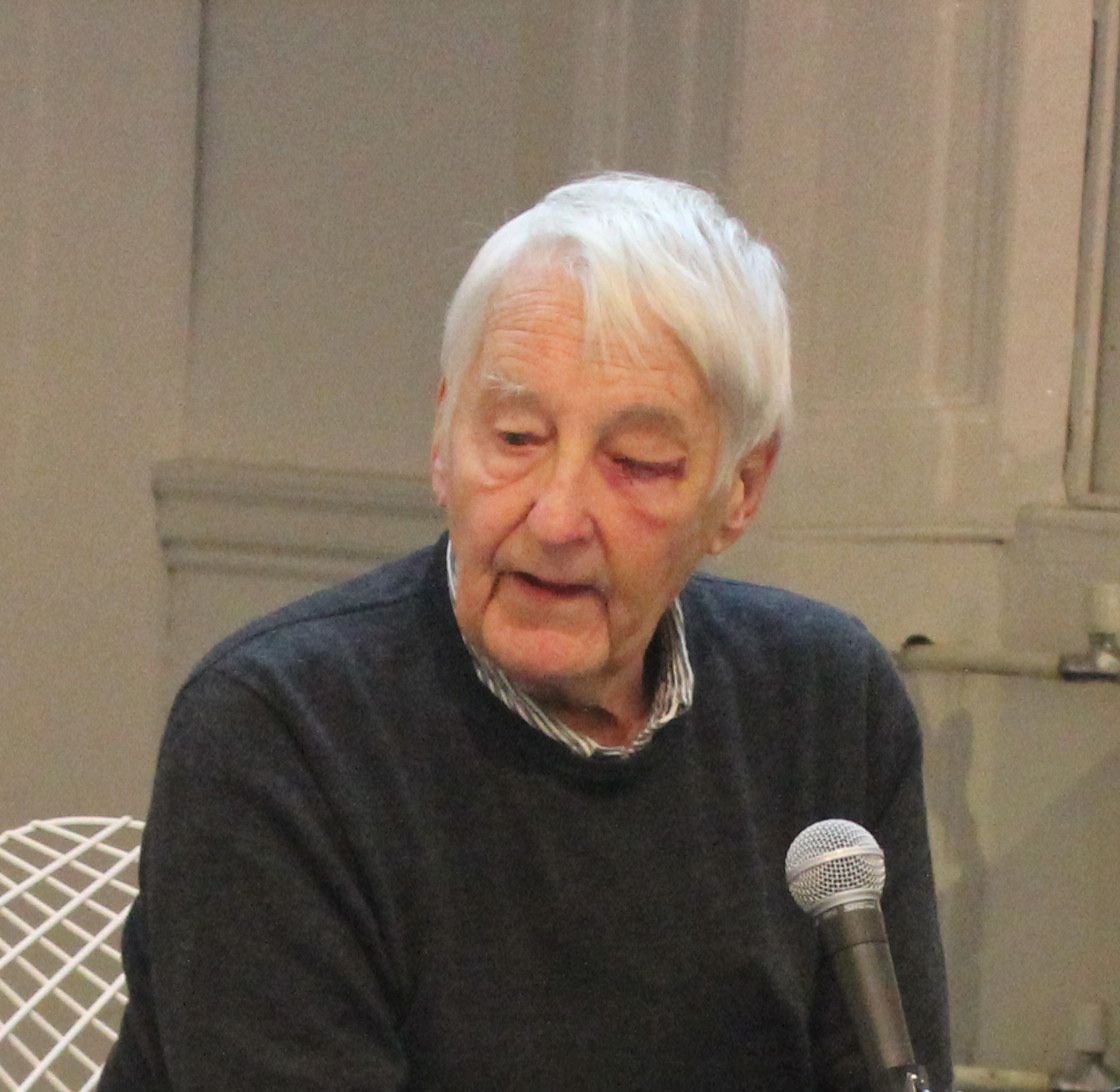
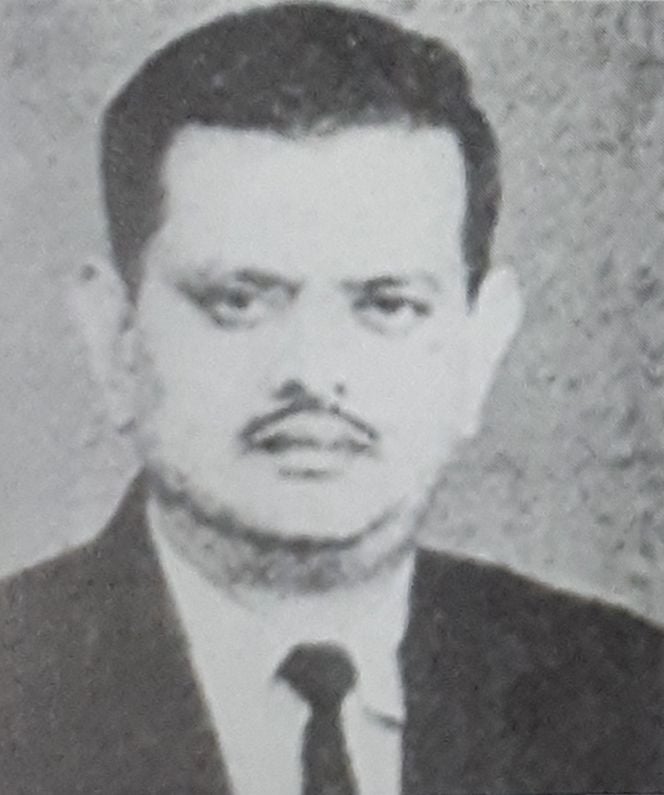
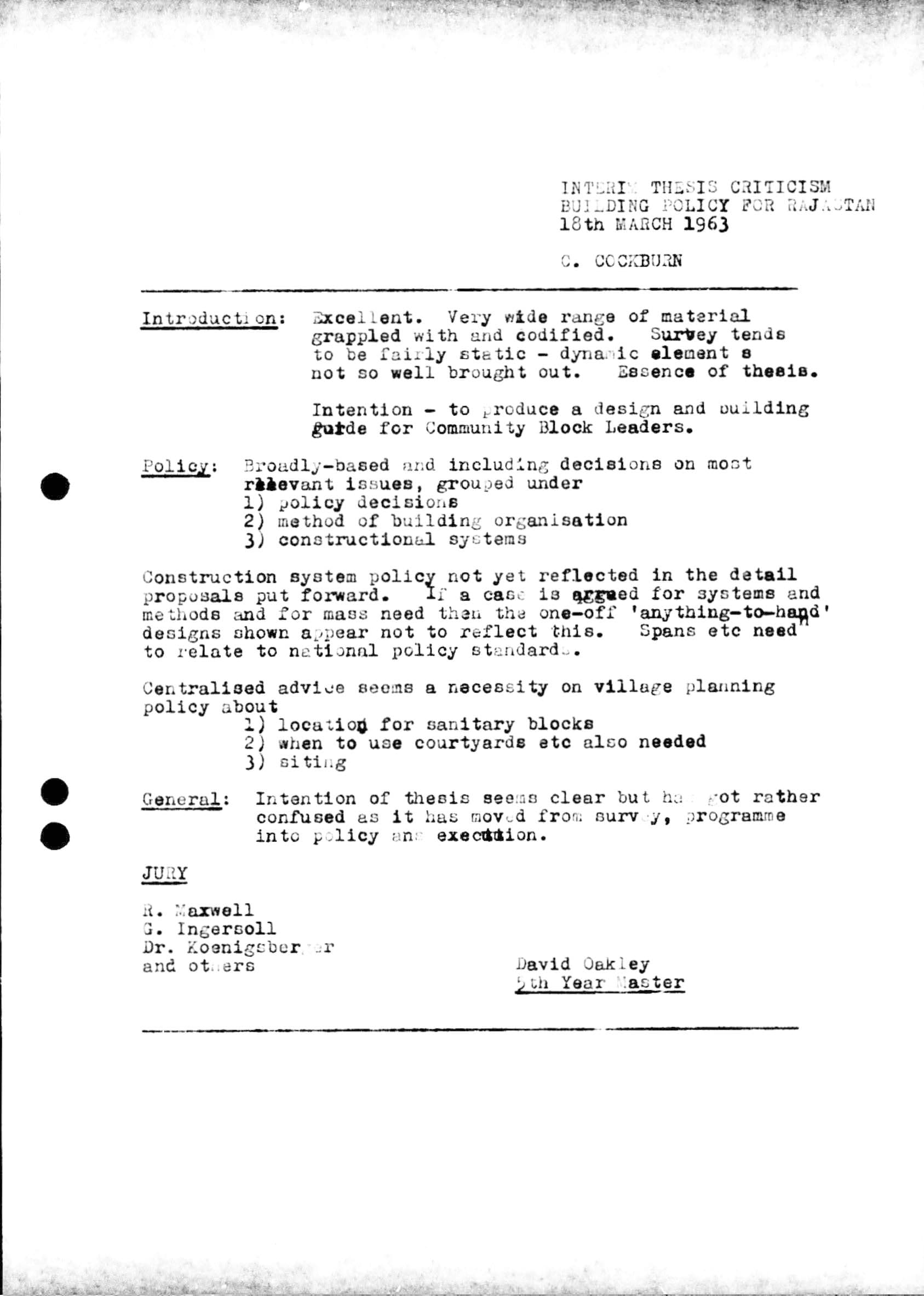
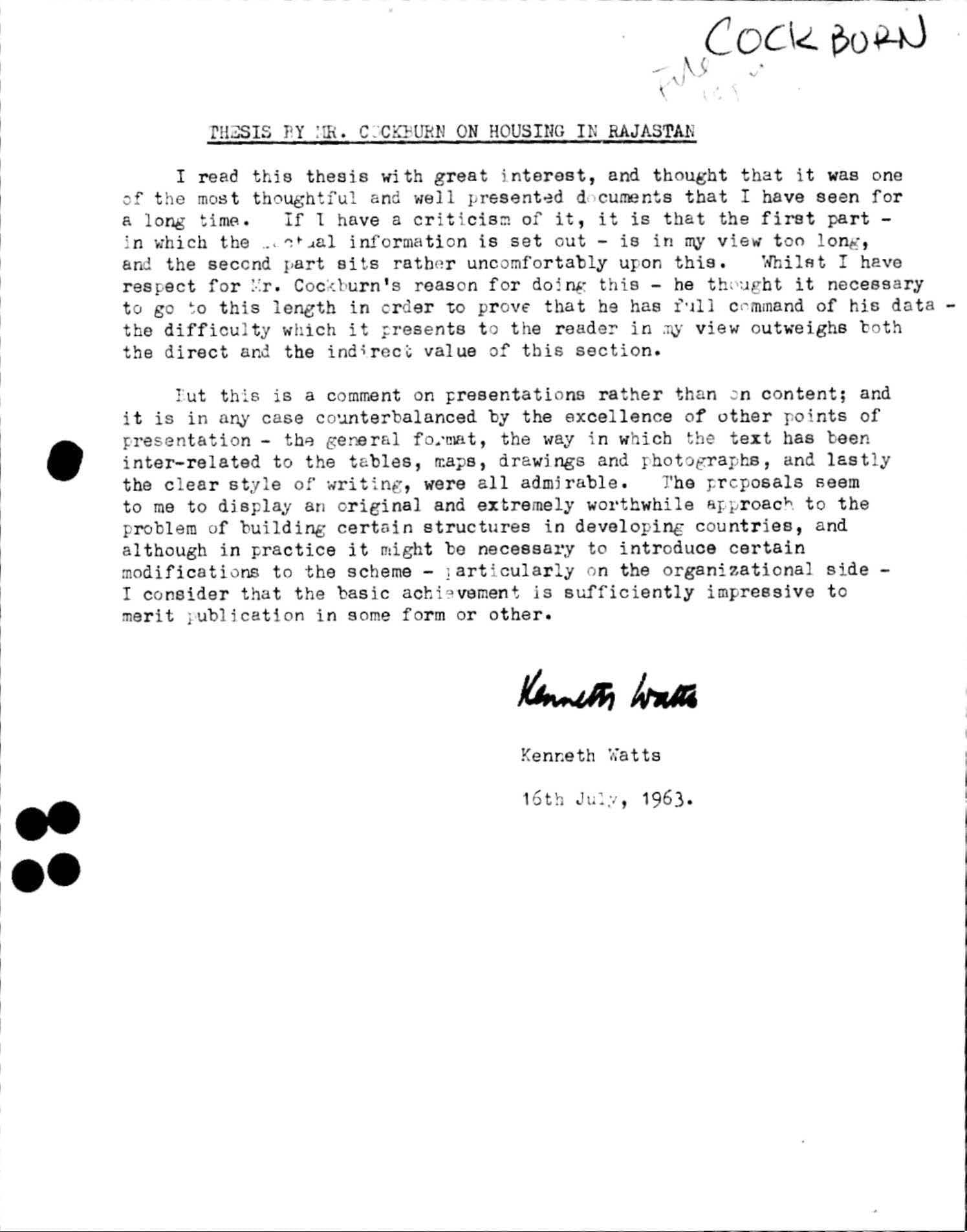
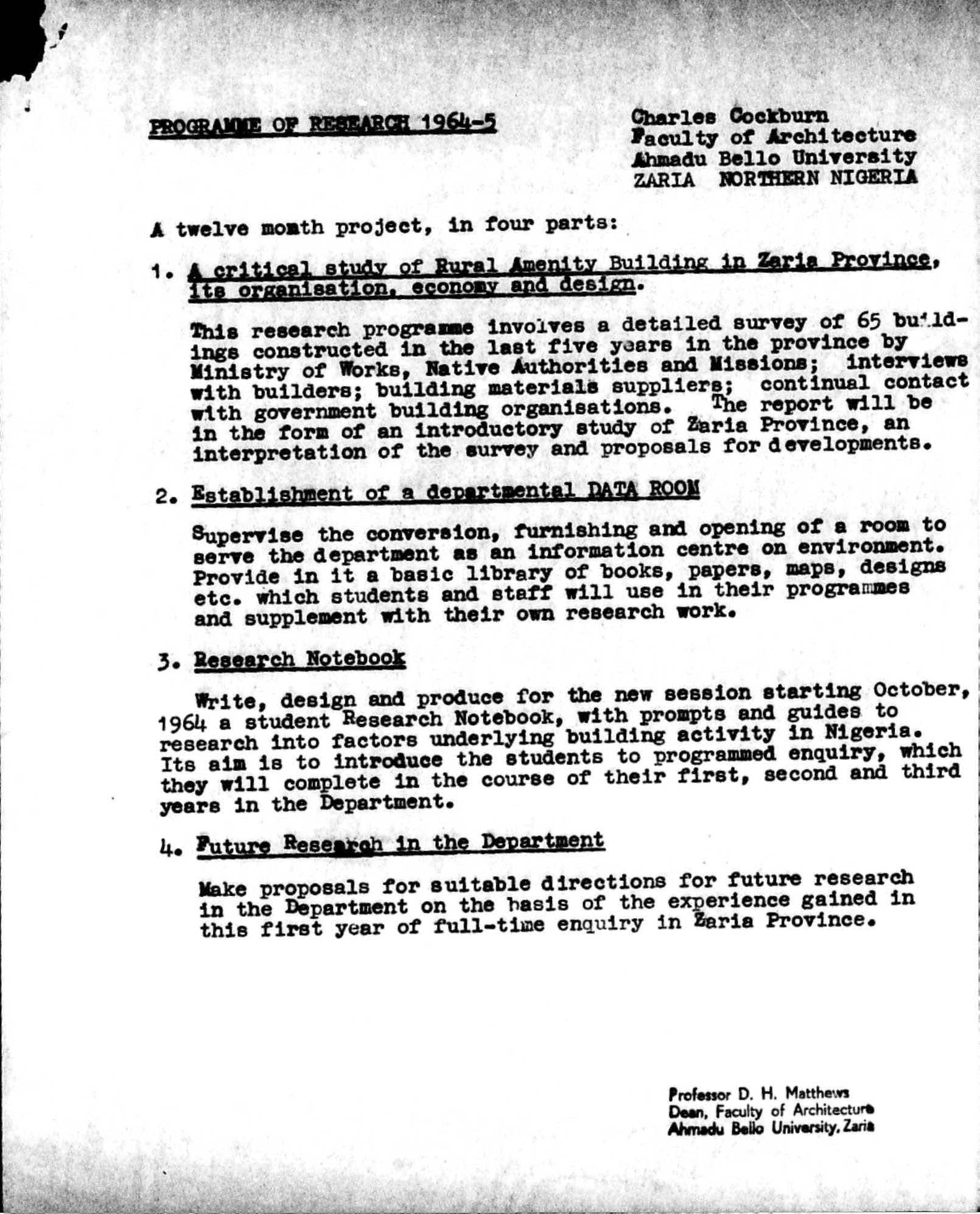
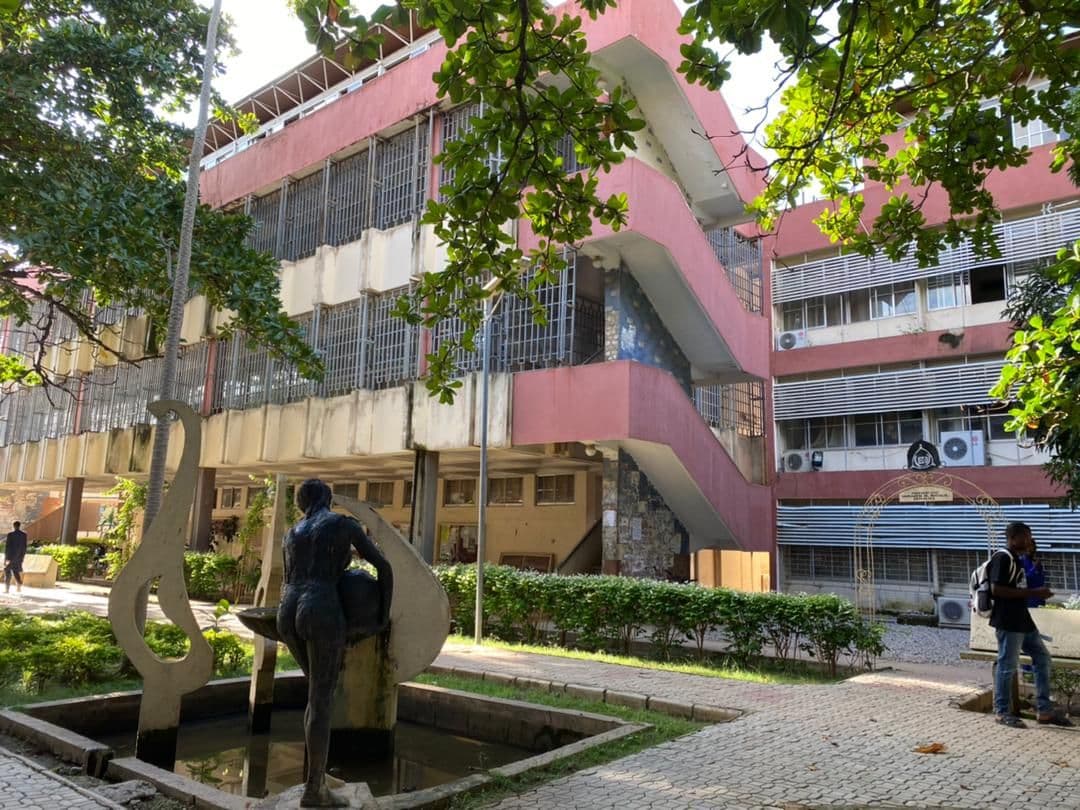
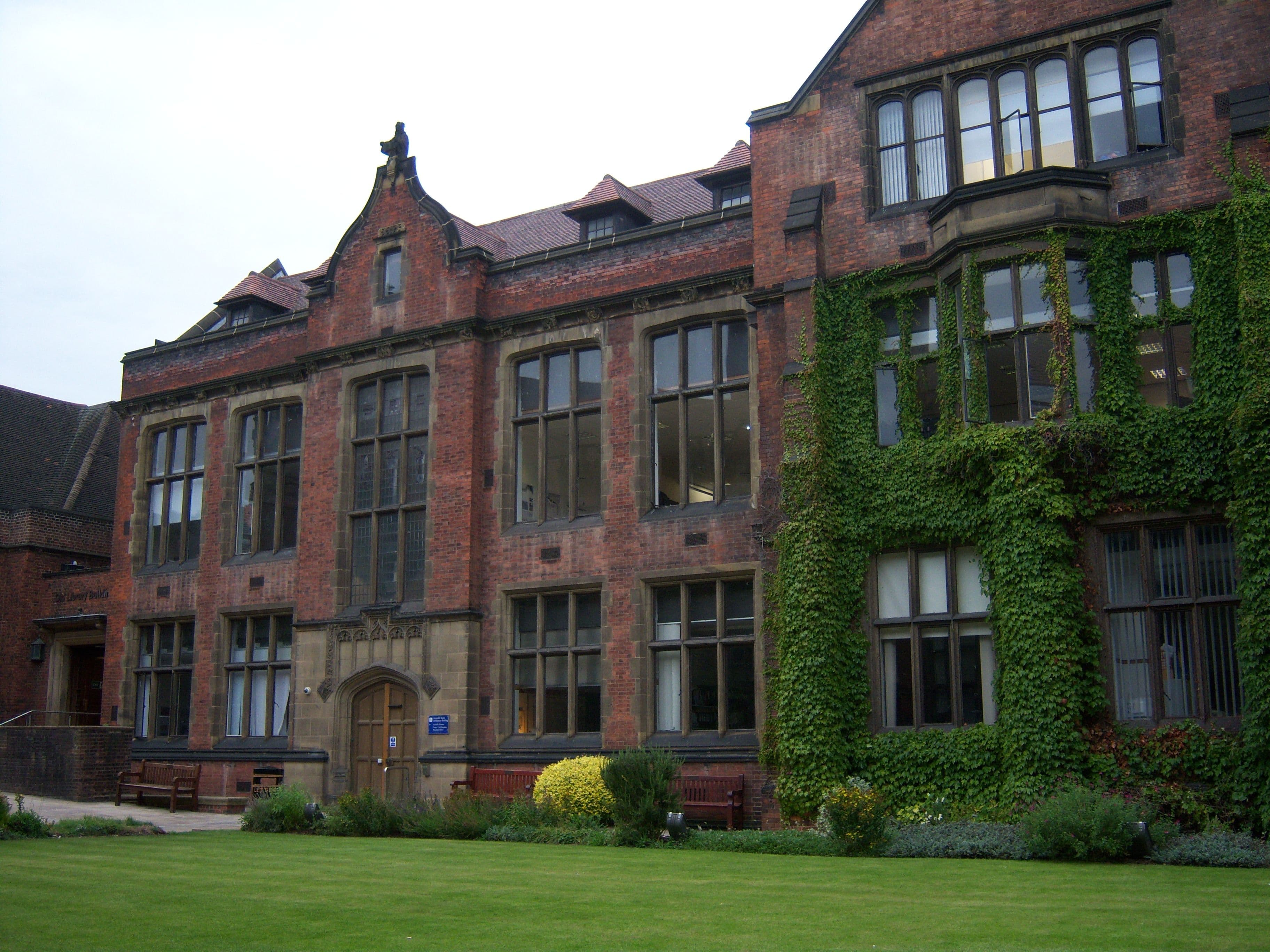
Robert Charles Cockburn was born in India in 1935. He studied architecture at the North London Polytechnic (now London Metropolitan University), before transferring to the Architectural Association (AA) and joining the Fifth Year of the AA Diploma course in September 1962. At the AA, Cockburn elected to study with the Department of Tropical Studies and his project for a school in Delhi (designed jointly with two other classmates) was published within the AA Journal of April 1963. His thesis on public building policy in Rajasthan was much acclaimed and elements were published in an article in Interbuild journal, later that year. On completion of the Diploma course, Cockburn travelled to Nigeria, where from February 1st, 1964, he was employed as a Research Lecturer at the newly formed Ahmadu Bello University Faculty of Architecture. A letter from the inaugural Dean of the Faculty, Prof. D.H. Mathews, survives in the AA Archives and outlines the programme of work which Cockburn himself devised. This comprised four parts: a detailed survey and critical report on 65 rural amenity buildings constructed in the last five years, in Zaria Province, by the Ministry of Works, Native Authorities and Missions; the establishment of a departmental ‘Data Room’ to serve as “an information centre on environment”; the writing, design and production of a ‘Student Research Notebook’, “with prompts and guides to research into factors underlying building activity in Nigeria”; formulation of a series of proposals for suitable directions for future Departmental research. By November 1964 Cockburn had almost completed his work, and in a letter to the AA Practical Training Advisor, notes that the Data Room had been established and was open to staff and students, and that the Student Research Notebook published and ready for use. He appears to have spent time travelling in Africa in early 1965, travelling in North Africa, asking the AA for contacts with “friendly graduates or former teachers” working in Libya, Algeria and Tunisia. By September 1965, Cockburn was back in the UK and working for Leslie Martin but by 1970 he was working with the Overseas Development Institute and three years later was part of a mission for the International Bank for Reconstruction and Redevelopment which published a framework for the promotion of construction industries in developing countries. Report. In 1973 he also joined fellow AA alumni, Mick Pearce (who had practiced in Zambia for several years), in an experimental building co-operative in Sunderland, in the North-East of England, called ‘Sunderlandia’. Operating on an equal pay and equal vote basis, the co-operative combined apprentices, managers and crafts specialists, renovating and modernising properties and designing new-builds for housing associations. Cockburn’s role from 1973-1976 was as a project manager and labourer. However, by the 1980s, Cockburn appears to have moved into academia, running a course on ‘Housing for Developing Countries’ at Newcastle University and then teaching at the Institute of Advanced Architectural Studies (IoAAS), at the University of York, from around 1984. His ‘Architecture and planning in the developing world’, jointly edited with C. Orbasli, was published by the IoAAS in 1994.
Sources
- Architectural Association Council Minutes, 13th February, 1963. AA Archives
- Architectural Association Student Register, 1963. AA Archives
- Architectural Association Admissions Records, Cockburn, C., AA Archives
- AA Journal, April 1963, pp.302-309
- Cockburn, C. ‘Fra-Fra House, Damongo, Ghana’ Architectural Design, June 1962, pp.299-300
- Cockburn, C. ‘Assessment: housing at Chandigargh, India’ Interbuild, January 1963, pp.36-40
- Cockburn, C. ‘Construction in overseas development: a search for appropriate aid and trade measures for the 1970s’ Overseas Development Institute, 1970.
- International Bank for Reconstruction and Redevelopment: Framework for the Promotion of Construction Industries in the Developing Countries
- Cockburn, C., Orbasli, A. (eds.), ‘Architecture and planning in the developing world’, York: Institute of Advanced Architectural Studies, 1994.
- Towers, G. ‘Building Democracy: community architecture in the inner cities’, Routledge, 1995.
- ‘Appeal for Sunderlandia Employees’, 26th February, 2010, Irwin Mitchell website. Accessed 21st July, 2025: https://www.irwinmitchell.com/news-and-insights/newsandmedia/2010/february/appeal-for-sunderlandia-employees-jq-817588