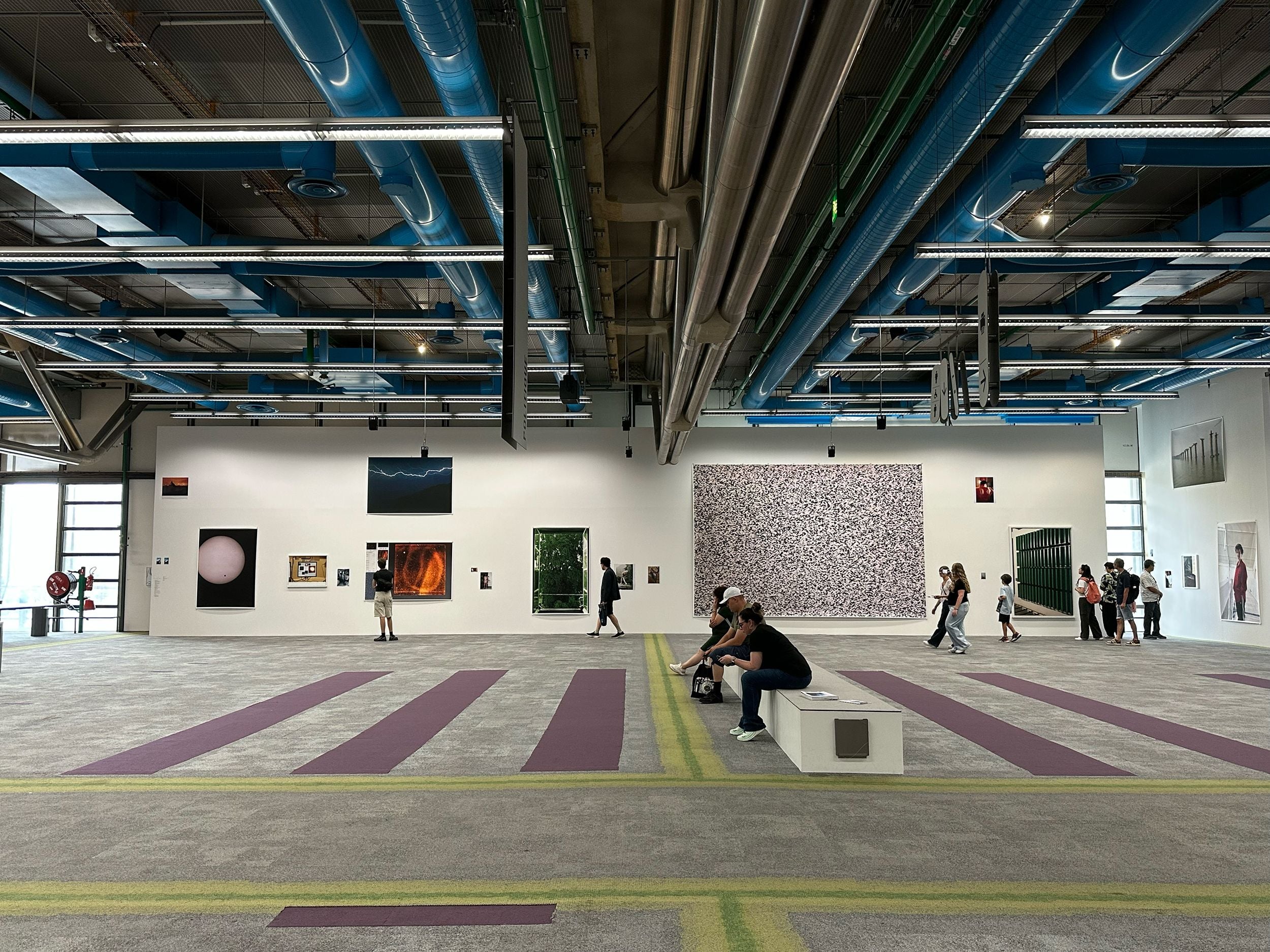
The Centre Pompidou in Paris opened in 1977 as a counterpoint to earlier Beaux-Arts museum projects, re-inventing the cultural centre as a new building type and democratising arts and culture along the way. This revolutionary building was born out of the May 1968 protests in France, where students and workers rallied against growing socio-economic inequalities and political authoritarianism, irrevocably changing the future of cultural institutions worldwide.
As the Centre Pompidou prepares for a major renovation and international expansion from 2025–30, questions arise. How can a building once shocking for its ‘inside-out’ design continue to challenge how we think about public space, access to culture and the circulation of knowledge? How should such an iconic centre remain relevant in an era of digital archives, decentralised collections and urgent climate action? What does it mean to ‘renovate’ a building that itself embodies change, adaptability and openness.
Continuing our exploration of architecture’s role in cultural production, Intermediate 13 will investigate and propose potential transformations of the Centre Pompidou. Designed by Richard Rogers, Su Rogers and Renzo Piano with Gianfranco Franchini, the building epitomised the Hi-Tech movement in architecture, with its structural skeleton, pipes and circulation routes boldly exposed and colour-coded; vast flexible floorplates; and the surrounding plaza offered as an urban stage for public life. Described by Rogers as ‘a cross between Times Square and the British Museum’, the Centre Pompidou remains Europe’s largest museum for modern art and houses a major public library as well as IRCAM, its renowned centre for music and acoustic research.
While the Centre Pompidou is closed for renovation, we will reflect on its radical approach to sustainability, inclusivity and cultural decentralisation in new proposals. We will also consider the possibilities of temporary partnerships and international satellites during its closure, while maintaining its civic presence in Paris. Throughout the year we will meet artists, curators and urban researchers; hold workshops on adaptive reuse, high-tech heritage and public realm design; and visit cultural spaces that blur lines between museum, city and public forum. Together we will propose alternative visions for the Pompidou’s future as a space that remains open, provocative and unexpected.
 UNDO
UNDO Two Sides of the Same Coin
 Upon Diluvial Order
 Mirror
 Business as Usual?
 Pressure Under Dust
 No Thing
 The Big Here and the Long Now
 True
True Earth Lab: Groundbreaking
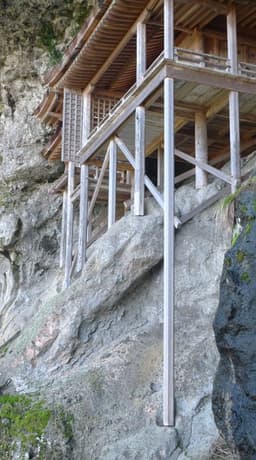 The Nature of Architecture
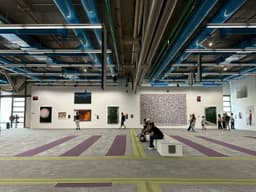 Cultural Capital: Pipes, Plazas and Publics
 Displace / Replace / Emplace
 Shifting Landscapes: Coexistence
 Don’t Look Back in Anger
 Golden Blue
 Fragments to Frameworks: Spatial Prototypes for Emerging Thought