‘Now is never just a moment… The longer your sense of Now, the more past and future it includes.’
– Brian Eno
Every building is a love letter to a future it cannot control, and every legacy project is a confession: where ambition collides with reality.
Intermediate 9 turns its gaze towards Paris, a city shaped by the lasting presence of its Grands Projets. In the 1980s, President François Mitterrand launched a series of monumental built works, expressing remarkable confidence in architecture’s cultural power. Today, such grand state gestures feel almost implausible, yet these buildings remain – some cherished, some contested. With these and other examples in mind, the unit will explore what happens when architecture becomes a public performance of permanence.
What remains when the spectacle ends? Can buildings outlast their original purpose? Some decay quickly, others adapt and endure. But is lasting always better? Intermediate 9 seeks to create technically and culturally adaptive architecture, navigating the complex relationship between time and legacy. We must learn to live with buildings that have outlasted the ambitions that once defined them. But how do we design for the long-term when the future feels so uncertain?
Situating Mitterrand’s Grands Projets within a wider European context, we will trace how architecture has made power visible, from state-sponsored megaprojects to political theatre. On our unit trip through Eastern Europe, we will study the ghostly grandeur of Soviet and post-Soviet legacy projects now suspended between decay, adaptation and myth. In Estonia, Latvia, Poland and Germany, we will examine how architecture serves collective memory, resisting or succumbing to erasure, nostalgia and reinvention.
Through iterative design exercises, including time-based and animated drawing, we will uncover the stories buildings carry and the traces they leave. We might propose a repair, extension, unbuilding or temporal reoccupation, developing strategies that explore time through layering. Our focus will be as much on the maintenance shed as the foundation stone. We will imagine architecture without the burden of permanence, but also without the comfort of forgetting.
 UNDO
UNDO Two Sides of the Same Coin
 Upon Diluvial Order
 Mirror
 Business as Usual?
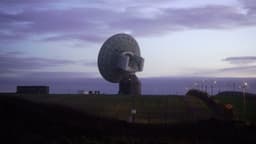 Pressure Under Dust
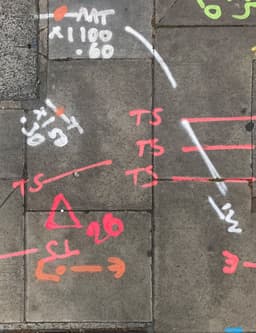 No Thing
 The Big Here and the Long Now
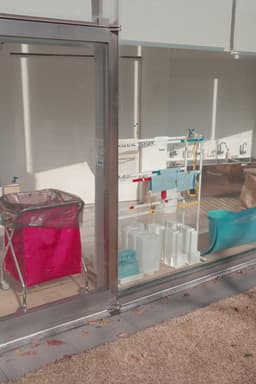 True
True Earth Lab: Groundbreaking
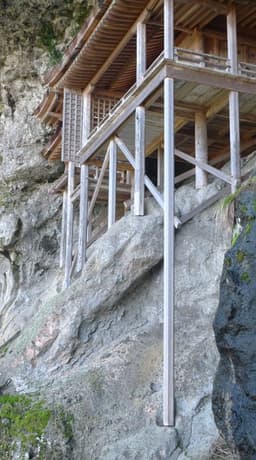 The Nature of Architecture
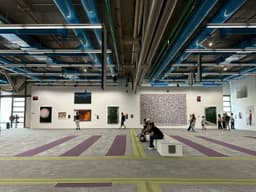 Cultural Capital: Pipes, Plazas and Publics
 Displace / Replace / Emplace
 Shifting Landscapes: Coexistence
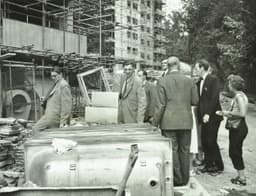 Don’t Look Back in Anger
 Golden Blue
 Fragments to Frameworks: Spatial Prototypes for Emerging Thought