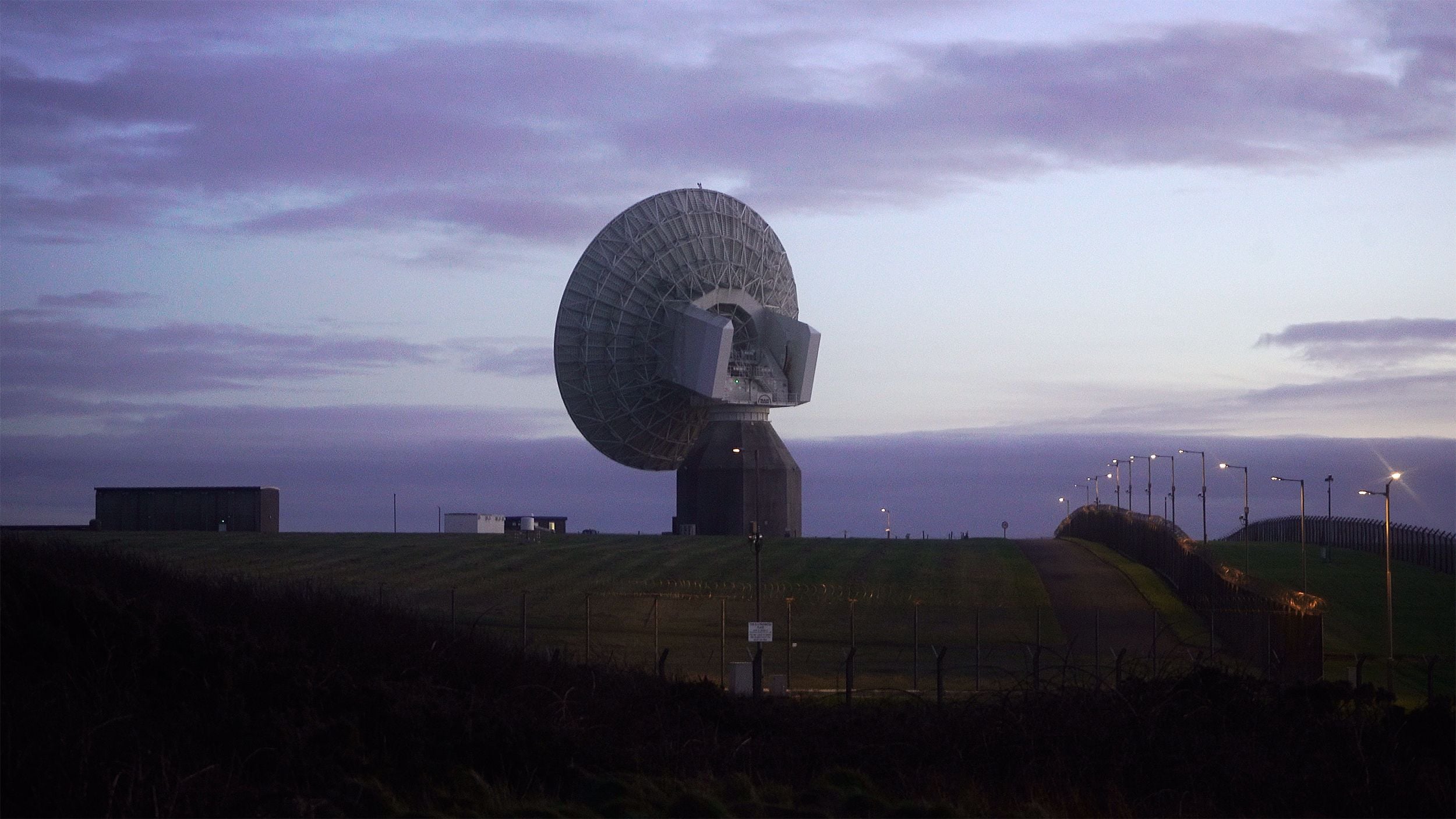
On 16 July 1945, in the basin of the Jornada del Muerto desert in the southwest US state of New Mexico, the world changed. At 5.29am, the first atomic bomb was detonated at the Trinity Site, initiating a series of events that would come to be understood as the beginning of a new geological epoch. The heat from that explosion was intense enough to fuse the desert sand into a green glassy substance known as Trinitite. This physical transformation of the ground in the surrounding area reflects the magnitude of the political and social changes that followed. Cold War technologies including the decedents of the German V-2 rocket enabled the rise of space exploration and, eventually, extra-terrestrial mineral extraction and the advent of space tourism. These industries continue to shape the landscape today, offering a prospect in which deep histories of land, justice, faith and science converge.
The collective imaginary of the American West is constructed on the idea of vast distances which not only reflect a given reality but also constitute a way of seeing and acting in the world. The landscape in New Mexico is an archive of contested sovereignties: Indigenous lands, Spanish colonial routes, the imposition of a fragile democracy and Cold War experiments. This year, we will read this area of the New Mexico desert as a zone of intentions; a site of national mythology, outer-space observation, settler colonialism, nuclear legacy and ecological collapse. Our journey will take us from the haunting clarity of the Trinity Site to the astronomical silence of the Very Large Array.
Maintaining that the experience of duration is fundamental to human existence and is therefore inseparable from architecture, INTER7 uses the medium of film for its unique ability to capture and edit time, observe and interpret reality, suspend logic and resequence space. By translating film into tectonic and ephemeral models, and drawing precise durational, atmospheric, geometric, social and geological analyses, each student will develop their own methods to derive transcendent value from empirical observations and formulate a cinematic architecture of the landscape.
 UNDO
UNDO Two Sides of the Same Coin
 Upon Diluvial Order
 Mirror
 Business as Usual?
 Pressure Under Dust
 No Thing
 The Big Here and the Long Now
 True
True Earth Lab: Groundbreaking
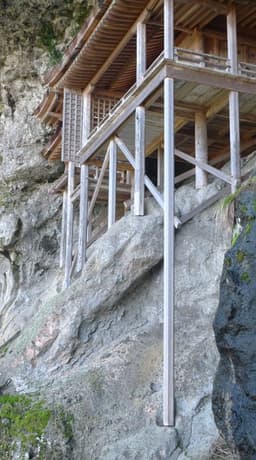 The Nature of Architecture
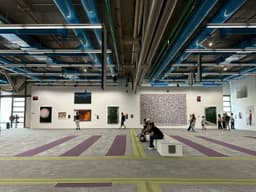 Cultural Capital: Pipes, Plazas and Publics
 Displace / Replace / Emplace
 Shifting Landscapes: Coexistence
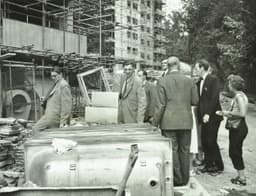 Don’t Look Back in Anger
 Golden Blue
 Fragments to Frameworks: Spatial Prototypes for Emerging Thought