Along the banks of the Nile, the Ancient Egyptians built a civilisation where sand and water created daily life and its architecture. Each year the river floods, depositing fertile silt onto the arid land which enables agriculture and sustains cities. Using a mix of sand, mud and straw, the Ancient Egyptians crafted sun-dried bricks to build homes, walls and temples. The desert offered stability; the river brought life. This balance allowed Egypt to thrive for more than 3,000 years, its architecture a lasting record of the co-operation between the shifting waterscape and sandscape.
Intermediate 17 will explore the interdependent relationship between sand and water; the solid and the fluid; the permanent and the transient. These two natural resources are perpetually extracted and commodified to fuel the progress of our modern lifestyles and infrastructures, from roads to planes and even the smartphones we use every day. We will critically analyse and articulate how these phenomena impact cities, neighbourhoods and the livelihoods of people worldwide, from Indigenous Amazonians to fishermen along the Mekong River and Giga Factory workers in Taiwan. We will unveil hidden, disconnected or seemingly irrelevant narratives to find meaningful interconnections. This enquiry will help us to establish architectural propositions for a new form of spatial occupation.
The unit will explore ideas through acts of drawing, modelling, thinking and making, where the very process of ‘doing’ becomes the project itself, serving as a tool to question and respond to the unit agenda and its wider discourse. An architectural project is inherently politically driven, socially interlaced and environmentally responsive, but beyond this the work of the unit is grounded in consideration of the fundamental factors that dictate an architectural and spatial condition – proportion, scale, materials, tectonics and elemental composition – which will be iteratively developed and synthesised.
 UNDO
UNDO Two Sides of the Same Coin
 Upon Diluvial Order
 Mirror
 Business as Usual?
 Pressure Under Dust
 No Thing
 The Big Here and the Long Now
 True
True Earth Lab: Groundbreaking
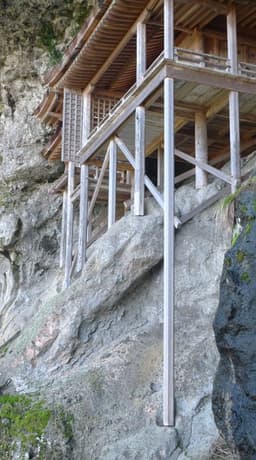 The Nature of Architecture
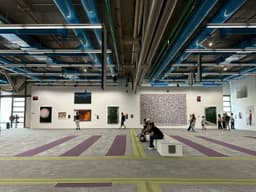 Cultural Capital: Pipes, Plazas and Publics
 Displace / Replace / Emplace
 Shifting Landscapes: Coexistence
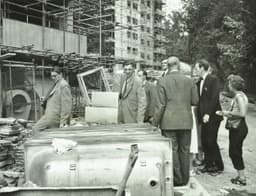 Don’t Look Back in Anger
 Golden Blue
 Fragments to Frameworks: Spatial Prototypes for Emerging Thought