Title: The Lure of the Image – Photography and Publishing
Tutor: Thomas Adank
Images play an increasingly crucial role in disseminating cultural value as mass media continues to expand its reach. We look at and understand the world in visual terms, and so it is vital to examine the potential uses and limitations of images as we make and record architecture. This course investigates how images shape our understanding of the built environment and how students can relate these ideas to their own research. Each student will create a series of photographic images and a publication that captures the essence and atmosphere of a space. Through this process, they will consider elements such as light, materiality, rhythm, narrative, memory, the fragment, the familiar and the unfamiliar.
Title: Genre Diffusion – Understanding AI Image Generation Tools
Tutor: Tamika Batalova
This world-building course uses visual genres in popular media to learn about the AI image-making tool Stable Diffusion, a pattern recognition machine trained on all the visual data that is available online. Genres categorise media into thematic, narrative and often visual tropes which are immediately recognisable to a contemporary audience. AI image-making tools like Stable Diffusion are trained on these visual tropes and can recreate them. This course uses prompt-building, input experimentation and the documentation of parameters to dissect these recreations, giving students an insight into the inner workings of the AI tool and helping them learn to control it.
Title: The Prototype Pavilion – 1:1 Fabrication
Alex Borrell
In this course, students will design and make an inhabitable pavilion at 1:1 scale. We will work with large sheets of cardboard and translate two-dimensional patterns into complex three-dimensional assemblies by cutting, bending, folding, creasing and fastening them together. Working iteratively through prototypes, we will develop cardboard-only connections before applying them at scale, learning the basics of digital modelling and using fabrication tools to aid the design and making process. The outcome will be a prototype for a space, which may need to be tested in different environments.
Title: Uncommon Senses – Experimental Film and Animation
Tutor: Nicholas Brooks
In this course, students will develop a video installation using animation, photography, filmmaking and drawing to explore sensations or phenomena that defy expression in language, such as ‘a sense of foreboding’, ‘a scent’ or ‘the feel of a piece of music’. We will develop a toolkit of methods including gestural mark-making, found materials, experimental video, sculpture, and real-world lighting and special effects techniques. We will then use these methods to make a standalone time-based work on screen or projection – a looping, living sculpture. Methods will emerge from individual investigation, through discussions in sessions, in response to artists’ works and, most importantly, through experimentation.
Title: Blade Building 3 – Carpentry
Tutor: Jack Cardno, Finbar Charleson
In this course, students will mix high- and low-tech methods to design and build a 1:1 demonstrator of the structural potential of homegrown timber. Students will design and manufacture a roof covering from material harvested in Hooke Park to be assembled at Bedford Square, working with the existing structure developed by previous course participants since 2023. We will learn how to design with natural, renewable materials, in harmony with their inherent properties and characteristics. (This course runs in Term 1 only)
Title: CNC for Designers – Digital Fabrication
Tutor: Henry Cleaver
This course provides an in-depth introduction to Computer Numerical Control (CNC) milling – a digital fabrication technology – and will focus on the importance of making in the design process. Students will experiment with materials, machining tolerances and digitally fabricated joinery techniques through a series of exercises and a main design brief whose outcome will be a finished piece of product design. The course is aimed at students with a basic knowledge of Rhino and a willingness to experiment.
Title: Terra Forma – Ceramic Extrusions
Tutor: Elliott Denny
This practical and playful series of sessions explores how ceramic extrusion can be used within an architectural context. Drawing on historical and contemporary references, we will create systems through which small parts can be brought together to create a cohesive whole. We will consider ways to create bricks, tiles, cladding and shingle, and discover new possibilities by designing our own custom tooling and production devices. There will be an emphasis on an iterative approach where ideas are developed through experimenting, making and material exploration.
Title: Solid Space – Architectural Model-Making
Tutor: Shaan Patel, Paula Schilliger
This course explores the architectural potential of negative space – the often overlooked yet highly significant result of architectural form. The ability to visualise these spaces and understand the relationships between them is fundamental for an architect. Students will begin by modelling the interior volumes of architectural precedents using foam. Later, they will combine these models into compositions that allow them to imagine new spatial sequences. We will conclude by documenting the resulting designs through photography to capture their compositional logic and sculptural qualities.
Title: Seeing Your Way to Draw – Observational Drawing
Tutor: Anderson Inge
This hand-drawing course is held in a series of national collections around central London. The course focuses on improving students’ drawing skills and developing different ways of looking and seeing. Each session will focus on a specific theme and will explore a range of different approaches to drawing. They begin with a short lecture, after which students will develop evocative drawings in response to the spaces and objects on display at each venue. (This course runs in Term 2 only)
Title: Politics of Colour – Practical Work with Colour and Pigments
Tutor: Antoni Malinowski, Fenella Collingridge
This course empowers students to make effective use of colour in their design work, and explores how the language of colour can be used as a tool for social and political interaction within urban and architectural contexts. We will discuss historical examples and contemporary projects, from ancient Rome to the Bauhaus. Individual research will be accompanied by practical workshop sessions to test the effects of painted or pigmented surfaces in relation to 3D space. During Climate Matters Week, we will explore the interaction of water and humidity with colourful building materials, and each student will make a 1:1 colour installation.
Title: Book Design – Concept, Design and Production – Graphic Design
Tutor: Michela Zoppi
Gathering, collecting and archiving are daily activities that enable us to remember and preserve the past, and books offer a means of capturing these continuous processes of collection. Curated accumulation is also central to the practices of modern museums, and this process can be employed to make books. This course provides students with an introduction to graphic design for publishing and demonstrates how books can be used as a tool for communication. It encourages students to think about the architecture of the printed space and to act as collectors, learning how to recontextualise and actualise material through design and production. Students will become familiar with processes of editing, writing, image creation and manipulation, typography and sequence-making, production and printing to develop their own concept and produce a final printed publication.
 UNDO
UNDO Two Sides of the Same Coin
 Upon Diluvial Order
 Mirror
 Business as Usual?
 Pressure Under Dust
 No Thing
 The Big Here and the Long Now
 True
True Earth Lab: Groundbreaking
 The Nature of Architecture
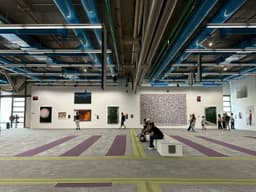 Cultural Capital: Pipes, Plazas and Publics
 Displace / Replace / Emplace
 Shifting Landscapes: Coexistence
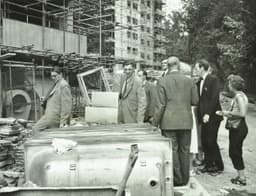 Don’t Look Back in Anger
 Golden Blue
 Fragments to Frameworks: Spatial Prototypes for Emerging Thought