Title: Projection and Speculation – Architectural Drawing
Tutor: Miraj Ahmed
Architectural drawing is a language used to speculate and represent architectural ideas using the rules of measured orthographic and perspective projection. This course will build students’ understanding of analogue and digital two- and three-dimensional drawings as imaginative tools that operate beyond architectural representation. Our critical evaluation of drawing techniques will include analysis of significant drawings from history, as well as the study of painting and artworks; this enquiry will inform projects that explore the artistic potential of architectural drawings.
Title: Abstract Nature – Structuring Spaces
Tutor: Sebastian Andia
This course will explore the creative process of design by using abstract images of natural elements as inspiration to generate three-dimensional geometries, which will inform the design of architectural spaces at the scale of a pavilion. To enable the creation of these objects, students will learn polygon modelling, using Autodesk Maya as our main drafting tool and developing their personal design language in the process.
Title: Experimental Film – Video and Editing
Tutor: Yoni Bentovim
This course focuses on experimental film practices to question how we define film, considering the ways in which time and movement, materials, narrative and spectatorship inform our understanding of the medium. We will share our findings throughout the course and each student will create at least one short film as part of their project. The intention is to enhance students’ understanding of audio-visual media and to deepen their knowledge of experimental film practices from the 1940s to the present day.
Title: Extended Touch – CNC Fabrication
Tutor: Yoav Caspi
This course focuses on how CNC fabrication can be used as a sculpting technique to support and expand students’ Design Studio projects. By making site models and reliefs – sculptures that emerge from flat surfaces – students will refine aspects of their design proposals, investigate site-specific landscapes and engage with the narrative of their project. The course encourages experimentation with form and material, using CNC to carve, engrave and shape a wide range of surfaces. Students will work between the DPL and the workshops, deepening their understanding of material processes. By extending the dialogue between digital and physical modes of production, the course promotes an iterative approach to design in which drawing, modelling and making are integral to spatial thinking.
Title: Spatial Translations – Community Engagement
Tutor: Fiona Cuypers-Stanienda, Thomas Faulkner
The central focus of this course is that people matter, and our work will engage directly with people through meaningful conversations. The course will take a design anthropology approach in which students focus on how we can help communities and individuals in present-day contexts. We will explore how design can best support individuals, communities and underrepresented voices within architecture, creating playful, informative and helpful objects that serve as tools to spark and support these conversations. Throughout the course we will collect, document and compile these dialogues into a documentary-style zine that captures the voices, insights and experiences shared.
Title: Falling Dust – Model-making and Film
Tutors: James Emery
This course will investigate how a crossdisciplinary approach to communication media can be used to develop narrative, create an atmosphere and engage an audience. Students will investigate a range of directorial mise-en-scènes, and this research will guide their experiments with different model-making, sketching, filming and post-production techniques. Each student will design through making, responding to unplanned contextual phenomena to create a one-minute film as their final project for the course, accompanied by a model and a booklet documenting their process.
Title: The Phygical – 3D Modelling and Augmented Reality
Tutor: Federico Fauli
This course will provide students with a diverse set of skills including 3D modelling in Blender, animation, augmented reality and Web 3.0. Throughout the course, a series of guest artists will provide insights to stimulate discussions around the topic of new architectural territories and opportunities, all of which will lead to a series of unconventional design outputs. Structured as an iterative process, the course invites students to question traditional design and representational practices, offering a stimulating foundation for the development of individual projects and innovative modes of representation.
Title: Drawing in the Nation’s Cupboards – Observational Drawing
Tutor: Anderson Inge
This hand drawing course meets weekly in a different national collection or archive near Bedford Square. Each session will focus on observational drawing of objects and spaces from throughout history, supported by discussions about ways of seeing and drawing. The course will build students’ confidence and skill in hand drawing and will reveal new perspectives on visualisation. (This course runs in Term 1 only)
Title: Trashing – 1:1 Making
Tutors: Rory James Sherlock
Form is important. This ought to be stated more than it currently is in architecture schools across the UK. Of course, many other things are important too (like ethics, holistic sustainability and integrity), but it is form, scale, composition and materiality that underpin those essential components of the intelligent, relevant and sensitive architectural project; that give them weight, impact and longevity. But when do we learn about form, or sense what it means to make at 1:1? This course will take the undervalued ‘trash’ materials of the building site – the real stuff of architecture – and use it to build collective monuments in the gaps of the AA. Through physical practices of fabrication and representation, we will use ideas of scale, heft and feel to bring an architecture into reality. (This course runs in Term 2 only)
Title: 99 Luftballons – Transformational Assemblages
Tutor: Jake Parkin
Drawing from Enzo Mari’s methods and the experimental model-making of Bureau Spectacular, this course explores how fragments can be reassembled to question architectural language. Using material from design work or spatial observation, fragments will be digitally manipulated, materially altered and rebuilt through a series of model-making exercises. Techniques such as 3D printing, sanding, filling and spraying will allow students to test ideas through process – moving between individual pieces and serial compositions, and playing with scale, understanding and consequence. The course culminates in a collective assemblage that uses disorder as a tool for critique and invention.
Title: Datascape – Virtual Worlds
Tutor: Mattia Santi, Francesca Silvi
This course explores how contemporary spaces are expanding beyond physical boundaries through virtual relationships shaped by Web 3.0, virtual reality and spatial computing. Within this digital context, architecture transforms into a virtual environment. Students will create virtual spaces or worlds tailored for digital human experiences, informed by research and analysis of current Metaverse technologies, and using AI and computational tools to support design innovation. Students will begin by learning the fundamentals of programming before creating 3D procedural environments using Rhino or Grasshopper. They will also learn to develop interactive virtual reality experiences and real-time immersive visualisations in Unreal Engine. Additionally, the course introduces AI-driven workflows to foster a forward-thinking approach to digital architectural design in virtual environments.
Title: Really Real – Digital Rendering and Photography
Tutor: Sebastian Tiew
This course investigates images in the realm of the ‘strangely familiar’, where pseudo-photographic versions of reality are remodelled and released back into the world. Students will explore the culture of photographic image-making through the lens of 3D computer-generated imagery and modelling, considering how this can inform our approaches to composition and representation in an age of hyper-accelerated digital imaging processes.
Title: Lemon Le Mans – Precision Designing and Making
Tutor: Nick Williamson
Students on this course will build and race vehicles. The course focuses on how our bodies interact with materials and explores how to build structures that support a human. We will work in pairs in the workshops to design, build and hack a rideable device at 1:1 scale and explore human-scale objects and movements. Students will develop their skills in metalwork, carpentry and mechanical invention, and the course concludes with a race to test their inventions. Will they move? Will they break? Will you win?
 UNDO
UNDO Two Sides of the Same Coin
 Upon Diluvial Order
 Mirror
 Business as Usual?
 Pressure Under Dust
 No Thing
 The Big Here and the Long Now
 True
True Earth Lab: Groundbreaking
 The Nature of Architecture
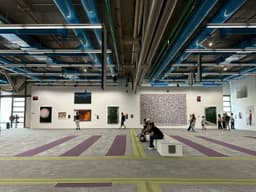 Cultural Capital: Pipes, Plazas and Publics
 Displace / Replace / Emplace
 Shifting Landscapes: Coexistence
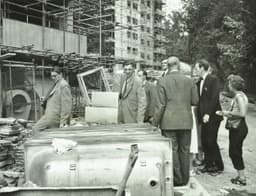 Don’t Look Back in Anger
 Golden Blue
 Fragments to Frameworks: Spatial Prototypes for Emerging Thought