Title: Drawing Between Paper and Stone: Shop-drawing and Model-making in Paper and Limestone
Tutor: Juliet Haysom
‘Drawing in architecture is not done after nature, but before construction; it is not so much produced by reflection on the reality outside the drawing, as productive of a reality that will end up outside the drawing.’ – Robin Evans
Unlike artists who tend to make their work directly, architects’ designs are conventionally translated into built form by someone else. To put this dynamic to the test, this course will collaborate with stonemasonry students at the Building Crafts College in Stratford. Students will gain a practical understanding of how drawings mediate between designer and craftsperson, becoming familiar with the fundamentals of working with stone.
Title: Exquisite Corpse: Architecture Assembled
Tutor: Hamed Khosravi
The tools of assemblage, which were methodologically developed and theorised during the Dada movement, have long been central to the production of both drawn and built architecture. From analogue and digital tools of drawing and painting to modelling techniques and even curatorial projects, this course addresses key projects that use architectural media beyond pure representation and instead as a systematic form of enquiry. The course discusses the use of media in architecture – and drawing in particular – not so much as a tool for surveying, recording or representing but as a project in its own right. We will undertake a close reading of artistic and experimental methods and practices, as well as precedents that have historically shaped the foundation of architectural representation. The course views architectural drawing as an assembled form: a mode of thinking and design that inherently reflects the intellectual, technological, cultural and political ethos of its time.
Title: Exhibition Design and Display Methodologies
Tutor: Mike Cooter
Ideas are communicated through display – the conspicuous showing of something to someone else. How something is shown conditions how it is understood. At the AA (and beyond), you often have to communicate your ideas to a public through the medium of an exhibition. How should you approach this contextualising form? There is a long history of methodologies of display and theoretical discussion about how different modes of display affect the things or projects that they support. We will approach these questions practically through demonstration and material experimentation, developing either a prototype display device, fixing, armature, support or exhibition system.
Title: Staging Worlds: 3D Modelling and Animation
Tutor: Sebastian Tiew
This course is situated at the intersection of filmmaking and 3D animation, exploring worldbuilding and speculative storytelling across temporal dimensions. Sessions introduce students to diverse methodologies used by filmmakers, with an emphasis on the practical application of Unreal Engine and various 3D tools. By integrating architecture and set design as narrative instruments, the course facilitates a deep engagement with the process of translating conceptual visions into immersive and dynamic experiences.
Title: Conservation Conversation: Journalism About a Natural Area
Tutor: James Westcott
This course is an introduction to journalism on the topic of nature conservation. You will identify a conservation site, either in the UK or closer to home, and will be taught methods – observation, interviews and research – through which to write about it. The output will be an article that you will attempt to publish on an existing platform or by yourself. Why conservation? Because we are at a confusing moment. With the interlinked threats of climate collapse and the nature crisis, conservation feels more urgent than ever, and the biggest NGOs are lobbying for 30% of the planet to be protected by 2030. But we may have to come to the painful understanding that mainstream conservation is part of the problem: it too often means displacing people from where they live, putting up fences and ‘offsetting’, which enables extraction to continue elsewhere. Zooming in on particular people and a specific place, your article will explore the core question: how can we protect a habitat and defend the place of people too?
Title: Where We Are: Navigation Practices
Tutor: Sheer Gritzerstein
This course explores means of navigating our surroundings through a synthesis of perception, intention, embodiment and mediated knowledge, understanding how we shape and are shaped by our surroundings. Sessions introduce Geographic Information Systems (GIS) research and analysis techniques, enhancing students’ understanding of urban, historical and planetary spatial contexts in relation to energy, information and material flows. Through workshops and discussions, we will review the history of navigation and surveying technologies, their inherent biases, and practical examples of cartographic methods and GIS analysis. Students will design a navigation device as an interface to their research, developing media for a more nuanced reading of our ever-changing surroundings.
Title: Protest Architecture: Site-specific Spatial Installation and Performance
Tutor: Nerma Cridge
This course explores urgent issues related to the global city – including the lack of social housing, homelessness, and the scarcity of public and green spaces – and focuses on the role of the architect in addressing these. The most powerful protests are often temporary yet create a lasting impact. This course aims to communicate, through a brief performance and site-specific installation, issues that we consider are worth protesting for.
Title: Proxy Visions: Understanding AI Image Generation Tools through Visual Pop Culture
Tutor: Tomiris (Tamika) Batalova
This is a worldbuilding and media research course that explores AI as a vast composite of contemporary visual culture, a neural network trained on an immense archive of imagery. Through this lens, AI becomes not just a tool, but a mirror reflecting dominant tropes, genres and aesthetic trends. By isolating and examining these visual tropes, students will unpack the internal logic of generative systems like Stable Diffusion to investigate what is being replicated, what patterns emerge and how visual culture is encoded in the machine. The course also asks a more urgent question: what can’t AI do? By focusing on worldbuilding – a process that demands narrative coherence, spatial logic and contextual sensitivity – students will confront the current limits of generative AI. In so doing, they will begin to define the role of the human designer not as a passive prompt-giver, but as an active world-maker working alongside machines.
Title: Relational Bodies: Spatial and Sculptural Design in Ceramics
Tutor: Béné Jakel
This course is an invitation to extend architectural thinking through sculptural design, using clay as both material and method. Students will explore making as a way of knowing, where clay acts as a thinking tool, a relational medium and a mode of embodied critique, investigating how form emerges through process, attention and relation. Through a sequence of sculptural inquiries, students will critically examine spatial relationships – surface and structure, form and counter-form, object affordance and interaction – in both individual objects and larger compositions. Emphasis will be placed on how forms act, interact and shape relations, fostering a sensitive perceptual awareness and a deliberate, intentional form-finding practice. The course will result in a series of five articulated sculptural iterations, together forming a composition that creates a moment of resolution, disruption, continuation or pause.
Title: Attuning to the Field: Filmmaking as Affective and Experimental Fieldwork
Tutor: Christopher Sejer Fischlein and Sasha Litvintseva
This course explores filmmaking as an affective and sensorial form of fieldwork. Moving beyond observational and representational traditions, we will engage with film as a relational and embodied practice of attention, attuned to rhythms, atmospheres and lived experiences. In this course, participants will build a practice-led understanding of camera operation, sound recording and experimental techniques through sustained engagement with a chosen site. The thematic focus invites attention to the often-invisible systems that keep the city moving, such as logistics, maintenance, port operations, night labour and other peripheral infrastructures. Emphasis will be placed on process and the generative potential of film to evoke, unsettle and reconfigure perception.
 The Language of Cities
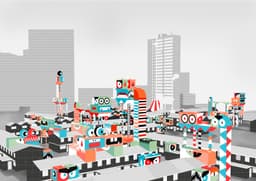 Relational Architecture as Commons
 The Living Ecology III – The Marvellous Ecologian
 Climate Peace: How heavy is a city?
 Bodies, Borders and Boundaries
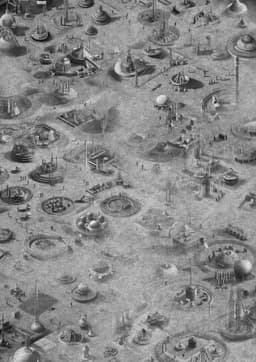 Consistency: Urban Infrastructures and Architectural Thinking
 Fluid Territories: On Property and Laziness
 Transience
 Universal Free Housing: Para-site
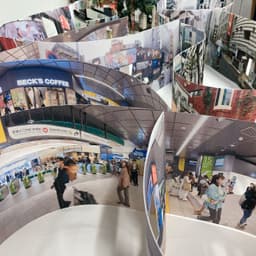 Transforming Transformations
 Unearthing Futures
 Hauntings and Auguries: Exploring Future Architectures through Cultural Technologies
 In Use
 Earth Machines
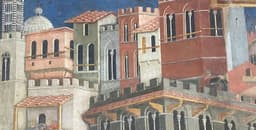 Another Medieval
 A House Full of Hot Air
 Margins: The Architecture of Mediation
 Architectures of Schismogenesis: Syncretism as a Method
 STUDIOLO