Title: Architectural Anthropology: Towards a Postcolonial Reading of Rituals and Architecture
Tutor: Francesca Dell’Aglio
The relationship between human beings and the built environment is one of the founding principles of architecture. Our homes, our schools, our working environments and our cities are extensions of our bodies; their spatial conditions are inherently human ones. Nevertheless, rituals – as either individual or collective practices – have for centuries been used to justify the design of built forms, a process that favoured the use of architecture as a colonial weapon through which these forms could proliferate and affirm themselves through their repetition. This course will instead consider rituals as emphatic daily practices of everyday life; as exceptional opportunities that might allow us to rethink the built environment.
Title: Architecture as an Apparatus of Government
Tutor: Eleni Axioti
This course addresses the ability of architecture to participate in the practice of government. Architecture has the capacity to configure and orient our actions and behaviours as living beings, through its technologies, mechanisms, rationalities and norms. By functioning as a diverse and dynamic network, it contributes to the production of our subjectivities and mediates between political economy and the economies of the subject. Bearing this definition in mind, we ask: how have architectures from the second half of the 20th century to the present day facilitated the practices of government? How have they contributed to political and social changes, and to the shift from liberal to neoliberal forms of government?
Title: Curating Modernities: Constructing Alternative Histories of Late 20th Century Architecture
Tutor: Guillermo Arsuaga
This course will critically reassess Eurocentric perspectives in modern architecture, focusing on the 1960s – a time when alternate modernities emerged outside of Europe and the US during independence movements – and their evolution to the present day. Sessions will consider the dichotomy within these modernities, asking whether they were an epistemic imposition by colonial powers or instead tools of liberation for newly-formed nations. The course navigates the intersection of postcolonial and decolonial theories, as well as race and gender studies, to delve into the paradoxes of modernity, with an emphasis on the transnational and collective dimensions of ‘global’ architectural modernities. Sessions will provide students with the tools to challenge traditional historiographies and will encourage new perspectives on architectural narratives.
Title: Forces of Production
Tutor: William Orr
Technological change appears like an outside force, unsettling and transforming societies in profound, seemingly irresistible ways, while reinforcing and preserving them in others. Highly ambiguous, such ‘modernisation’ promises both progress and crisis. In this course, we will consider how technological development poses paradoxes of form and function. Whether bearing on creative control and authorship or social programme and sustainability, these cut to the core of architecture’s contemporary contradictions. Intended to feed into neither technophilic nor technophobic narratives, we will question how and for whom technology is architecturalised and architecture is technologised.
Title: Ghosting2 – Architecture in Absentia
Tutor: Doreen Bernath
This course is premised on the proposition set out by Mark Cousins that ‘space begins when someone else enters the room’. This specific register of ‘the presence of an absence’ will be further explored through Daniel Heller-Roazen’s typologies of what is missing, from diminishing presence to various acts of erasure and substitution. Hal Foster has called this ‘ghosting’; Mark Wigley considered it as what is concealed in ‘haunting’; and Jacques Derrida refers to ‘spacing’ as an inscriptive force. The uncovering of such spatial alterity will be evidenced in Francesca Woodman's Space2 series (1977–78), Steve McQueen’s Grenfell (2017), The Otolith Group’s The Radiant (2012), Susan Collins’ Fenlandia and Glenlandia (2004–7), and Pierre Huyghe’s Variants (2021), interwoven with postcolonial, psychanalytical, ecological, feminist, media, transcultural and posthuman readings.
Title: Intertwined Practices: A Lens on Architecture as Cultural Oiko-logy
Tutor: Marina Lathouri
This seminar series aims to rethink the manifold objects, practices and subjects of architecture. The initial claim is that the architectural does not only consist in bound forms or fixed typologies but in a series of practical engagements with situated material conditions; a thread tying together histories of land and people, and histories of inhabitation. Beginning with a consideration of oiko-logy as oikos – including domestic economies and life forms, processes of space-making, conceptions of place, migration, boundary and liminality – we will draw up specific sites for investigation while highlighting the inter-articulations of ‘a world in common’, and positioning architecture as entangled with other critical spatial practices.
Title: Constructive Critique: Urban Imagination with Marx, Foucault, Kropotkin, Bourdieu, Fanon and Butler
Tutor: Nicholas Simcik-Arese
This course equips students with basic proficiency in the main ideas of Karl Marx, Michel Foucault, Pierre Bourdieu, Peter Kropotkin, Franz Fanon and Judith Butler – writers who significantly influence contemporary public discourse. Through application to empirically rich urban case studies in Brasilia, Cairo, Delhi, Mumbai, Hong Kong, Phnom Penh, Baltimore, Warsaw, London and New York City, we will map how contemporary urbanists apply root ideas. The objective is to achieve conversational competence and design relevance; to subtly engage in debates within the critical tradition by way of examples from architecture and urbanism, towards empowering radical proposition.
Title: Social Form
Tutor: Irénée Scalbert
For modern architects, social architecture was synonymous with a socialist architecture. Yet, like society itself, the project of social architecture has become increasingly complicated. Aldo van Eyck and Herman Hertzberger sought to integrate social commitment and artistic expression while others such as Ralph Erskine, Lucien Kroll and Giancarlo de Carlo introduced participation in design. Should architecture be made by the people themselves? Or can their desires be interpreted by architects on their behalf? This course scrutinises the links between social reform and formal expression, as well as the relationship between ‘good intentions’ and the discipline of architecture.
Title: Urban Form
Tutor: Ingrid Schroder
This seminar is offered in collaboration with the Drawing Matter archive and the London School of Economics (LSE). The series will use a selection of drawings of cities, real and imagined, held in the archive to reflect upon the orchestration of urban form around five readings of the city: as an idea or ideology; as a terrain (real and vague); as theatre; as a rhythm or network; and as a lived metabolism. The course will use the original archival drawings as a catalyst for discussion and a means for questioning how the ideas contained in each are amplified or distilled by their representation.
 The Language of Cities
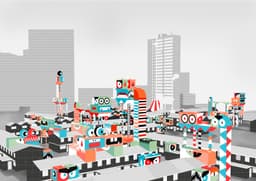 Relational Architecture as Commons
 The Living Ecology III – The Marvellous Ecologian
 Climate Peace: How heavy is a city?
 Bodies, Borders and Boundaries
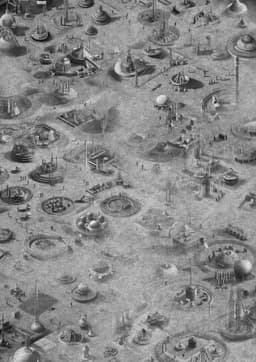 Consistency: Urban Infrastructures and Architectural Thinking
 Fluid Territories: On Property and Laziness
 Transience
 Universal Free Housing: Para-site
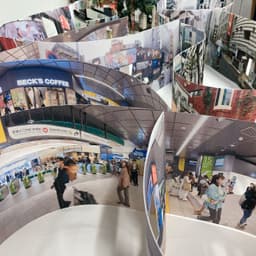 Transforming Transformations
 Unearthing Futures
 Hauntings and Auguries: Exploring Future Architectures through Cultural Technologies
 In Use
 Earth Machines
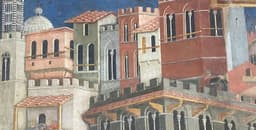 Another Medieval
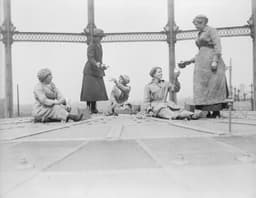 A House Full of Hot Air
 Margins: The Architecture of Mediation
 Architectures of Schismogenesis: Syncretism as a Method
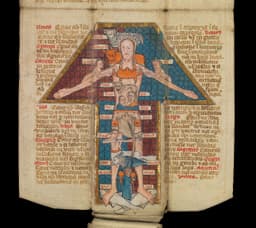 STUDIOLO