Title: The Third Skin
Tutor: Wolfgang Frese
This course addresses the functions and considerations inherent in building envelopes or façades. A building’s envelope is both ambiguous and multipurpose: forming a filter for various environmental conditions while also acting as a building’s ‘face’; expressing its function as well as the sociocultural status of its owner or occupier. Today, façades are often complex and multilayered environmental performers that communicate on multiple levels with a building’s occupiers and the outside world. Sessions will provide a technical overview of the main components of envelopes and façades, exploring the technologies that enable them to respond to varying climatic conditions.
Title: Casting light
Tutor: Vittoria Lenzi
This course positions daylight as a fundamental partner in architectural design – as both material and medium, as well as a catalyst for innovation. Across seven sessions, students build a conceptual and technical grounding in daylight theory, metrics and digital analysis tools before moving to case studies and crossdisciplinary applications. The course explores daylight at multiple scales, from material surfaces and façade strategies to the integration of natural and artificial lighting within the built environment. Designed to support studio work, it provides strategies and insights that reveal daylight’s dual role as a rigorous performance parameter and a poetic force in architectural practice.
Title: Timber and Hybrid Structures
Tutor: Bola Ogunmefun
Timber and hybrid structures are complex systems providing strength, stiffness and stability to buildings; architects must understand structural principles to design buildings that respond to challenging design briefs and site constraints. This course explores the opportunities offered by timber and hybrid forms of construction which have recently risen in popularity within the building community. Sessions will address the creation of sustainable structures and the assessment of embodied carbon, and students will apply their understanding of these subjects to real projects, exercises and workshops.
Title: Material Systems 2.0
Tutor: Nacho Martí
This course provides students with an ability to understand and design systems of different scales in the context of architecture. Each lecture will focus on systems at a particular scale – material, building, city, territory and planet – in order to develop a working methodology to understand their elements, interconnections and performance, enabling students to make informed design interventions. Concepts such as behaviour, emergence, self-correction, information flows, feedback loops, inputs, outputs and stocks will be introduced, and the course will demonstrate how systems thinking can be used in architectural design to make sense of the complex dynamics and interconnected realities that surround us.
Title: Works in Progress
Tutors: Giles Bruce, Tom Raymont
This course examines two live residential projects delivered by the tutors’ practices in London: one by A-Zero Architects and the other by Arboreal Architecture. Over the course of seven weeks, we will investigate both projects from a variety of perspectives, and will be joined by some of the projects’ structural engineers, contractors, consultants and suppliers. Their perspectives will offer different insights into the design, delivery and construction of a project, allowing students to understand the underlying complexity and co-ordination that is required to bring a project into being.
Title: Antidisciplinary Integration: Migration from nZEB to nZIB
Tutors: Xavier Aguiló, Anna Mestre
In contemporary architectural design, systems have become highly fragmented and independent. This course focuses on the integration of all requirements of architectural design into one antidisciplinary system that encompasses orientation, construction, light, structure, water, MEP, energy efficiency, CO2 emissions, environment, thermal inertia, radiant systems, circularity and many more, with the aim of reducing the environmental impact of the building and improving the comfort of the user. Sessions will study successful contemporary projects, and participants will be asked to analyse, challenge and apply new strategies to an existing pavilion.
Title: Low Carbon Tectonics
Tutor: Cíaran Malik
This course explores the use of low carbon structural and façade materials to create new architectural forms. In response to the climate emergency, we need to design architectural forms that emit less carbon during their construction and over the course of their lifetimes. Whole Life Carbon Assessment is used as a tool to examine architectural materials across construction, use and end of life. Students will explore combinations of materials to provide the structural, foundational, thermal and moisture barriers required to create equitable architecture.
Title: Der Lauf der Dinge
Tutors: Aude-Line Dulière, Lena Emanuelsen
Under current regulations and in a quest for standardisation, the ruling model for sourcing materials in architecture relies heavily on virgin resources travelling vast distances to feed an industry that often seeks the new, the easy and the cheap. This course takes the current specification and detailing of a specific building component as its point of entry. Students will develop an understanding of the status quo and explore ways to facilitate material reuse by experimenting with possible building applications and developing reversible assembly techniques.
Title: Acoustics Today
Tutor: Laura de Azcárate
Acoustic design enables architects to investigate new ideas alongside sustainable construction techniques and materials. This course explores the creative possibilities of acoustic design and analysis to enhance the holistic experience of architectural space. We will start by exploring what acoustic design is, introducing its basic concepts in relation to digital fabrication, and will conclude with two workshops conducted by architects and acousticians to encourage collaboration between disciplines from the beginning of the design process.
Title: Digital Craft: Machined Circularity
Tutor: Pablo Zamorano
This course will investigate the intersection of circularity, technology and craft. Over seven sessions, we will use the latest innovations in AI and machine learning to capture material properties and design new architectural connection details that we will prototype with digital manufacturing technologies. Starting from demolition sites and salvage yards, we will collect and digitise material resources, explore 3D spatial arrangements and design novel connection details that will enable these materials to come together in new architectural arrangements. The course will teach and use advanced technologies, but no software prerequisites are required. This course is part of the CINOVATE programme at the AA.
Title: New Environments: Towards Climate Resilience and Adaptation
Tutor: Joana Gonçalves
Relying on the potential of interstitial spaces to mediate the impact of climatic variables, this course challenges the notion of building envelopes as hermetic skins to create new environments by transforming building components into transitional zones of various types, configurations and materialities. Climate literacy and environmental simulation modelling are the main integral components of the course’s methodological approach. This year, design explorations will focus on interventions in existing buildings located in the tropical region. Project-specific analytical frameworks involving parametric and sensitive performative assessments will be developed as part of the design process, as platforms for comparative analysis of alternative intervention scenarios.
Title: On Detailing
Tutor: Anna Font
The constructive detail occupies such an operative role in the design process that the architectural discussion embedded within it is often reduced to pragmatic and regulatory demands. Nevertheless, reading a building’s detail reveals superimposed narratives through forms of representation, untangling the architectural project behind it. In this course, we will read and draw constructive details, taking this as an opportunity to discuss the evolution and transformation of material lineages in the architecture of recent decades, with the aim of generating a platform that will allow for speculation about contemporary practice. Students will contribute to a collective atlas of details and incorporate new ones linked to their current investigations.
Title: Endless Forms Most Beautiful: Designing and Engineering Complexity
Tutors: Adelina Koleva, Vincenzo Reale
Complexity in architecture and the built environment can refer to the intricate interplay of various elements such as geometry, scale, material, context, traditional and innovative techniques, the rules of physics and the principles of engineering. To fully realise an architectural vision without compromising on the essence of an idea, architects need to be able to navigate this interplay of elements. This course explores how to approach the design of complexity from the perspective of structural design, from basic theory to advanced computational processes. We will use case studies to explore how basic structural theory has been coupled with innovative technologies to solve complex briefs, and students will develop their own studies to create a complete prototype design.
Title: Form Follows Forces and Function
Tutor: Danae Polyviou
This course explores the different ways in which designed forms, structural typologies and arrangements are driven by the force flow of a structure as well as its function. An understanding of these factors provides the foundation from which we can achieve integrated designs wherein architectural, structural and environmental behaviours complement one another. Students will examine how the physical properties of materials can contribute to this process. Sessions will focus on physical and digital simulations in Rhino and Karamba, with concepts discussed in the context of a range of case studies.
Title: Building with Nature: Full-culm Bamboo Design Fundamentals
Tutor: John Naylor
This course is an introduction to full-culm bamboo, the most sustainable form of bamboo when used locally. We will start with an overview of bamboo’s opportunities and challenges, such as environmental sustainability, material properties, species diversity and supply chains. We will then investigate why non-standard materials often face unfounded societal prejudice and how we can also address these non-technical barriers by design. The course introduces the current ‘path to standardisation’ for full-culm bamboo, including ISO 22156:2021. We will compare durability factors between timber and bamboo to highlight the principle of ‘protection by design’ as part of a wider radical challenge to mainstream form-based design practice. As part of the course, groups will be challenged to deconstruct precedent projects and engage in 1:1 scale physical construction of bamboo building elements, guided by codes, practice and real-world supply chain scenarios.
 The Language of Cities
 Relational Architecture as Commons
 The Living Ecology III – The Marvellous Ecologian
 Climate Peace: How heavy is a city?
 Bodies, Borders and Boundaries
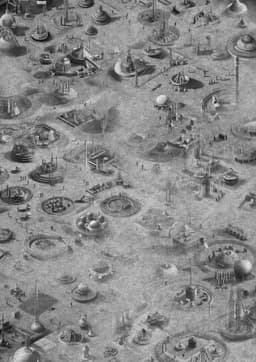 Consistency: Urban Infrastructures and Architectural Thinking
 Fluid Territories: On Property and Laziness
 Transience
 Universal Free Housing: Para-site
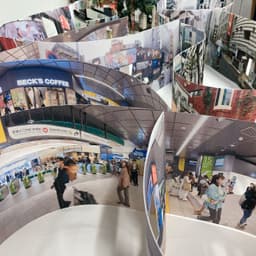 Transforming Transformations
 Unearthing Futures
 Hauntings and Auguries: Exploring Future Architectures through Cultural Technologies
 In Use
 Earth Machines
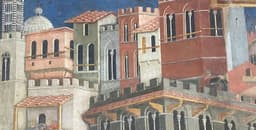 Another Medieval
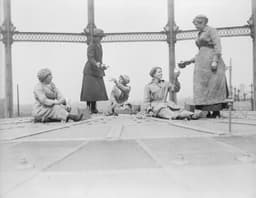 A House Full of Hot Air
 Margins: The Architecture of Mediation
 Architectures of Schismogenesis: Syncretism as a Method
 STUDIOLO